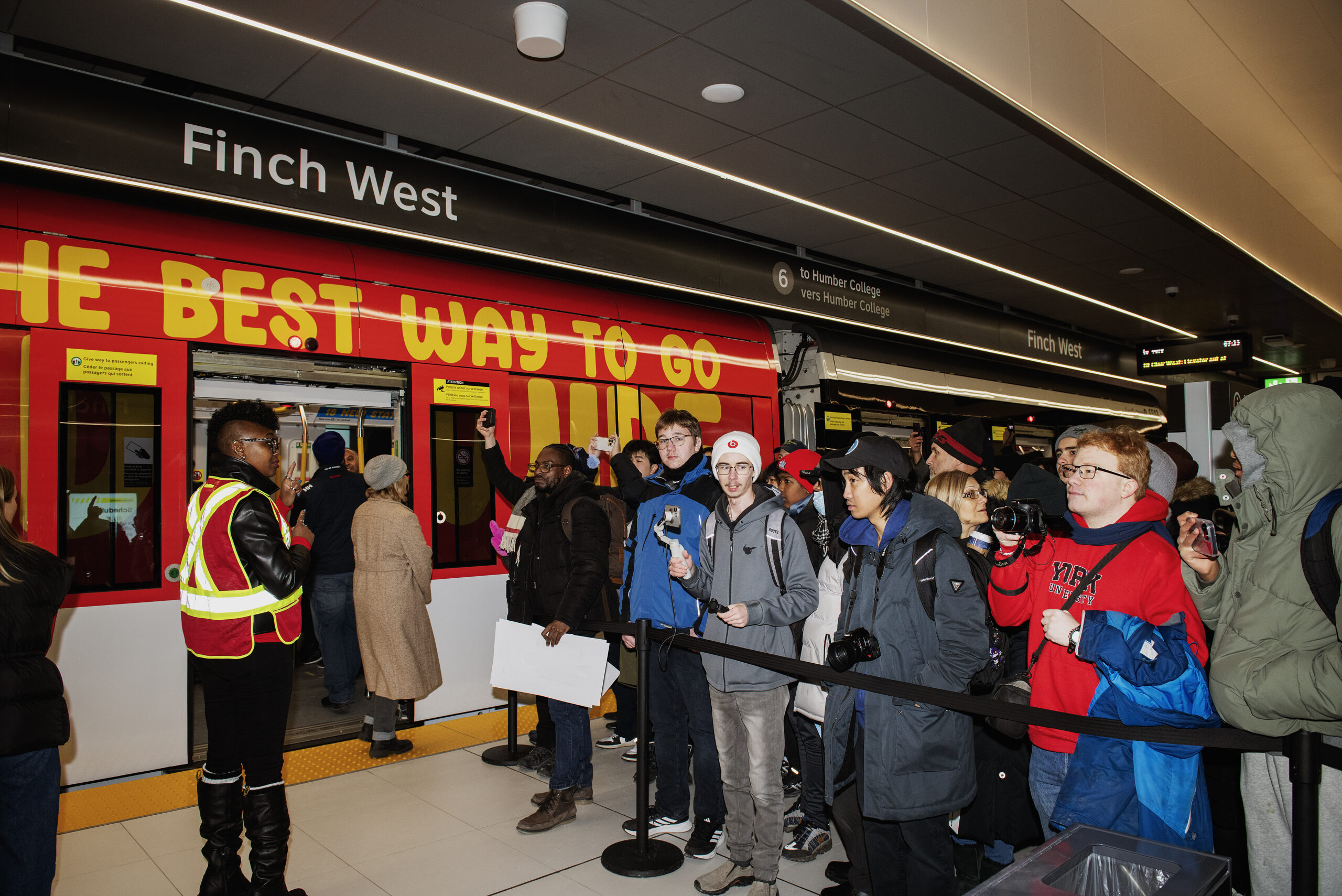
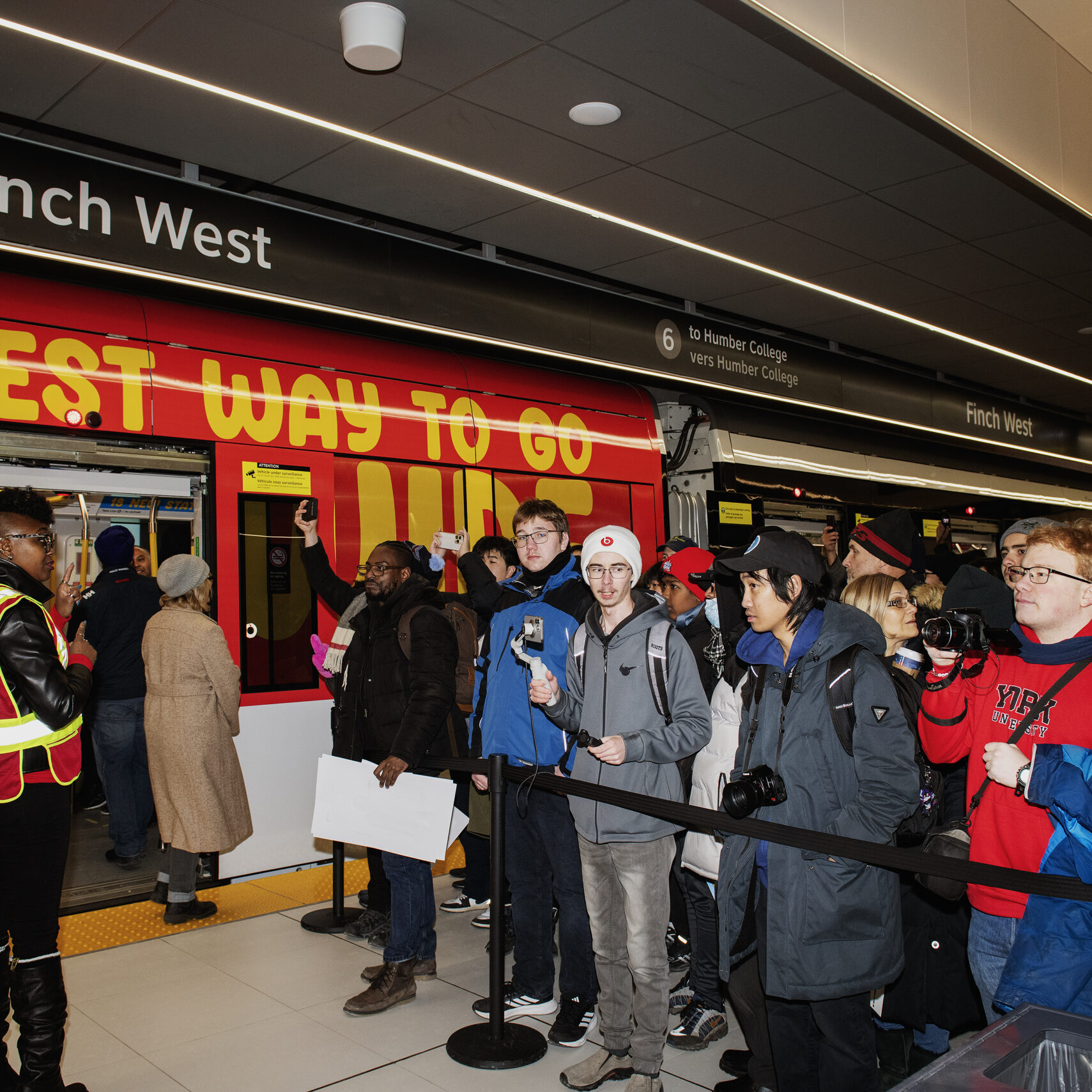
At 7 a.m. on Sunday at the intersection of Finch Avenue West and Keele Street, crowds lined up around the block in the pre-dawn snow for a chance to see the launch of Line 6, the new Finch West LRT. Spanning more than 10 kilometres and 18 stops, the line traverses a region of the city historically isolated by poor transit infrastructure. It has been decades in the making.
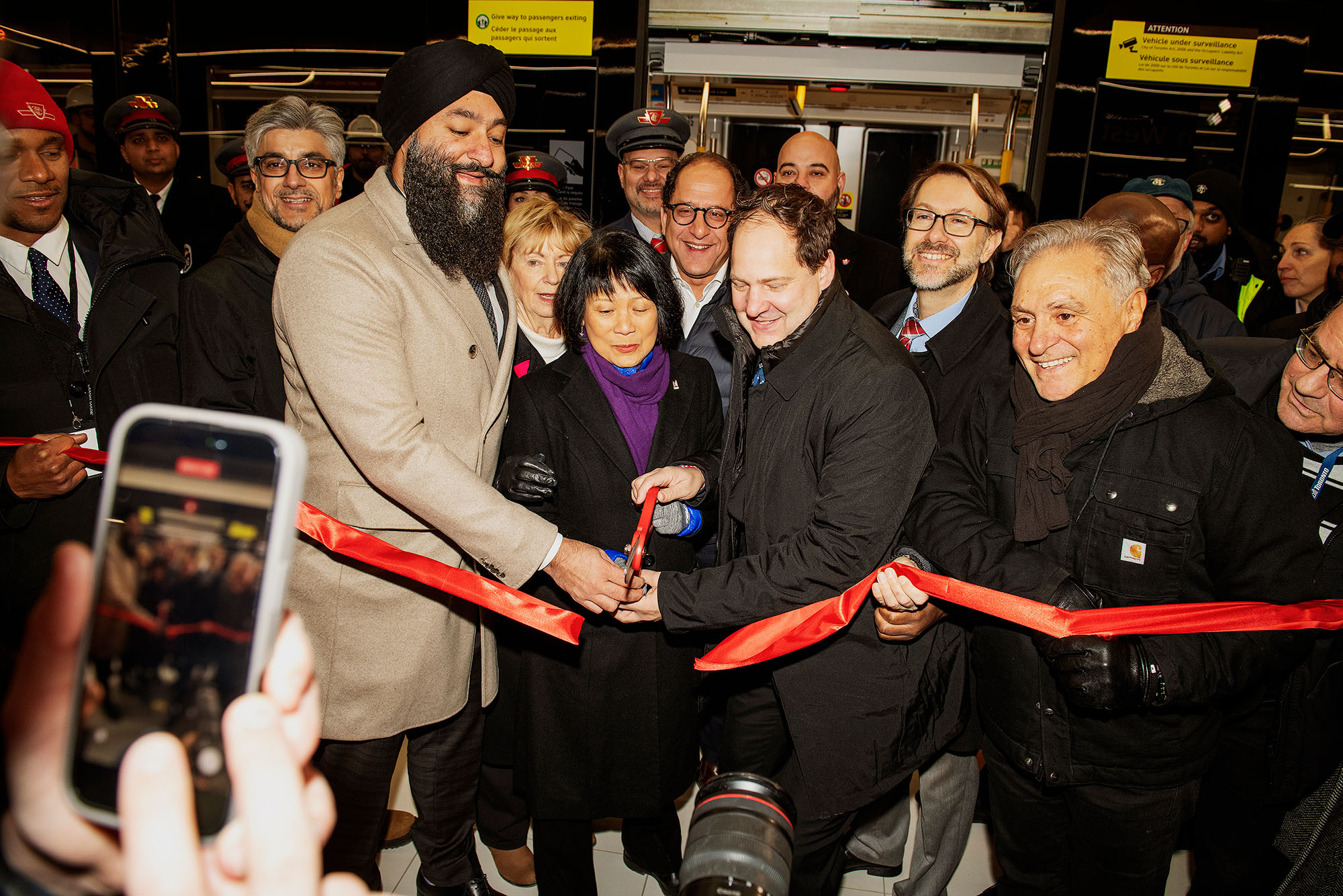
From across the street, latecomers ran to join the back of the queue, while at a side entrance a mix of volunteers, special invitees, and members of the press jostled for a chance to convince a security guard of their right to attend the opening ceremony. Underground, on the cold, white-tiled station platform, a handful of representatives including Mayor Olivia Chow, local Councillor Anthony Perruzza, and Ontario Transportation Minister Prabmeet Sarkaria stood for opening remarks. “This line is not just a new way to travel,” said Jamaal Myers, chair of the TTC board and city councillor for Scarborough North. “It’s a connection to opportunity, jobs, education, services, and everything that makes our city great.”
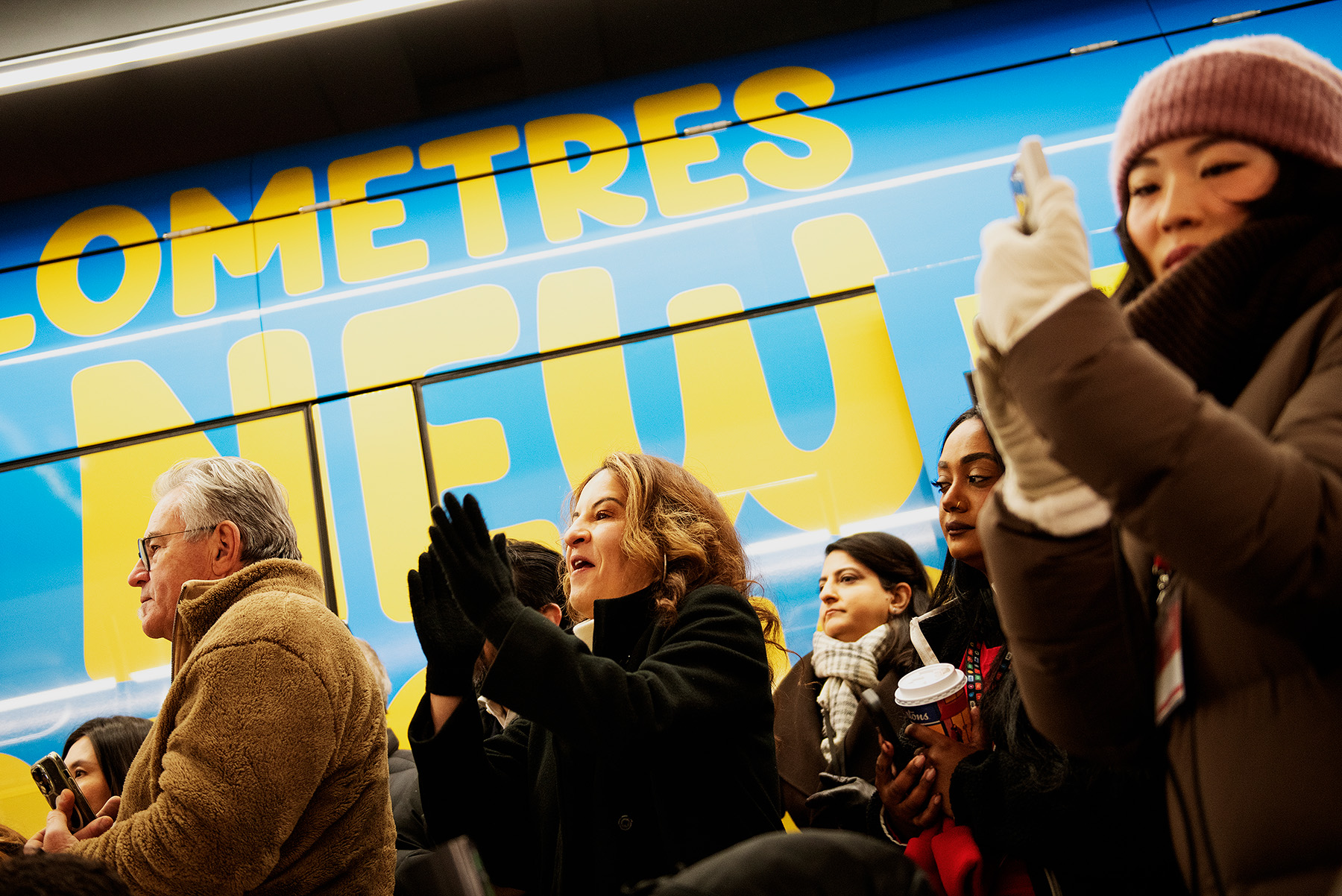
Plans for rapid transit spanning Finch Avenue West, a major artery in northwest Toronto, have been made, then cancelled, then re-made since the 1960s. When construction on the Finch West LRT began in 2019, the predicted opening was 2023, already an eight-year delay from the original plan to build it for 2015.
If the city’s residents could tolerate the decade-long delay for the Finch West LRT, they could bear another 10 minutes of waiting. The second train of the day—and the first open to the public, after the inaugural dignitary and press car—was stalled on the platform. The 1986 Canadian cult hit “Spadina Bus” blared over the station speakers (someone, I suspected, was slowly turning up the volume to compensate for wavering enthusiasm in the face of delays). Eventually, 11 minutes behind schedule, the train departed the station, cheers erupting from behind the closing doors.
At Jane and Finch station, Anna-Kay Brown, community benefits coordinator at the Jane/Finch Community and Family Centre, boarded the train. For years, Brown has been a key advocate for the area in negotiations with capital funder Metrolinx, builder consortium Mosaic, the TTC, and the City, working to secure community benefits like employment for locals at the LRT’s maintenance and storage facility, and access to community space. Metrolinx has been criticized for its lack of transparency in these negotiations, and for reneging on its agreements regarding community benefits.
Now, after all those years of battling, she was finally getting to experience the new transit line herself. “It feels small,” she said, stepping into the LRT. “Like a glorified streetcar.” Throughout the journey, the flaws and idiosyncrasies of the LRT—its size, the longer distances between stops, and its lack of speed—added up. To Brown, it was hard not to measure it against all the time and effort of the advocacy work, or what had been promised, and find it lacking. For all of that hard work, the outcome resembles transit infrastructure available to downtown residents decades earlier.
Brown’s son, Anthony, a high school senior who takes at least two buses and a subway to get to school, rode with us, expressing doubt that the LRT would ease his daily travel time, or outpace a bus.
“Now people are riding this thing because it’s new and shiny,” Brown said. The opening day trains were filled with transit enthusiasts, many of whom had journeyed in from elsewhere in the city in the wee hours of the morning to experience the LRT. “[But] imagine the real people, on Monday morning, who are going to work.” In the weeks and months to come, she points out, all the workers who live in the area and rely on transit to get to their jobs will be arbiters of whether the LRT can live up to its promise.
But the mood is mixed among passengers, and some people are impressed with what they see. Barrington, who has resided in an apartment building at the corner of Duncanwoods Drive and Finch Avenue for more than 31 years, had a look of awe on his face. “It’s very excellent,” he said quietly. The people he’s spoken to have been excited for the LRT’s arrival, and he can see himself using it day-to-day. It’s a step up from the 36 bus, he said: “This is better for me—I feel comfortable.”
Further down the line, around the corner from Emery station, at Weston Road, residential real estate developer Medallion built new luxury condos between 2021 and 2023, in the years before the LRT was initially slated to open. Just one stop over, near Milvan Rumike station, an asset management firm proposed building two new highrises just this year.

“I’ve heard stories of people being slowly pushed out of [their] buildings,” said Sherley, who lives near Finch Avenue West and Kipling Avenue. “My only concern is it’s going to bring some sense of gentrification to the neighborhood.”
But Sherley could also see the value the LRT could bring to life along Finch Avenue West. She works remotely, but her aunt is a personal support worker. “I know for her, this would be extremely helpful,” she said, adding that she hoped Line 6 would make it easier for her aunt to reach her clients. “And especially in this neighborhood, many women are in that field…They need this.”
The TTC says an end-to-end trip on the LRT takes 45 minutes—in actuality, it had taken an hour. Both locals and transit enthusiasts have to hope that that slowness is at least partly due to first-day caution and bad weather.
The west end of the line was quieter than the east. At the western terminus of the LRT, Humber College, the train dipped back underground, and half its passengers disembarked, stretching their legs, taking selfies with the train. On a weekday, the station would be filled by some fraction of the college’s tens of thousands of students, who now have an easier—though perhaps not significantly faster—route between campus and the rest of Toronto.
It has taken years to build the Finch West LRT, and for people like Anna-Kay Brown, its opening is the culmination of years of hard work. The question now is what happens next: for the possibility of more connectivity in Toronto’s transit map, for the region’s development, and promises of preserved affordability and character.
At the end of the line, three women boarded together, two of them a mother and daughter living near Islington Avenue and Steeles Avenue West, north of Finch. Serafina, a student at a high school nearby, will be taking the LRT to school every day from now on, though her mother Felicia, a court worker, is planning to stick to driving when she needs to work downtown. “It’s great that we have the transit,” Felicia said. She’s excited to be riding the LRT. But she also believes it could be expanded. More transit development on Jane, she suggested, and on Islington—a more connected transit network for everyone. “I think that transit could go further.”
More from this issue
Understanding the Eglinton Crosstown in Seven Illustrations
From Shohei Ohtani’s salary to the tunneling rate of a mole—an unorthodox guide to the numbers behind Toronto’s newest transit line.

Meet Gabrielle McMann, Our Yearlong Journalism Fellow
The emerging journalist is our first early-career fellow, in partnership with The Philanthropist Journal
Ontario’s Daycares Are Increasingly Staffed by Underqualified Hires
New data shows Ministry of Education approvals for non-ECEs working in ECE-designated roles jumped more than 1,000 percent over the last five years.
The Year in Pictures
The Local’s editors pick our favourite images of 2025
The Local’s Most-Read Stories of 2025
From features about health care and higher ed, to stories about tracking bunnies, scammers, and worms, these are our most popular stories of the year.
The Local’s 2025 Year in Review
At this reflective time of year, we gather around the flickering warmth of The Local Slack channel to discuss the year that was.
On the TTC, With Nowhere to Go
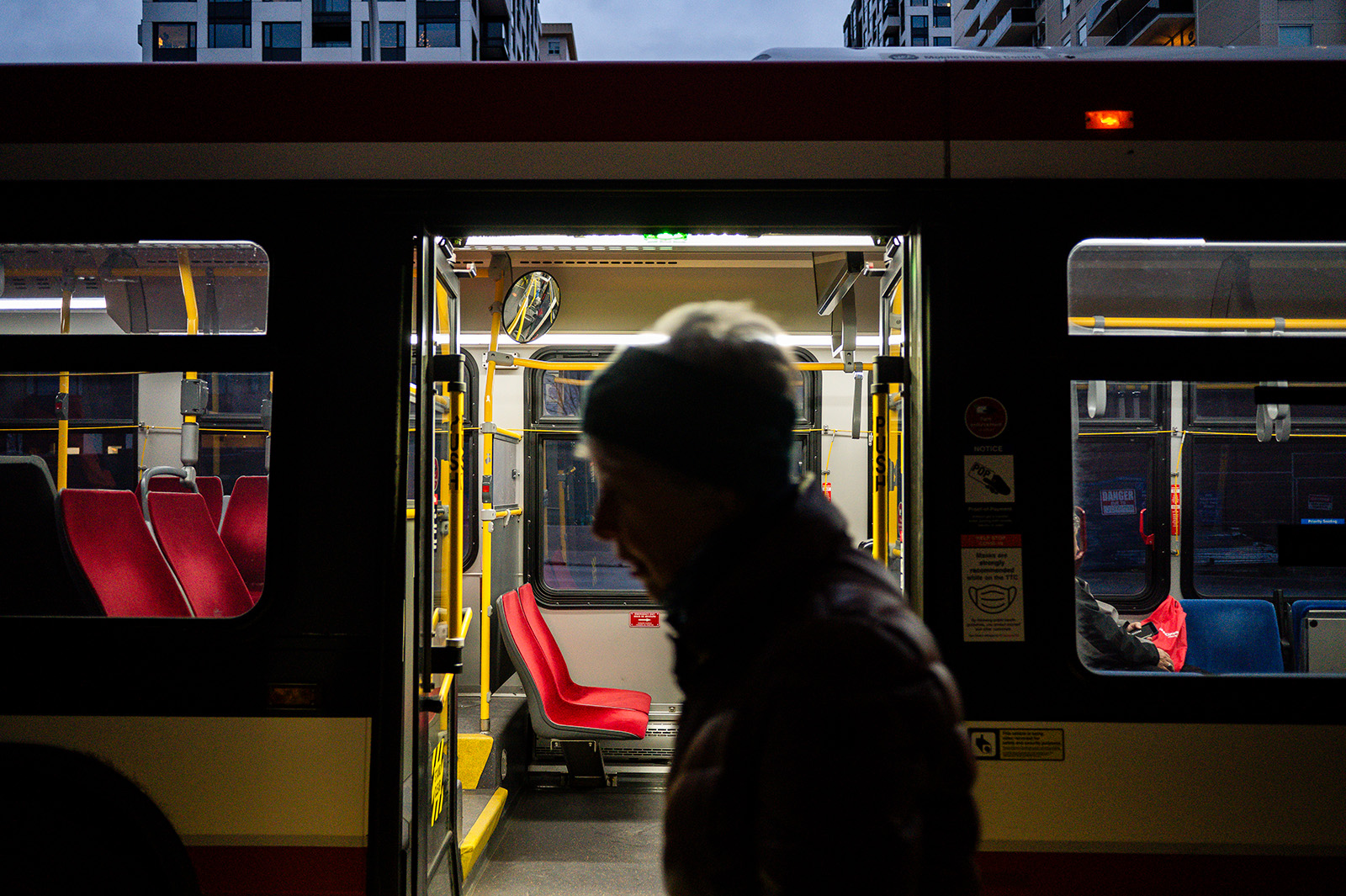
With rising homelessness, decreased mental health support, and fewer public spaces than ever, the TTC and its workers are being asked to fill gaps in a dissolving social safety net.

The Fallout From Our AI Freelancer Investigation
A conversation about the future of journalism in a world of “Victoria Goldiees.”

Investigating a Possible Scammer in Journalism’s AI Era
A suspicious pitch from a freelancer led editor Nicholas Hune-Brown to dig into their past work. By the end, four publications, including The Guardian and Dwell, had removed articles from their sites.
Early-Career Journalism Fellowship
A joint undertaking of The Local and The Philanthropist Journal, the fellowship provides one Black and/or Indigenous journalist an opportunity to write about issues that matter to their community and civil society.