


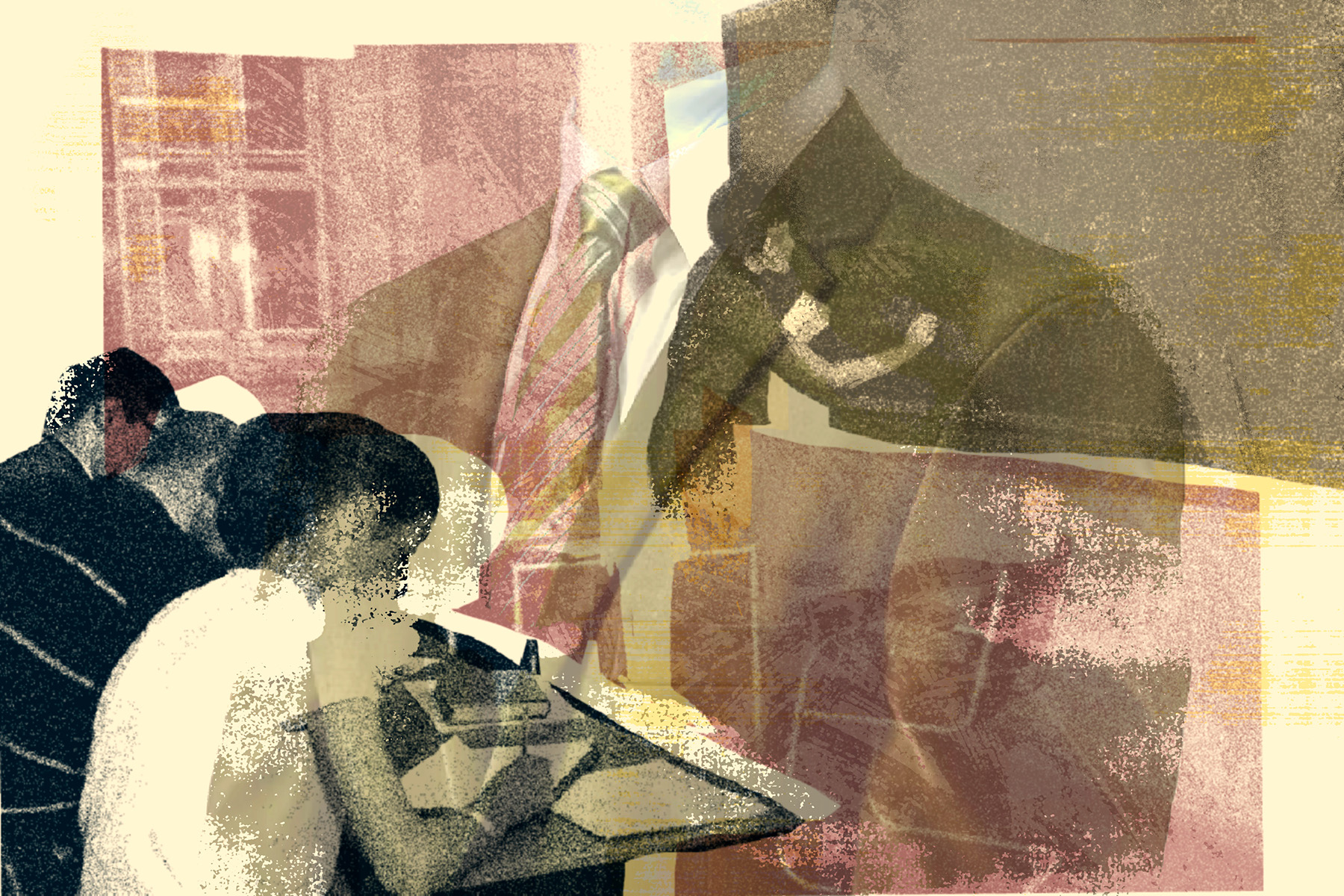

Rohit Gupta sat silently as senior staff gave a budget presentation to parents at the Toronto District School Board (TDSB) on a Tuesday evening in June. The supervisor of the TDSB fiddled with his diamond-patterned tie. He rubbed his temples. He checked his phone.
Only moments earlier, many of the parents, advocates, and union leaders attending this meeting had held a rally in front of the TDSB’s North York head office. They carried signs that read, “Fund our Schools,” and “Education is NOT a Business.” They took turns giving speeches decrying the decisions made behind closed doors since Gupta was appointed supervisor by the province a year ago, including a recent notice to slash 792 jobs in the fall.
Now, in a packed boardroom with Gupta, the crowd demanded answers. What will happen to schools in underserved neighbourhoods that rely on extra staff and resources through the board’s long-standing Model Schools for Inner Cities program? Is there any way to spare the outdoor education facilities on the chopping block? Are there more cuts coming? Who was consulted on these decisions?
Gupta let TDSB senior staff do the talking. They gave a general overview of their 2026-27 budget, but few details, explaining that the board would receive $39.3 million less from the province in the coming year owing to declining enrollment. But they would also receive certain new pockets of funding, including $6.6 million for learning resources, though the details have yet to be worked out. The senior staff tried to sound reassuring, but their answers were vague. “The decisions that we’ve made have…really tried to minimize the impact of direct support to students in the classroom,” said Stacey Zucker, the TDSB’s chief financial officer and chief operations officer.
Gupta did not look directly at many of the representatives of the board’s parent involvement advisory committee as they asked questions, nor at those watching from the sidelines who muttered, “Shame!” He appeared as though his mind were entirely elsewhere.
“He’s not even listening!” one parent erupted in frustration. “So disrespectful!”
“You’re making $350,000 a year,” another voice heckled, as the meeting adjourned. “Your cuts are hurting children!”
“I don’t know how you sleep at night, Rohit,” yet another called out.
Join the thousands of Toronto area readers who've signed up for our free newsletter and get award-winning local journalism delivered to your inbox.
"*" indicates required fields
It’s now been a full year since the province’s takeover of Toronto’s public and Catholic school boards, installing hand-picked supervisors like Gupta to oversee the boards’ finances and operations. Each supervisor is paid $2,000 a day, up to $350,000 per year plus expenses. And Education Minister Paul Calandra has not yet publicly signalled when the takeover will end, maintaining it will continue for “as long as it takes.”
If you speak with educators, parents, and students in the city, it’s evident the public education system needs fixing. Educators are overwhelmed, schools are in disrepair, violence is pervasive, and students—especially those with special education needs—are struggling. So in theory, the prospect of having someone take charge and set things in order, as Calandra has vowed, seems appealing. Calandra is the Ford government’s fifth education minister in its eight years in power. His promises to put student achievement first and to commit to a “back-to-basics” approach are not without supporters.
But if the past year of supervision at the TDSB, Ontario’s largest board, is any indication, greater control in the hands of the province will likely also mean less transparency, fewer opportunities for the public to seek accountability, and less input from local communities. Critically, it will also likely mean more cuts and standardization of the delivery of education—to the detriment of students who rely on specialized local programs and resources created to promote equity. In other words, paring the system down to the “basics” is almost certain to leave behind those in greatest need.
All that means we should expect more public outcry. The cuts so far have not sat well with union leaders, who are now entering bargaining for new collective agreements with the government. The current four-year contracts of major unions expire on Aug. 31.
John Weatherup, president of the Toronto Education Workers/Local 4400 of the Canadian Union of Public Employees (CUPE), told me he felt sick to his stomach when he heard about the TDSB’s latest plan to cut nearly 800 positions. “Any equity program at the board, they’re killing it,” Weatherup said. “We’re not just talking numbers, we’re talking about the wiping out of most of the programs that make it special for students and parents.”
Calandra’s Responsibility
From the moment he stepped in front of the cameras to give his first press conference as Minister of Education in April 2025, Calandra has projected the image of a man in charge. Since then, he has essentially neutralized the roles of elected school trustees, taken over eight school boards, and pushed through two major pieces of legislation that give his ministry unprecedented powers.
However you feel about this—whether you see Calandra as a common-sense commander who’s bringing order to out-of-control school boards or a Ford government hatchet man who’s dismantling the oldest level of local democracy—Ontario’s public education system hasn’t undergone such a dramatic overhaul since the Mike Harris days. And the fallout of Calandra’s reforms will be felt by students for many years to come.
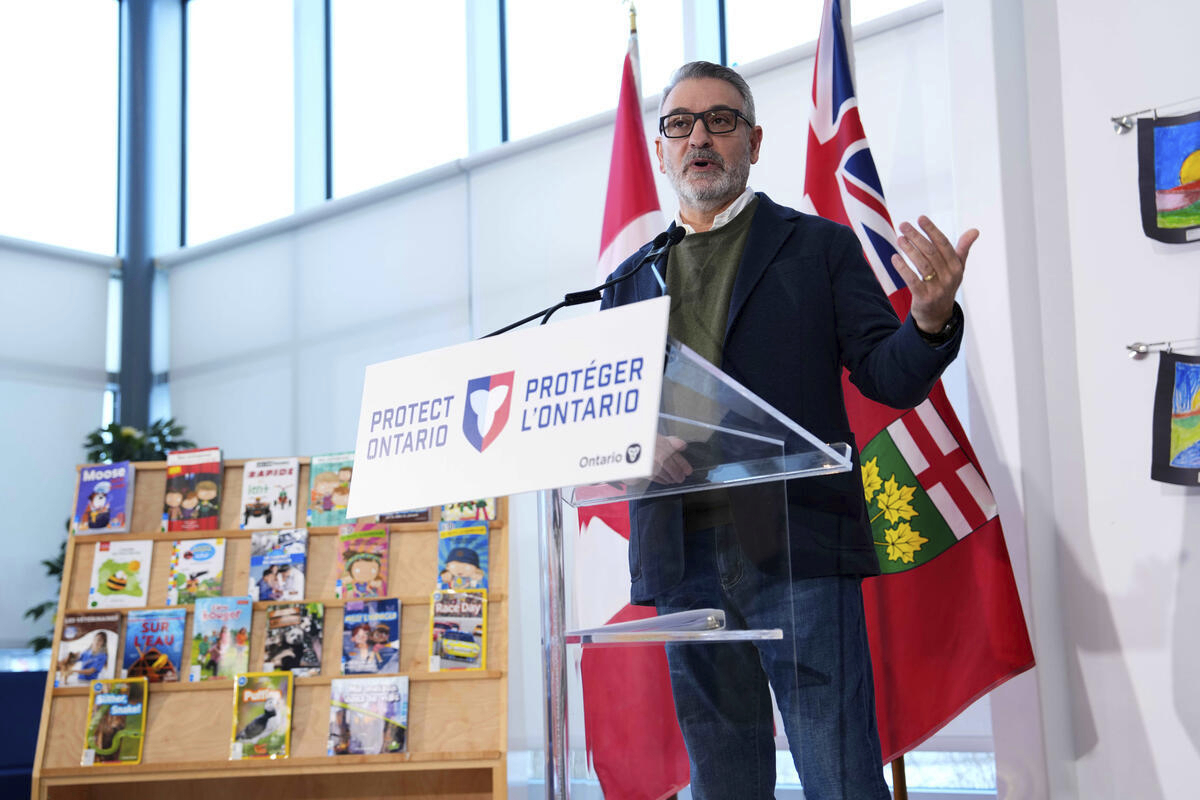
Previous governments “have always been afraid to take on” the public education system, Calandra told an online audience at the Toronto Metropolitan University Democracy Forum this May. But, Calandra told the forum, he is not: “I will say that as the minister taking responsibility.”
Last summer, when the province took over the TDSB, I reached out to Hugh Mackenzie, a long-time researcher on education funding in Ontario. Mackenzie explained that the takeovers could only be understood in the context of a decades-long power struggle between the province and locally run boards.
“This is all about political control,” he told me. Since the Harris era, school boards have relied almost entirely on funding from the Ministry of Education. Yet it’s been the job of locally elected trustees to decide how that money is spent—until now.
The provincial government has long strived to rein in Ontario’s large boards, specifically those in Toronto and Ottawa that had introduced innovative programs, like English as a second language, French immersion, and outdoor education programs, Mackenzie explained. The takeovers were an extension of that effort, he said—a continuation by the provincial government to get out of “being forced to fund things that they don’t want to pay for.”
Recent cuts seem to support this view. Cuts at the TDSB and the Toronto Catholic District School Board (TCDSB) indeed suggest the province is unwilling to pay for some of the longstanding, locally developed programs unique to these jurisdictions, for which many trustees have advocated. Under supervision, for example, the TCDSB has ended its school-day international languages program, axing 77 language instructors in the process, according to CUPE. Meanwhile, at the TDSB, several of the trustees, who have been sidelined since the ministry’s takeover, have raised concerns about cuts. Those include to outdoor education, which provides opportunities for urban students to access nature; the board’s equity department; specialized kindergarten classes for students with special education needs; and the Model Schools for Inner Cities program.
“Any equity program at the board, they’re killing it… we’re talking about the wiping out of most of the programs that make it special for students and parents.”
It’s possible that trustees would have been forced to make at least some of these cuts if they were still in charge of creating the budget. Before the takeovers, the budget process each spring was a fraught exercise, with trustees and staff wrestling to balance the books, as required by the province. Invariably, they’ve had to find other pockets of money to fill major gaps in necessary but chronically underfunded areas, primarily special education and staff salaries and statutory benefits. Often, this process has involved painful spending reductions, and the ever-looming threat of highly unpopular cuts to areas that are either underfunded or entirely unfunded by the province, like school pools.
Prior to supervision, however, any decisions and deliberations were made openly, with public input, said TDSB trustee Deborah Williams. The budget process involved multiple debates, community consultations, and delegations from families and other stakeholders.
“Now, there’s a void of information,” Williams said.
Lack of Transparency
Accessing information about what’s been going on at the boards under supervision has been exceptionally difficult. At the TDSB, one of the first things the board did was remove trustees’ access to their emails and phones, severing an important link between the board and its communities.
Throughout the past year, there have been no publicly held board meetings or committee meetings, with the exception of those required under the Education Act, like the parent committee’s budget presentation meeting in June. And even at these meetings, it can be hard to find out what happens unless you attend in person; in October, the province halted live-streaming of their proceedings without explanation.
Few of the decisions by the minister-appointed supervisors have been published on the boards’ websites. For example, when the TDSB supervisor fired the board’s director of education Clayton La Touche in December, no public announcement was made of the decision or why.
Similarly, an internal email from Gupta and Zucker notified TDSB employees the board was shedding 218 central staff positions, and 91 vacant positions in May. But if those cuts are posted anywhere on the board’s website, they aren’t readily found. The same goes for the decision to cut 15 diagnostic kindergarten classes at the TDSB, as reported by The Trillium.
Supervisors have declined media interviews, referring The Local’s questions to the ministry, which, even before the takeovers, has been reticent. Over the past two and a half years, the Ministry of Education and the minister’s office have not responded to any of The Local’s numerous inquiries, with the exception of the odd out-of-office email reply.
It’s unlikely that public engagement will be fully restored under Calandra’s vision for the education system. In an April press conference, while introducing the Putting Students Achievement First Act, the minister told reporters, “Board communications will be refocused strictly on matters of educational importance.” He did not elaborate.
Local Journalism Matters.
We're able to produce impactful, award-winning journalism thanks to the generous support of readers. By supporting The Local, you're contributing to a new kind of journalism—in-depth, non-profit, from corners of the GTA too often overlooked.
SupportSweeping Changes
Between new requirements and the two key pieces of legislation introduced over the past year— the Putting Students Achievement First Act, which passed in May, and the Supporting Children and Students Act, passed earlier in November—the changes the Ford government has introduced have been wide-ranging. They include expanding the minister’s ability to direct and take over school boards; splitting the job of boards’ directors of education into two executive roles; and limiting the number of trustees at each board to 12, a move aimed exclusively at the TDSB, which previously had 22. Plus, trustees’ honoraria will be drastically reduced, and for most, their expense accounts will be scrapped.
Taken together, these governance-related measures essentially serve two functions—to consolidate the province’s power over school boards, and to curtail the roles of trustees.
The government’s reforms also affect the day-to-day experience for students. Boards are now required to work with local police and allow them to bring back officers in schools. Elementary home room teachers will be allowed to spend $750 a year ($300 of which will come from existing school budgets) on ordering classroom supplies through a new website that the ministry said will be launched this summer. The government has also proposed mandatory written high school exams and making attendance and participation part of highschoolers’ final grades: the Putting Students Achievement First Act gives the minister power to establish policies and guidelines for assessing student achievement.
To those who support the government’s changes, Calandra’s approach represents a welcome shake-up of a public education system that they feel has drifted too far away from academics.
TDSB trustee Weidong Pei, who has been vocal about his support for overhauling the system, said he had been extremely frustrated during the past two years of his pre-takeover trusteeship because he felt his fellow trustees were too hung up on “pretty divisive” issues, like renaming schools, anti-oppression, and anti-racism initiatives.
“These have nothing to do with student success,” Pei said. (Some of his fellow trustees disagree, arguing these measures remove barriers for marginalized students.)
Pei said there are a number of issues that rankle him. The TDSB’s scores on Education Quality and Accountability Office (EQAO) testing, especially in math, are “not acceptable at all,” he said. For example, for the 2024-25 school year, only 52 percent of grade six students and 56 percent of grade 9 students scored at or above the provincial standard in math. The reported violence at schools is outrageous, he said, and the amount of bureaucracy at the board is exasperating.
He said he believed Calandra’s governance changes would improve accountability at the board and allow for a greater focus on student success, rather than what he characterized as “political ideologies.”
“We’re not a human rights institution. We should not talk about all those human rights issues at the TDSB,” Pei said, noting this stance has earned him criticism for holding “far right” and “extremist” views.
Yet you don’t have to side with Pei to share some of his concerns. Regardless of how you feel about the merits of standardized testing, the EQAO scores suggest there’s considerable room for improvement. Violence in schools has become distressingly common. And you only have to speak with anyone who serves on a school council to hear about the board’s bureaucracy. (These frustrations, though, are sometimes misdirected at trustees, who have had a say in school board policies, but not in matters that are considered operational).
Calandra, too, has spoken about the same dire reality in classrooms that trouble some of his most vocal critics. Teachers, he acknowledged, don’t feel they’re getting the support they need.
“The day it really crystallized for me was when I was in Peel region,” the minister told the Democracy Forum in May. He recounted meeting a teacher of a class of about 27 students. Seven of those students had individual education plans, documenting their required special needs, supports, and accommodations, and one student had high needs.
“She became very emotional because she thought, ‘I am not helping everyone in my class,’” he said, recalling she appealed to him. “‘I need help. You gotta do something.’”
It’s hard to find anyone who would dispute that. The trouble is, it’s not clear how Calandra’s sweeping changes meaningfully address the most pressing problems hampering the education system. These include issues The Local has reported on over the past year—the heavy reliance on people who aren’t qualified teachers, also known as emergency replacement people, to fill in for rising staff absences; the anguish of families with children whose special education needs aren’t being met; a provincial funding formula that is long overdue for review and that disproportionately puts Ontario’s largest boards into the red.
For his part, Calandra has told reporters at his press conferences that he would look into the funding formula if the provincial supervisors found issues with it, and he told the Democracy Forum that his ministry will focus on reforming special education in the coming year.
But for now, it’s hard to see how eliminating trustees’ expense accounts will make up for a funding gap of hundreds of dollars per pupil per year. Or how having two executives instead of one leading school boards will address teacher burnout. Or how reducing the number of wards and trustees in Toronto will lead to better resources for fulfilling individual education plans.
Vulnerable Students Affected
Meanwhile, what is clear is that certain cuts being made at the TDSB disproportionately affect students needing the most support.
Heydon Park Secondary School and Eastdale Collegiate Institute, for example, are two special education high schools that are no longer accepting new students in their lower grades. While the TDSB, under supervision, has stated that the reason for closing admissions is low enrollment, parents see it as a move to eventually close these schools. Apparently confirming their fears, parents received notice this June that the board is moving students from a neighbouring school into Heydon Park, owing to nearby construction, and that they would be relocating Heydon Park students to an undisclosed location in the upcoming school year.
Kamala Kalsi is co-chair of the parent council at Heydon Park, a special education high school for young women, transgender, and non-binary students. Among the school’s offerings are cooking classes that provide students with regular hot breakfasts and lunches, and job- and life-skills training, including personal hygiene and how to navigate public transit—all of which go beyond the ministry’s priorities of emphasizing reading, writing, math, and STEM education.
Kalsi said that being able to attend Heydon Park has been vital for her daughter, who is in grade 11, and the other roughly 130 students.
“If they go to a big school, they’re going to be lost. They will be bullied. They will be harassed,” Kalsi said. Efforts by parents to save the school are not only about their students’ safety, she said, they’re also about student success—albeit perhaps a different type of success than is captured by EQAO scores: it’s “for them to be successful in society,” she said.
The cuts to Heydon Park began even before the ministry takeover. More than a year ago, the TDSB closed 2025-26 admissions to new grade 9 students, citing low interest, which Kalsi disputes. But this year, under supervision, the school closed admissions for new grade 10 students, as well. And the notice of the relocation does not bode well. Kalsi and her fellow parents interpret this as a clear intention to phase the school out altogether.
“Don’t underestimate the power of parents to mobilize… Parents are angrier and frustrated more than ever before.”
Similarly, parents rallying to protect the TDSB’s Model Schools program say cuts to that program would reduce access to things like student nutrition programs, mental health supports, after-school activities, and literacy initiatives. (It’s not yet clear what the board’s plan is. In an email, the TDSB said only that it was “modernizing the range of supports” the program offered, and was moving away from the current model to direct resources where they’re needed most.)
Speaking at a press conference in May, Bibi Hanif, a parent council co-chair at Firgrove Public School, said the supports provided through the Model Schools program help level the playing field for those in her Jane and Finch neighbourhood. “Not every child begins life with the same opportunities,” she said.
In a city like Toronto, which has a higher proportion of families living in extreme poverty than many other Ontario municipalities, expenditures like the Model Schools program are far from extra frills—they’re critical components of public education, said TDSB trustee Alexis Dawson.
“If they want to get EQAO scores up, if they want children to succeed, if they want youth violence to be prevented, if they want school safety to be preserved, then we need initiatives that focus on student well-being and initiatives that empower families to support their children’s success,” Dawson said.
One important change she said she’s seen during the past year is that the province’s reforms and its decisions through its supervisors have stirred parents into action. “Don’t underestimate the power of parents to mobilize,” she said. “Parents are angrier and frustrated more than ever before, and that kind of organizing is happening.”
Calandra has already stated he is not afraid of taking on the education system. Even so, he’ll need to steel himself. With trustees sidelined, union leaders entering contract negotiations angry, supervisors keeping mum, and no sign yet of when the supervision will end, parents will have no one at which to direct their frustrations but him.
More from this issue

The Toronto Schools Using Non-Teachers Most Are in the Poorest Neighbourhoods
Exclusive data shows a stark divide in how the TDSB relies on untrained emergency replacements—and schools in low-income neighbourhoods are bearing the burden.

The Province Took Over Ontario’s Biggest School Boards to Fix Their Finances. The Numbers Tell a Different Story
Analysis by The Local shows Ontario’s largest boards receive some of the lowest per-student funding in the province—raising questions about whether the real problem is mismanagement or the funding formula.

“It’s Quite Clear They Don’t Listen to Us”
For years, the TDSB's special education advisory committee has pressed for accountability from the board. Since the province's takeover, that's become harder than ever.

What Happens to TDSB’s $20 Billion Worth of Land Under Provincial Supervision?
The Toronto District School Board is one of the city’s largest landowners. When the province took over the board, it also took over its subsidiary that manages its properties—and it’s not saying what’s next.

New Data Shows Dramatic Rise in Non-Teachers Filling in at TDSB Schools
Records obtained by The Local reveal the Toronto District School Board’s use of unqualified emergency replacements jumped more than 1,100 percent since COVID.

Takeover of GTA School Boards—Your Questions Answered
What we know about the province’s supervision of GTA school boards, so far.
Inside the Takeover of Toronto-Area School Boards
The province says its decision to put multiple school boards under supervision is about restoring financial stability. But observers see a larger play for power.