




When 54-year-old “Imran” was having trouble seeing, he made an appointment with his optometrist, who worked with a popular chain of opticians at a large Toronto mall. The optometrist referred him to an ophthalmologist at a private for-profit Toronto clinic. That doctor told him he needed cataract surgery in both eyes, and that he needed it fast.
He was presented with multiple options. Three of them involved extensive testing, specialized lenses, and laser surgery that would be performed at the clinic. Prices, according to the paperwork they gave him, ranged from $4,840 to $7,600. Another option, with fewer tests, simpler lenses, and manual surgery, to be performed in a hospital, would ring in at $1,240.
“I was saying, ‘OHIP, my health card—it doesn’t cover that?'” Their response, he recalls, was that it did, partially, but that if he opted for treatment in a hospital, the wait could be long and the surgery would be performed by a “student” rather than a physician. At no point did they discuss a fully OHIP-covered option, says Imran, who is using a pseudonym because he is awaiting citizenship and is worried that speaking out could compromise it.
“I didn’t care about the money that much,” he says. “I was more worried about the time they were telling me, that I would have to wait probably more than one year, and a student will operate on my eyes—these two things.” He was the family’s main breadwinner and he was worried about going blind.
After speaking with his wife and children, Imran decided to go for a $5,620 package, which charged $820 total for the two lenses, $2,460 for the diagnostic tests, and $2,400 for the use of a laser. (On the upside, according to his receipts, he was rebated a $60 “standard lens credit.”) Payment for each eye had to be made in full before the surgery took place.
Both of his surgeries, performed 14 days apart in summer 2023, were successful, and the first happened within a few weeks of his referral. He was satisfied. What Imran did not realize at the time, however, was that OHIP had in fact paid for his surgery: cataract surgery in Ontario is fully funded, regardless of whether it is performed in a public hospital or a private clinic.
What Imran paid for were add-ons.
Never Miss a Story
Sign-up to our free newsletter to receive the next story in the Cost of Care issue—publishing throughout January and February 2026.
"*" indicates required fields
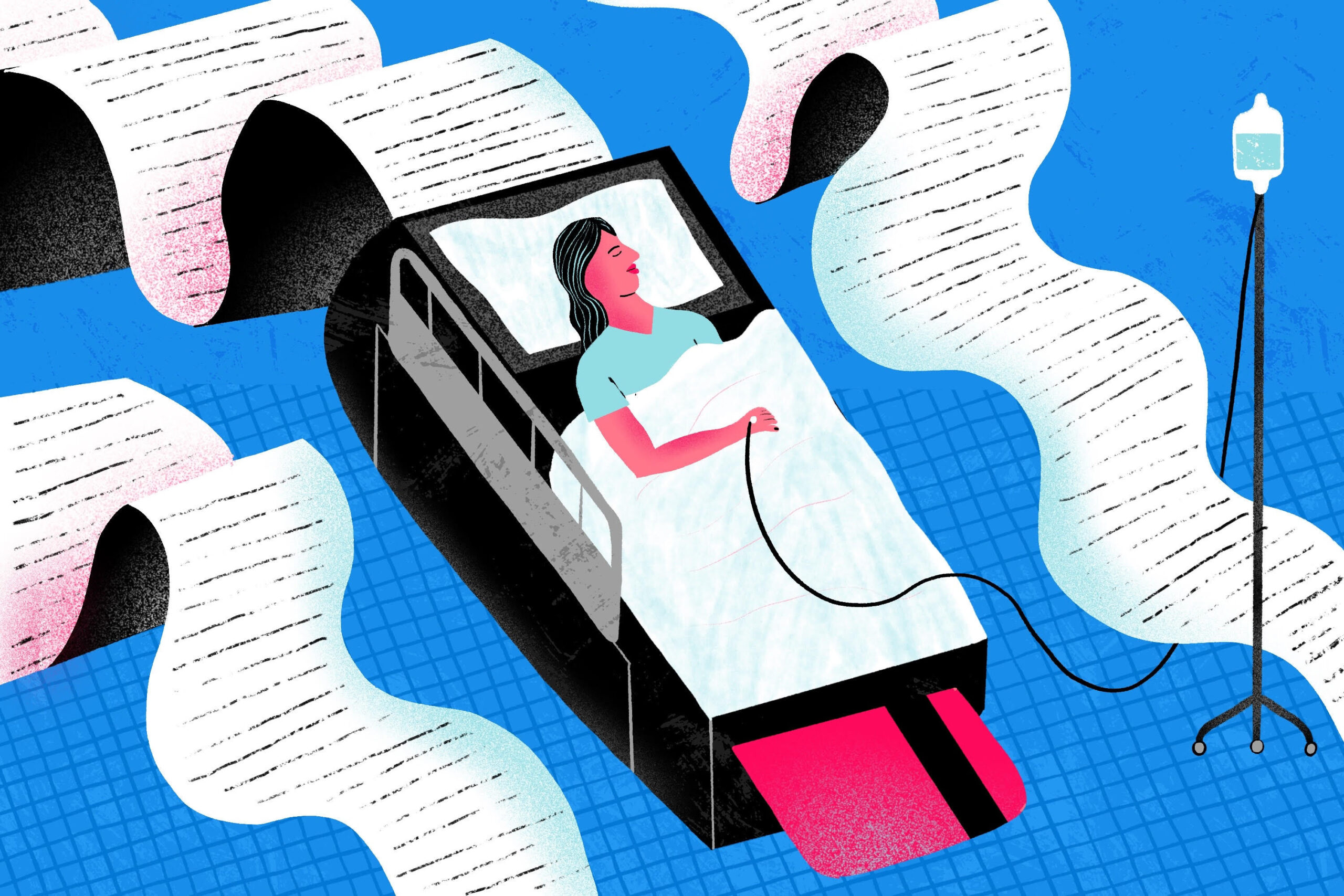
It’s easy to be confused about eye care in Ontario. Funding for it is an inscrutable mishmash of private and public. Routine eye check-ups are mostly private—they weren’t always—and so are glasses and contact lenses. Laser vision correction, or LASIK, has always been private. Cataract surgery used to be done only in public hospitals, but now it’s done in private facilities, too—but it’s still publicly funded. How can an ordinary person know what’s what? If you’re used to paying an optometrist for retinal scans and glaucoma screening, is it so hard to believe that an ophthalmologist doing testing for cataract surgery won’t charge, too?
The Canada Health Act states that all “medically necessary” surgery in the country has to be publicly funded and available equally to all eligible patients. There can’t be any mandatory extra charges or conditions or queue jumping. If there is, the federal government can withhold funding to the province. With respect to cataract surgery, this means Ontario is supposed to pay for the surgeon, the operating room, all medically necessary testing, and an appropriate replacement lens.
How did we get from that ideal to Imran dropping five grand?
The human lens, which sits about one-third of the way into the eye, is supposed to be clear, but it can become discoloured or cloudy. Cataract surgery involves taking that cloudy lens out and replacing it with an artificial implant. It’s a lens exchange surgery.
Cataract surgery is the most common operation in most high-income countries: at least 150,000 surgeries were done in Ontario in 2023. For all sorts of reasons, the wait times for this surgery have often been lengthy—sometimes many months, sometimes years—but for a long time, there was no option but to sit tight.
Then a loophole emerged: although it’s not legal to charge extra to exchange a cloudy lens for a straightforward clear lens, it is legal when you exchange a lens for one with correction. What’s known as “refractive lens exchange” is essentially cataract surgery for people who want to get rid of their heavy-duty glasses but whose prescriptions are too high for LASIK. This particular lens exchange involves swapping out a person’s underperforming lenses for ones that have the correction built right in, and since it’s considered “cosmetic” and not “medically necessary,” a doctor can charge for it. All told, refractive lens exchange can ring in at a few thousand dollars per eye.
Ford’s cash transfer did not improve access to cataract surgery for Ontarians overall—only the richest Ontarians got improved access to cataract care.
With the agony of cataract surgery wait times came a new kind of client to private for-profit clinics—regular cataract patients willing to pay for a fancy lens exchange in order to get their surgery more quickly. “People might not even want these lenses,” says Sherif El-Defrawy, a professor in the department of ophthalmology and vision sciences at the University of Toronto and former ophthalmologist-in-chief at the Kensington Eye Institute, a private not-for-profit clinic in Toronto. “But they want their surgery promptly, so they’ll pay for them.”
It was legal, it was quick, and people who had the money were happy to pay to speed things up. It was also a good deal for the eye surgeon. If they replaced cloudy lenses with clear ones, they could bill OHIP for the $397.75 fee for cataract surgery, even if it was done privately. If they used a laser, they could bill the patient for that on top and get a handsome cut for themselves, maybe a third of the price. (The rest would go to the clinic.) And although the ministry forbids inflating the price of lenses, the clinic can charge the patient for the extra testing associated with those lenses, and the surgeon will get a cut of that, too, for interpreting the results. A surgeon doing this surgery in a private for-profit clinic could walk away with a thousand or more dollars per eye, in addition to the OHIP fee. If the surgeon happened to own the private clinic, the returns were even juicier.
When the pandemic hit, surgeries of all kinds were temporarily shut down. When things started up again, there were backlogs for everything. Hospital operating rooms were prioritizing lifesaving cancer and heart surgeries. So the ministry encouraged some hospitals to temporarily move their fully-funded cataract surgeries into private for-profit eye clinic operating rooms.
Doctors performing medically necessary surgery in private settings had always been paid by OHIP for that surgery, and that would continue. What was new here was that clinics would now be compensated for their overheads, as well.
It was a risky idea. Private for-profit medicine is different from public or not-for-profit care. In the latter, a patient is 100 percent a patient, whereas in the former, they are at least part customer. How can you know if you really need that $3,200 “trifocal toric” lens or if it’s just an upsell? You can’t. You have to trust.
Against the backdrop of this public-private blur, the claim in September 2020 was that, by fully funding cataract surgeries performed in private for-profit centres, overhead and all, even ordinary people who had no ability to pay extra would get their cataracts treated there, too.
That’s not what happened.
A group of researchers, several of them affiliated with ICES (formerly known as the Institute for Clinical and Evaluative Sciences), an independent but Ontario-government-funded organization that uses data to evaluate the delivery and outcomes of policies like these, decided to have a look at how this particular decision played out. They used databases on OHIP claims, hospital and outpatient admissions, and socioeconomic status, among other things, to study what happened between January 2017, before the new arrangement came into play, and March 2022, a year and a half in.
The Ford government’s stated aim was to clear the backlog and reduce wait times by providing greater access through private surgical facilities. Cataract surgery was already being provided equally to patients of all income levels when provided in hospitals, but care in private for-profit facilities was skewed toward the better off. If the additional public funding worked as intended, the researchers would have seen rich and poor Ontarians benefit equally—most likely through more lower-income people now having access to private for-profit care.
But that’s not what they found. According to the study findings, patients in the wealthiest income quintile got 22 percent more surgeries in private for-profit facilities following the funding change. Patients in the poorest income quintile got 8.5 percent fewer.
“Unexpectedly,” the researchers wrote, “despite new public funding for operations provided in private for-profit surgical centres, which was intended to fully cover all overhead costs and remove the need to charge patients, this disparity did not decrease, but instead grew during the funding change period.”
“You would think that if you’re transferring funds from hospital to private centres, that you would see an increase in the lower socio-economic quintiles. You assume that they were the ones that [previously] went to hospital,” says El-Defrawy, who was one of the authors of the paper, which was published in CMAJ in 2024. “But in fact, as you transferred funding from hospitals to private centres, you just incrementally increased the wealthiest’s access to private centres.”
The authors speculate on why this happened. They point out that there is no central waitlist for patients needing cataract surgery. Instead, each facility has its own, and surgeons and private for-profit facilities have financial reasons to prefer, and prioritize, patients who opt to pay for add-ons. Also, surgeons who work in private for-profit facilities may have actively channelled wealthier patients from their ophthalmology practice to their facilities, in the hope that they would be more likely to pay for extras.
To boot, the researchers calculated that many fewer surgeries than expected took place during the study period. That’s because hospital numbers were down significantly, equally across all income levels.
Ford’s cash transfer did not improve access to cataract surgery for Ontarians overall—only the richest Ontarians got improved access to cataract care.
No matter. In 2023, the Ford government passed the “Your Health Act,” making it possible for the ministry to directly pay private for-profit clinics for overheads on publicly funded procedures. This was no longer a case of backlogged hospital patients being treated in private surgical facilities, it was the full-on integration of public with private provision.
The move concerned Adil Shamji, MPP for Don Valley East and Liberal health critic, who is himself a physician: “The concern I had expressed then, which I continue to feel now, is these private for-profit operations seem to create an increasing disparity that takes us away from that vision of universal, publicly funded health care.” Wealthier people just pay the extra fees, but lower income people can’t.
Shamji says the arrangement is also bad value. “Mysteriously, [private for-profit clinics] are being offered higher fees than are paid in the public hospitals,” he says. The facility fee for cataract surgery in private clinics is about $650 per case, whereas for hospitals it is only around $500. (The government did not respond to multiple requests by The Local for more precise figures.) Shamji argues this doesn’t make any sense, given that hospitals typically take the oldest and most complex patients. Private for-profit facilities sometimes don’t accept patients in wheelchairs, for instance, or on home oxygen or with certain comorbidities. “The services that are being offered in the private for-profit clinics are being offered during banker’s hours on the easiest procedures on the easiest patients,” says Shamji. If anything, he argues, hospitals should be getting higher overheads, but at a minimum, there should be parity.
“In the medical profession, I expect people to be honest and just lay it out as it is. I just felt that I was duped.”
According to the government, there are currently more than 900 private for-profit facilities providing publicly funded care in the province—most of them doing diagnostic imaging. And the list is growing. In June 2025, the Ministry of Health announced it was licensing 35 more private for-profit facilities to deliver MRI and CT scans and 22 more for gastrointestinal endoscopy procedures. That was followed in December by the announcement of four facilities that would early in 2026 be licensed to start doing hip and knee replacements.
The Ford government bills this move as a commitment to reducing wait times. “Our government is leading the country with continued investments that have resulted in the shortest surgical wait times of any province,” said Sylvia Jones, in the December press release announcing the expansion of public surgical care into private for-profit facilities. According to data from the Canadian Institute for Health Information, wait times for cataract surgery in Ontario for a six-month period in 2024 were worse than in B.C., Nova Scotia, Saskatchewan and New Brunswick. The 2024 numbers were also worse than Ontario’s own 2019 numbers, though better than the intervening years. Ontario’s own wait time tool, which is more granular, indicates that 82 percent of Ontarians in November 2025 were receiving their cataract surgery within the target time (which depends on severity).
Still, many have raised concerns about the private for-profit provision of public care, among them the province’s auditor general. Between December 2020 and June 2021, the Office of the Auditor General of Ontario conducted a value-for-money audit on outpatient surgeries. In their report, they drew attention to the fact that the ministry had “no oversight mechanism to prevent patients from being misinformed and being charged inappropriately for publicly funded surgeries.” The auditor general wanted data to be collected on the extra fees surgeons were charging and on characteristics of patients being hit with those charges. They also called for disciplinary action in cases where patients were being misled. Following up two years later, the auditor general found that there had been “little or no progress” on these recommendations.
Local Journalism Matters.
We're able to produce impactful, award-winning journalism thanks to the generous support of readers. By supporting The Local, you're contributing to a new kind of journalism—in-depth, non-profit, from corners of the GTA too often overlooked.
SupportIn June 2025, Natalie Mehra, executive director of the Ontario Health Coalition, a group that advocates for universal health care, wrote a letter to Ontario’s health minister, Sylvia Jones. Mehra was writing on behalf of 50 patients who had been victims of bad practices at private for-profit clinics doing cataract surgery in the province. Mehra called on the government to reimburse the patients—as it promises it will do in cases of misconduct—and take action against the perpetrators.
The letter outlined various kinds of wrongdoing. Some clinics had told patients they only did “private” cataract surgery, not OHIP cataract surgery, or that they would only do cataract surgery if the patient paid out-of-pocket for extras. Some clinics told patients they were paying for cataract surgery, but then billed them for add-ons the patients hadn’t consented to. Some lied about hospital wait times.
“Under Ontario law, no person or entity can charge for an OHIP covered service or make its provision dependent on user fees, and no person or entity can sell queue jumping. These fundamental values—that health care be provided based on a patient’s medical need, not their wealth—are deeply held,” Mehra wrote. “As the Minister of Health, you are required to safeguard these values.”
The story hit the front pages. Elected officials asked pointed questions in the legislature. The Minister of Health promised she would follow up, but months later, says Shamji, she still has not.
Mehra maintains that it is the business model of private for-profit clinics to charge OHIP and then to charge patients on top. They are not allowed to lie, coerce, deceive or misrepresent, but “everything requires enforcement,” she says, “and no one’s enforcing anything.”
The provincial government continues to say they don’t allow private clinics to charge patients for medically necessary services, says Mehra. But cataract patients, she says, “are paying routinely when they go in—they’re convinced to pay by hook or crook, and it’s thousands of dollars.”
If that’s what’s happening for cataract surgeries, Mehra worries about how privatization will play out in other areas, including joint replacement surgery. “What are we going to see? Private clinics saying, ‘Well, the basic joint is not good. You’re going to have to pay for a titanium joint’?”
Mehra underscores that it’s not always the wealthy who end up forking out. One person, in their 70s and retired, had to go back to work to pay for their cataract surgery, she says. Another, an 83-year-old woman on a fixed income, took out a line of credit to pay her $6,990 bill. She’d been told she’d have to wait two years before she could get cataract surgery in the hospital. Later, she learned the wait had actually been three or four months. “I could have waited three months,” she told me. “I could still drive.”
The incident undermined her trust in doctors. “The thing is, I don’t like being taken for a ride,” she says. “I expect—at least in the medical profession—I expect people to be honest and just lay it out as it is. I just felt that I was duped.”
Imran, too, says he could have used that money to help his family, new immigrants, to get on their feet. The province’s own data shows that the wait time where and when he had surgery was not more than a year, as he was told, but rather, less than four months. “I know this kind of thing happened back home in our country,” says Imran, who grew up in South Asia. “They overcharge. Emotionally, they blackmail. But we never suspected that that kind of thing can happen in Canada. Canada? How can it be happening here?”
More from this issue
Health811 Promises 24/7 Health Advice—If You Can Wait
Data obtained through freedom of information requests show wait times have increased dramatically since Health811 replaced Telehealth Ontario, peaking at a monthly average of more than 11 hours.
When Your Dermatologist Becomes a Salesperson
Getting a mole checked can takes months, but Botox appointments are readily available. Why dermatologists say their practice is the canary in the coal mine for privatized care.

How Ontario’s Corporate Pharmacies Are Burning Out Their Pharmacists
At corporate pharmacies like Shoppers Drug Mart, pharmacists say they face overwhelming pressure from their parent companies to perform medically unnecessary tasks in the interest of profit.

Inside the Booming Industry Selling Lifestyle Drugs Online
From erectile dysfunction medicine to hair loss treatment to weight loss drugs—a thriving online market has emerged to seamlessly deliver drugs straight to your door. But what happens when prescriptions meet profit incentives?
Saving Rhea Seegobin
For the growing number of Canadians who will get cancer in their lifetimes, the financial stress can be profound. But despite her terminal diagnosis, with the support of her community, Rhea is determined to live well.
And How Will You Be Paying for Your Baby Today?
When I first came to the pediatrics unit as an idealistic medical student, I ran into an uncomfortable reality about our universal health-care system.
A Clearer Look at the Cost of Care
Dispatches from the edge of the health care system, where money meets medicine and patients are customers.