


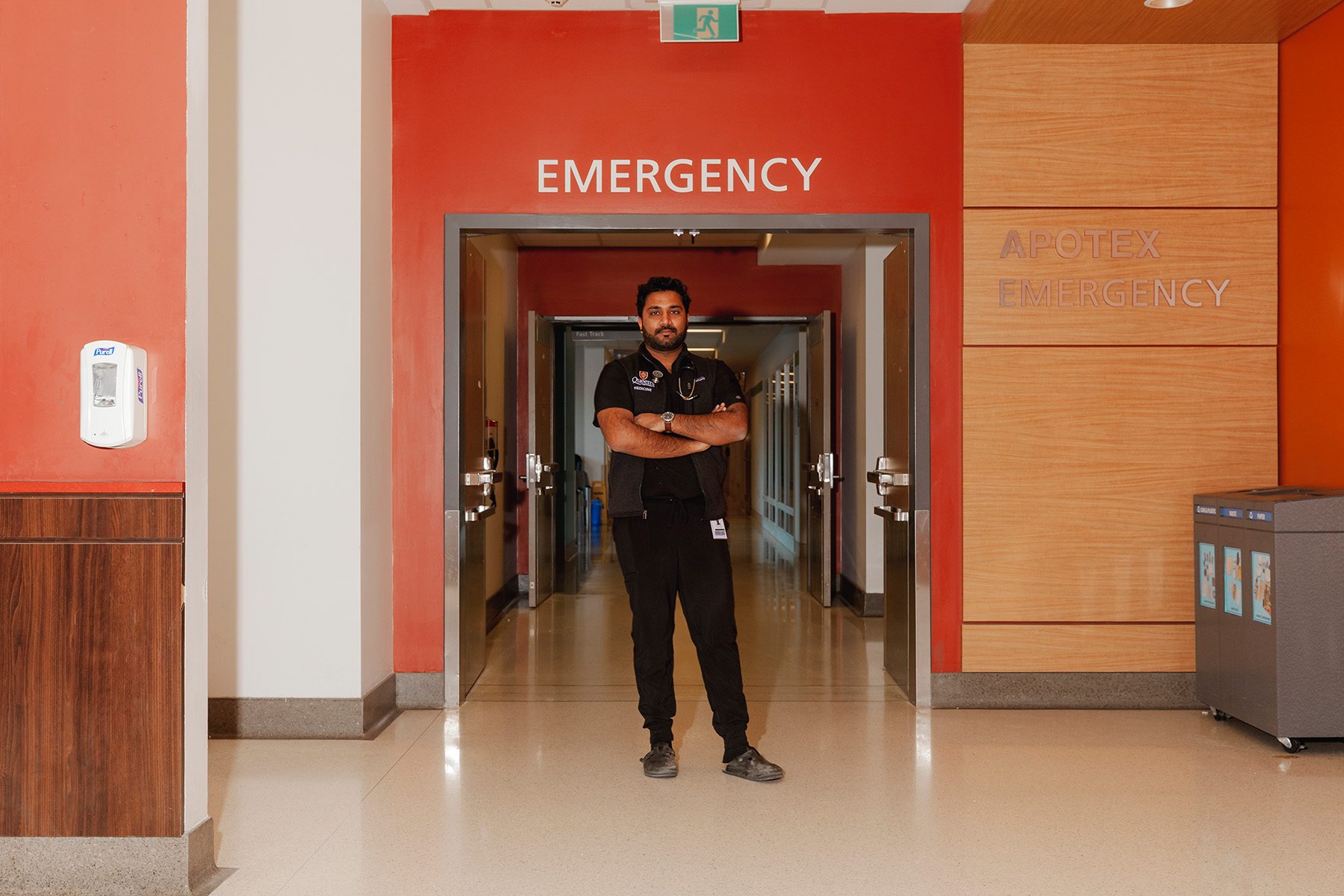
It was September 2023 and I was a third-year medical student arriving for my first in-hospital placement, on the pediatrics service at Humber River Hospital in North York. I had brushed up on all the back-to-school specials—hand, foot, and mouth disease, RSV, gastro—but I never would have expected the question staff physicians were grappling with.
Would you like to pay cash or credit?
On the table in front of them was a Square reader, that tiny white piece of plastic we have all tapped our credit cards to, seemingly everywhere but the hospital.
It represented everything that I had hoped never to encounter as a physician in Canada.
The first two years of medical school in Canada are spent in classrooms and mock hospital rooms, where patient-actors humour students as we stumble through uncomfortable canned phrases and awkward moments. The hope is that by the time we are released into teaching hospitals to interact with real patients, we have stopped mindlessly using filler phrases like “OK, great” as a patient vividly describes their 10/10 hemorrhoid pain.
In the hundreds of hours I had spent with practice patients, the question of how a patient would like to pay never arose. For me, this was not an oversight, but an intentional choice. I had always wanted to study and practise medicine in Canada, under a universal health care system where a person’s ability to pay would not influence my patient interactions. The biggest benefit of working under a publicly funded health care system, I believed, was the ability to just focus on the patient and the medicine, and to forget the rest.
Despite my best efforts, there I was, and there was the Square.
Never Miss a Story
Sign-up to our free newsletter to receive the next story in the Cost of Care issue—publishing throughout January and February 2026.
"*" indicates required fields
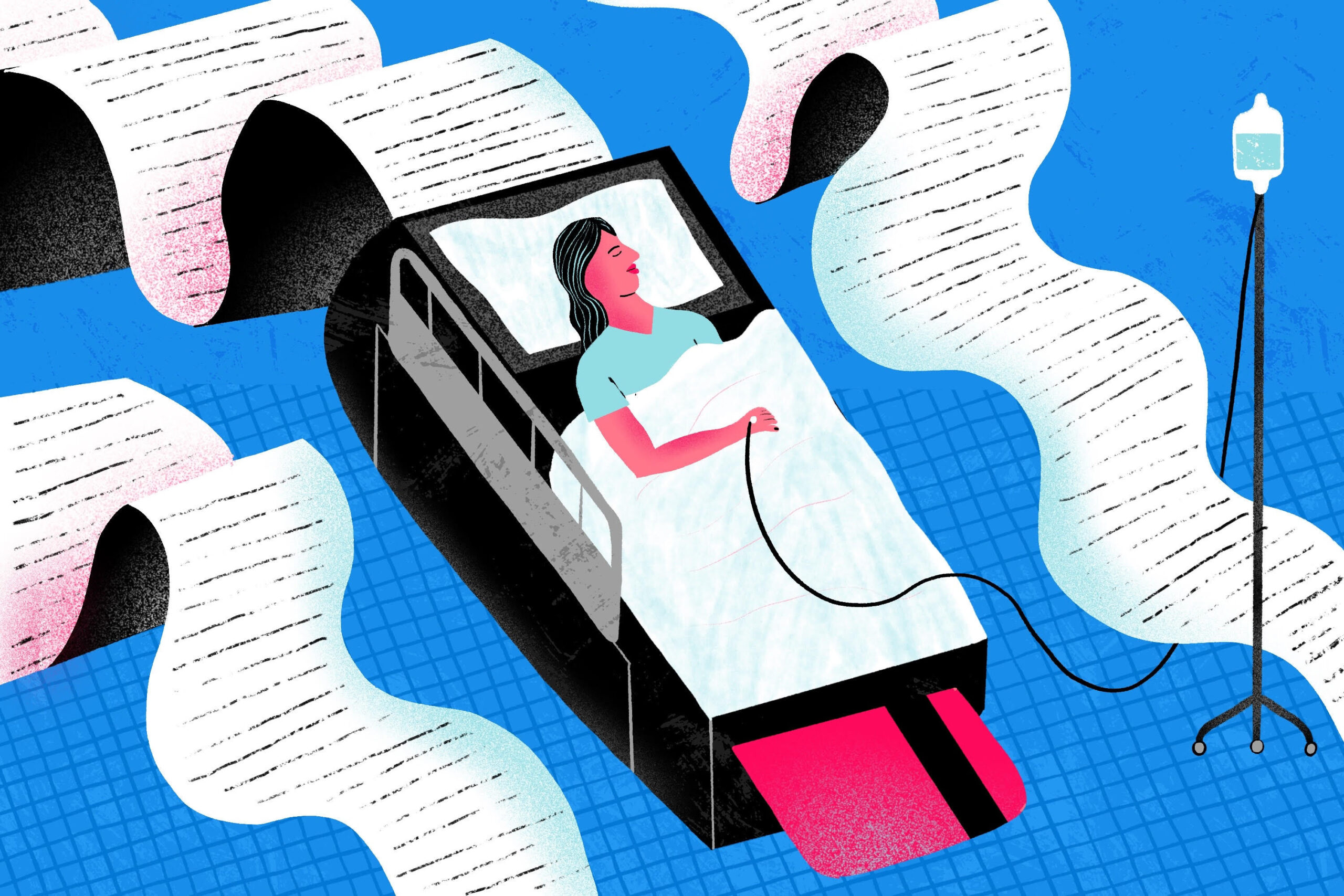
I began to ask the basic questions every medical student fears asking. Why do I need this? When do I use it? How? Did I miss the lecture where they taught us about this?
The staff dutifully answered as I tried to hide my disappointment.
The primary intended use for the credit card terminal was to collect fees from uninsured, non-resident patients. These patients, who are not covered by provincial, federal, or private insurance, need to pay out of pocket for services provided in the hospital. If they are admitted, the hospital cashier collects fees for services like the bed, food, medication, and nursing care. But doctors must collect their fees directly from these patients. The amount that they bill for each specific service is guided by a document of standardized fees published by the Ontario Medical Association.
If doctors don’t bill and work in a fee-for-service system, they do not get paid for their work. Which is why in the doctors’ lounge at Humber Regional Hospital, the question was not how much to bill, but rather how to have these conversations, and when.
Is it on admission, hoping for no complications, and no further charges? Prior to letting the non-birthing parent into the operating room during a caesarian? Or do you ask the new mother to reach for their wallet as the baby is learning to nurse?
Turns out there’s no good time to give someone a bill for their baby.
This is a side of practising medicine in Canada that is rarely discussed. There were an estimated 5,430 non-resident births in Canada in 2024, according to analysis of Canadian Institute of Health Information data published by Policy Options. This is just below the historic peak of 5,698 in 2019. In 2023 — the year I was at Humber —the hospital had the highest rate of non-resident births in the country, accounting for roughly one in 10 deliveries.
I witnessed this firsthand. Almost every day, I would be asked to assess the newborn baby of an uninsured, non-resident mother on the postpartum ward.
Often, non-residents’ births are unexpected. Temporary workers, students, or people visiting Canada, all of whom fall under the non-resident birth category, may go into labour and deliver in hospital. There are also refugee claimants who are caught between Interim Federal Health renewals, or immigrants who plan to stay in Canada and are within their first three months of arrival.
Non-resident births also include those who have intentionally travelled to Canada close to their expected delivery date, with the aim of delivering their baby in a Canadian hospital—a practice known as birth tourism. The newborns are immediately granted Canadian citizenship under Section 3(1)(a) of the Citizenship Act. Canada is one of only 35 countries in the world that uphold jus soli or ‘right of soil’, the right to citizenship for being born on sovereign territory.
It is hard to estimate how many non-resident births are for the purposes of birth tourism because there is no available administrative data from immigration agencies. One of the only studies exploring birth tourism rates used data from Calgary’s central triage database between July 2019 to November 2020, and found 227 non-resident births, of which 102 were categorized through chart review as birth tourists. That’s nearly 45 percent.
On August 6, 2023, the organization CanadaMama Consulting posted on social media that they were working directly with a number of hospitals in Toronto and Vancouver, including Humber River. Their website, which is in Russian, states that their “goal is to do everything” for aspiring “baby-tourists” including visa document preparation, housing, transport, and medical care. They have three tiers of services, ranging from $16,900 (economy) to $23,900 (comfort, for those desiring “concierge service”). The company promotes “baby tourism” as being both popular and legal, with the newborn having future benefits related to education, health care, employment, and travel. The company claims to be able to provide a selection of not only hospitals, but also health care providers. (CanadaMama Consulting did not respond to requests for comment).
None of this is true.
Weeks later, Humber River Hospital put out a notice formally stating that they “are not affiliated, associated, or in any way officially connected” with birth tourism agencies. The hospital warned that the total charge for non-OHIP patients to deliver their baby at Humber would be $10,028, to be paid ten days in advance of the delivery.
Those are just the delivery fees for the hospital. An uninsured non-resident patient having their baby in a Canadian hospital will generally encounter three specialist physicians. The baby will be delivered by an obstetrician, often with the assistance of an anesthesiologist, and then must be assessed by a pediatrician.
While the hospital collects its fees up front, these physicians must individually collect their fees directly from the patient. If there are any complications requiring additional assessments, treatments, or care, patients are hit with additional fees and the physicians must collect again.
That was the case for one patient family, who have lingered in my mind in the two years since I met them. Their baby was born at Humber, but his pre-delivery ultrasound showed hydronephrosis, a dangerous swelling of one of his kidneys. The treatment for this is a week-long admission for prophylactic intravenous antibiotics to prevent urinary tract infections, which can be potentially fatal in newborns, and surgical unblocking of the ureter if it does not open on its own.
I spoke multiple times a day with the parents, who consistently questioned the medical necessity of an admission, claiming there was no way they would be able to pay the bill. They were well-dressed, seemingly well-resourced, and medically literate. I could not shake the feeling that they were misrepresenting their means, but I avoided the conversation entirely. Claiming ignorance as a medical student is one of the few perks of being at the bottom rung of the medical hierarchy.
Turns out there’s no good time to give someone a bill for their baby.
On the fourth day of the newborn’s admission to hospital, the dynamic inexplicably shifted. There were no more daily debates over cost. Instead, we were ensuring continuity of care for when the couple returned to their home in Lagos, speaking with their family doctor, pediatrician, and obstetrician in Nigeria over video call.
I wondered if the physician had confronted the patients, or if the patients had simply grown tired of bargaining for their baby.
I recently called Jay Dahman, the pediatrician with whom I was working at the time, to ask if he remembered this family. He said he could not remember them, but that it is highly unlikely that he ever received his fees. Not being paid by non-resident patients has been a common experience in his 15 years at Humber River.
He said many patients will receive the bill, claim they will pay by wire transfer, and walk away. Once a patient leaves, there’s no way to hold them to account, and chasing down patients to bill them is neither aligned with his values nor is it often successful. Patients have gone as far as giving him fake phone numbers and addresses in the past.
I asked him if he’s gotten more comfortable asking patients to pay before they leave, or has a standard way of approaching these conversations. He says it’s still nerve-wracking, particularly when patients attempt to negotiate with him. “I have to ask them—did you haggle with Airbnb? Did you haggle with the car rental company or the company providing the SIM card for you to use your phone in Canada? It’s very uncomfortable.”
There is no easy, canned phrase for medical students to add to our repertoires for these situations. We don’t talk about it in Canada, and there’s no standardized checklist or algorithm to assess a patient’s financial capacity, nor their willingness to pay.
While I felt for my pediatrician and obstetrician colleagues, I also felt reaffirmed in my choice to pursue emergency medicine—a specialty where I hoped that the urgent needs of patients would provide me with some protection from having to face the predicament of payment.
Unfortunately, this hope was short-lived.
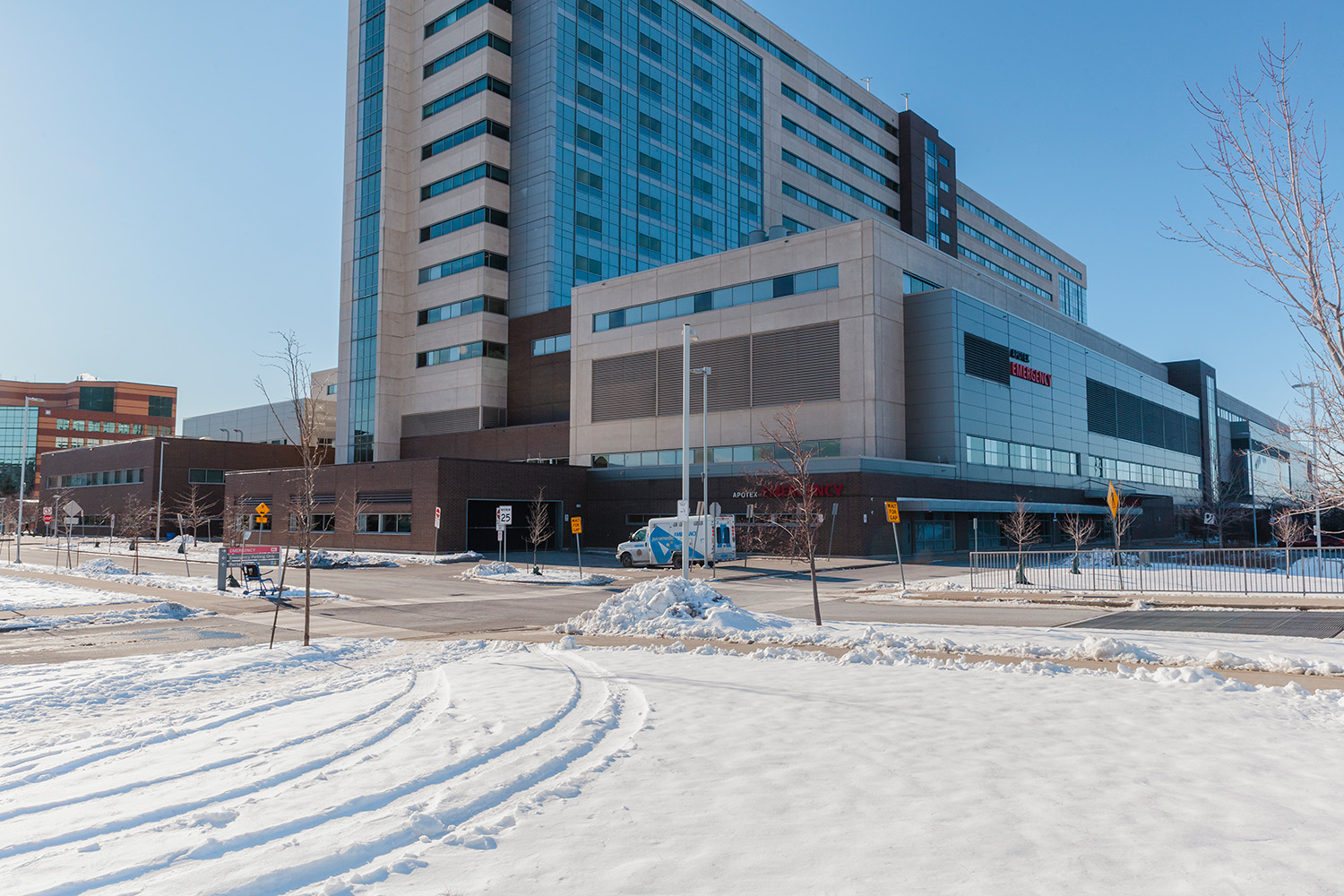
I recently came across that tiny white credit card terminal again, but this time it was in my beloved emergency department. Two years had passed, and I was back in the GTA for the last of my in-hospital placements in medical school. It was only a few weeks before I would submit applications to emergency medicine residency programs across the country.
This time, I was less surprised by the Square, but just as disappointed. I reached out to Square, in an attempt to understand just how widespread the adoption of their payment tools has been. Laura Henry, a Senior Product Marketing Manager, said that health professionals have been a fast-growing userbase, with an emphasis on clinicians who require portability for “collecting payment directly in patient rooms.”
It appears there will be no escaping the point-of-care points of sale.
As the start of my specialty training rapidly approaches, I can’t help but wonder how I’ll approach these financial conversations in the emergency department. Providing care for marginalized people who are caught in the gaps between our systems is a large part of why I want to be a physician. To ask these patients if they can pay for their care feels like a betrayal of my values, and those of the emergency department as a place where everyone will receive care. I count myself among the many health care workers who would like to see a reinstatement of the Physician and Hospital Services for Uninsured Persons Program, which provided government funding for non-resident patients presenting to emergency departments during COVID-19. However, in the absence of such funding, I recognize that the sustainability of our taxpayer-funded universal health care system (as well as my ever-mounting student debt) will depend on me billing uninsured patients directly. Perhaps with time and practice, I’ll find a better way to ask the question.
Until then, we’re back to square one—will it be cash or credit?
More from this issue
Health811 Promises 24/7 Health Advice—If You Can Wait
Data obtained through freedom of information requests show wait times have increased dramatically since Health811 replaced Telehealth Ontario, peaking at a monthly average of more than 11 hours.
When Your Dermatologist Becomes a Salesperson
Getting a mole checked can takes months, but Botox appointments are readily available. Why dermatologists say their practice is the canary in the coal mine for privatized care.
How Ontario’s Corporate Pharmacies Are Burning Out Their Pharmacists
At corporate pharmacies like Shoppers Drug Mart, pharmacists say they face overwhelming pressure from their parent companies to perform medically unnecessary tasks in the interest of profit.

Inside the Booming Industry Selling Lifestyle Drugs Online
From erectile dysfunction medicine to hair loss treatment to weight loss drugs—a thriving online market has emerged to seamlessly deliver drugs straight to your door. But what happens when prescriptions meet profit incentives?
Saving Rhea Seegobin
For the growing number of Canadians who will get cancer in their lifetimes, the financial stress can be profound. But despite her terminal diagnosis, with the support of her community, Rhea is determined to live well.

How Privatized Cataract Surgery Helped Ontario’s Wealthiest—and Left Others Behind
Why a routine surgery offers a window into the possible future of care in this province.
A Clearer Look at the Cost of Care
Dispatches from the edge of the health care system, where money meets medicine and patients are customers.