




Just 39 percent of long-term care homes in Ontario received a proactive inspection from the province’s Ministry of Long-Term Care in 2025, falling well short of regulatory goals set by the Ford government, new analysis by The Local shows.
Proactive inspections are comprehensive surprise check-ups on the operations of a long-term care home, meant to ensure the facility is meeting provincial standards of care. The Ford government set the target of one proactive inspection a year as part of a new inspection program launched in 2021, following the passing of the Fixing Long-Term Care Act.
That act was passed in response to the devastation of the pandemic. COVID revealed the disastrous conditions in which Ontario seniors were being housed—the result of decades of unheeded warnings about crises in staffing and in infection prevention, and a failure to issue penalties for homes found to be repeat violators of existing standards. More than 4,000 people died in Ontario’s LTC homes. Long-term care fatalities made up a greater proportion of all COVID deaths in Ontario than they did in 16 wealthy countries.
“Our government has a plan to fix Ontario’s long-term care system, and increasing accountability, enforcement, and transparency in the sector is a key part of it,” then-long-term care minister Rod Phillips said when the new act was announced. The province said its investments in expanding the ministry workforce would “ensure there are enough inspectors to proactively visit each home every year,” guaranteeing a foundational level of oversight for the sector. In their 2024-26 strategic plans, they gave themselves a deadline of the end of 2025.
But analysis of thousands of LTC inspection reports by The Local reveals that for the 2025 calendar year, the Ministry of Long-Term Care reported proactive inspections for just 243 of the more than 615 long-term care homes in Ontario—less than 40 percent. The vast majority of inspections are instead reactive, responding to a complaint or critical incident, meaning that if someone doesn’t make an effort to alert the ministry to an issue, it often doesn’t get noticed.
The ministry and minister of long-term care did not respond to multiple requests for comment from The Local.
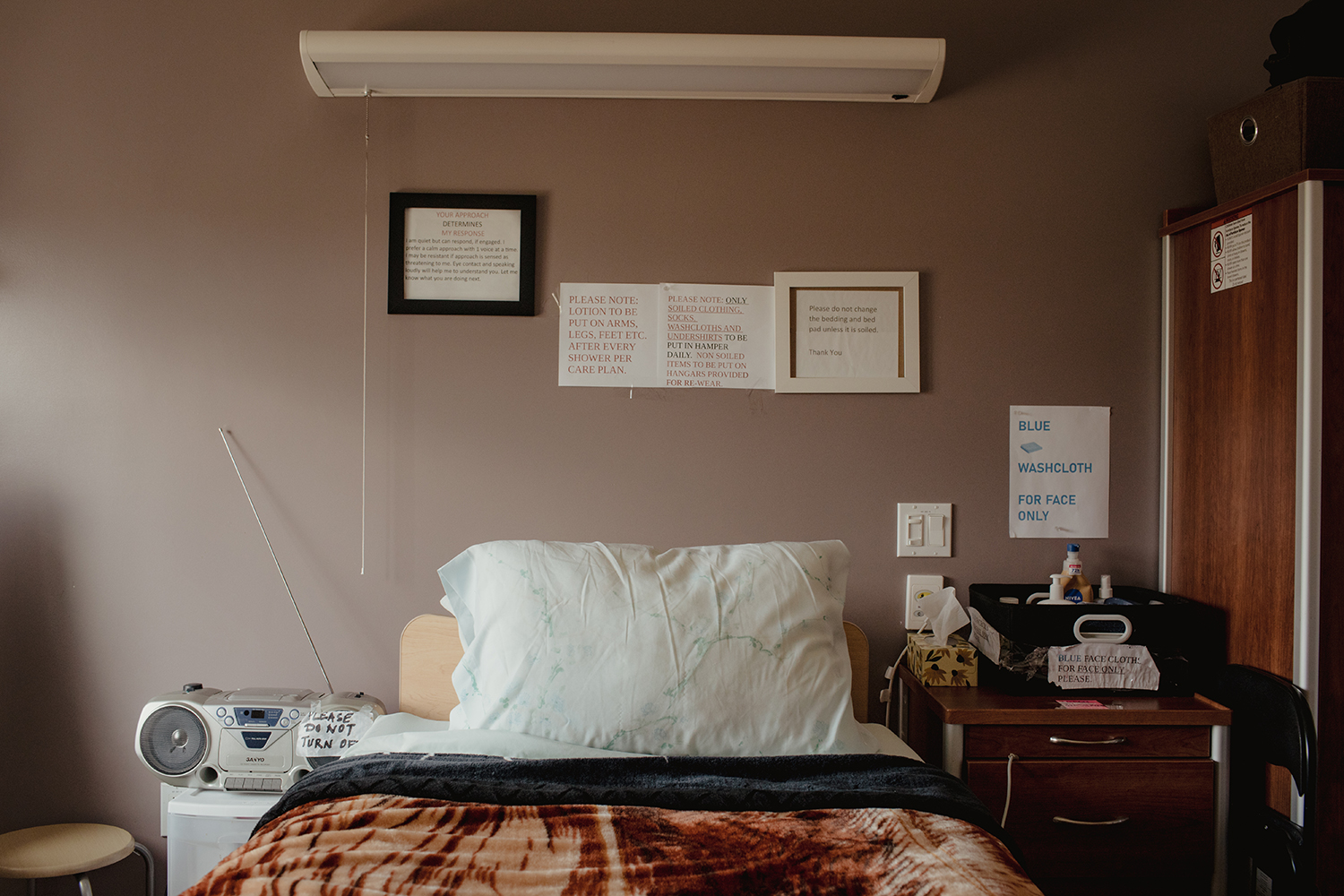
The Local’s finding of the Ford government’s shortfall is part of our analysis of more than 17,500 long-term care home inspection reports, dating from 2018 to the end of 2025. Those reports are public, and mandatory for the provincial government to post under the 2021 act. But to understand how well or poorly a home is doing in the eyes of the ministry, one would have to read each individual report. In response to a freedom of information request for a dataset quantifying the results of inspection reports, the Ministry of Long-Term Care told The Local they have no such records.
So The Local created its own, analyzing the contents of these reports to quantify each home’s performance year over year, and to put numbers to the province’s oversight of the sector as a whole. Our Long-Term Care Tracker is the most comprehensive picture available of both provincial trends in regulatory enforcement and individual home quality.
Long-Term Care Tracker
Visit our Long-Term Care Tracker, a dashboard designed to help you better understand the quality of life inside every long-term care home in the province.

Our findings, paired with insights from experts, policymakers, LTC staff, and the family members of people in long-term care, reveal an inspections system that is responsive mainly to the persistence and advocacy of families who know how to navigate the labyrinthine provincial complaints process. Even though seniors in long-term care today have more complex needs than ever, there were fewer proactive inspections last year than comparable inspections a decade prior, before successive provincial administrations slashed regulations in the name of cost-cutting, efficiency, and red-tape reduction.
It’s likely that ministry inspectors aren’t able to conduct proactive inspections because they’re underequipped to tackle the sheer number and scale of inspections in response to complaints made by residents and their loved ones, or critical incident reports filed by the long-term care homes themselves. Families who have gone through the complaints process describe a patchwork system that leaves them in the dark, and residents at risk of continued harm. And critics warn that the current inspections system, despite the Ford government’s promises, still relies too heavily on the vigilance of individuals with the time, resources, and ability to navigate the process, leaving behind vulnerable long-term care residents who don’t have anyone to advocate on their behalf.
For decades, people have called for better oversight and accountability in long-term care. As early as 2002, an Ontario Auditor General’s report revealed that the government had no comprehensive review system to identify the homes that are most regularly found to violate ministry standards during LTC inspections. Two decades later, during the pandemic, the same government body said that the province had “neither monitored nor set targets for most aspects” of the inspections regime, making it impossible to tell whether the inspections were improving quality of life in long-term care homes at all. For more than 25 years, tens of thousands of inspection reports have essentially languished on a corner of the internet for individuals to read, with no indication that the ministry conducts any analysis of the trends or chronic issues apparent in the reports over time.
Provincial policies around proactive inspections have been shaped and reshaped by every successive political administration since the ’90s. The reluctance of governments to commit to annual proactive inspections comes down to a matter of ministry costs, and a philosophical argument about whether long-term care homes should receive oversight and direction from the government or operate as self-regulating free agents. Critics of the for-profit long-term care industry also say that part of the sector has historically worked to keep ministry interference in homes—through regulation and inspection—to a minimum.
In the early ’90s, Bob Rae’s NDP oversaw the first loose consolidation of long-term care regulation under the Ministry of Health, and improved regulation and enforcement practices in the sector. Under subsequent Conservative rule in the late ’90s, regular inspections within long-term care homes fell by 40 percent, only to be reinstated with the goal of one per year in every home following public backlash. A decade later, the Liberals enacted the first Long-Term Care Homes Act in 2010 and mandated inspections that surveyed residents, families, and staff, only to then cut, reinstate and expand, then again cut proactive inspections in the eight years that followed. Early in the Ford administration, these resident-informed inspections essentially ceased entirely, but were reinstated on an annual basis—in theory—starting in 2021.
To the government’s credit, inspection numbers have increased overall since the pandemic, and there have been improvements to the way they’re conducted. The provincial government has touted increased investment in the inspection regime, including doubling the number of long-term care inspectors. Millions have been invested in an inspections unit meant to address cases of non-compliance with the long-term care act that could lead to fines or prosecution (though there have been no public reports that the unit has pursued any cases). Representatives of the Ontario Association of Residents’ Councils told The Local that inspectors now make a point to speak with members of the residents’ councils every time they conduct an inspection, to hear from advocates with experience of living in the home—an improvement over the seemingly arms-length approach inspections used to take, they say.
In 2025, there were more than 3,300 inspections across long-term care in Ontario, our data shows. This is likely the most inspections in a single year that the sector has ever seen, and with the most inspectors the ministry has even employed. But the vast majority of these inspections were reactive: the result of complaints and critical incident reports.
Those inspections are vital, but they are not sufficient. The ministry said in a 2021 internal guide introducing the new inspection program that proactive inspections “will not be done at the same time as inspections related to complaints, critical incidents, and follow-ups.” Proactive inspections in long-term care are supposed to be a baseline, an opportunity for all homes to receive equal and comprehensive scrutiny. Think of restaurant inspections: it’s better for a food inspector to come into a restaurant and catch warning signs of a cockroach infestation, than for them to only arrive after someone has complained about a bug in their lunch.
Without proactive inspections, “there’s a real risk that they don’t know what they don’t know.”
The Local’s analysis shows proactive inspections typically yield twice the number of non-compliances—instances in which the ministry writes up the home for failing to comply with the standards in the long-term care act—than complaint or critical incident inspections do, because they require the inspector to observe every part of the home, rather than one particular incident or set of issues.
Without proactive inspections, “there’s a real risk that they don’t know what they don’t know,” says Tim Burns, referring to the Ministry of Long-Term Care. Burns led the long-term care branch of the Ministry of Health in the 2000s, and then oversaw the inspections process. He argues that if the Ministry isn’t going to proactively inspect every home, it at least needs a risk-management framework. “You need to know how you’re focusing [the inspections], and it should be testable to make sure you’re focusing on where you’re most likely to encounter issues,” he says, warning against arbitrary decision-making when it comes to which homes to inspect.
The Local’s findings quantify how homes have performed in proactive and reactive inspections each year since 2018. Some of the homes found at the top of the non-compliance list are unsurprising. St. Joseph’s at Fleming, a non-profit, 200-resident home operating in Peterborough for more than 20 years, received the most non-compliance findings by the Ministry by a wide margin, with 132 in 2025 alone, nearly ten times the annual home average of 14. The Ministry of Long-Term Care ordered the home to cease admitting new residents in May 2024 after it found chronic violations of long-term care legislation. The home’s board collectively resigned later that year, after calls from the home’s council of resident family members. The admissions order was lifted in January of this year. In an email to The Local, Nelson Ribeiro, the home’s new chief executive officer, said, “These interventions were a critical turning point for the organization.” He added that the home, after undergoing a complete leadership overhaul, has focused on strengthening their care practices and staffing models, among other improvements.
Other homes high on the list are familiar, given their poor track records during the pandemic. Orchard Villa, in Pickering, where the Canadian Armed Forces noted in its damning 2020 report that the home had roaches and flies, and staff were failing to properly feed and care for patients, was found to have 66 non-compliances last year. Administrators at the home did not reply to The Local’s request for comment. Tendercare Living Centre in Scarborough, which had one of the highest rates of COVID deaths in the province with 82 deaths in the home as of July 2022, had 68 non-compliances and no proactive inspections in 2025. In an email to The Local, Tendercare executive director Lisa Romaniello said the home continues to “work closely with our team members to ensure all compliance matters are addressed with the speed, attention and seriousness they warrant.”
But some of the homes with the highest number of non-compliances and inspections on the list are unexpected. Comparing post-pandemic inspection results with performance metrics reported by the Canadian Institute for Health Information (CIHI) reveals there is very little relationship between the objective measures of the quality of care tracked by CIHI and the results of long-term care inspection reports. CIHI measures performance indicators like how many residents in a home have experienced falls, pressure ulcers, inappropriate use of antipsychotics and restraints, worsening pain, and depression, among other indicators. When compared with the inspection outcomes of those homes, there’s no sign that homes that perform worse by CIHI standards get written up any more often by long-term care inspectors, except in the category of falls. (This may be because falls are required to be reported to the Ministry of Long-Term Care by the home itself, potentially resulting in an inspection, while other factors measured by CIHI are not.) So while one may expect an inspector to write up a home for failing to prevent pressure ulcers, or restraining their residents, for example, there’s no indication inspections are catching these failures in care, or that inspectors even spend more time on these homes. This raises a question: do inspection reports always capture the worst of what’s happening in a home, or just the issues that have the most vocal advocates behind them?

Wellbrook Place is a shiny new senior care hub in an industrial neighbourhood on the western edge of Mississauga. It features a hospice, still in development, and two long-term care homes—Wellbrook East and West, two wings of the same six-storey building, which each house more than 300 residents. To an outsider, there’s no obvious reason the home would get in trouble with the ministry. On a blustery day in March, the home is bright and cheerful, and the hallways bustle with smiling staff wheeling residents out for a change of scenery or to watch The Sound of Music in one of the common areas. In health metrics compiled by the Canadian Institute for Health Information, the home performed better than the province-wide average in almost every category.
Despite these outward metrics of success, the west wing of the home (each wing is inspected separately) ranked second-worst in the GTA and fifth-worst province-wide in inspection results in 2025. The year prior—the first year it was inspected—it performed similarly, ranking fourth worst. Almost every inspection was, at least in part, the result of a complaint to the ministry. The home was fined $22,000 in January of this year, and was noted to have repeatedly failed to follow through on compliance orders issued by the Ministry of Long-Term Care. The east wing of the building performed better, but was still found to have more than 40 non-compliances in both 2024 and 2025, nearly three times the provincial average.
Wellbrook is run by Partners Community Health, a non-profit health care organization. In an email statement to The Local, Shaun Dias, the company’s director of communications, said the home exceeded the province’s long-term care target of four hours of daily direct hands-on care per resident last year, and that Wellbrook West’s resident and family satisfaction score was 88 percent.
“[Partner Community Health] is strongly committed to maintaining operations in compliance with Ministry regulations, including addressing any compliance-related concerns, and are confident the changes we are making have improved the quality of care for residents,” he said. “We prioritize transparent, open communication with residents and families and actively address issues as they arise.”
It’s hard to explain with any certainty the incongruity between Wellbrook’s appearance and its poor inspections performance. What’s likely is that Wellbrook is a home that does indeed have lapses in management and care practices, but also has an active community of family members who are present, vigilant, and willing to escalate matters to the Ministry of Long-Term Care when they feel the need. It’s something not every home may have, and without which—in the absence of adequate proactive inspections—issues will slip past the ministry’s notice.

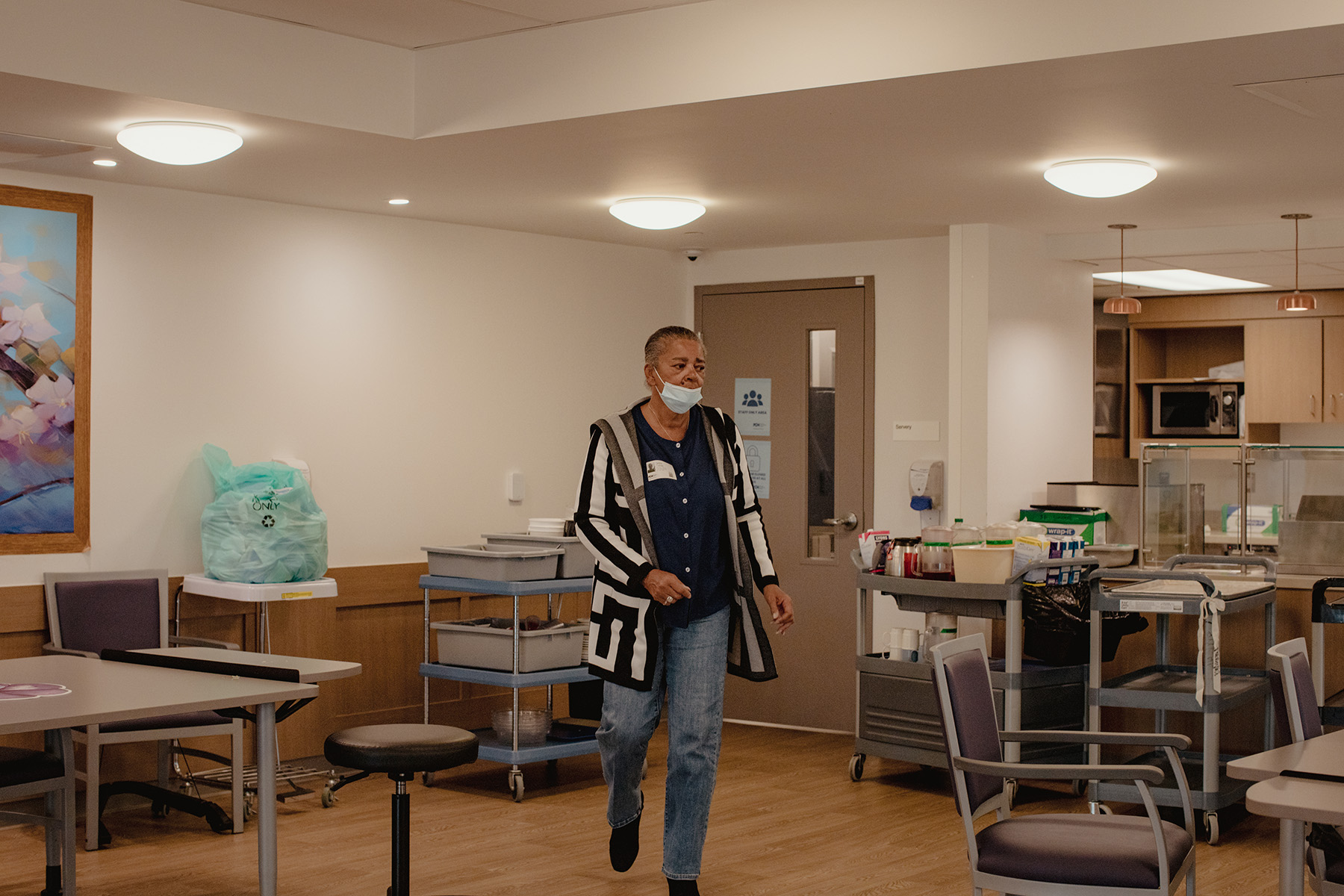
When Sandra Tierney walks down the halls at Wellbrook, you could mistake her for someone running the place. She greets the staff by name, and knows her way around the halls. When she doesn’t know something, she’s not afraid to ask. Her father, Claude Forrester, now 97, has Alzheimer’s, and moved into Wellbrook East in January 2024. “I was very happy,” Tierney says. “And then I started paying attention to different things, and the more I paid attention, the less happy I was about performance.”
Tierney had concerns about levels of staffing, about whether her father’s nutrition guidelines were being met, about caretaking practices in the home. She says she had to intervene repeatedly to change the wash routine she suspected had led to a year of chronic eye infections for her father. When he became ill with a cough and fever, she says it took an ultimatum and persistent calls for the home to finally call the doctor in to see him. Finally, last October, she bundled her concerns—about how rarely she says he’s assisted to the toilet, and about his eye infection, among a few other issues—into a complaint to the Ministry of Long-Term Care. Inspection results are anonymized, making it difficult to track Tierney’s particular complaint, but Wellbrook West has been repeatedly written up for lapses in administering care to residents in the last year. (Partners Community Health did not respond to questions about Tierney’s specific complaints.)
But Tierney only knew to intervene because she’s regularly in the home. The Local spoke with other family members of residents of Wellbrook West who could similarly advocate for their loved ones because they devote an extraordinary amount of time to visiting them and monitoring their care. They describe visiting often during dinner and becoming de facto staff for the hour, advocating for other residents whose food isn’t cut up small enough, or who aren’t being fed as they need to be. (Partners Community Health told The Local their team “closely monitors and supports each resident’s needs in a way that aligns with their personal care plan.”) Tierney is now chair of the east wing’s once-dwindling family council, which meets monthly to discuss the home’s operations. In a single day, going from floor to floor within the home, she managed to convince seven family members of residents to join.
“If you come in here blind, you’re screwed,” she says of long-term care. “You better know what you’re signing up for. You better know that you need to be an active participant.”

Even when family members keep vigilant, there are things they won’t know to pick up on. Victoria Dorey, a trained personal support worker, or PSW, who has worked in long-term care, now spends her time as a paid consultant for families trying to advocate for their loved ones and file complaints with the Ministry of Long-Term Care. She says the complaints system works best for people who know the ins and outs of existing standards and policy. You need to quote the ministry back at itself. That’s why the insights of a consultant with PSW training come in handy—and the demand from frustrated, desperate family members is great enough that Dorey has built a full-time business helping them navigate the complaints system.
“The system relies heavily on families to push things,” Dorey says. “Some families have the time and education and confidence, and then others don’t. We also deal with language barriers, work demands, financial stress…If someone doesn’t have that strong advocate to push for them, they’re at a disadvantage in the end.”
When a home doesn’t have active family participation to flag issues, then you’re left relying on the home to self-report major issues, says Jane Meadus, lawyer at the Advocacy Centre for the Elderly. That’s why proactive checks by qualified ministry inspectors are so vital. “The average resident or the average visitor, they have no idea whether the food temperature is up to code, they don’t know whether the IPAC [infection prevention and control] is being done properly,” she says, adding that it’s not uncommon that homes fail to meet self-reporting standards.
There’s an uneasy paradox at the heart of this issue: one reason for the remarkably high number of non-compliances found by the ministry at well-regarded homes like Wellbrook is the relative quality of the home. It attracts residents who are particular about the kinds of homes they are willing to put their family members in, and are therefore more likely to complain. Dotted across the province are homes where conditions are visibly much worse, whose residents were put there by families desperate for a spot and unable to care for their aging loved ones themselves. There are, as well, families who don’t necessarily care about the quality of the home their senior is entering. People in desperate, impossible situations and people who don’t care are both less likely to complain. And many of the 50,000 people in Ontario waiting for placements in long-term care are desperate.
“You know, there’s homes out there where people say, ‘I wouldn’t put my dog in there’?” says Meadus. “Who ends up in those homes are people who have no one…people who have little to no support from the community. They don’t have anybody who’s going to report on their behalf.”
Having witnessed more than 20 years of long-term care from the inside, Lucia Rocha could tell when the pandemic irrevocably changed things for the loved ones of people living in long-term care.
For 14 years before she passed away, Rocha’s mother lived at Kensington Gardens, a 350-resident, non-profit long-term care home in the heart of downtown Toronto. For all that time, and still today, Rocha has been a member of the home’s family council. Kensington Gardens is another unusual name high up on the Ministry’s list of non-compliance findings: in 2025, the home received 68 non-compliance notices, and the year before that, 37. The majority of the inspections were in part due to complaints, alongside reports of critical incidents in the home. The figures are striking given that Kensington Gardens has a good reputation, and was known for its successes early in the pandemic compared to other homes.
That’s not to say it doesn’t have issues: The Local spoke to family members of residents who described having concerns about inaccurate medications being doled out, and turnover among staff. Others say they’re largely satisfied with the home. In an interview with The Local, Kensington Gardens’ vice president Andrea Thompson said administrators have encouraged a “safety culture” within the home in recent years. “I do believe part of what you’re seeing in the increase in numbers is our effort to promote more reporting, so we can learn and address any patterns or process issues or trends.”
But Rocha and experts interviewed by The Local say there’s another key factor: the pandemic fractured the trust family members have in long-term care homes, making them more vigilant and willing to complain. In the aftermath of COVID, families became more aware and particular about their loved ones’ care. “Our families are more demanding, very demanding,” Rocha says. “And I understand, because if my mom was still alive, I’d be doing exactly the same thing.”
Join the thousands of Torontonians who've signed up for our free newsletter and get award-winning local journalism delivered to your inbox.
"*" indicates required fields

Prior to the pandemic, there may have been some part of the population that didn’t understand how vulnerable long-term care residents are, and how great the possibility of neglect or harm. But COVID revealed massive flaws in the sector. The result is a population of family members across the province who have armed themselves with knowledge about their loved ones’ needs, and are willing to advocate for them. The Local spoke with family members of long-term care residents across Ontario who have engaged with the ministerial complaints process. Their stories reveal deep cracks in the reactive inspections process.
From London to Brampton to Ottawa, family members described slow response times, reports containing inaccuracies, and lack of follow-up or follow-through on serious concerns. A Kensington Gardens family member says she had to call the ministry’s hotline multiple times regarding her claims of inaccurate administration of medications; never hearing back, she eventually gave up on her requests. Family members of residents across different homes say inspectors wouldn’t accept video evidence regarding the incidents about which they were complaining, making it impossible to substantiate their claims. Staff at multiple homes, including PSWs and food service workers from Scarborough to Sault Ste. Marie, told The Local that although staff are required to report serious issues in the home, they often cannot speak up, out of fear for their jobs or of being labelled a troublemaker.
Across the board, long-term care staff also reported that home managers tend to call around to every floor once they know inspectors are in the building, and address issues ahead of time when they’ve been given warning, to make the home appear more functional than it really is. In 2021, the chief executive officer for the Ontario Personal Support Workers Association, Miranda Romanowicz, told the commission investigating COVID in long-term care that it seemed like “every time there is an inspection in long-term care, for some odd reason, the administrators know it.” The corollary is that suddenly there are two staff helping move a resident to go to the washroom, where on a regular day there may have been one person struggling to lift a resident alone (against ministry standards) or abandoning the task altogether until they had the help of another equally overtasked PSW. When the ministry is in the building, suddenly middle- and upper-management who are usually shut in their offices are out on the floor, long-term care staff told The Local. “We call it tripping over each other,” joked one worker from Scarborough.
Failures in an inspection regime in long-term care don’t just cloud the public’s ability to know what’s going on at any given home. They can have devastating consequences for the individuals living in these homes.
“Who ends up in those homes are people who have no one…people who have little to no support from the community. They don’t have anybody who’s going to report on their behalf.”
When Julie Evason first saw the bruises and skin tears on her father-in-law Jack Evason’s body in December 2024, she believed the home—Burton Manor in Brampton, a for-profit home with 128 beds run by Primacare Living Solutions—would follow through on their promise to look into it. But the home’s management, previously kind and responsive, started to blow her off, and never had any answers for her, she alleges. So she put up a camera in the room. Soon after, the camera captured footage of a PSW aggressively handling her father-in-law, in what Julie alleges is abuse (the footage has been reviewed by The Local). She contacted the police, and the ministry.
The first inspection report that found evidence of malpractice by staff in the home was in March 2025, detailing two months during which a staff member displayed “inappropriate behaviours and remarks” while providing care to a resident. While the ministry anonymizes any details provided in inspection reports, making it impossible to confirm whether the instances mentioned in the report pertain to Jack, The Local has reviewed images of bruises and wounds Jack sustained at Burton Manor, footage from a security camera the family had installed in the room, and police reports of multiple incidents he experienced.
Because of his health, Jack’s skin was delicate, known to bruise and tear easily. Staff were supposed to care for him accordingly. In one incident, police were called to the home after a nurse witnessed Jack being “change[d] in a very quick and rushed manner…which she advised was unprofessional and also is a form of elder abuse,” according to the police report. On a separate occasion, a student trainee, staff nurse, and the police all described his treatment by a staff member as “rough,” though the police did not deem it criminal in nature. The family also has footage that leads them to believe a staff member at the home attempted to take down the security camera in Jack’s room, and additionally allege the home put Jack on medication that he is allergic to without notifying the family. (The police did not pursue criminal charges after investigating multiple instances reported by Evason and home staff.)
Bidarekere Swamy, executive director at Burton Manor, told The Local in a statement that “due to privacy obligations under applicable legislation, the home cannot comment publicly on matters involving any individual resident or family.”
“The home can confirm that concerns brought forward were reviewed and addressed in accordance with the Long-Term Care Homes Act, Ministry requirements, and the home’s internal policies and procedures,” he wrote.
Great Journalism Powered By You
Investigations like this are made possible thanks to the support of readers like you. Recurring monthly donors of $10/mo or more will get one of our snazzy tote bags.
SupportDespite the inspection report noting the prolonged nature of the lapse in care over two months, the home initially received only a written notification, one of the lightest penalties available in the inspections process, described by the ministry as the appropriate response to issues that are “low impact or risk to a resident.” It took more than seven months for the ministry to issue the home the more severe penalty of a compliance order, saying that “a staff member used excessive force when they provided care to a resident,” and that the home “failed to ensure that a resident was protected from physical abuse.”
Evason describes encountering a couple of long-term care inspectors who were meticulous and caring, supporting her through the investigations process. But overwhelmingly, she found her family’s experience with the ministry to have been a struggle, not treated with the urgency or transparency she felt it merited, dashing hopes of any kind of accountability for what Jack experienced.
“Maybe things would have been better, if they had been a lot harsher and taken the complaints a lot more seriously,” Evason says, adding it may have made the last year of his life less of a struggle.
When Jack was hospitalized in March this year after becoming seriously ill, Evason searched desperately for a new long-term care home for him, eager to get her father-in-law out of the situation that had caused him and the family such distress. In April, the week he was supposed to move from the hospital to the new home, Jack died in hospital.
“It’s heartbreaking. And then you feel guilty for them being in the home,” she says. “It’s really hard to watch what goes on and know that there really isn’t help.”
Long-term care is in flux in Ontario. On one hand, thousands of individual crises in care together form a picture of a sector that is failing to address the needs of a vulnerable, aging population. On the other hand, there are more resources being dedicated to the inspections regime now than there have been before, with a larger workforce of inspectors conducting more inspections than have ever been known to take place in LTC history.
But this isn’t enough to face down today’s challenges: the last aftershocks of the pandemic, an older resident population with more complex health needs, a more vocal and well-informed network of resident families than ever before, and a chronically underfunded and understaffed long-term care sector. Across the board, experts, families, and policymakers The Local spoke with advocated for both more inspectors in the ministry, and more funding to the homes themselves, to tackle chronic staffing issues and a dearth of resources.
“We need additional time,” says Janet Groux, a long-term care inspector with the Ministry of Long-Term Care. After 12 years on the job, Groux says the conditions she and hundreds of other inspectors face are more complex than ever before. In her capacity as a union representative for inspectors at the Ontario Public Service Employees Union, she hears from peers about the overwhelming workload, working through lunches and on evenings and weekends. While proactive inspections were historically done by two inspectors, Groux was told just this month that inspectors are now being sent into homes on their own to do the task in the same amount of time. “I hear so many inspectors,” she says, “struggling to conduct an inspection within the time constraints that we have.”
Long-term care workers who spoke with The Local also said that beyond doing more inspections, there needs to be a better system for inspectors to really address the root of the problem: if an incident happens in the home because staff are overtasked and underresourced, the solution can’t be simply to compel staff to do the task, but to give them the workers and resources to do it well. Right now, there are few pathways in the inspections process that lead to any systemic reform.
To Wayne Gates, NDP MPP for Niagara Falls and shadow minister for long-term care, there are solutions within reach that just require political will. “The first thing we should do is go back to full proactive inspections every year in every home,” he says. And beyond that, he argues, there should be better infrastructure to understand the findings of the inspections and enforce consequences. “You have to make sure that the data is searchable and understandable, and we need to create escalating consequences when homes repeatedly break the rules.”
In the absence of these reforms, the standards in long-term care homes will continue to be held together by a fragile network of people who care: workers doing their best with scant resources and mounting challenges; inspectors who go above and beyond despite a dearth of enforcement tools and no apparent means of systemic oversight; and family members who can, for a time, devote themselves entirely to their loved ones’ final years in care.
___
The Inspecting Long-Term Care issue was supported with funding from the Data-Driven Reporting Project. The Data-Driven Reporting Project is funded by the Google News Initiative in partnership with Northwestern University | Medill.
More from this issue

The Ford Government Just Deleted Thousands of Long-Term Care Reports. Here They Are.
The provincial government has eliminated access to long-term care home inspection reports from before 2023. We have over 10,000 of those reports, and are restoring access to the public.

These Seniors Homes Were Fined for Their Failures. The Province Let Them Expand Anyway.
New analysis of government data shows that nearly a third of long-term care companies approved to expand or renew their operations by the Ministry of Long-Term Care were also fined for failing to meet provincial care standards.
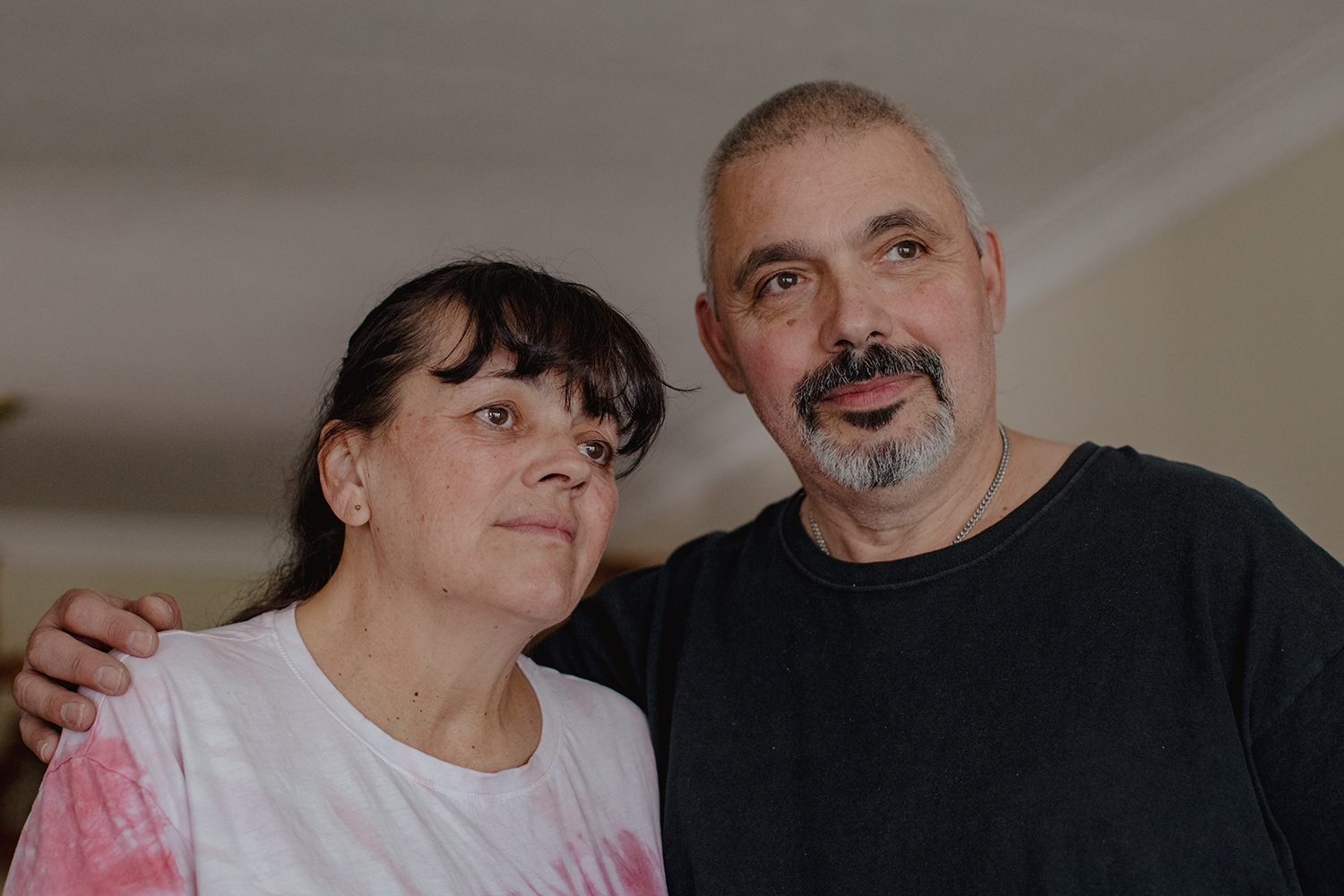
He Complained About His Mother’s Care. The Home Restricted Him From Seeing Her
Five years after Queen’s Park unanimously voted to end the practice, families say they’re still being kept from their loved ones as punishment for complaining about care—with no clear legal recourse.
Inspection Results for Every Long-Term Care Home in Ontario
Use The Local’s exclusive dashboard to look up fines, violations, and care quality metrics for the province’s more than 600 long-term care homes.
How The Local Analyzed 17,500 Long-Term Care Reports to Understand the State of Provincial Inspections
Every year, thousands of inspections capture failures to meet provincial standards in long-term care. No one has ever tried to quantify the results of those inspections—until now.