


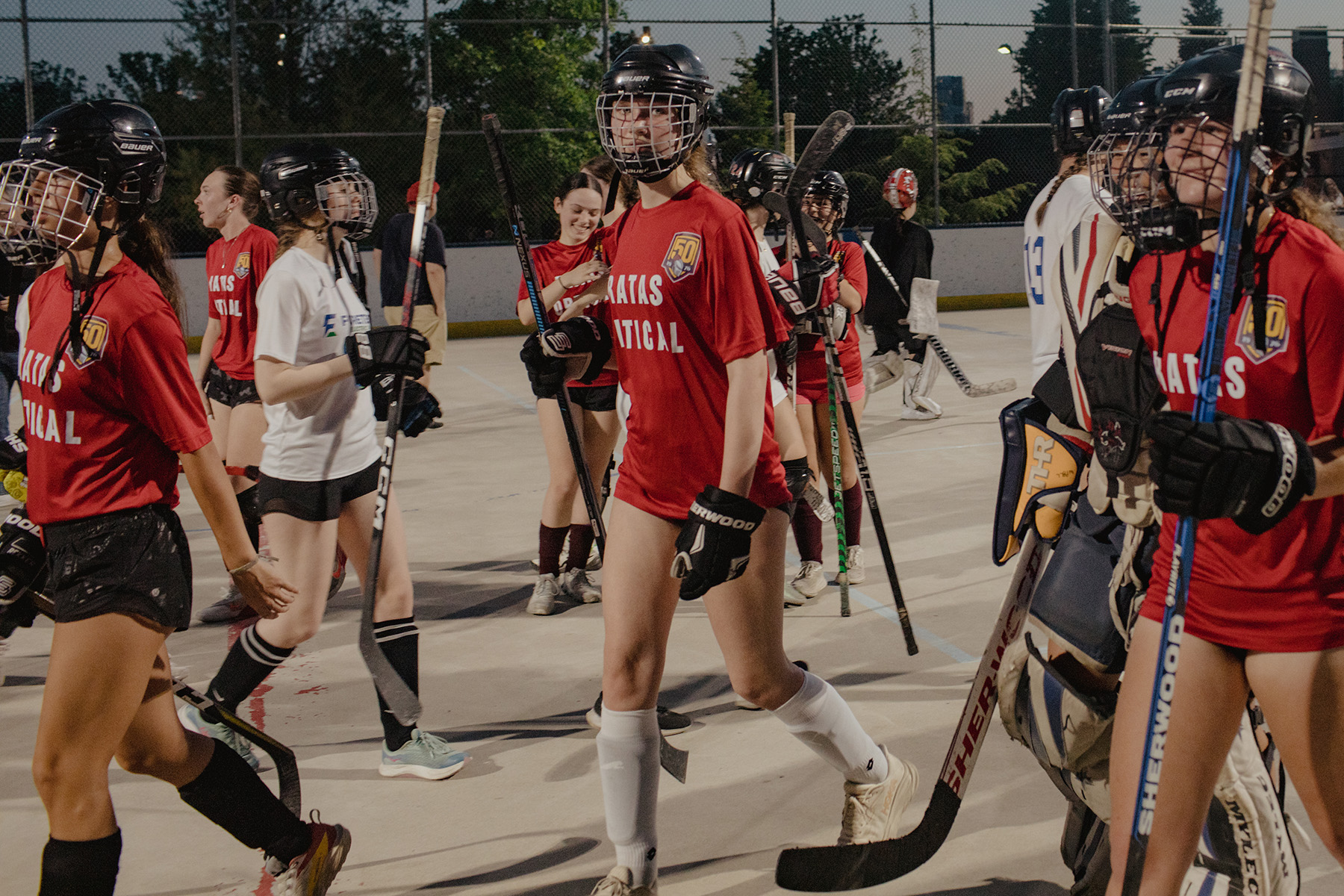
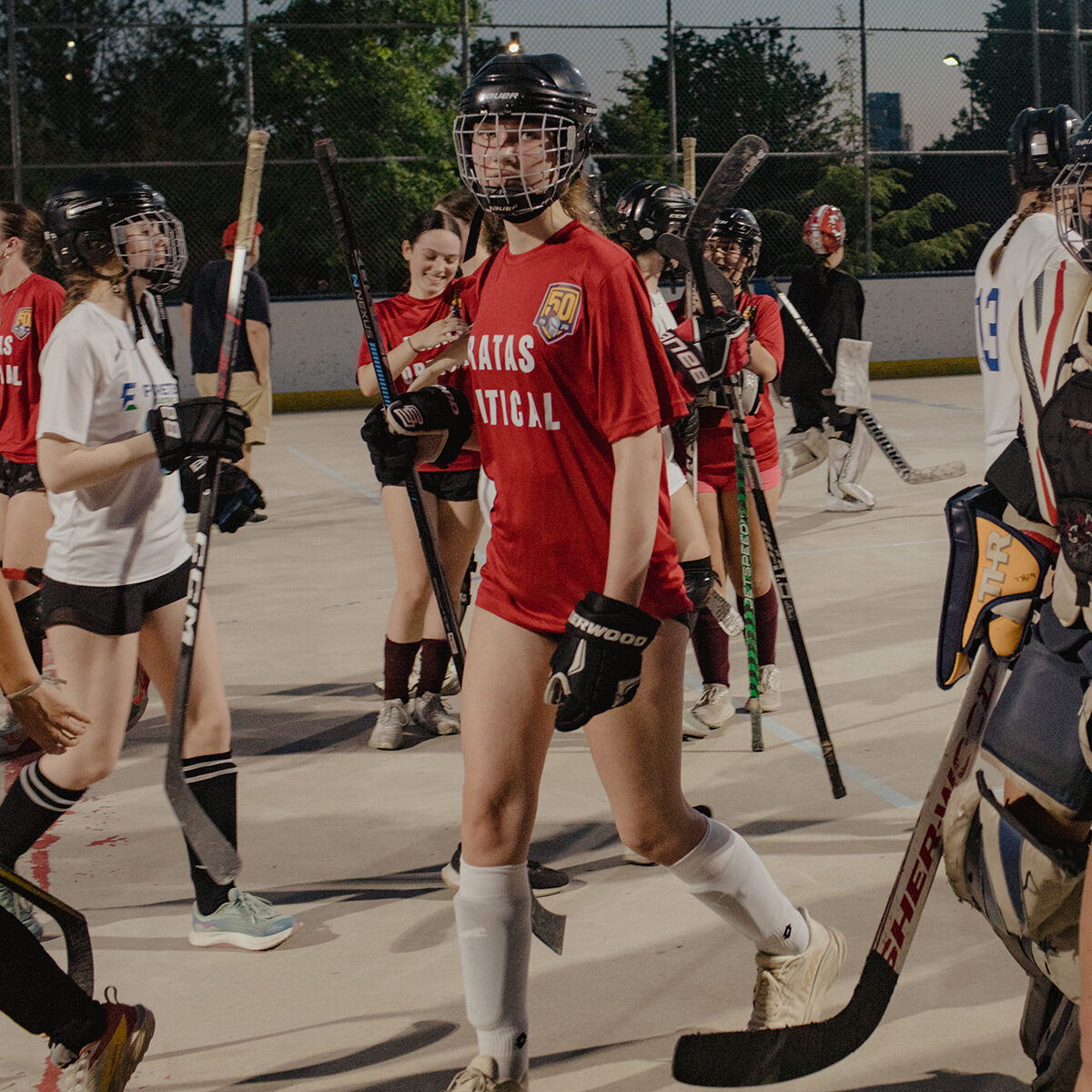
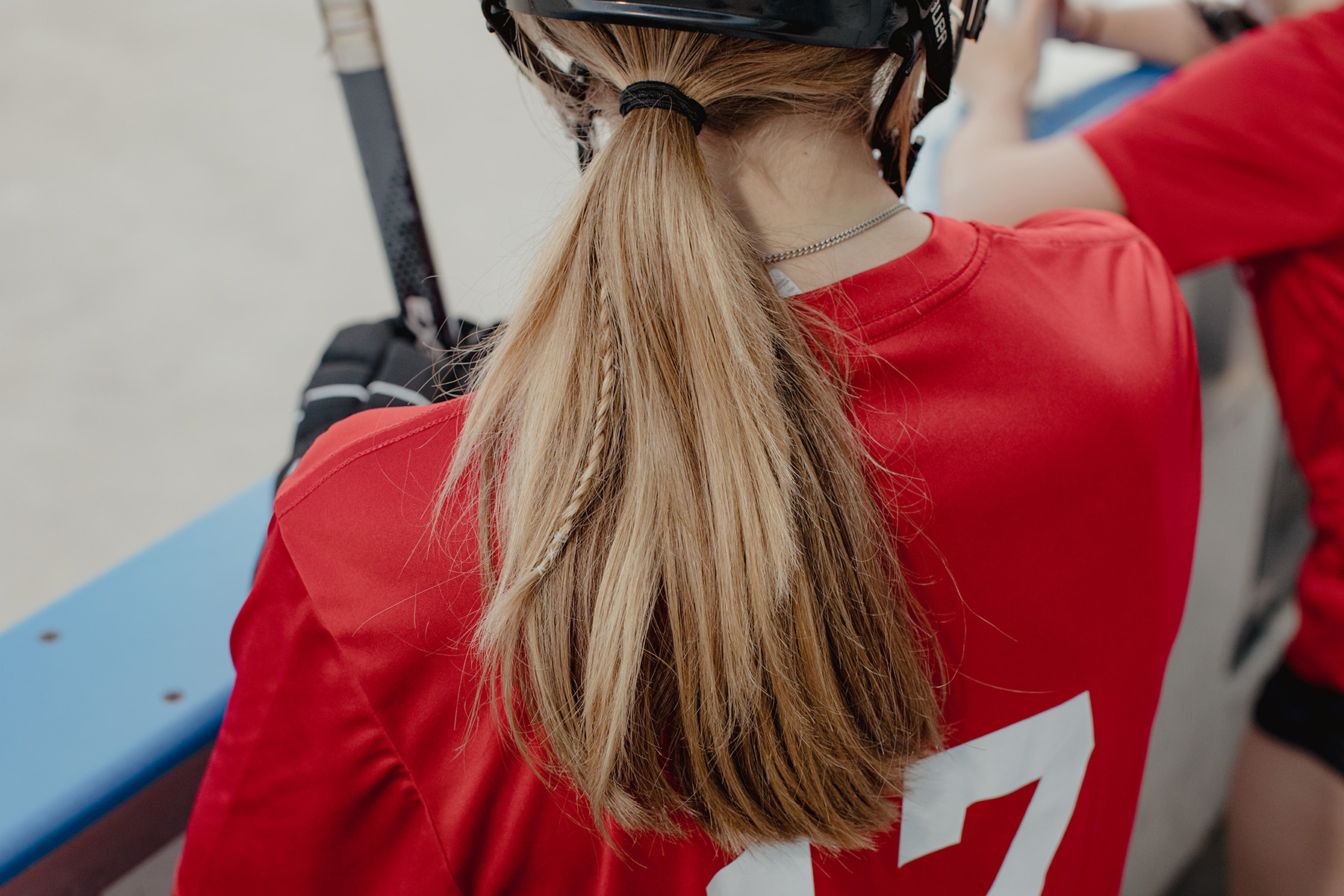
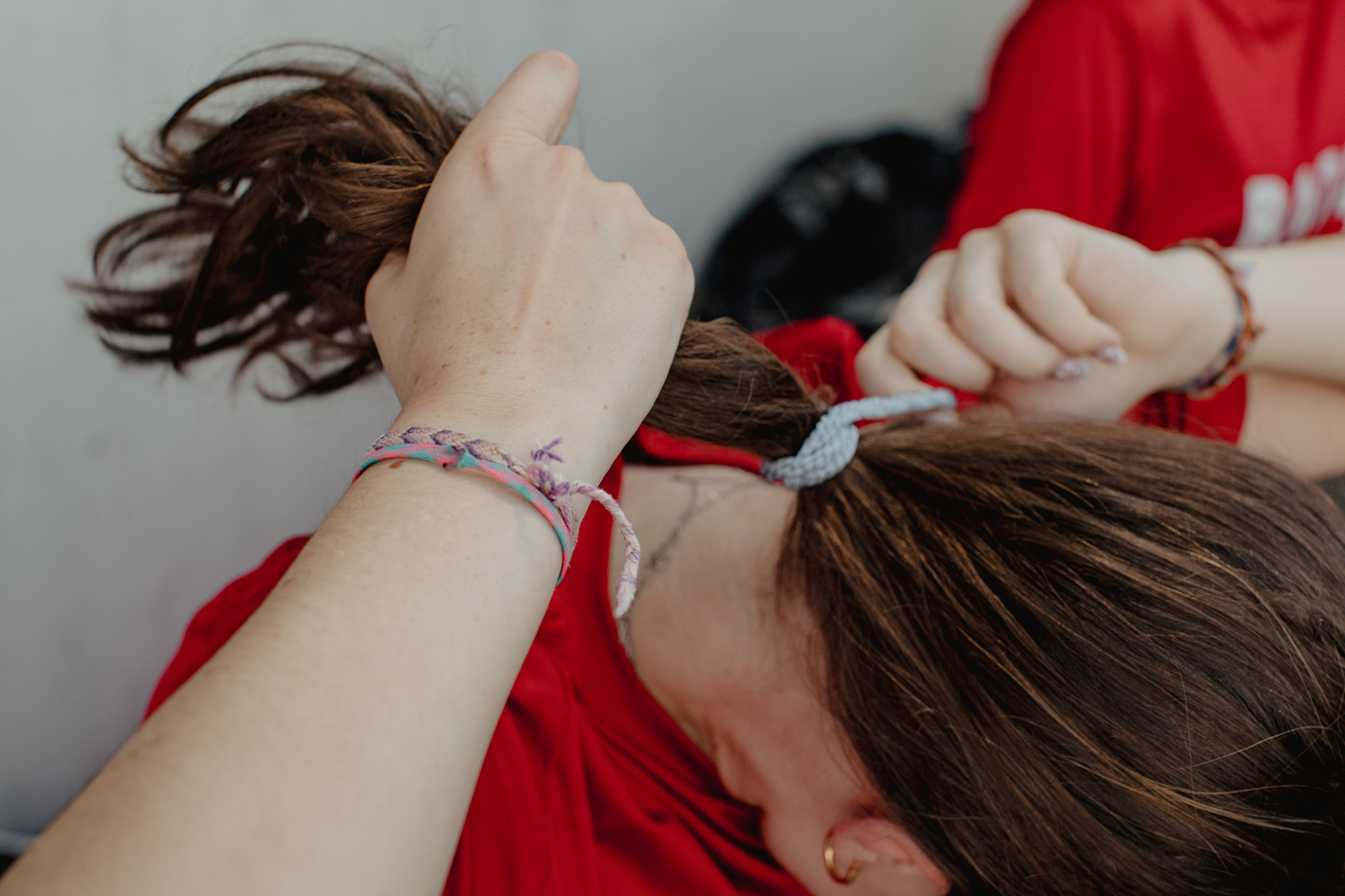
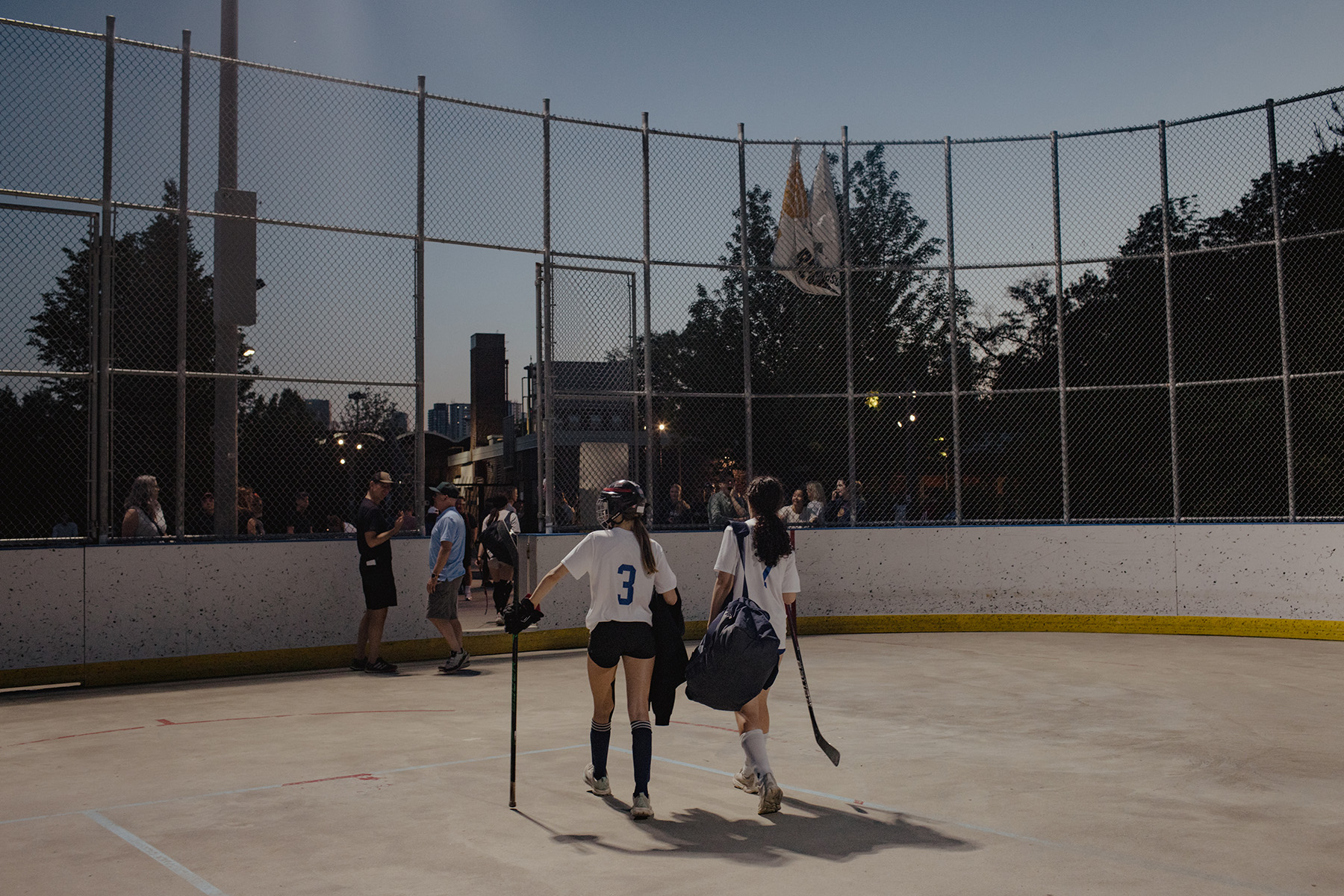
It was a bumpy start to the 6 p.m. game at the Withrow Ball Hockey League. Ten minutes after the hour and it was time for the face off, but players were still warming up: a dozen girls, aged 14 to 18, braces flashing and messy ponytails tucked under their helmets, took loud, smacking practice shots on empty nets while the two goalies laid face down getting strapped into their pads. The sole official present, a teenaged boy scheduled to time keep, couldn’t find the referee. Coach Jim Lafazanis worried about tonight’s short benches. Several players had absconded to a Bruno Mars concert, including his own 17-year-old daughter Anna. Tough to compete with that, he shrugged. He was interrupted by a player who arrived in Crocs and forgot to pack her sneakers. Could someone loan her a pair?
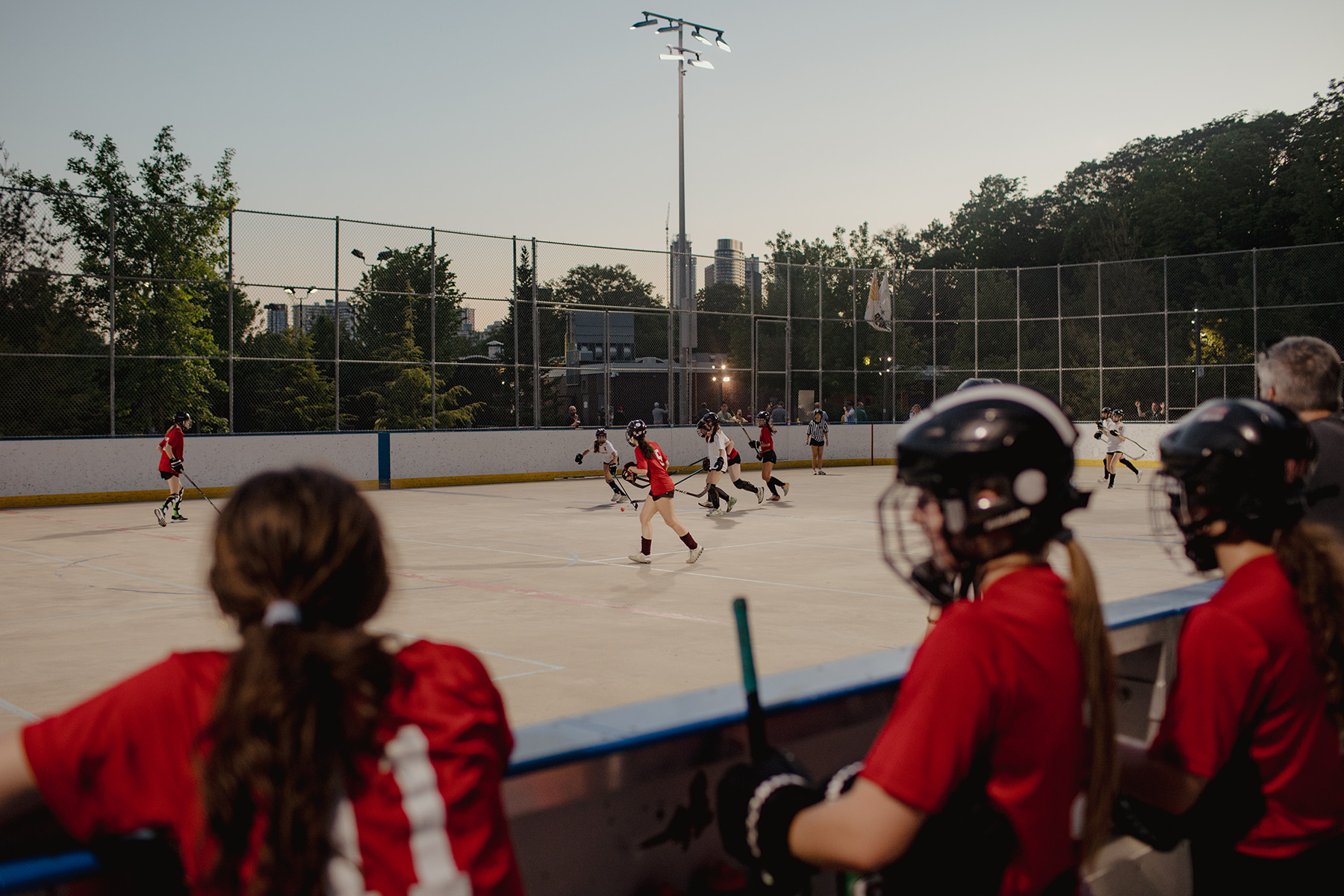
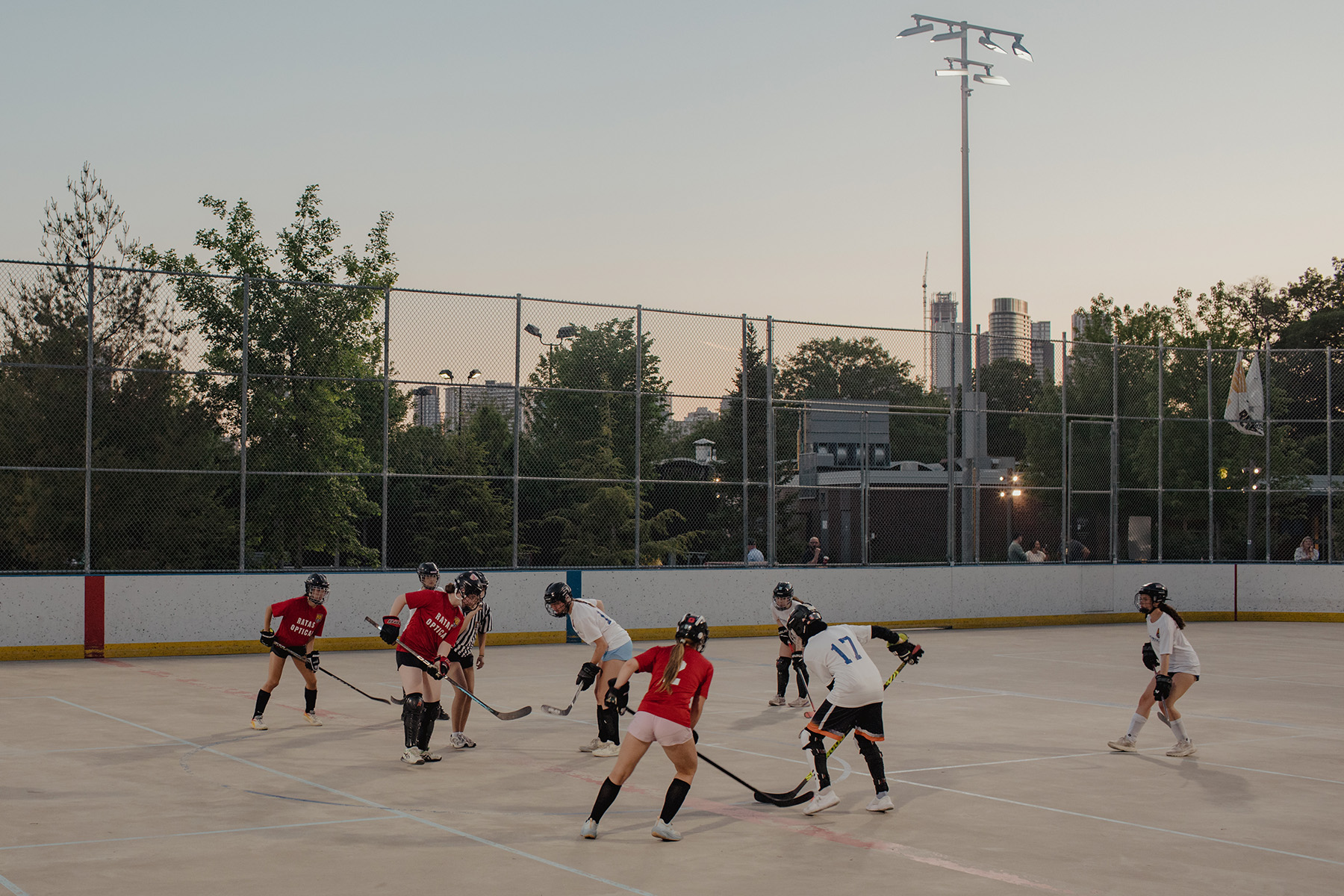
Each spring, the 50-year-old community-based league takes over two skating pads in east Toronto: one in the centre of Withrow Park, the other, this one, tucked in the northeast corner of Riverdale Park, between tennis courts, a pool, and a small playground. Most of the players are neighbourhood kids, whose families pay a relatively low fee of $150 for the three-month season. There are no practices, just two games per week, and, while there are all-star teams, the league remains largely focused on more inclusive house league play.
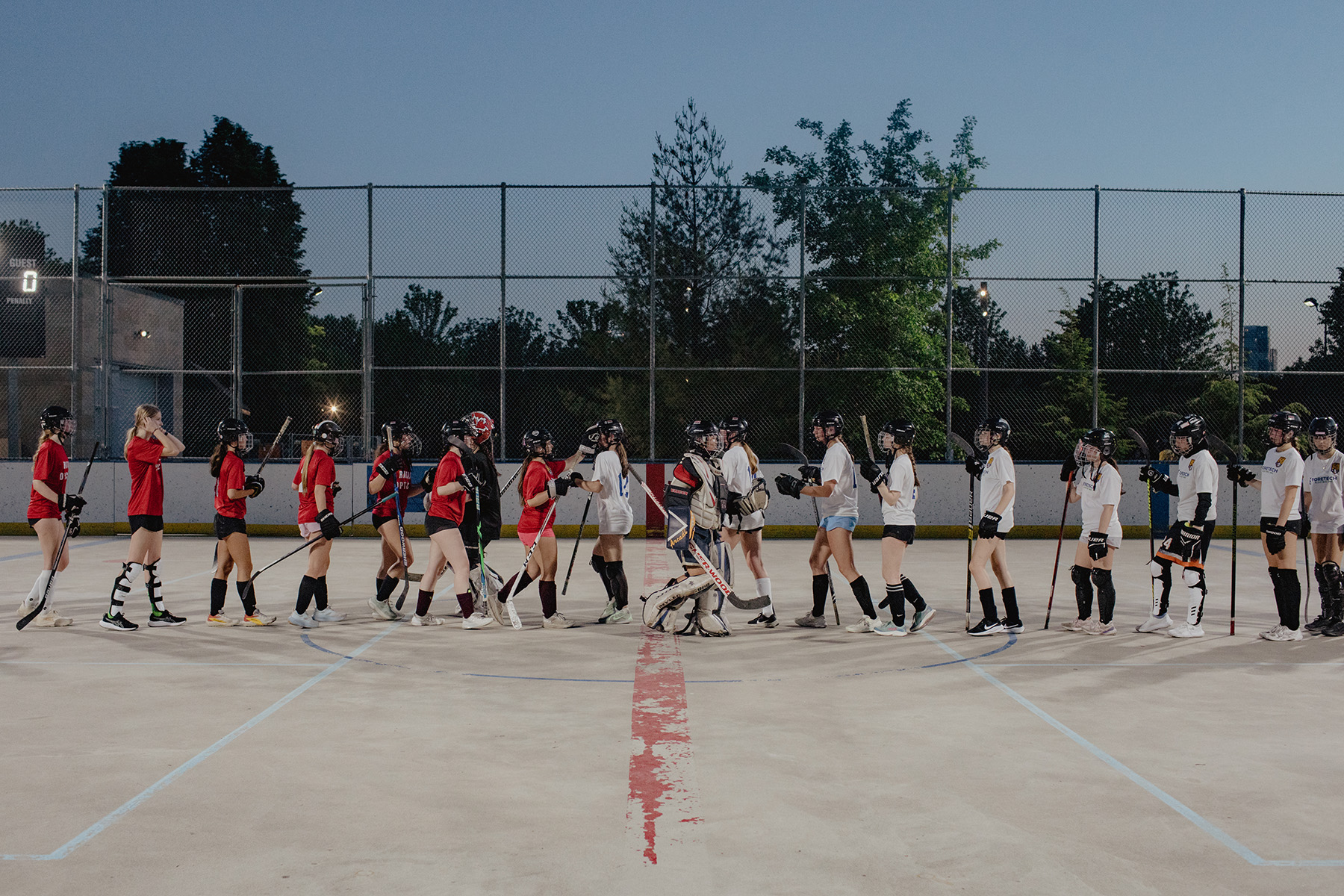
Some of the evening’s players demonstrated the smooth, stickhandling skills of seasoned ice hockey players, which several are. But when the game eventually started—the timekeeper filling in for the missing ref—the play was fast but friendly. Barely a handful of parents watched from the sidelines, peering through the chain link fence above the boards. Very few noticed the scoreboard. The coaches—players’ dads in T-shirts and ball caps—managed substitutions but otherwise didn’t shout or chirp at the players.
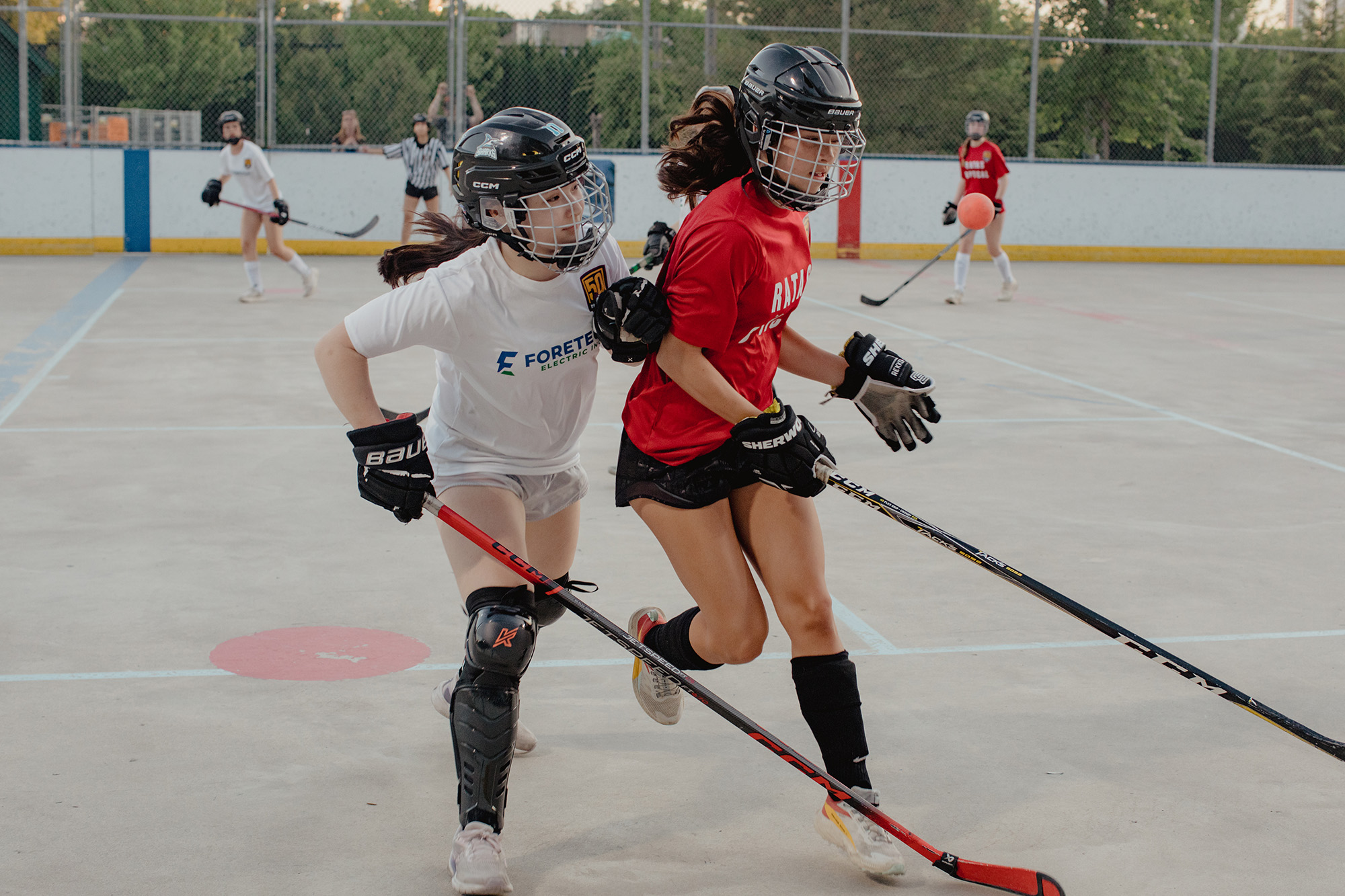
Lafazanis, who played in the league himself as a kid in the 1980s, says his approach is to “do the exact opposite” of what he’s witnessed in competitive youth ice hockey. “Only say something positive, never negative. Every player has their strengths, and you coach to their strengths.” The game seemed largely controlled by players themselves, as they streaked up and down the pad, calling for passes and shouting encouragement. It had the loose, joyful, organized chaos of shinny.
This kind of low-competition, high-engagement sport has become a rarer and rarer experience for Canadian children and teenagers. The majority aren’t moving nearly enough—aren’t playing as much—as is recommended for their physical and mental health. The factors contributing to their inactivity are well documented: hours spent on screens; fewer and less accessible parks, playgrounds, and green spaces; greater use of cars and public transit to get to school and friends’ houses; high costs of extracurricular sports; time-strapped families; and, more recently, the health risks of exercise during the increasingly common waves of extreme heat and air pollution caused by climate change.
But beyond these material hindrances is the equally pernicious culture of youth sports. It’s a culture that celebrates competition and specialization from early ages, where meets and matches prevail over personal mastery—whatever one’s skill level—and the pure joy of play. As public schools struggle to deliver the physical education kids need, a massive industry around competitive, specialized youth sports has taken root. The result is a growing divide between children who play sports at an evermore demanding and elite level and kids who are moving less and less. And attempts to boost youth sports tend to focus on the former group, providing them with a greater share of resources, whether in funding, attention, coaching, or facilities.
The trouble with youth sports, then, is not that children are lazy or glued to their screens. It’s that youth sports are increasingly not meeting the needs or desires of the majority of children—few of whom will be high-level athletes, but all of whom could find delight in moving their bodies while developing lifelong healthy habits.
Competition, it turns out, is a losing game.
The one place meant to provide all children with opportunities for physical activity is public school. School remains the space where the majority of kids learn physical literacy: how to run, jump, catch, and throw, how to strengthen their developing muscles, and coordinate their movements. In 2017, the Ontario government issued a daily physical activity (DPA) mandate requiring all elementary school students to have a minimum of 20 minutes of moderate to vigorous physical activity every school day.
A 2022 survey of 186 Ontario elementary school teachers, however, found that only 23 percent of teachers were meeting that standard. Their reasons for falling short included space and time constraints, inadequate training, and struggles with student behaviour. In Ontario, fewer teachers are specializing in health and physical education, sometimes leaving it up to classroom teachers to deliver physical literacy education or to coach school teams. Labour disruptions and staff burnout have also meant there are fewer volunteers to run lunchtime and after-school intramural games. Proposed budget cuts by the province threaten the maintenance of sports fields and school pools, auguring even greater losses for school-based sports.
Melanie Davis, the executive director of Physical and Health Education Canada, says kids are still much more likely to be active during school than in the evening and on weekends—but the quality of that activity is inconsistent. Walking between classes is sometimes counted as part of those 20 minutes of DPA. Kids do want to move, she says, but the support isn’t always there for them to do so. “Coming out of COVID, we had a higher interest from students in sports. But there were less resources in schools and fewer volunteer staff in schools able to offer [sports programs].”
With limited resources, competitive programs have the edge. Davis offers the example of how schools will shut down their gyms for entire days to host an interscholastic tournament. It’s a terrific prospect for the school’s ten to 12 best players, but, Davis says, “the other 500 or 1,000 kids who were supposed to have gym class that day don’t get it.”
George Kourtis, the former health and physical education coordinator of the Toronto District School Board, is a true believer in the value of school sports. He says that at their best, sports offer a sense of belonging, foster friendships, teach leadership skills, and support physical health and emotional well-being. But he also sees a brewing crisis.
School sport is falling short in engaging all children, at all levels, and keeping them engaged. After a steep drop in physical activity during COVID-19 lockdowns, sports participation numbers in the TDSB returned to pre-pandemic levels in 2024: 98,000 elementary and 30,000 secondary students played in school sports. But that data captured overall participation, not that of individual students. “Those numbers might be counting a much smaller percentage of students each playing several sports,” Kourtis says. Anecdotally, that’s what he’s witnessed. A small group of top performing student athletes dominate school sports, participating on multiple teams—including in external pay-to-play clubs and leagues—while a much larger group of students opt out of sports, or feel shut out, and become increasingly inactive. “Thirty years ago, if you had one club kid on your school team, it was like a big thing,” Kourtis says. “Now they’re all club kids.”
The socio-economic factors behind this shift are easy to see. A 2023 report found that 44 percent of parents in Canada cannot afford to register their children in organized sport. Newcomer children, children with disabilities, and children from low-income families face disproportionate barriers, especially when it comes to club sports offered outside of school. This two-tiered system worsens over time: more competitive or more experienced kids get development time and playing time, while the space shrinks for everyone else.
Join the thousands of Torontonians who've signed up for our free newsletter and get award-winning local journalism delivered to your inbox.
"*" indicates required fields
And that inequality plays out on a larger scale in the dominance of a small group of schools in the TDSB’s interscholastic competitions. “In Toronto, we know who’s going to win,” Kourtis says. He says of the more than 100 high schools in the city, just nine of them win more than 50 percent of the city’s championships. All of these sports powerhouses—which include Northern Secondary School, Lawrence Park Collegiate, Richview Collegiate, and Etobicoke Collegiate—are in affluent neighbourhoods.
Kourtis says as long as these disparities exist, as long as the priorities of high performance sport and winning trophies drive how resources are allocated, physical activity levels among young people will continue to decline. “As much as we’re pushing for kids to be active, we have to ask ourselves if we are spending our money wisely? Are we funding sports in ways that will affect all our kids? Or are we just giving kids who already have opportunities, more opportunities?”
The stakes of the answers are significant. Physical activity and social engagement are crucial to children’s physical and psychological development, as well as their life-long health. The Canadian 24 Movement Guidelines, developed by a wide range of health experts, sets standards for how much time children and teenagers should “sweat, step, sleep and sit” every day. It advises at least 60 minutes of moderate to vigorous physical activity daily with muscle and bone strengthening activities at least three days per week; several hours of light physical activity; eight to 11 hours of sleep; and no more than two hours of recreational screen time, as well as limited sitting for extended time.
Many Canadian kids’ days flip that ratio: hours of video games and YouTube videos, minimal movement, let alone vigorous heart-rate raising activities, and routinely disrupted sleep. A study from 2017, looked at self-reported data from more than 22,000 kids, ages 10 to 17, across the country and found that only 3 percent met the sweat, sleep, and sit recommendations.
And yet, when it comes time to large-scale initiatives to address issues of cost and access in sport, the competitive lobby eclipses grassroots organizations. Funders, whether public, private or non-profit, often want a demonstrable, high-profile return on investment, which programs like Own the Podium, created to support Olympic and Paralympic athletes, aim to provide. What youth sports needs, says Simon Darnell, a professor at the University of Toronto’s School of Kinesiology, is a reset of its culture towards a rights-based approach—one that views all people as deserving of access to physical activity and sport, as a part of “any life worth living.” There should be space, he says, “for the kids who just want to have fun alongside the kids who excel.”
Notably, one nation that’s found great success in that balance is Norway. Its vision for its national sports guidelines is idrettsglede for alle—or sports joy for everyone. The provisions for children’s sports emphasize friendly participation and camaraderie, playfulness and freedom to make mistakes, activities that are free or affordable, and games and sports that are designed for all abilities. Specialization, travel teams, and high-performance training are not permitted until kids reach their teens. There is even a ban on putting youth game stats, player rankings, and scores online. The result of this child-centred, radically non-competitive approach: a country where 93 percent of kids under 13 and 70 percent of teenagers regularly play sports. It’s also proof that focusing on accessibility and joy doesn’t hinder athletic excellence. For all its feelgood vibes, the tiny nation has dominated the world at the Winter Olympics, winning 405 medals since the games began in 1924—more than any other nation.
The cultural reset that Darnell points to is happening in small ways all over the GTA. Filling some of the gaps of school sports programs are grassroots lunchtime, after school, and summer programs at low or no cost. Lay-Up offers free basketball programs in Toronto’s Neighbourhood Improvement Areas to children aged 6 to 14, alongside employment skills training. Executive director Micaëlla Riché says the group does everything it can to encourage participation: free meals and snacks are provided, programs are located within neighbourhoods to make them walkable, coaches facilitate practices and games so that all children get equal time.
Bringing girls into basketball has been a priority. In 2019, 30 percent of participants were girls. Riché and her team spoke to young women about what they wanted to feel more comfortable. Sessions were scheduled at lunch because many didn’t want to walk home late, in the dark, after evening programs, or else they needed to be home to look after siblings. Hijabs and sports bras are provided for free. “After getting a proper bra, girls come out of the locker room, saying, ‘Oh my gosh, I can run and jump and play now,’” Riché says. Last year, more than 50 percent of participants were girls. It proves, Riché says, that small interventions and meeting children where they are can make a huge difference in their engagement. Especially for girls, who begin to opt out of sports when they reach puberty. By 16, more than one in five girls who have previously been involved in sports quits.
In East York, Impact Skateboard Club offers year-round lessons, as well as summer camps in Stan Wadlow Park. Like Lay-Up, the club views sport as a vehicle for building broader life skills: resilience, empathy, community-building, healthy self-esteem. Learning to skateboard is humbling, says Yash Presswalla, the founder and executive director. “Part of my motivation was seeing the ways the experience of skateboarding had parallels to lessons for everyday life,” he says. “There’s the obvious one about falling and getting back up. But there’s also the freedom that it allows—because beyond some common conventions there’s no real right way to skate.”
Impact keeps fees low and offers scholarships—no one is turned away. And while some kids bring Tony Hawk-sized ambitions, the focus is on developing physical literacy, whatever one’s abilities, and finding joy in physical activity. “Not every child that comes through is going to be a lifelong skateboarder,” Presswalla says. “I just want them to have a positive experience where they feel supported, cared for, welcomed, valid, and accepted for who they are. And hopefully they carry that sense of acceptance with them. Or look back and think, ‘This was a place where I was comfortable and safe, and around people very different than me, but yet I was, you know, still one of the crew.’”
Plenty of school-based programs, physical education teachers, and school coaches have similar goals. There are hardworking teachers arriving at schools at dawn to coach track, or skipping lunch to oversee intramural volleyball. But Kourtis says that if we want to meaningfully encourage all children to be active throughout their lives, the solution starts at a much more basic level: high-quality health and physical education, taught by well-trained, specialized teachers, multiple times per week.
The stereotype of the tyrannical gym teacher persists, and there are kids who find phys ed alienating and mortifying—because they lack the skills or experience, because they feel awkward in their bodies, because the culture of winning and losing can lead to teasing and bullying. But those are the children who need good coaches and teachers most.
Melanie Davis, from Physical and Health Education Canada, says she sees signs that the culture is changing. At a recent conference of phys ed teachers, there were sessions on expanding sports and games beyond the usual dodgeball, basketball, and soccer. A series of African games were demonstrated, as well as a session on goalball, which is designed for players who are visually impaired. Increasingly, she says, phys ed teachers are moving away from a sports focus to a real-world focus. Gym class doesn’t have to look like sports, she says. “It can be ice skating, tobogganing, dance, family games, or a walk to explore local neighbourhoods.”
The major challenge, she says, is that phys ed is often viewed as a perk—fun and games—rather than an essential part of education. And that translates into less time in teachers’ college to train teachers in health and physical education, less time in the school day for children to be physically active, fewer opportunities to develop children’s physical literacy and instill that Norwegian-style sports joy.
“I do believe that there’s a role for competitive athletics,” she says. “It can be a great motivator for individuals. It can be nation building. It can create careers and galvanize communities. Even in a school setting, it can create a sense of belonging. But youth sports can’t just be that. For me, it’s about ensuring that all young people have the ability to live well and create a good life—and that includes being able to play.”
More from this issue
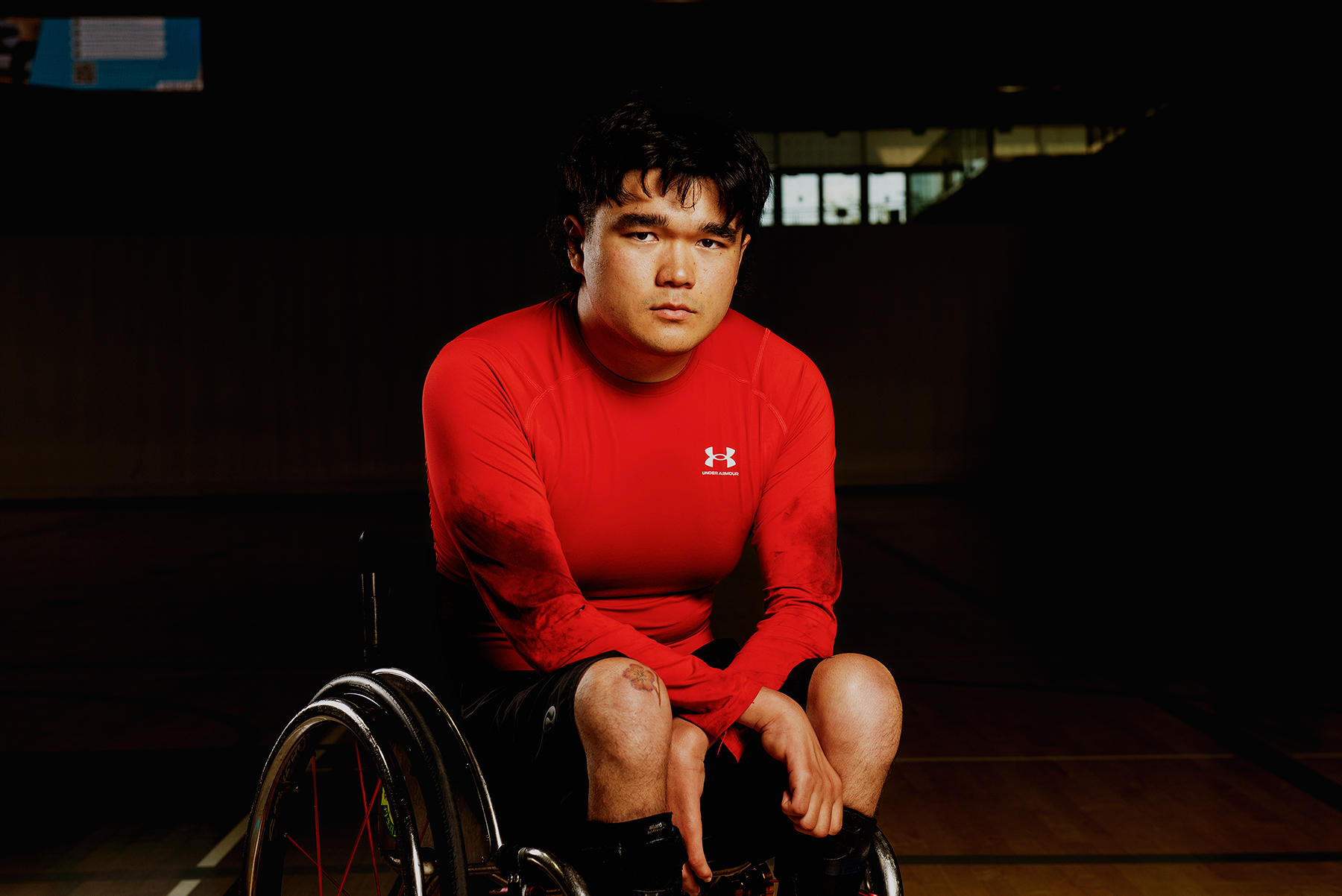
Wheelchair Athlete Rio Kanda Kovac Wants to Win
His thirst for victory has gotten Team Canada's youngest player this far in wheelchair rugby. But in this fast-paced, aggressive, yet remarkably inclusive sport, getting ahead also means learning to play nice.
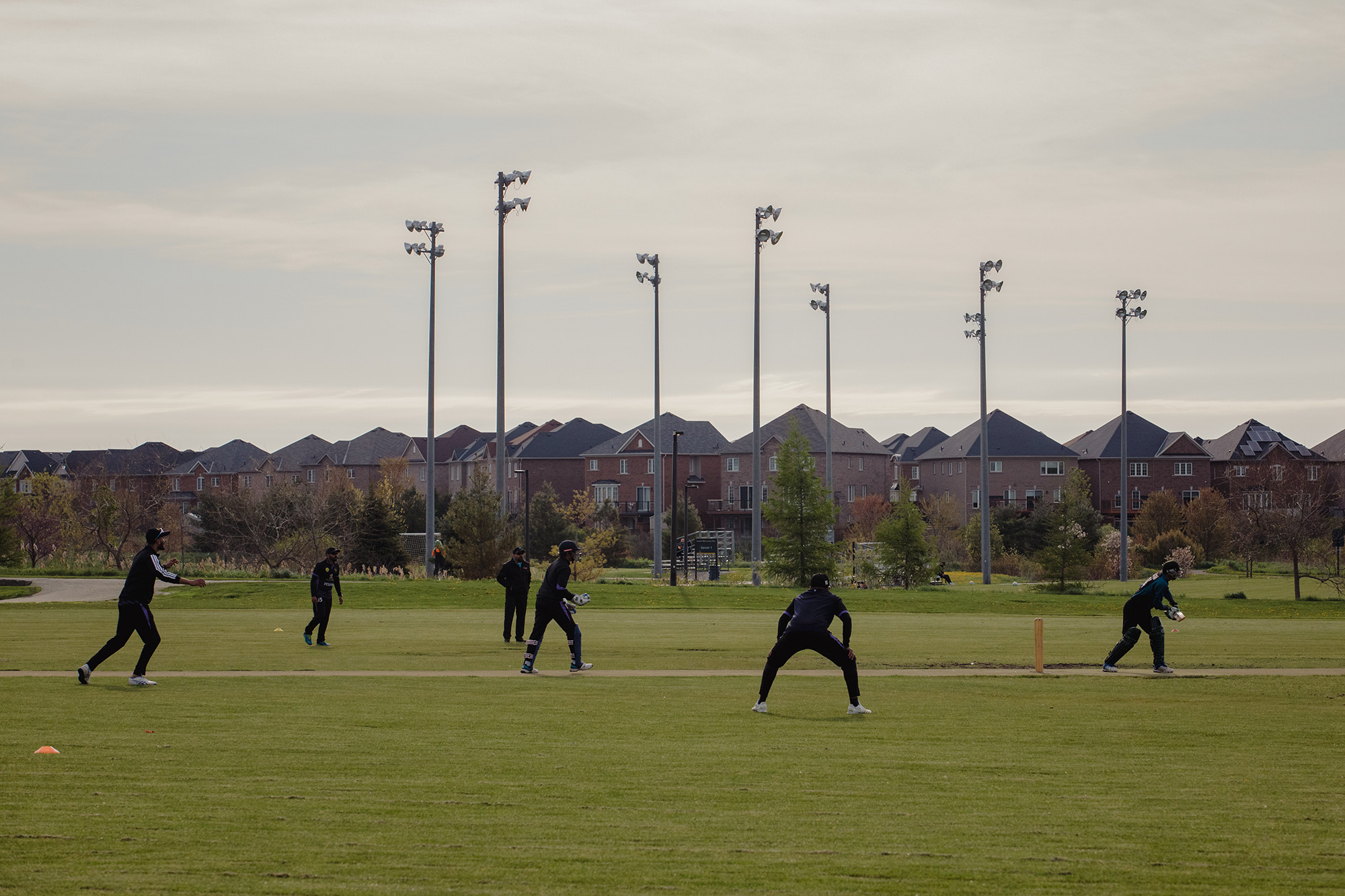
Cricket in the GTA Is Booming. Now Comes the Hard Part.
Fuelled by waves of South Asian immigration, cricket has become one of Canada's fastest-growing sports. But overcrowded fields, failing businesses, and allegations of corruption are threatening the game from within.
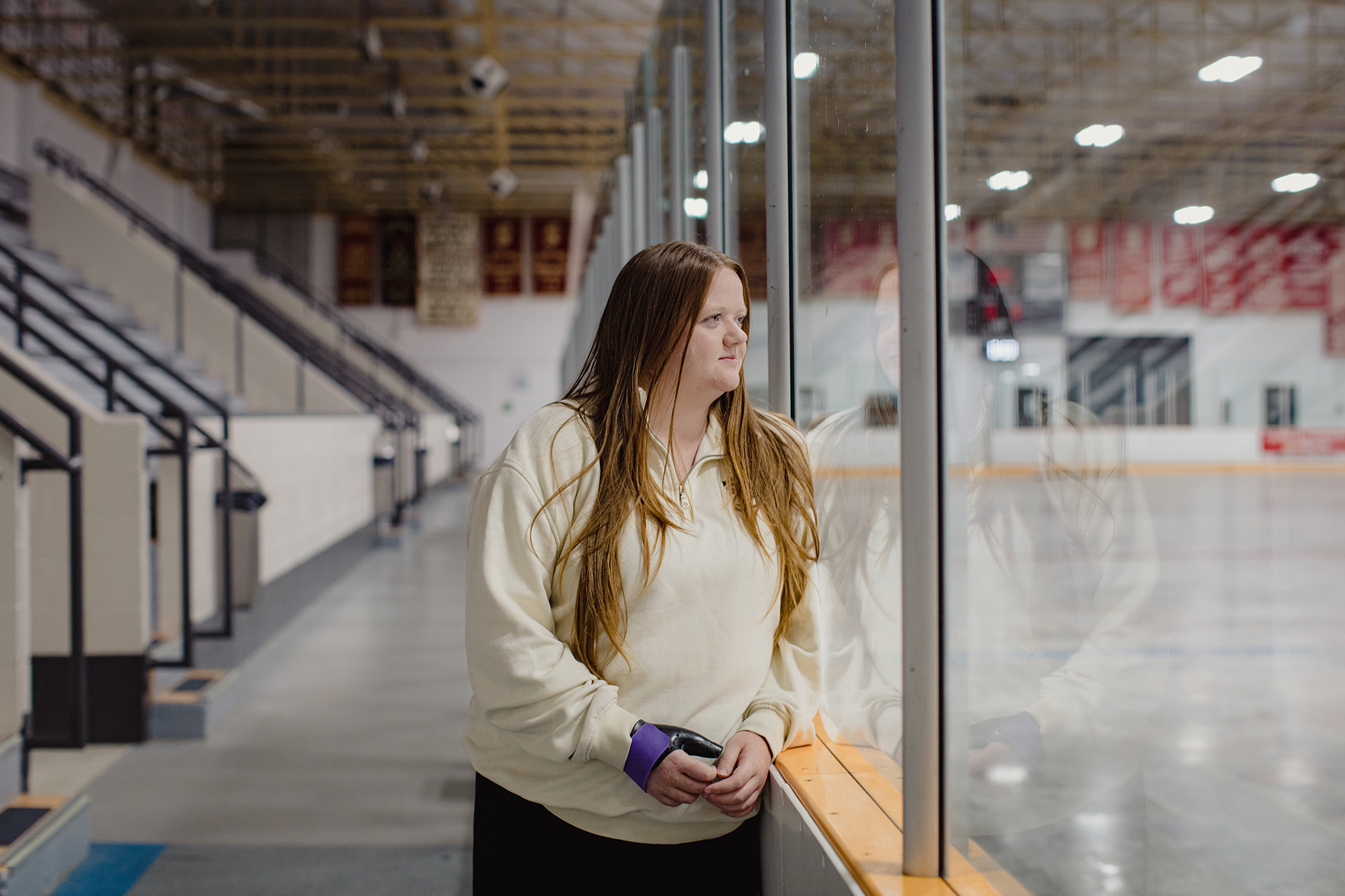
Where Are All the Female Coaches?
Canada is in a moment of unprecedented expansion in women’s sports. But structural barriers and unclear pathways into coaching mean that women are being deprived of opportunities to lead the next generation of young athletes.
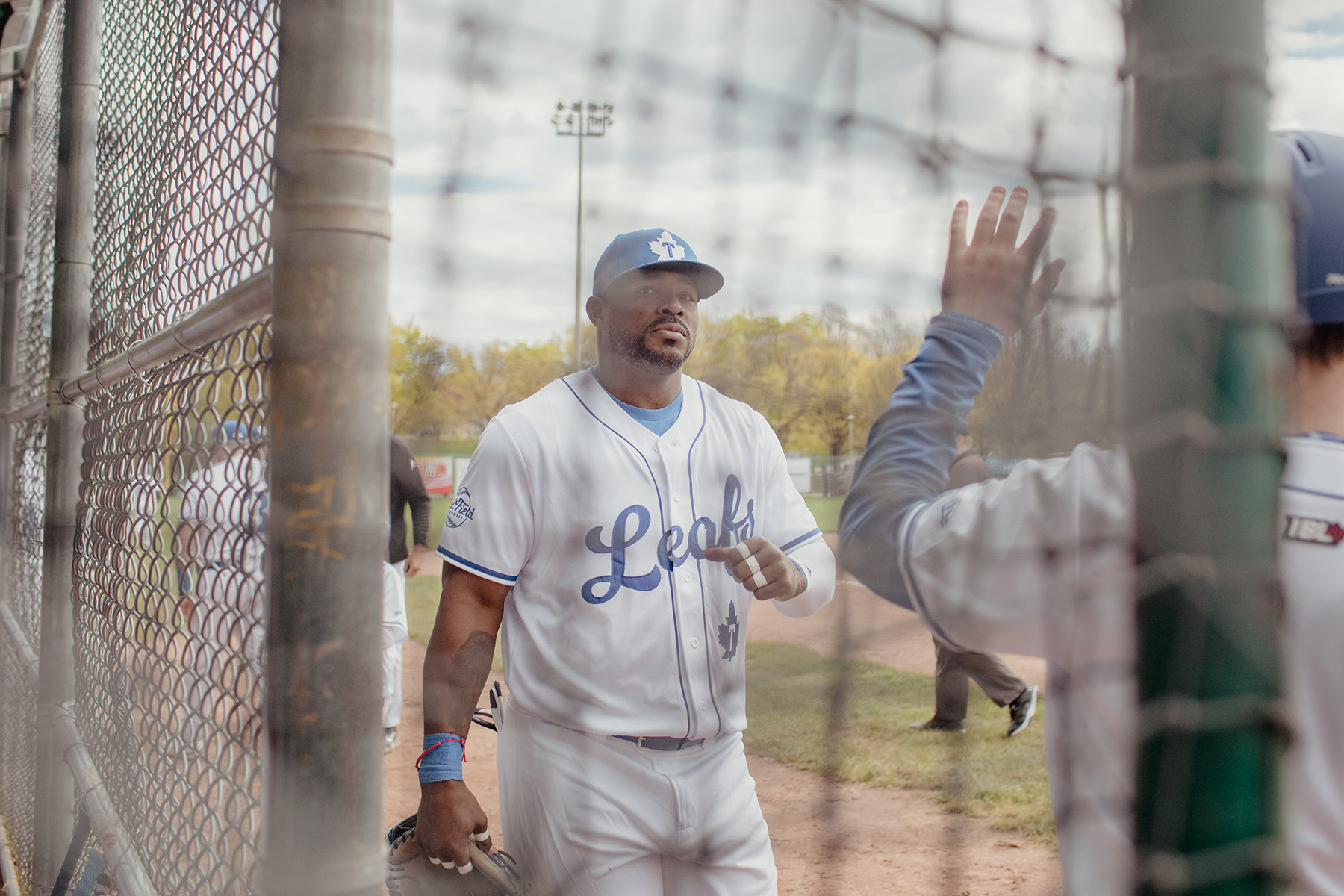
Yasiel Puig at Christie Pits
A free Maple Leafs baseball game at my local playground has long been the best community event in the city. Then the team signed a former Major League Baseball star awaiting sentencing.
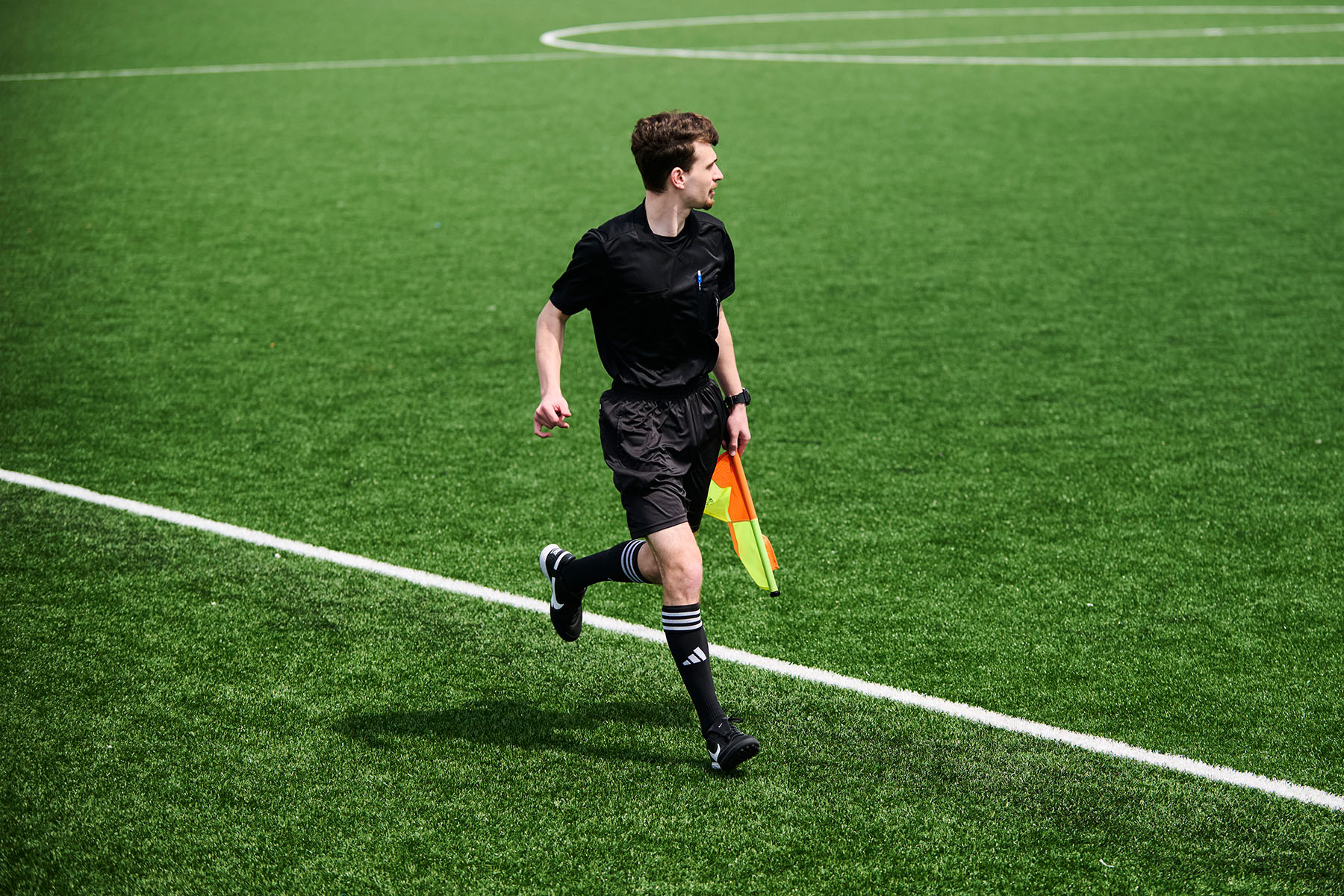
The Grand Ambitions and Grubby Indignities of the Aspiring Soccer Referee
Making it pro as a referee in Canada is in many ways harder than making it pro as a player. That doesn’t stop this corps of exacting, self-serious officials from trying.

An Illustrated Guide to the FIFA World Cup in Toronto
How many private jets could this pay for? Seven illustrations to make sense of the costs and payoffs of hosting the World Cup.
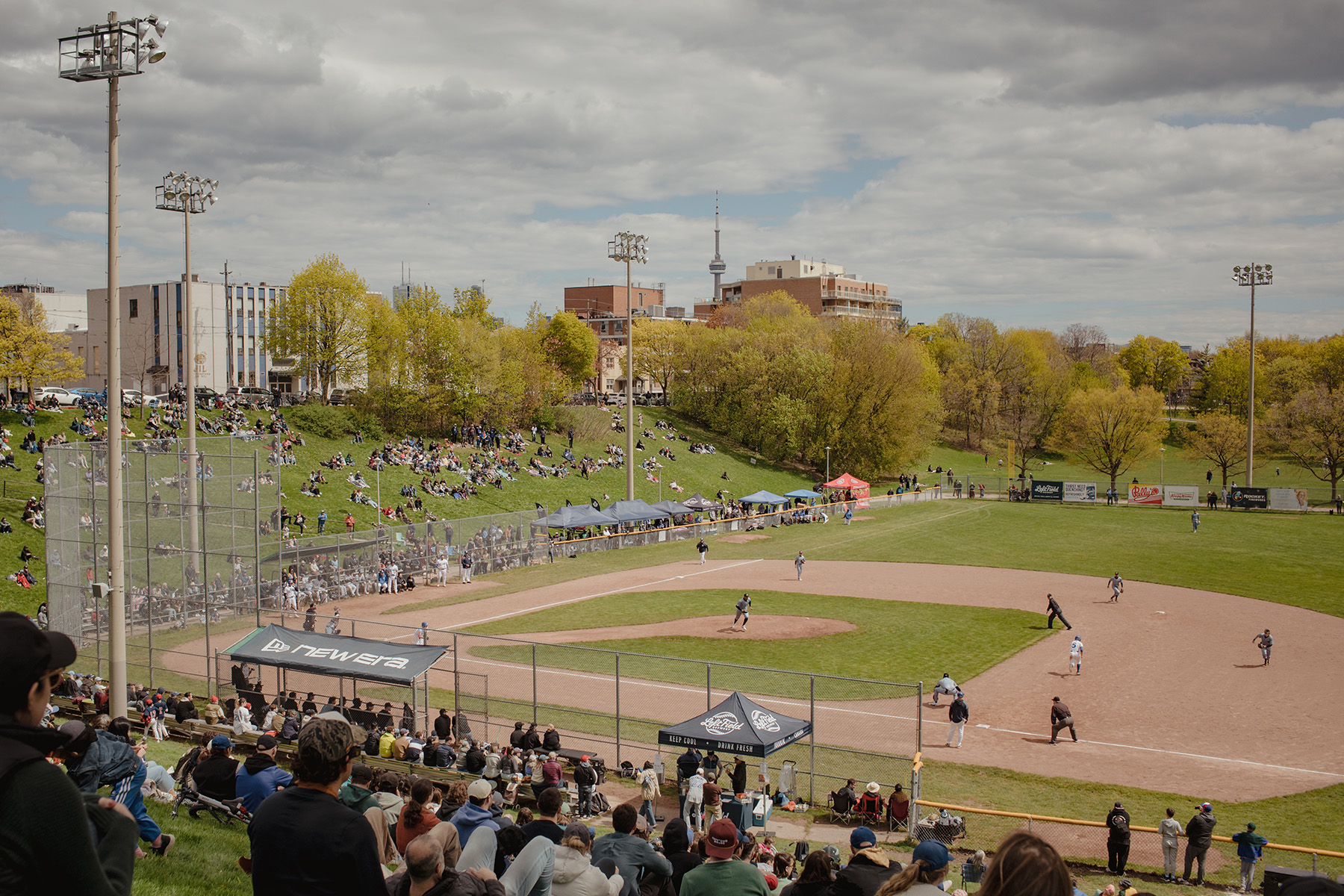
How Sports Transform a City
The World Cup is a reminder of the massive influence sports can have over a place like Toronto—reshaping our geography, sparking celebration or mourning, and remaking our experience of the city.