

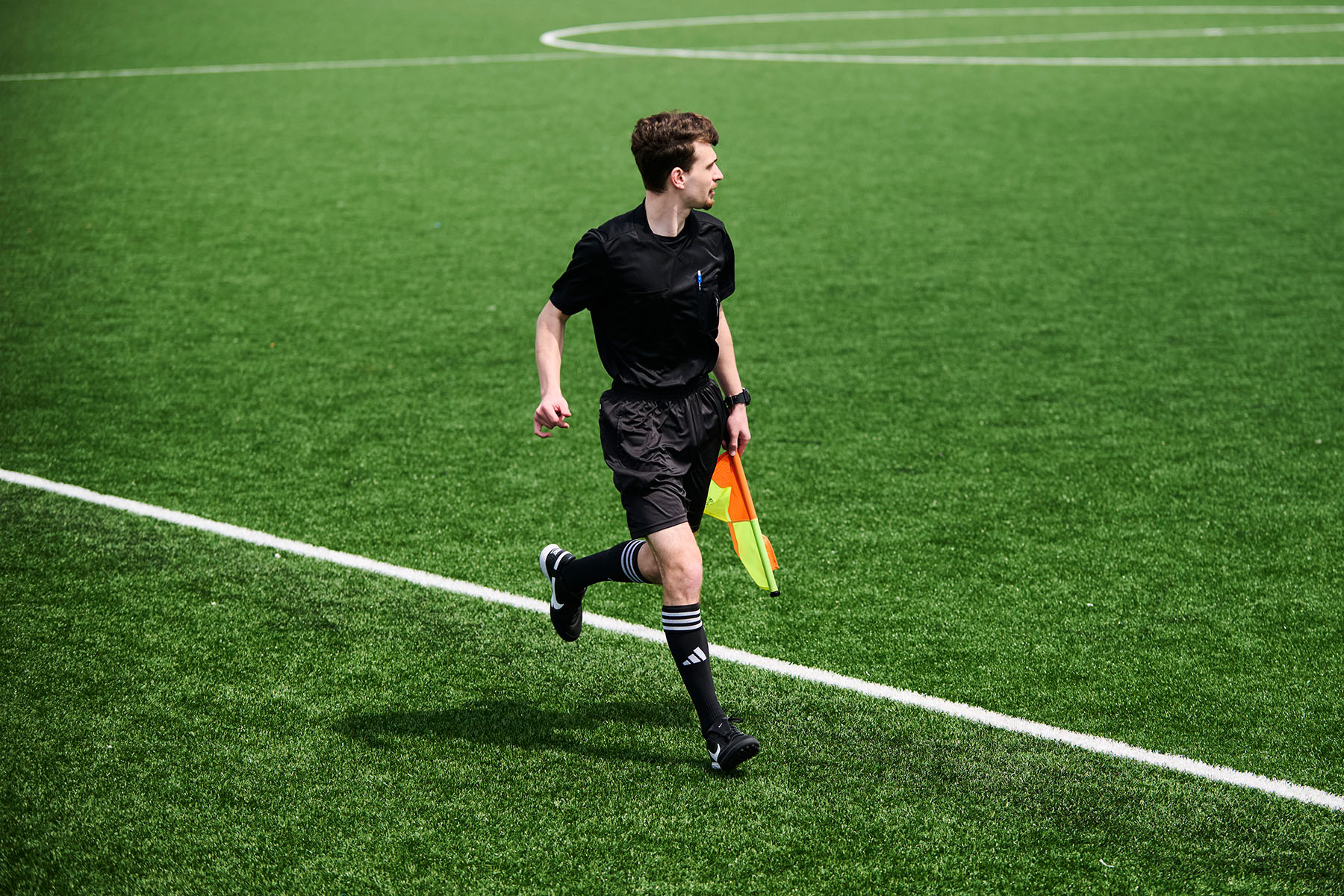
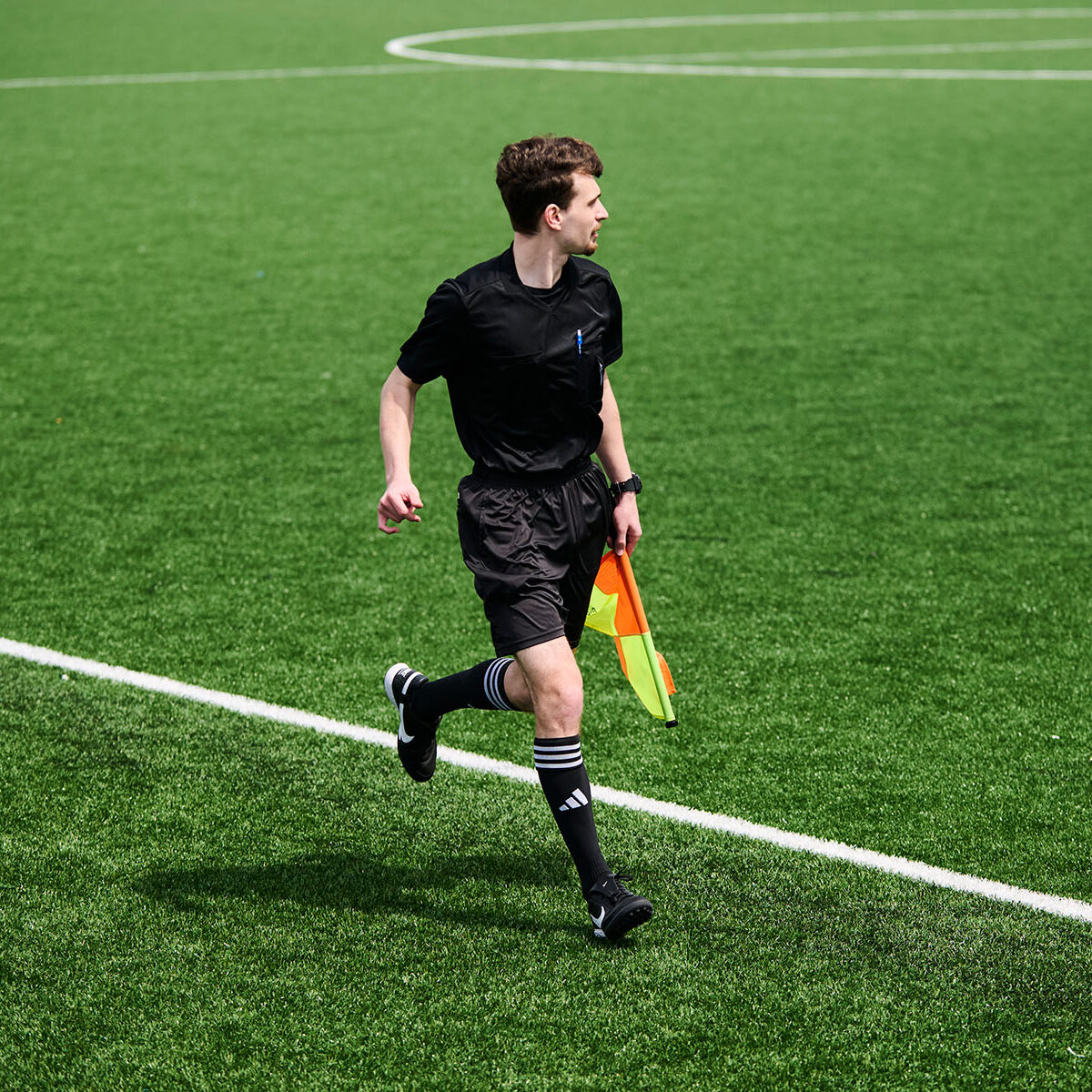
It’s a Saturday in January, the snowiest day of the year, and there’s amateur football to be played. My friend Ben and I skid to Seneca College’s campus so that I can watch him referee kids’ soccer games. We are the only car on the highway.
We get to the game just in time, trudge past the groundskeeper fighting a losing battle against the snow, and enter the massive dome that covers the turf field. Balls fly around while coaches, parents, and parent-coaches try to corral their teenagers for the final team talk, their voices increasingly shrill upon seeing the arrival of the ref.
Ben’s been my friend for 15 years and has been refereeing for nearly 12, but this is the first time I’ve ever seen him in action. An engineer by day, Ben possesses an annoyingly good memory, a calm head, and a rationalist love of order that would put an enlightenment philosopher to shame. The last few summers, I’ve seen his interest in refereeing sharpen into a passion, mostly expressed through quoting the rule book at me as I complain about a decision given against Arsenal. We went to see the Canada men’s team play in a friendly match this spring. I watched the players; Ben watched the ref.
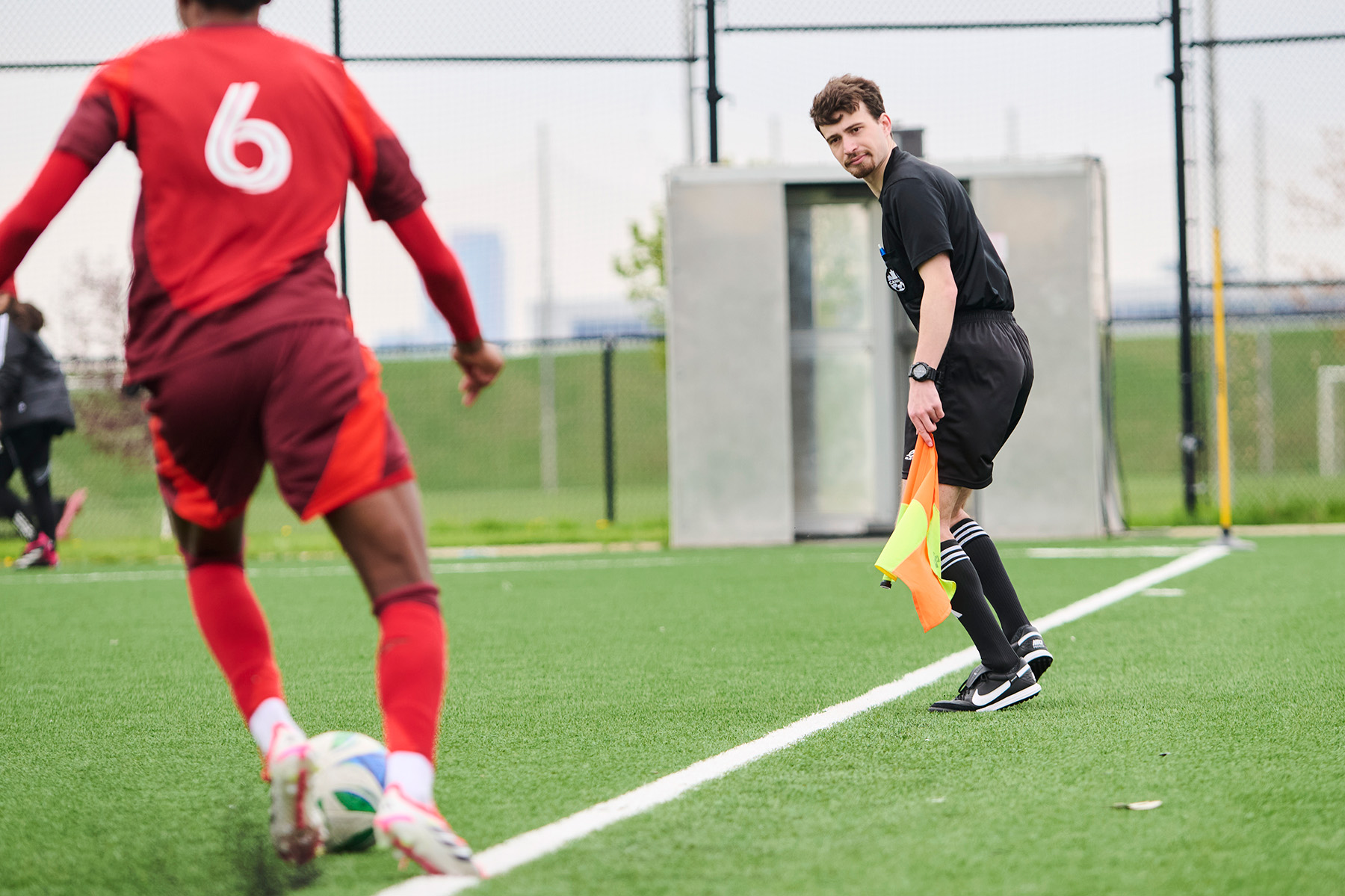
Like so many of the people I meet during my four months investigating the lives of soccer referees, Ben has ambitions to officiate at the highest level possible and to reach the promised land of professional refereehood.
Achieving that dream, however, is a vanishingly difficult proposition. There are only a handful of Canadian referees who officiate professionally full time, and even fewer who are fully qualified to officiate at a tournament like the World Cup (three Canadians will feature this year). While there are many pathways for a talented Canadian player to become a professional—MLS academies, American universities, leagues like the OPDL, moving to teams in Europe or the U.S.—there is but one for a referee: being assessed by a more senior referee and ascending the ranks within their association. In many ways, it is easier for a very talented player to make it pro than a very talented ref.
This does not curb the ambitions of the striving referees I meet, although it does imbue them, on occasion, with a monk-like vigilance and discipline. The odds of making it are low, and refs don’t want to jeopardize them.
I’ve been observing my friend’s games and speaking to his colleagues at a crucial juncture for football in Canada. As the FIFA World Cup takes over Toronto this month, the local football world is anticipating an increase in investment, infrastructure, and interest at all levels. Football’s already a burgeoning sport in Canada, and a mega-tournament typically brings a surge of growth.
The referees I speak to, however, express a sense of deep foreboding about this prospect. No matter how many people are interested in playing, there exists a critical shortage in the human infrastructure necessary for the game—namely, in the corps of referees, a quirky but indispensable bunch. For football to truly scale along with expectation, new refs in Toronto need to be trained much more quickly. And, crucially, we need to keep the refs we have.
At the referees’ bench that day in January, I’m greeted by Ben’s colleagues. The younger one holds my glance and asks me whether I’m here to assess him. When I say no, he seems disappointed. “I wish that I got assessed more,” Ben chimes in. “It’s a funding issue.”
Referees are apportioned, and paid, along seven ranks of qualification, from children’s games to international professional competition. The system is stratified. Almost everybody wants to progress, and your ability to do so is based largely on the subjective evaluations of your superior. To advance, a referee is assessed according to their deviation from perfection. You never know who may be watching you.
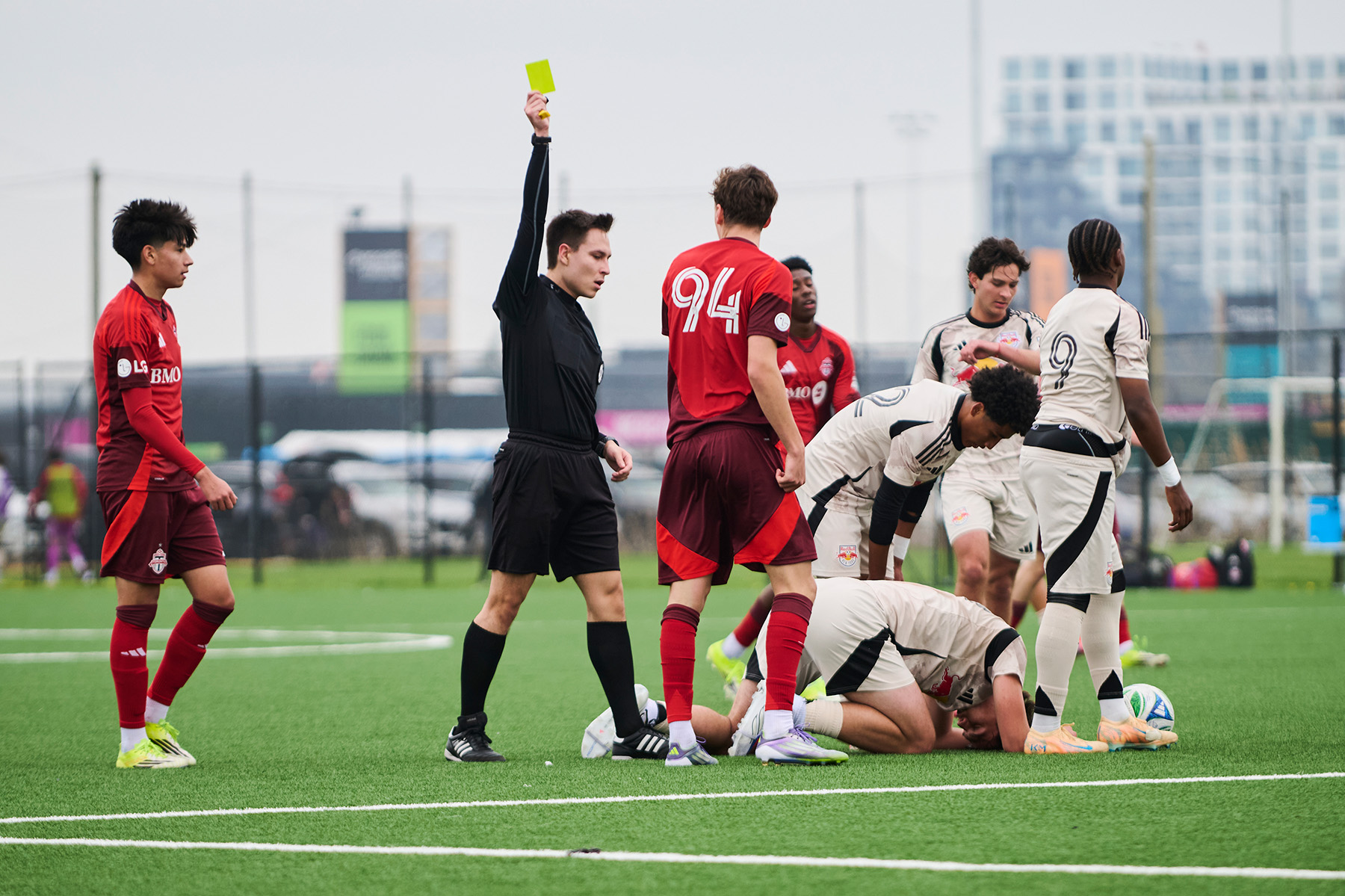
Referees, then, are prone to approach every game with a level of uber-professionalism that is, to put it lightly, wholly incommensurate with the demands of youth and amateur soccer. Their uniforms are impeccable; they wear black shirts, long black stockings, and black boots. They grip highlighter-bright flags checkered orange and yellow. They prance around with purpose. They are trained in how to whistle with maximum authority. If they have hair, it is kempt, though elite referees have a reputation for baldness. “One of my career goals is World Cup 2038,” Ben tells me. “My other career goal is to get to a high enough level where I look around and realize that I just have to shave my head.”
I ask Carlo, an older ref, whether he takes the U14 girls game he’s refereeing that day as seriously as a game in, say, the Ontario Player Development League, an elite youth competition. Carlo bristles. “It’s one game. One game!” he says. “U8 or U21–same laws of the game!”
When I ask him about referees’ labour conditions, he’s blunt. “They’re shit!” he tells me.
Join the thousands of Torontonians who've signed up for our free newsletter and get award-winning local journalism delivered to your inbox.
"*" indicates required fields

One of the reasons for the dire conditions, according to Carlo and the other refs I speak with, is that there are simply not enough referees in the system, particularly at the higher levels. That shortage results in officials feeling pressure to take on more and more games, to cover their colleagues’ games last-minute, and to travel longer distances to work. Referees are not employees of Ontario Soccer, the governing body. They’re contractors, assigned games through an online platform, and often are victim to an ad hoc, last-minute roulette of assignment.
After one game, I meet a young referee called Lawrence Chan. Lawrence is from Hong Kong and came to Canada as a refugee after anti-government protests in his home country in 2019. He tells me that refereeing is his way of giving back to his new home, a form of public service. “Canada gave me a safe place to live. How can I contribute to this country? Being a referee is such a good way.”
I ask Lawrence how his officiating is going. “I’m doing eight games today,” he responds. He refereed more than a game a day last year, and is on track for more in 2026. We’re between games, and balls fly around us as the next crop of kids warm up. Lawrence nudges a ball away slowly as I ask him why he works so much. “When assigners give you games, you better not turn them down,” he says.
Lawrence believes that he won’t get consistent work if he is not maximally available—but he’s not sure who, exactly, would make the determination that he was not working hard enough, or if anyone is even watching.

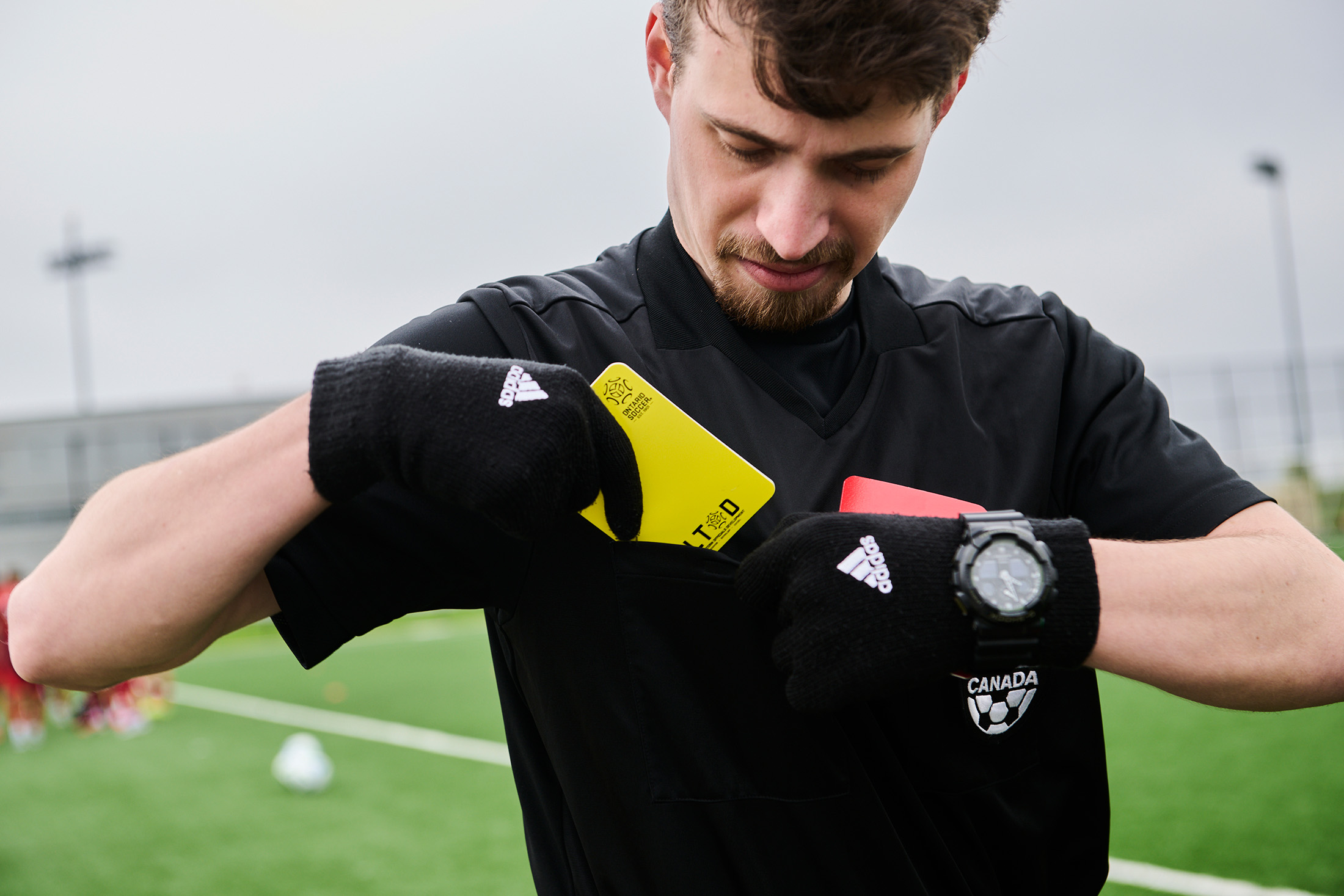
David Barrie, the director of officiating for Ontario Soccer, acknowledges the referee shortage is a problem. Because of the relative independence of many leagues, Ontario Soccer does not know exactly how many more games are being played, just that there are more players every year. But there are the same number of referees that there were pre-pandemic, he tells me, so “we have fewer referees per capita.”
What Ontario Soccer hopes to do in the coming years, according to Barrie, is move talented referees through the ranks and into the professional game more quickly. “We want to accelerate people through. If we accelerate them too quickly, it does a disservice to them, and it impacts the integrity of the game,” he says. But “it’s something that we’re actually working on over the next 18 months. We kind of want to redefine what that pathway looks like.”
The City of Toronto, as part of their world cup legacy initiative, is planning on training new, young referees. The City’s “match officials training program,” a spokesperson tells me, is already underway, with courses that will run throughout the year with the goal of “certifying approximately 265 youth as soccer officials.”
It’s a worthwhile goal. As referees will tell you, though, the problem isn’t training refs. It’s keeping them.
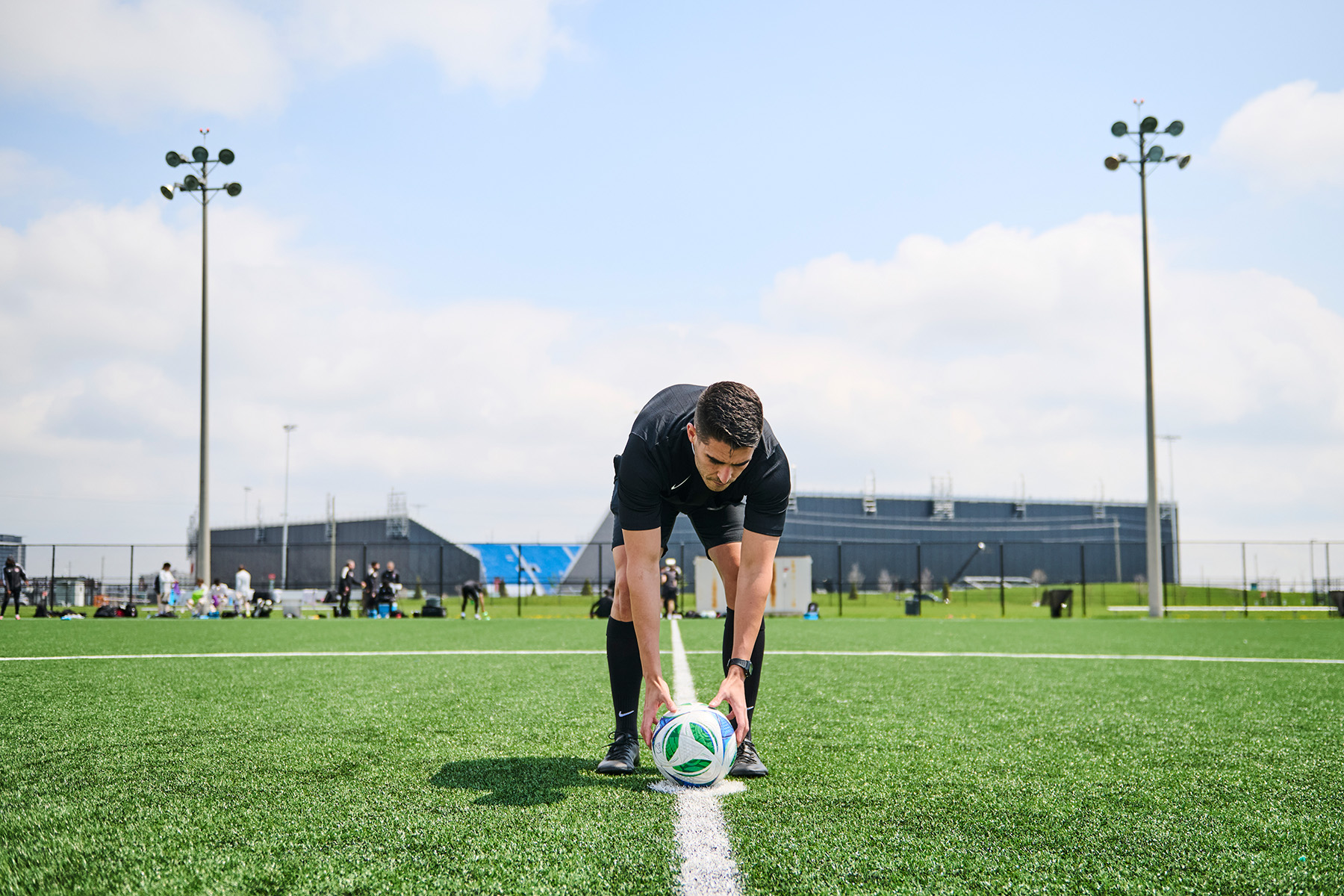
In the first game of the day, Ben’s an assistant referee, which means he’s running up and down the sideline as the coach yells at him about offsides, real or imagined. “Fuck my life,” the coach says after one close call, catching my eye with a red and terrible Alex Ferguson-esque scowl. “You’re inconsistent!” he yells, at no ref in particular. “You don’t know what you’re doing!”
Ben is implacable. After a red card is given to a player in a U-14 girl’s match, a coach insists that the girl be removed from the field entirely (presumably into the snow). Instead of acknowledging the suggestion, Ben performatively focuses on the game: he narrows his eyes, lowers his body and shuffles along the touchline, sniffing for an offside call.
Verbal abuse from players, coaches, and above all, parents, is perhaps the prime issue in referee retention. And it’s an issue that falls along gendered lines. “Year one we lose 42 percent of our male referees and 50 percent of our female referees,” says Barrie. “By year three we have lost 68 percent of male referees and 82 percent of female referees.”
He puts this down to the way officials are treated. Like in many sports, referee-oriented-vituperation is baked into the game at a cultural level. Barrie is a professional referee himself, and has experienced his share. “You know you’re a referee. You expect to be abused,” he says. Ontario Soccer has no real insight into the exact extent of abuse on the field. “We see it, we hear it, we speak to some people, but we certainly don’t have data to support it,” he says.
In 2023, Ontario Soccer piloted a body camera program to deal with the abuse issue. The idea was for the camera to act as “a visual deterrent and data gathering mechanism for disciplinary and research purposes,” according to Barrie. But the cost of the cameras made “scalability impossible” and the program was quickly scrapped.
“They [Ontario Soccer] always forget about referees,” Lawrence Chan tells me. He describes the abuse (including threats of violence) referees receive as almost unbearable, and traces it to a sense of entitlement from parents, who pay exorbitant fees, and consequently coaches who face pressure to win. “Profit, profit, profit,” he says. “When parents are paying such a high fee [for] … their kids to play soccer, they feel like they are a customer. Customer is king, right?”
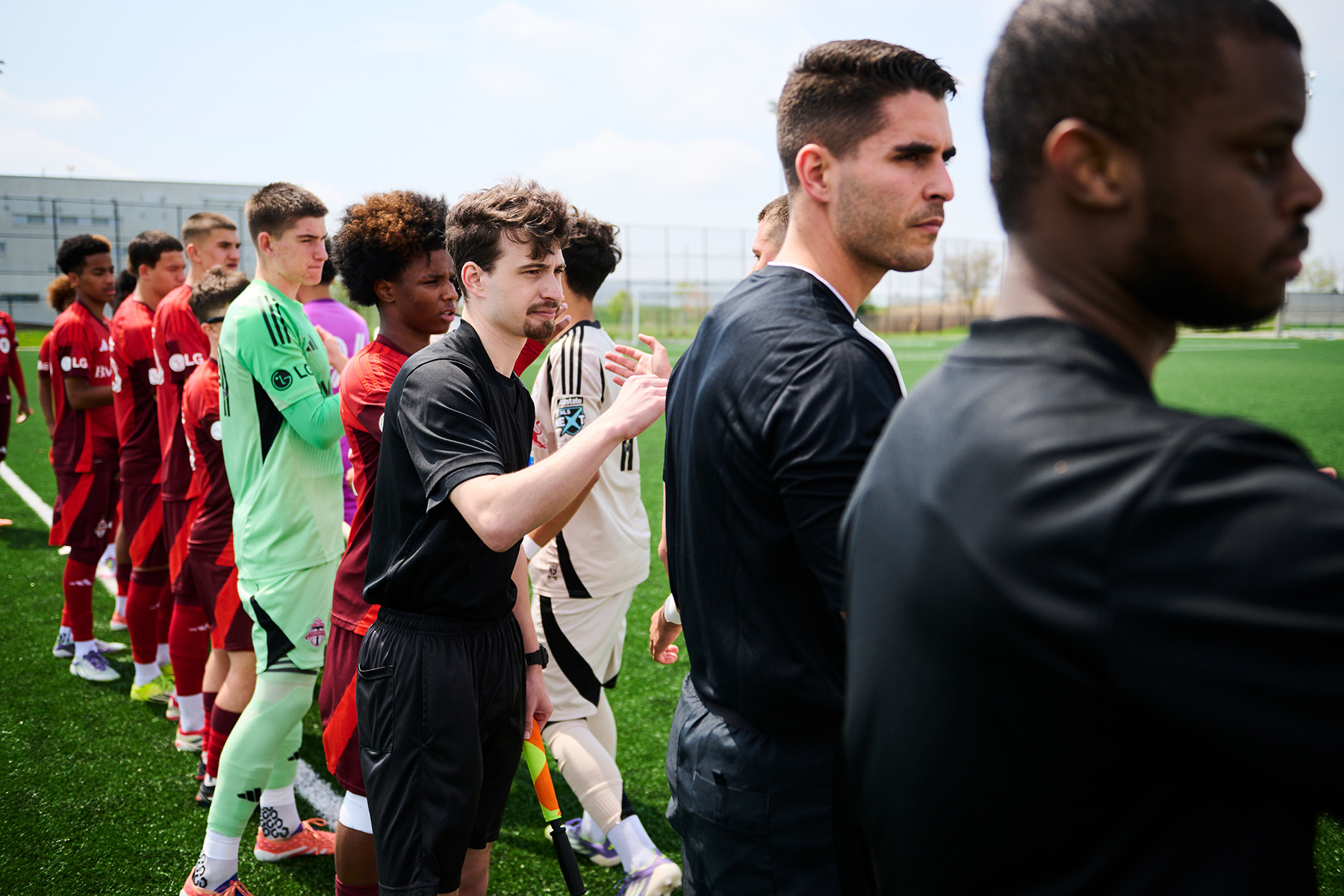
Abuse is not the only reason referees quit. Two other refs I spoke to, Robertocarlos Quiroz (named after the Brazilian legend) and Tristan Cerkovich, describe the state of refereeing in Toronto as opaque. According to Robertocarlos, an intense, quiet man in his 30s, referees’ status as subcontractors means that they are responsible for accounting for a system that is chaotic at best. Sometimes they’re paid by Ontario Soccer and sometimes by the leagues, sometimes in cash and sometimes electronically. “We have no idea who to contact,” he says. “You would do a whole bunch of games in a month, and then three months later, you get a lump sum payment.”
Tristan and Robertocarlos show me the spreadsheets that they keep to track their payments from different leagues. Both sheets are dotted with yellow and red cells, indicating lost or unmade payments. And when they do get paid, the pay is too low, they say. “‘No ref, no game.’ Then pay me more,” says Robertocarlos. (David Barrie from Ontario Soccer insists that as long as refs invoice correctly they should get paid on time. “There are things that ‘fall through the cracks,’ but overall we are pretty good!”)
For Robertocarlos, though, all this accounting chaos is indicative of a larger pattern of disrespect and disregard for referees that manifests both in a lack of training and a lack of pay. Qualifying as a referee is simple, he says: “Show them that I can do signals and shit, and then they give me a badge.” But staying a referee requires sacrifice, and his priority is the integrity of the sport.
“All of these games are World Cup games for these kids, right?” he says. “This is as far as some of [them] may go. So you have to treat it with some sense of care. I’m here to respect the sport. I’m here to do something for the sport.”
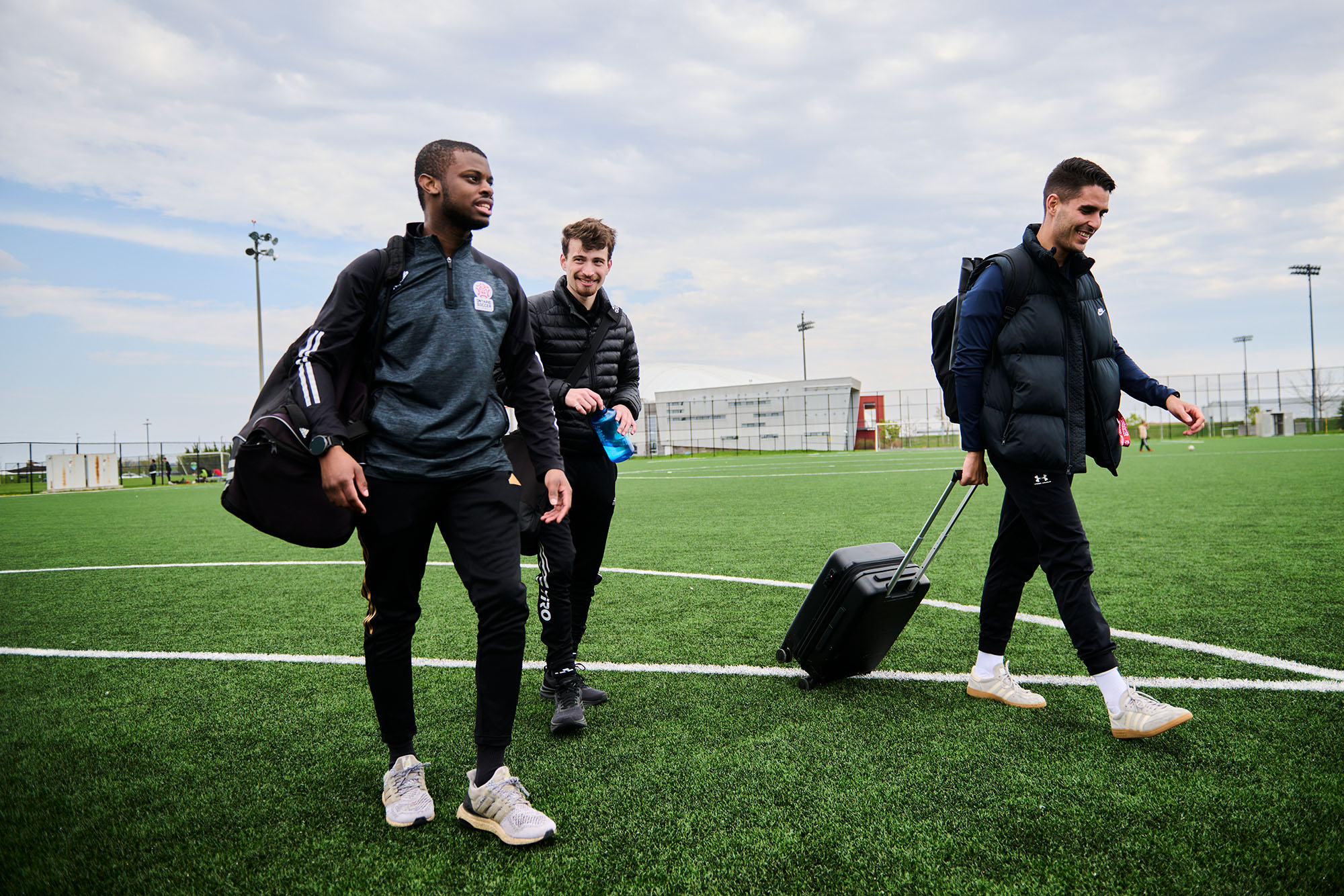
Inside the dome at Seneca College, in the break between games, the referees rib one another in one moment and discuss the contentious decisions of the day in another. In a match where Ben is an assistant referee, there has been a red card. Ben assures his colleague that by necessity, the call was correct. “If you have a foul, I have a red,” he says. Though the laws of the game allow for some discretion, referees think in hyper-logical terms: if-then statements, necessary and sufficient conditions. The girl they sent off is crying quietly.
In a certain light, these strictures lend referees a gravitas—the air is sucked out of the stadium when the only arm that matters extends toward the penalty spot. But in another light the referee becomes a pantomime figure, somewhere between a cop and a clown. Many referees I spoke to persisted in their work out of a sense of civic duty. Needless to say, the idealism of referees is often tested.
Later that day, I watch Lawrence trudge toward the exit of the bubble as I sit with John, the field’s convenor, who has been a referee for 30 years himself. John, like all the other referees I spoke to, thinks the growth of the game resulting from the World Cup will put a strain on an already struggling cadre. “We’re two years behind,” he says. “Right now, they should have the infrastructure built.”
John is a nostalgic man. Referees these days, he reckons, are no longer up to scratch. “Mentally, physically, emotionally, they can’t handle it,” he tells me. He shakes his head at Lawrence’s receding figure as I tell him how many games the young referee is officiating today. “The problem is that he’s proud of it—you shouldn’t be proud of it. You’re taking away from the game. I’m sorry. You’re taking away from the quality of the game.”
I venture that Lawrence doesn’t seem proud of his game-load, but in some ways bound by it. John huffs and pivots. He is the pinnacle of the referee-as-monk ideology, of self-abnegation as a form of service to the game. For him, a referee’s seriousness is the condition of their total suffusion into the rhythm of the football. He trains a new crop of referees yearly, he tells me, and stresses to them that they are no protagonists: “I said to a group of referees, ‘look yourself in the mirror. Do you see anything? You’re in the wrong business. Get out of fucking refereeing.’”
In the day’s last game, Ben is centre stage, prowling the field, waving his arms, and telling off teenagers for kicking each other in the shins. As the ball makes its way into the penalty area, a tangle of limbs ensues and the ball squirts out from beneath the goalkeeper. I hear the cry of the striker, an exaggerated cry of pain, eleven boys screaming “REF!” and Spanish cries of “PENAL! PENAL!” from the sideline.
Ben straightens his arm downward: penalty. His whistle screeches long. He’s crowded by the young boys on both teams who he waves off theatrically. To my surprise they disperse. This is all part of the choreography between the ref and the players, a dance of unhappiness that lends coherence to the game. After the anger fades, on the ride home, and weeks later, Ben will be thinking about that decision, turning it over in his mind, wondering if he’d make the same call if he saw it again.
More from this issue

Wheelchair Athlete Rio Kanda Kovac Wants to Win
His thirst for victory has gotten Team Canada's youngest player this far in wheelchair rugby. But in this fast-paced, aggressive, yet remarkably inclusive sport, getting ahead also means learning to play nice.
Cricket in the GTA Is Booming. Now Comes the Hard Part.
Fuelled by waves of South Asian immigration, cricket has become one of Canada's fastest-growing sports. But overcrowded fields, failing businesses, and allegations of corruption are threatening the game from within.
Where Are All the Female Coaches?
Canada is in a moment of unprecedented expansion in women’s sports. But structural barriers and unclear pathways into coaching mean that women are being deprived of opportunities to lead the next generation of young athletes.
Yasiel Puig at Christie Pits
A free Maple Leafs baseball game at my local playground has long been the best community event in the city. Then the team signed a former Major League Baseball star awaiting sentencing.
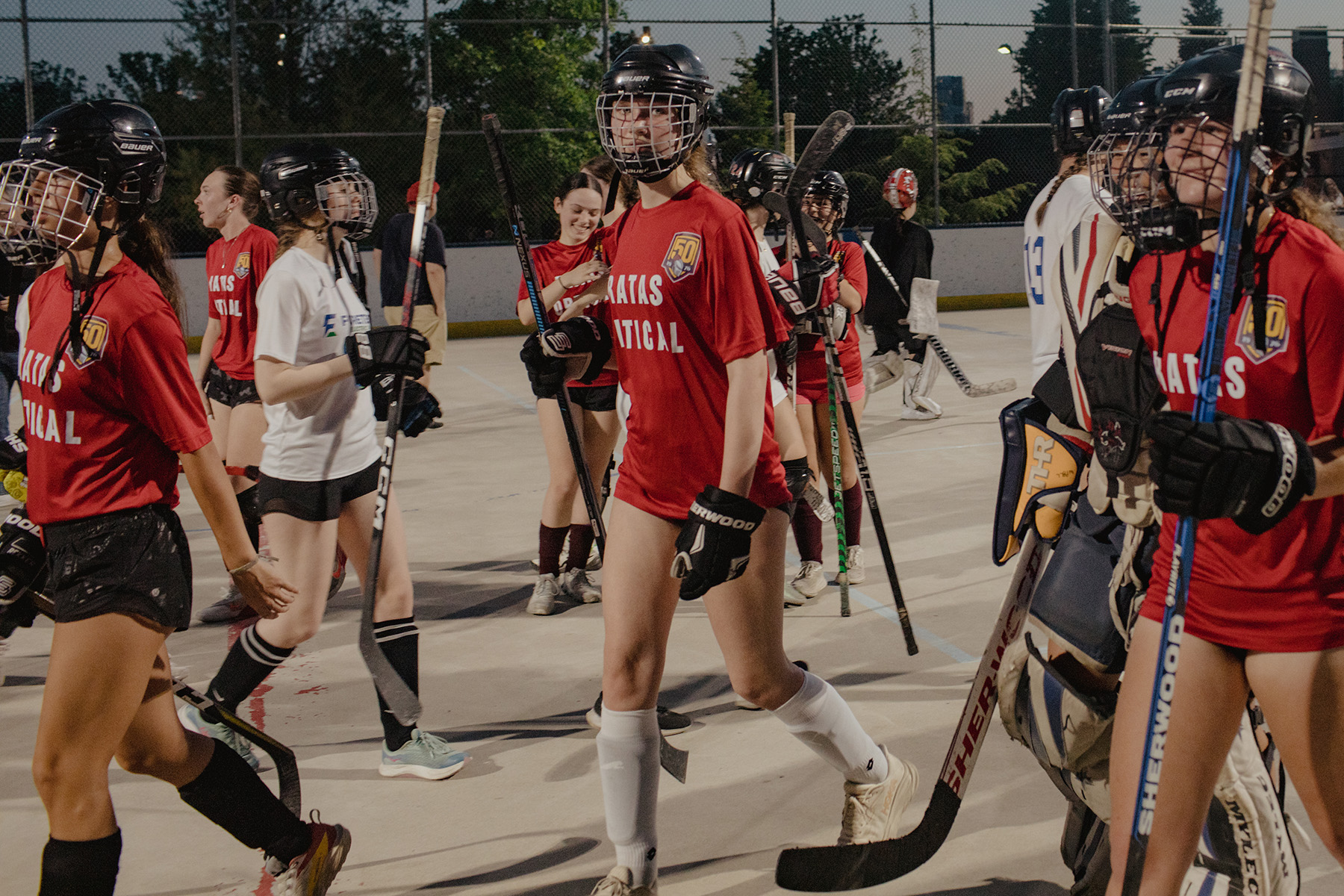
Kids Aren’t Active Enough. Youth Sports Are Part of the Problem.
As competitive, specialized athletics dominate gyms and community fields, the children who need physical activity most are the ones being left out.

An Illustrated Guide to the FIFA World Cup in Toronto
How many private jets could this pay for? Seven illustrations to make sense of the costs and payoffs of hosting the World Cup.
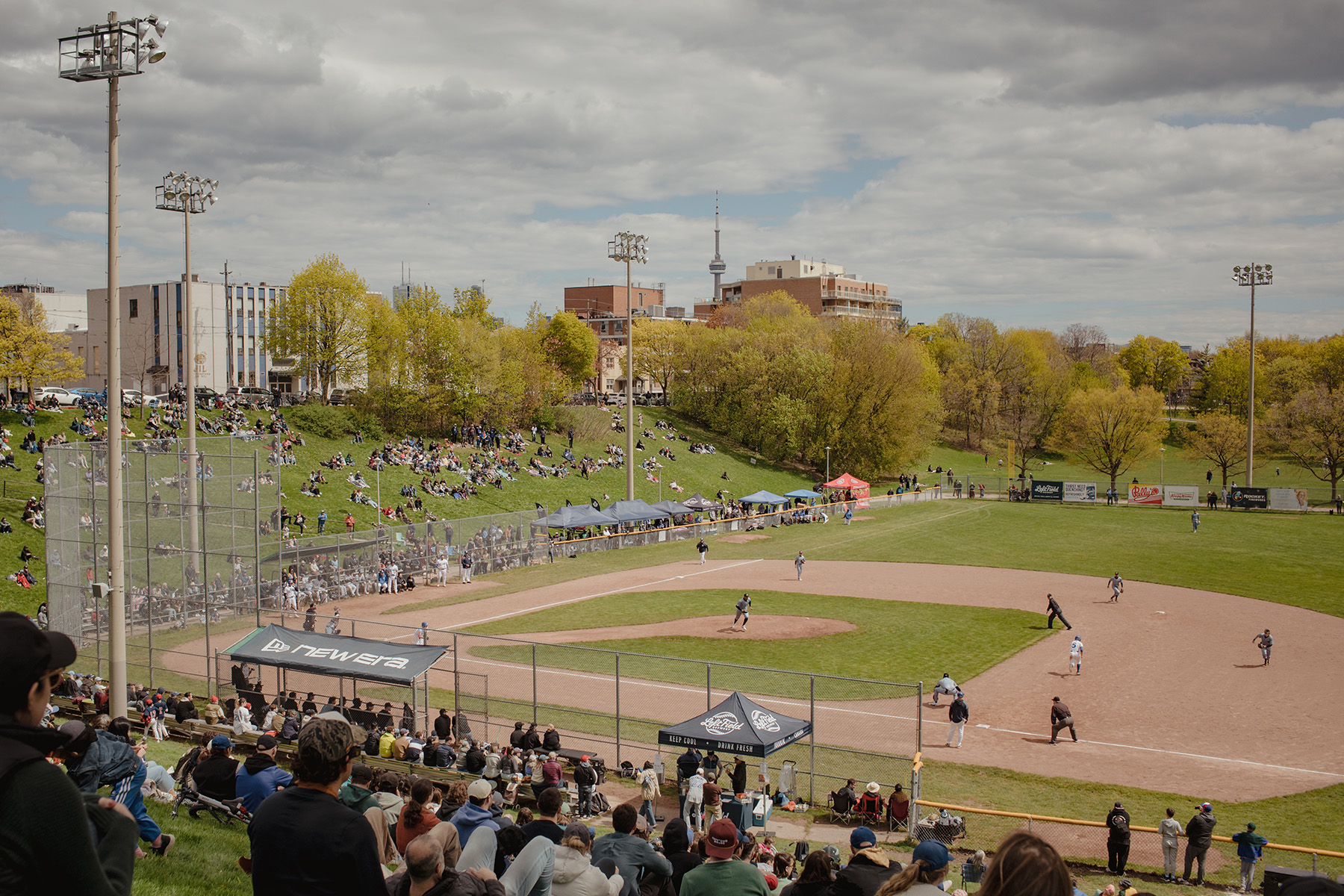
How Sports Transform a City
The World Cup is a reminder of the massive influence sports can have over a place like Toronto—reshaping our geography, sparking celebration or mourning, and remaking our experience of the city.