


With three minutes left in the third quarter, the Boise Bombers are down by seven in their first game of the April 2026 U.S. Wheelchair Rugby National Championships. At the whistle, Toronto’s Rio Kanda Kovac, wearing his green camo Boise jersey, tosses the ball into the court.
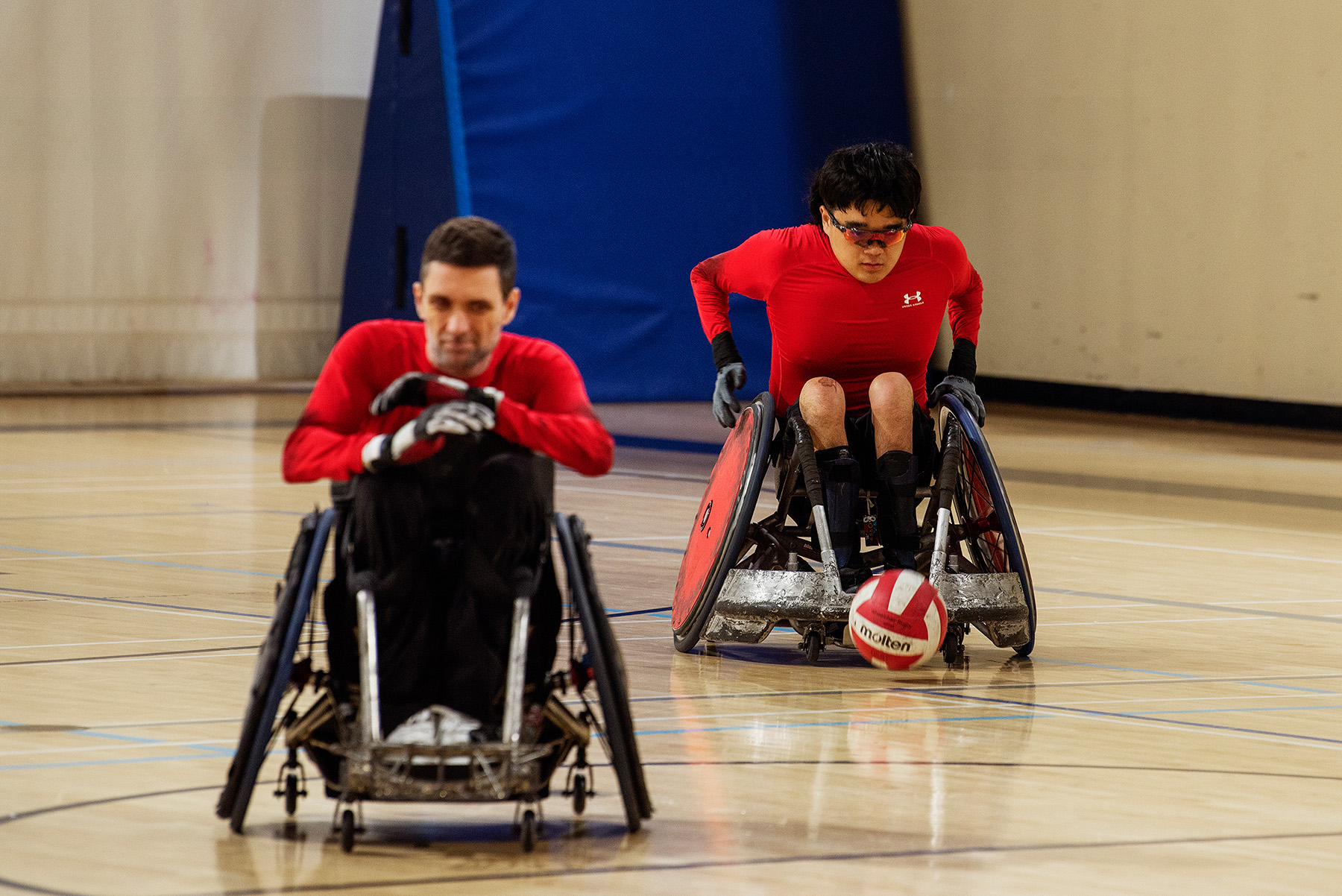
Arms pumping, he drives his wheelchair up the court toward the opponent’s end. He finds an opening. Rio catches a pass from his teammate and makes a hard right, narrowly averting a collision from an oncoming rival. With the ball tucked in his lap, Rio seizes his chance. Ahead of him is a clear path to the goal line, but his rival from the Wounded Warriors Abilities Ranch team is now right at his side. He cuts Rio off, forcing him toward the sideline to a stop.
At that moment, No. 8 from the Wounded Warriors comes to assist his teammate on defence. He and Rio have clashed before. No. 8 hurtles toward Rio at full speed from the side. He slams his chair into the back of Rio’s wheel. CLANG. The momentum sends Rio’s chair into a half-spin. It tips backward and lands with a sickening bang.
The video camera, broadcasting the game live online, doesn’t capture Rio’s head hitting the hard wooden gym floor. But it’s unmistakably a concussive hit. You can hear a collective groan of sympathy from the onlookers.
“Ohh! Ow! Fuck!” Rio screams.
Two men come running to his aid.
“You hurt, Rio?” a voice calls from the sidelines.
“I’m out,” he says quietly.
“You okay, Rio?” a louder voice yells from a distance.
“No.” His voice is flat.
Several seconds pass. The two helpers flip his chair right-side up. Rio gently touches the back of his head, ruffling his distinctive feathery black mullet. “What the fuck!” he curses under his breath.
The ref fetches a towel to wipe Rio’s sweat marks from the floor so they can resume the game. Alone, Rio, one of Canada’s top wheelchair rugby players, slowly rolls off the court and out of sight.
Join the thousands of Toronto area readers who've signed up for our free newsletter and get award-winning local journalism delivered to your inbox.
"*" indicates required fields
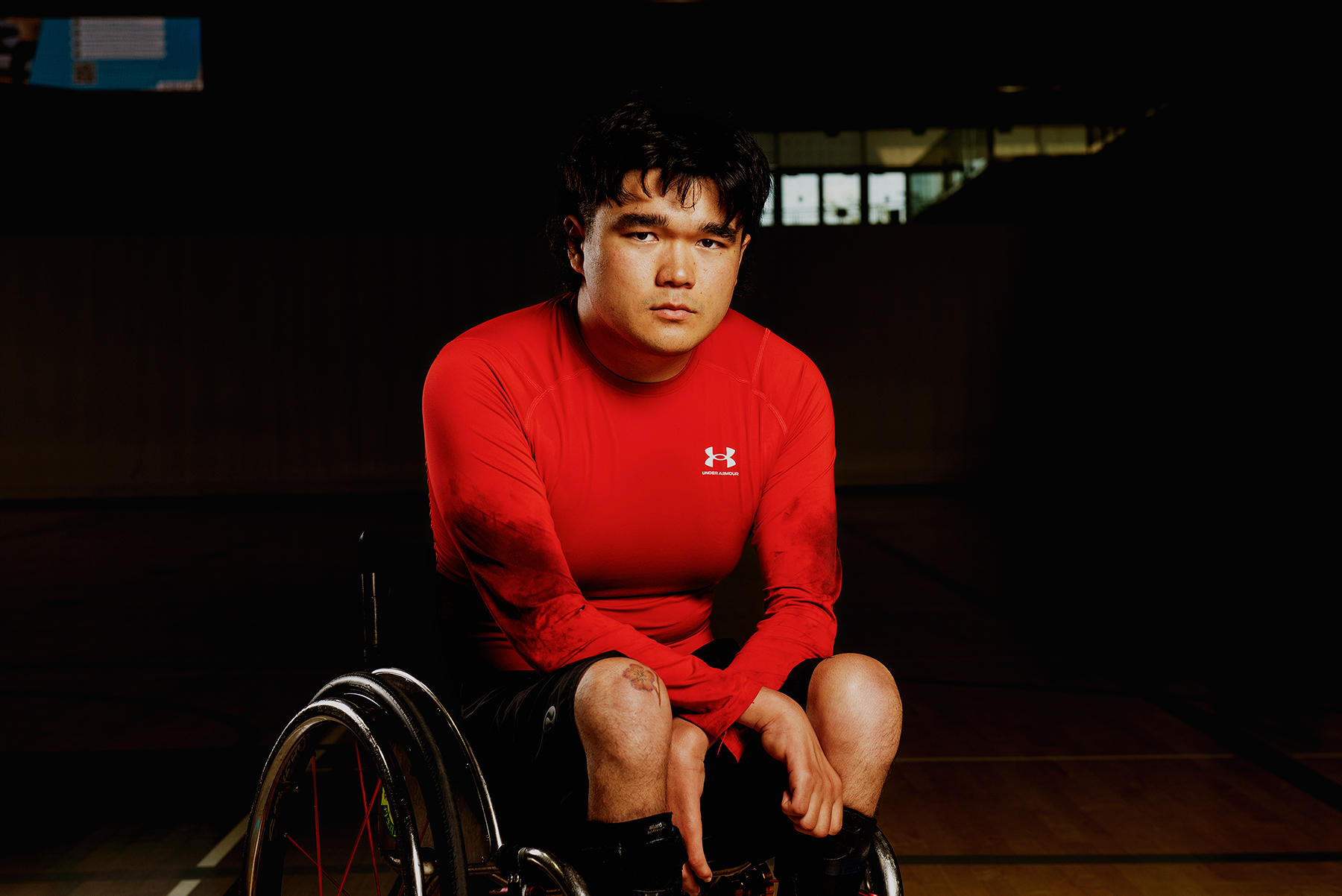
At 23 years old, Rio Kanda Kovac—broad-chested, smooth-faced, and headstrong—is a dynamo on the court, and the youngest wheelchair rugby player on Team Canada. He’s held that distinction since he was selected to join the national team at age 16, playing alongside athletes more than twice his age. At 21, Rio went on to represent Canada at his first Paralympic Games in Paris in 2024.
In this intense, full-contact sport, he’s had multiple injuries: a broken finger, a broken rib, several concussions. The concussion he sustained this April during the first game of the U.S. National Championships in Birmingham, AL, is his third. It worries his dad, Nick Kovac. As a carded elite athlete, financially supported through the federal Athlete Assistance Program, Rio could enjoy a very long career in the sport, Nick says. “But it’s going to be short if he continues to get injured.”
Injuries aside, the past couple years have been painful for other reasons. Some of Team Canada’s star players have retired. A widely beloved coach and mentor passed away. New coaches have stepped in. Earlier this year, Rio had a nasty fight with a teammate. Plus, heading into this August’s World Championship in Sao Paolo, Brazil, the potential for Canada to earn a medal is, in Rio’s estimation, “grim.”
“Vibes are low,” he says. “Vibes are low.”
No longer a newbie, yet still decades away from being one of the senior players on Team Canada, Rio is now trying to navigate the next stage of his athletic career. There are workout plans, diet regimens, and game strategies to follow if you want to be a stronger athlete. But there’s no such formula for being a great team player, for fostering goodwill, and accepting things beyond your control. And Rio’s drive—his desire to win—seems to be what brings him the most grief.
“I was having fun for the first six years. Probably it’s been more of a grind the last couple years,” he admits. Like anyone, “you have good days and bad days,” he says, “but you just have to mitigate the lows. And without rugby, I don’t know—I don’t know what to do with my time.”
Without rugby, in other words, he would be lost.
But when I visit him at his North York home in late April, Rio’s been sidelined for over two weeks. It’s not just the concussion from that hit at the tournament in Birmingham. He’s been benched by Team Canada for the spat he had with a teammate in February, when a dispute during a game escalated into fisticuffs. “Just tempers were high,” Rio says, dismissively. But as a result, Rio is at home in Toronto, while Team Canada competes at the Japan Para Wheelchair Rugby Championships. Rio admits part of him is disappointed to be missing out.
“I want to be with the team, you know. But, ah,” he says, pushing away from his kitchen table, hours before the first game in Japan between Canada and the U.S. He inhales sharply. “We might get our asses whooped.”
He’s played both against and with some of the U.S. players before, including on the Boise Bombers, one of several clubs and teams on which he splits his time. He knows what Team Canada is up against, and predicts a loss. He’ll watch them later that night, tuning in to a live broadcast from the large house he shares with his mom, Yoko Kanda, and sister Julie. “Oooooh, it’s gonna be hard to watch,” he says.
What he doesn’t say, at least not out loud, is that part of him—the part that isn’t disappointed to be missing out—may be a little relieved he won’t be involved in Team Canada’s loss.
That night, the U.S. does, indeed, win against Canada, though not by quite as wide a margin as he expected.
It’s a wonder that wheelchair rugby isn’t a more popular spectator sport in Canada. It’s fast-paced and nail-biting, played by dynamic athletes, each with their own harrowing backstories. Even from the sidelines, you can feel the reverberation of every wham and thwack of chairs colliding into one another. It echoes in your guts. The players don’t hold back; there’s a reason the sport was previously known by its less-sponsor-friendly name, “murderball.” (Incidentally, almost everyone I speak to for this story mentions the 2005 documentary, Murderball, which features several national heroes of the sport.)
Plus, the game is as Canadian as it gets. Wheelchair rugby originated in Winnipeg in the late 1970s, when a group of individuals with spinal cord injuries began improvising at a local gym while waiting for a volunteer to lead their rehabilitation sessions. Today, the sport is a global phenomenon. It’s played over four eight-minute quarters, with four players from each team on the court at a time. Unlike traditional rugby, it’s played with a volleyball on a basketball court, and players are allowed to pass the ball forward to their teammates. The objective is to carry the ball across the opponent’s end line between two pylons.
Wheelchair rugby is remarkably inclusive. It’s a co-ed sport, mostly played by athletes with quadriplegia (contrary to a common misconception, quadriplegia does not necessarily involve the full loss of movement of all of one’s limbs. While it involves some degree of paralysis from the neck down, those affected can have varying levels of sensation and ability to move.) The teams are kept fair by assigning each player a classification number based on their functional ability, ranging from 0.5 for lowest function to 3.5 for highest function. At any given time on the court, the total value of a team’s four players cannot exceed eight.
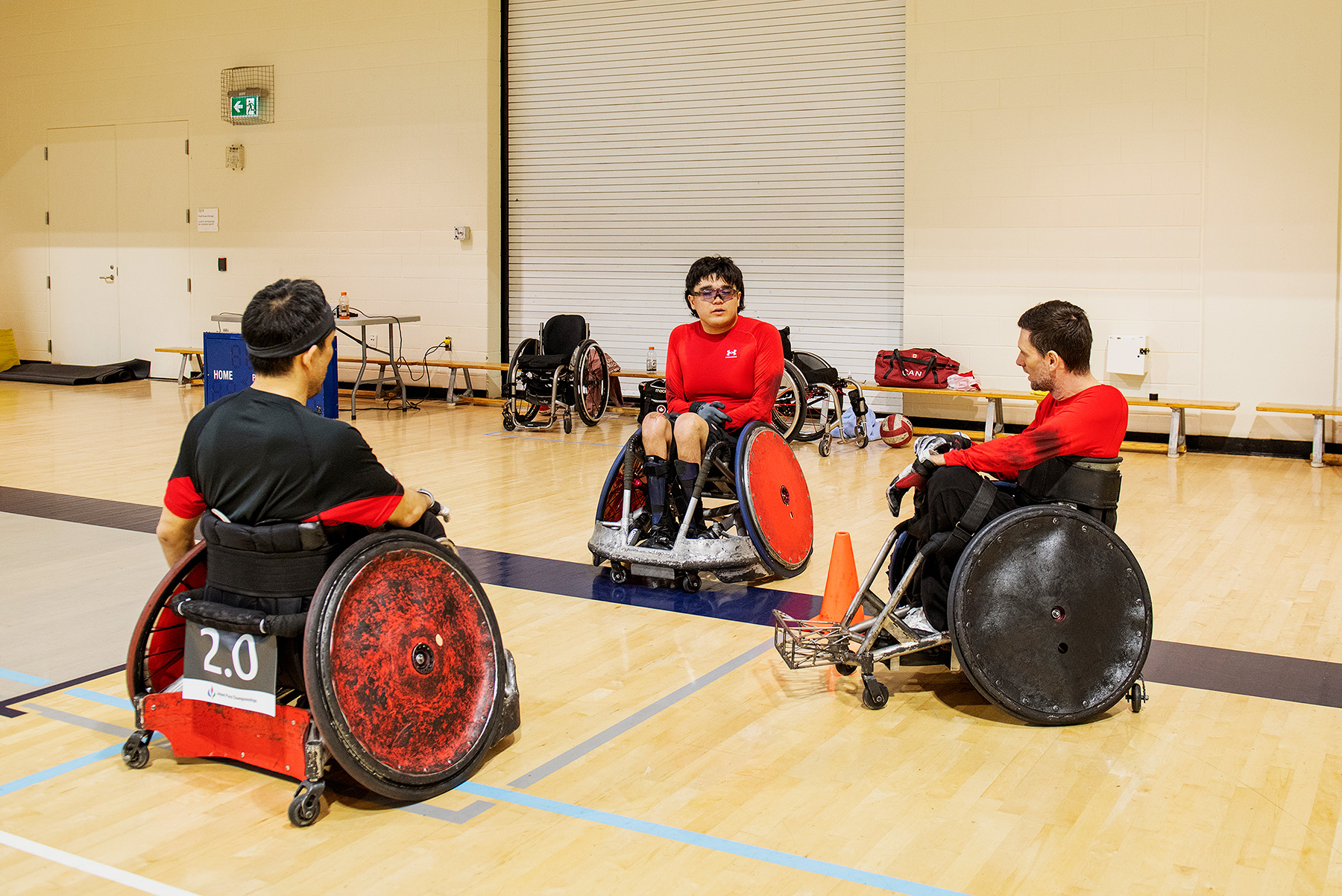
Many players who struggle in other sports discover they’re able to thrive in wheelchair rugby. Team Canada co-captain and long-time defenceman Eric Rodrigues says he didn’t have the temperament or desire for solo sports after his spinal cord injury at age 29. Nor did he have enough physical function to play wheelchair basketball. “I have the fewest working muscles of any athlete on our team,” he explains. Rodrigues is classified as a 0.5.
Though he can’t throw the ball overhand, he’s able to pass it by batting it into the air. And at 47, he’s a stalwart on the team, having represented Canada at the past two Summer Paralympic Games.
Players often find the sport helps them off the court, too.
“There’s a big social aspect,” Rodrigues says. When you’re playing with others who are in a similar situation, “you’re learning from them. Not just about sport. About life. Life with a disability.”
In the past, wheelchair rugby has predominantly been played by athletes with spinal cord injuries. But as the sport grows, it’s attracting players with a broader range of impairments.
Like his father Nick, Rio has Charcot-Marie-Tooth disease, or CMT, a hereditary, degenerative condition that affects the nerves and muscles in his limbs. Rio’s function has gradually declined with the progression of his disease. In rugby, he is currently classified as a 2.5.
Rio’s CMT wasn’t evident at first. Neither of his two older siblings have the condition. But by the time Rio was about four, Yoko says she began to see signs of CMT, which often starts with weakness in the feet and legs before progressing to the hands and arms. He was constantly tripping, and his feet, particularly his right foot, curved inward as he grew.
The realization landed heavily for Nick. “As a father, you’re like ‘Wow,’ you know? ‘What have I— what have I done?’”
Yet Nick recognized that his son’s experience of growing up with the condition would be different from his own. When Nick was a child, he had no relatives with CMT and there were few people who understood it or had even heard of it. But he’d since learned a lot about the condition first-hand and what to expect; he could provide Rio with some of the support he never had.
Yoko responded to their son’s condition differently. Looking back, she says, she realizes it took her many, many years to fully accept Rio’s disability. “It’s hard to accept the truth,” she says. She put him in all sorts of activities and sports, from swimming to skating, determined he would have the same experiences and opportunities other children had. If he couldn’t keep up with his teammates in soccer? Fine. She urged the coach to put him in as goalie. When he was 11, and still walking with the aid of braces, she took him and his sisters to climb Mount Fuji, all 3,776 meters in elevation. They made it to the summit.
Of all the various sports and activities Rio tried, however, it was wheelchair rugby that captivated him. He first saw it played at the 2015 Parapan Am games in Toronto the summer before he turned 13. It was loud. It was electrifying. “It touched his heart,” Yoko recalls.
When I ask her why, she taps her chest and says, “Soldier heart.” He’s always been scrappy, and even as a young boy, he had a thirst for action and combat, she says. “I thought [in his] previous life, maybe he was a soldier, a warrior… He’s a fighter. He always wants to be the best.”
Soon after, Rio moved to Tokyo, where he lived with Nick. Though bright, he wasn’t academically inclined. Nick felt that participating in a team sport would be good for him and that wheelchair rugby was something he could really excel in. He recalls spending at least $10,000 on a specialized rugby wheelchair for Rio, scouring Facebook groups, taking Rio all over—to neighbouring cities like Yokohama and Chiba—to watch games and practice. In helping his son get into the sport, Nick, who started using a wheelchair at the age of 50, found himself learning to play, too. There were times Yoko would visit, she says, and help Nick and Rio transport their rugby chairs to a school gym that they’d rent out. There, the two would practice together, racing each other round and round the gym.
Many players have similar tales of discovering that this sport suits them like no other.
For Ruby Stevens, a 2023 Parapan Am gold medal swimmer who now also plays wheelchair rugby, the thrill was in seeing people like her play a full-contact sport, “and not [be] treated like they’re fragile,” she says. Stevens, 23, has a rare disorder called complicated hereditary spastic paraplegia, as well as a movement disorder called generalized dystonia. When you have visible mobility issues like she does, she explains, people tend to treat you as though you’re made of glass. People would speak about her, or around her, or near her, as though she wasn’t even there. But when she joined the local club team, Toronto Titans, she felt instantly included.
“Everyone was very eager to greet me, and talk with me, and learn about me,” she said. “I’ve never had that happen to me before.”
Beau Hayward, 36, who also plays for the Toronto Titans, had tried and floundered at a few different sports, like sit-skiing and sailing, after he was injured in a diving accident. But the first time he showed up for a wheelchair rugby practice, it felt seamless.
“I just fell in love with the game immediately,” Hayward says. It’s hard to explain, exactly. “It’s just a feeling, right? You feel like you’re part of the community and a team, and you’re welcomed.”
Rio had a considerably less warm and welcoming reception when he eventually joined a club team in Japan. As Nick puts it, it didn’t go smoothly. Rio himself describes the club as toxic, run by a leader who had “very old-school Japanese” hierarchical ideas about respect. He admits he was kicked out of a few practices for having a “bad attitude.”
But in 2018, Nick and Rio were put in touch with a couple of Team Canada coaches, and on one of the team’s visits to Japan, the father and son duo were invited to meet them. “That was our first interaction with the Canadian team,” Nick says. “We got to meet all our heroes of the time.”
On a Thursday morning in March, Rio races ahead of his teammates as they do laps around an indoor basketball court at the Toronto Pan Am Sports Centre in Scarborough. It’s a routine practice for the Toronto-area players on Team Canada. When co-captain Rodrigues calls out for them to sprint, Rio leans in and drives his wheelchair, letting out a grunt that sounds like “ish!” with every forward push. “Ish! Ish! Ish!”
He brings that same intensity to his strength-training session later that same afternoon. As he pulls on the weight machine, a strap wrapped around his wrist since he lacks gripping strength in his hands, his eyebrows knit together, and he gazes ahead of him as though he’s focused on something invisible to everyone else.
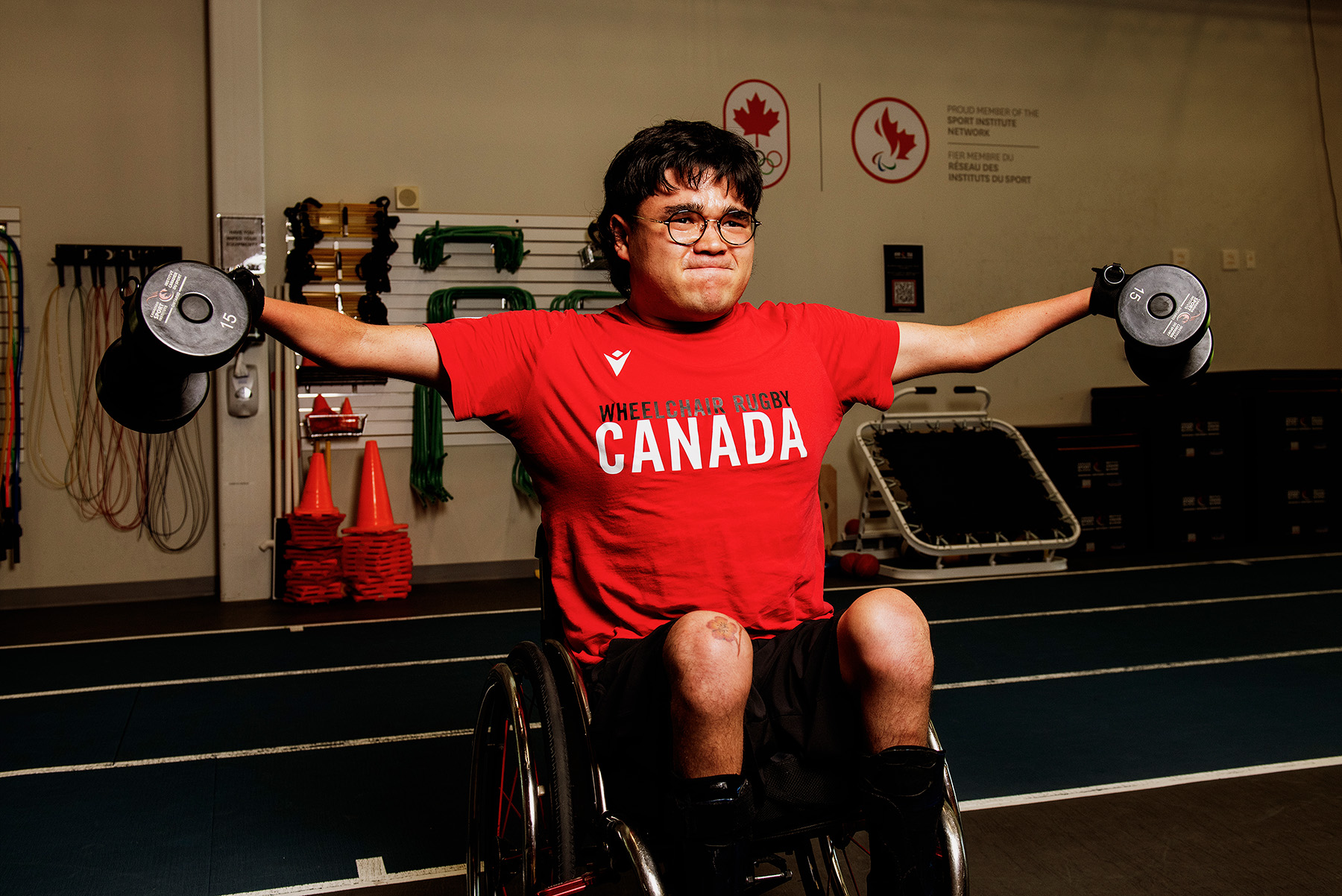
From the way he trains, you can see why Team Canada selected Rio when he eventually tried out for them in 2019. There’s an unmistakable fire in him, a kind of hunger that drives him to go beyond the limits of the rest of us.
But whatever you call that quality—grit, tenacity, relentlessness—it can also sometimes make him insufferable, even to those closest to him. Yoko recalls he was impossible to be around during the 2024 Paralympic Games in Paris. For days before and after the Games, he was amped up and bursting with a restless energy. Yoko, who prefers tranquility at home and enjoys quiet pursuits like Japanese tea ceremonies and flower arranging, says his frenzy drove her up the wall. “I hated it.” The pressure Rio was under was so high, she says: “He has to keep winning, keep winning, keep winning.”
As you’d expect, there’s a high degree of training and skill involved when it comes to playing wheelchair rugby at the elite level. But that’s not all.
“A huge part of playing on a national team is having the trust and respect of your teammates and putting the team first,” says Paralympian and long-time Team Canada player Travis Murao. “You know, being selfless. Sacrificing for the team.”
Murao, who became the Ontario hub coach for Wheelchair Rugby Canada last year, is reluctant to discuss Rio specifically. As his Ontario coach, he says he wants to respect his privacy. Nevertheless, his comments about trust, respect, and selflessness seem germane.
In the run-up to the World Championship in Brazil this August, the expectations for Team Canada are different, compared with previous major tournaments, Murao says. In the past, Canada has been one of the top-ranked teams in the world. It’s now ranked at number 6, and is fighting to qualify for the next Paralympic Games in Los Angeles in 2028.
The team is currently in a rebuilding phase, Murao explains. It’s only natural for teams to see a dip in their international rankings as they bring the next generation of athletes up to speed, he says, noting that’s already started to happen over the past two competitions.
“The team’s really come together. It’s really starting to gel and fight for each other, and I think it’s going to be really exciting to see how we develop heading into Brazil,” he says. He does not mention that these competitions are ones Rio’s been forced to miss.
Rio’s situation is not unusual, says Mike Frogley, a Paralympian and former head coach of Team Canada in wheelchair basketball, whom Nick has hired to privately coach Rio through his current career malaise. Part of becoming a great player in any team sport is figuring out how to align your goals with those of your teammates.
“Good players can play really, really well on the court,” he says. “What great players do is they not only play really, really well themselves, but they make everyone else around them play above what they thought they could do.”
That was the hallmark of the late Garett Hickling, who had coached Rio at the club, provincial, and national levels. Hickling, known as “Coach G”, was a four-time Paralympic medallist and a legend in the sport. His sudden death in June 2025 was a blow to the entire community. Rio says they weren’t close, but near his computer desk at home, he keeps a framed black-and-white photo of Hickling in his prime at the 2012 London Paralympic Games, smiling and clutching a silver medal around his neck.
“He was very patient,” Rio says. “And you know, you need a certain level of patience when you’re working with me and, you know, like when I’m not listening. But G was always there.”
Rio is currently in the process of learning how to motivate and uplift others, and to get on the same page as his teammates and coaches, Frogley explains: everyone wants to get to the podium, but they may have different timelines for when they see that happening.
A common mistake is to conflate the final score of each game with success or failure. In reality, he says, the focus should be on the multitude of smaller components, or “winnable goals,” within each game—forcing turnovers by the opposing team, for example, or making more passes. If those things improve over time, the wins will eventually happen, he says. But it’s tough, especially when, for Rio, “all around him is the noise of society, you know. Like, ‘Well, you guys lost to Great Britain by four in the Canada Cup,’ or whatever it may be.”
Player development doesn’t follow a nice, clean line of progress, Frogley says. It involves plenty of highs and lows. And it’s during those lows that great players regroup, learn how they got there, and figure out how to make their way back up again.
“Rio has just so much promise, and he’s in a really exciting spot,” Frogley says. His journey will have its ups and downs, certainly, he adds. “But I think we’re going to see there’s a whole lot more ups than downs.”
When I phone him in June, nearly two months after his injury, Rio tells me he’s pretty much fully recovered from his concussion. Receiving coaching from Frogley has been helpful, he says, as they’re able to talk through his values and about team dynamics. He’s eager to put his altercation with his teammate behind him, and get back on track to prepare for the World Championship in Brazil.
He now recognizes that Team Canada won’t be competing for a medal there. “We’re just trying to, you know, qualify for L.A. So knowing that now…my expectation’s a little bit lower,” he says.
“It’s demotivating,” he admits, “but I think making it to L.A., that’s going to be very important.”
There’s something in his voice that’s a little lighter. A little less deflated. A little less brittle. And I’m reminded of what his co-captain Rodrigues said about how one of the greatest things about this game is the opportunity to learn from one’s peers. Not just about the sport, he had said. About life.
Maybe, just maybe, Rio is on his way toward grander victories—if he can just set his sights beyond the next win.
More from this issue
Cricket in the GTA Is Booming. Now Comes the Hard Part.
Fuelled by waves of South Asian immigration, cricket has become one of Canada's fastest-growing sports. But overcrowded fields, failing businesses, and allegations of corruption are threatening the game from within.
Where Are All the Female Coaches?
Canada is in a moment of unprecedented expansion in women’s sports. But structural barriers and unclear pathways into coaching mean that women are being deprived of opportunities to lead the next generation of young athletes.
Yasiel Puig at Christie Pits
A free Maple Leafs baseball game at my local playground has long been the best community event in the city. Then the team signed a former Major League Baseball star awaiting sentencing.
Kids Aren’t Active Enough. Youth Sports Are Part of the Problem.
As competitive, specialized athletics dominate gyms and community fields, the children who need physical activity most are the ones being left out.
The Grand Ambitions and Grubby Indignities of the Aspiring Soccer Referee
Making it pro as a referee in Canada is in many ways harder than making it pro as a player. That doesn’t stop this corps of exacting, self-serious officials from trying.

An Illustrated Guide to the FIFA World Cup in Toronto
How many private jets could this pay for? Seven illustrations to make sense of the costs and payoffs of hosting the World Cup.
How Sports Transform a City
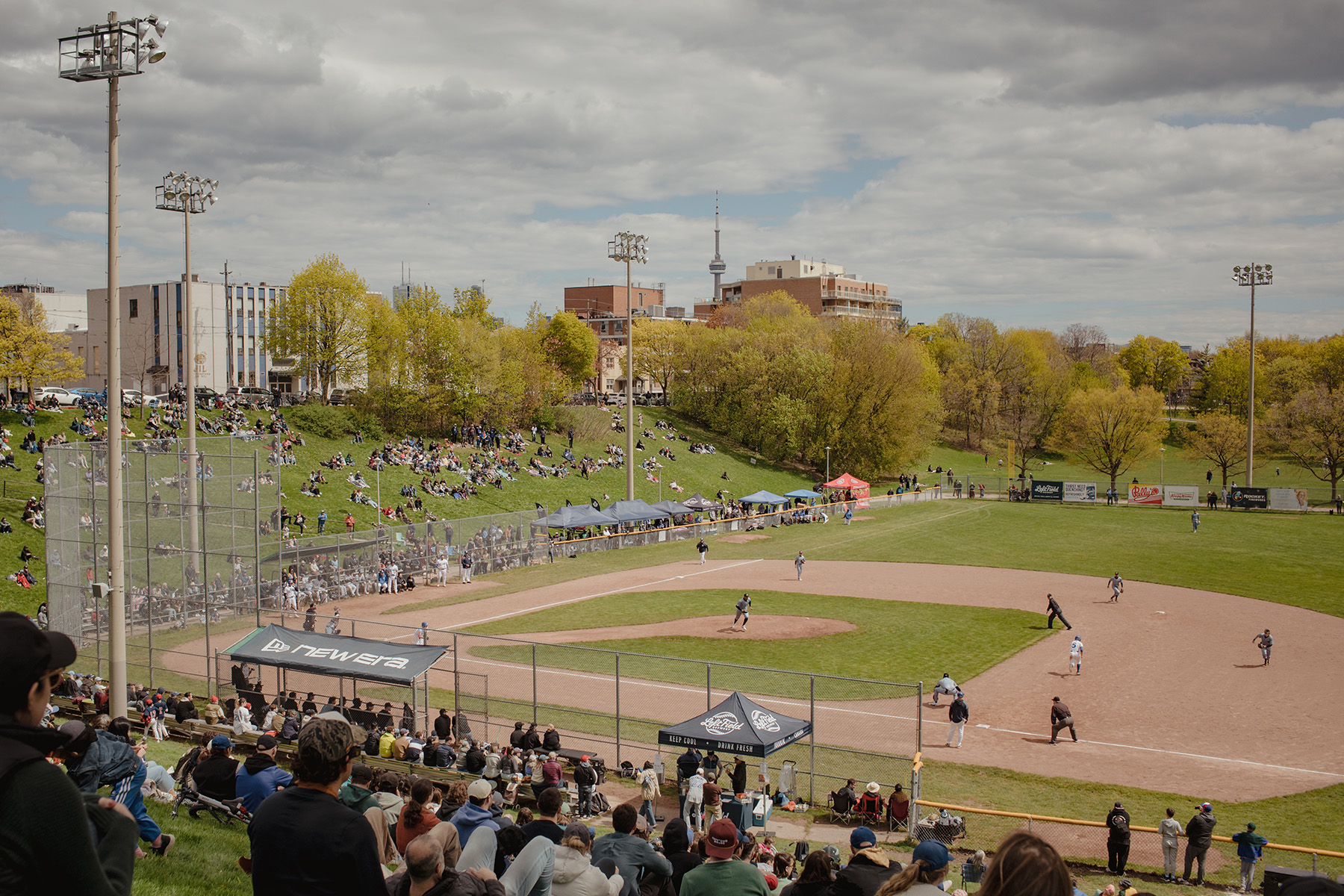
The World Cup is a reminder of the massive influence sports can have over a place like Toronto—reshaping our geography, sparking celebration or mourning, and remaking our experience of the city.