


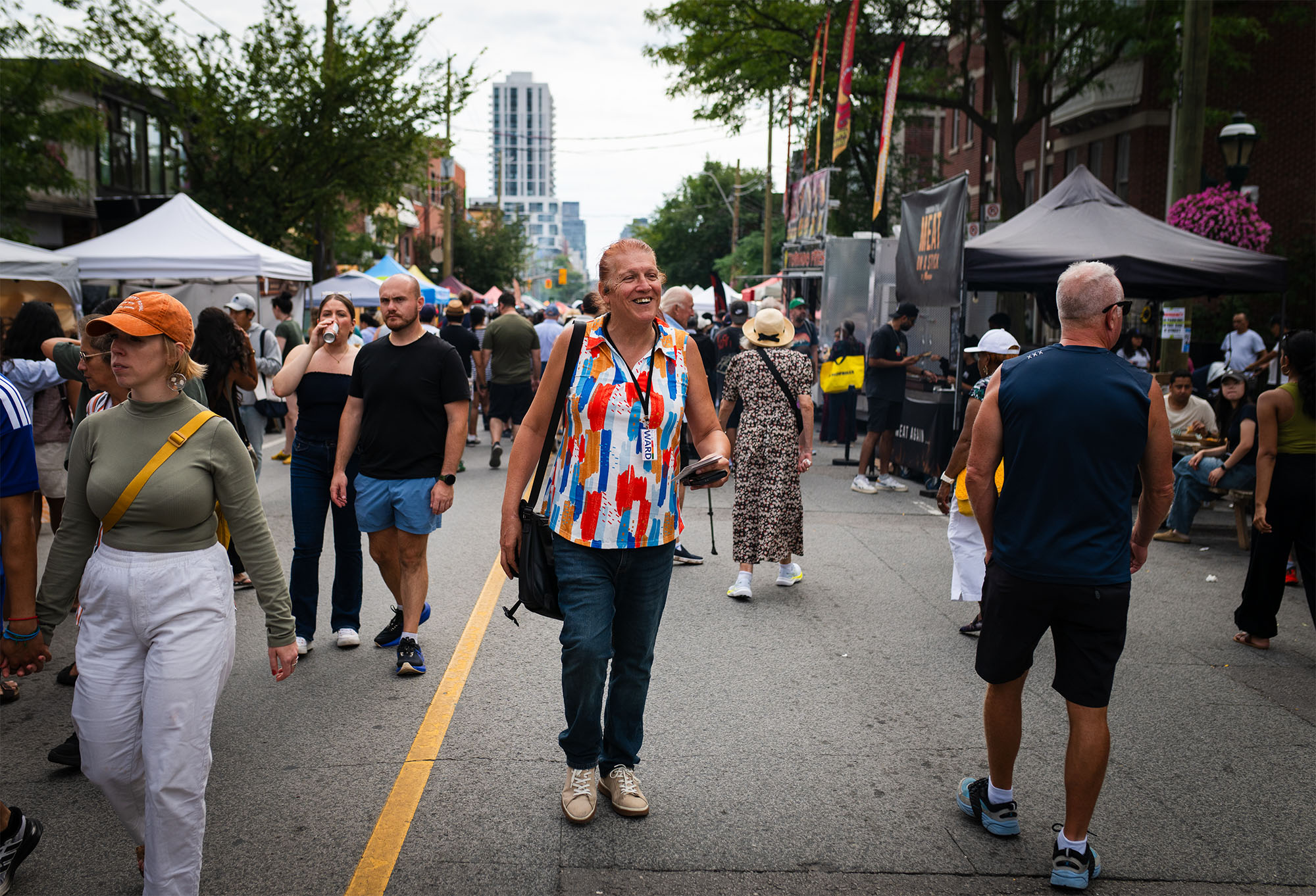
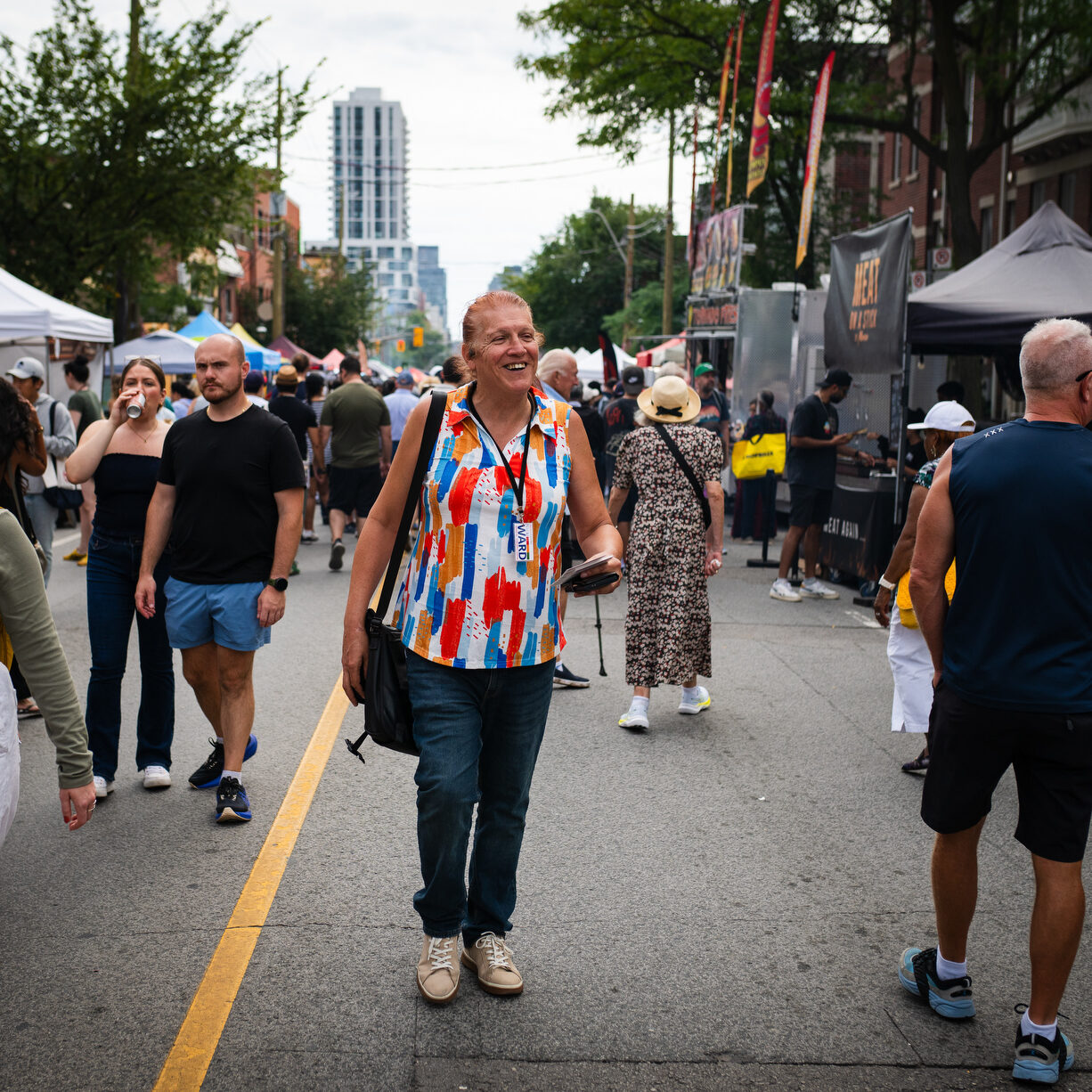
Nicki Ward is tired of being sidelined. She’s blunt. She’s witty. And she cuts an imposing figure. But in the past two municipal election cycles, she says, self-described progressive candidates or their representatives have reached out to her for coffee chats, only to offer the same patronizing advice: step aside so we can protect the vote.
“Every one of them has said ‘Nicki, I’m a supporter of trans rights. But you know Nicki, you are going to split the progressive vote, so I think you should step down,’” she says. “It’s like coming into a room where there’s only a trans person in it with a bunch of cisgender guys who come in and say, ’We need this room, could you leave please.’”
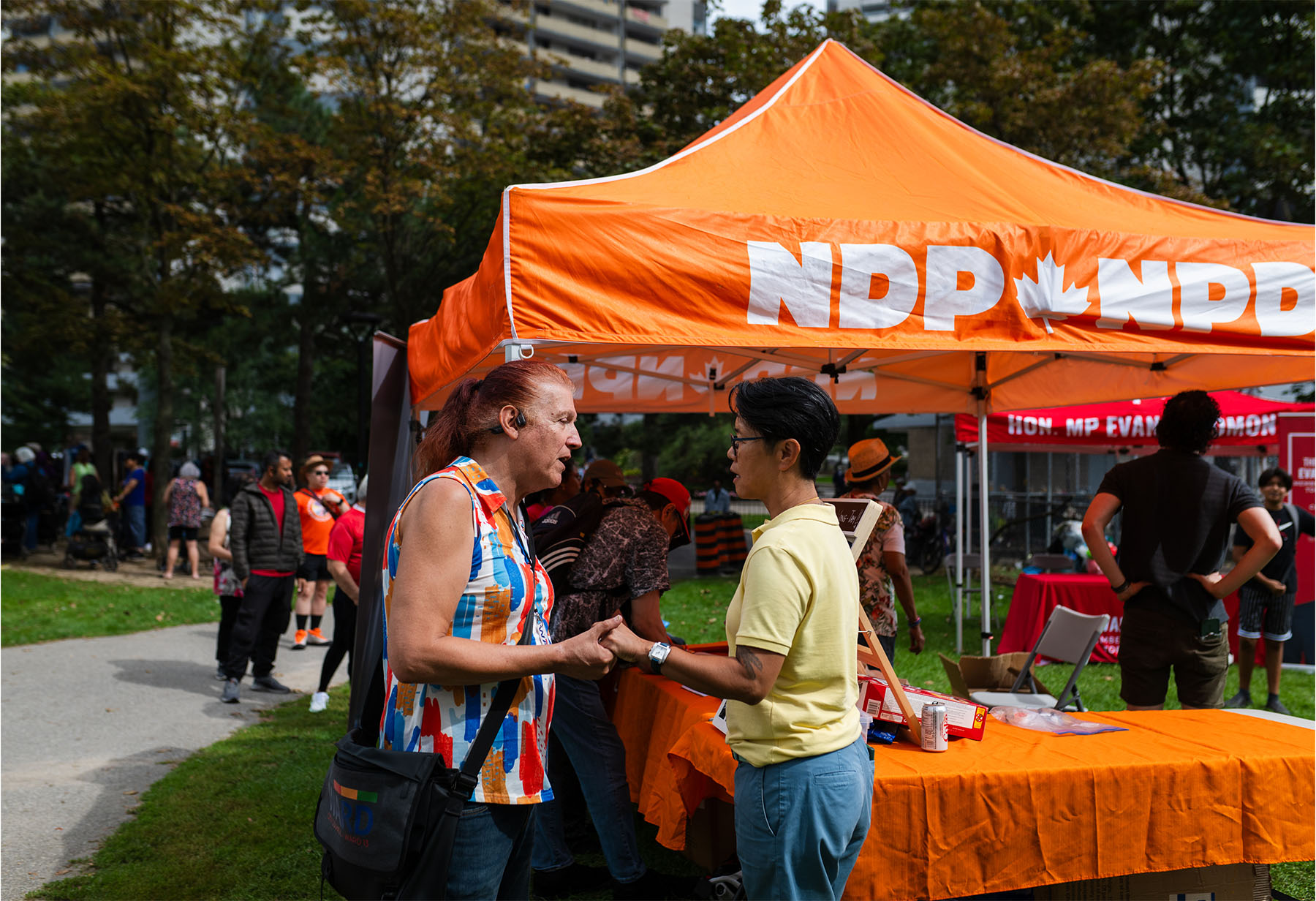
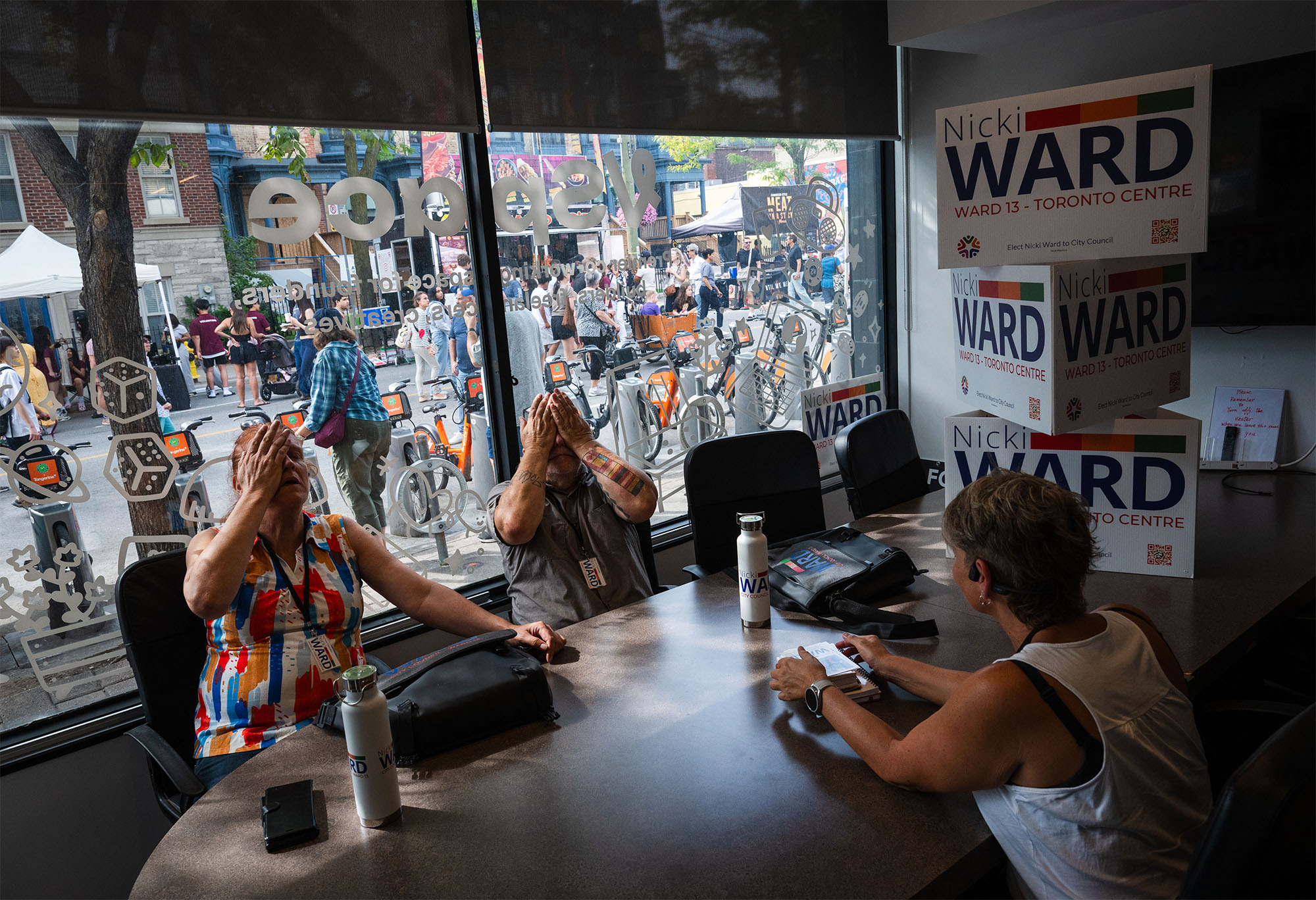
With her vibrant red hair and wide smile, Ward, 64, is instantly recognizable when she walks into the Second Cup on Church Street, where she’s agreed to meet me on a Friday afternoon in August. When it comes to the municipal election this fall, she says she intends to step aside for no one.
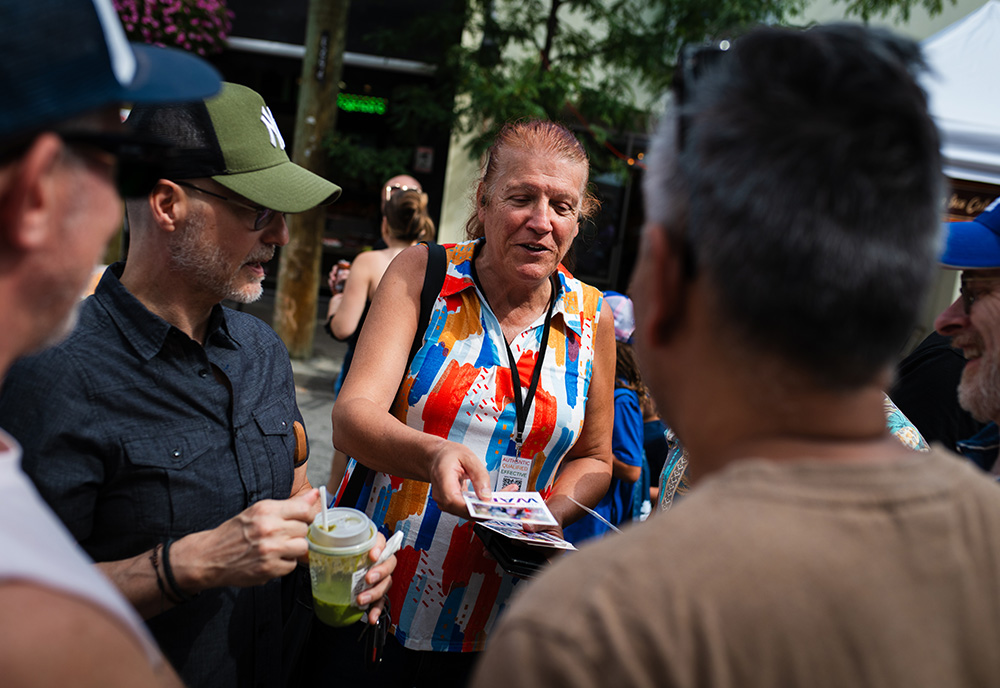
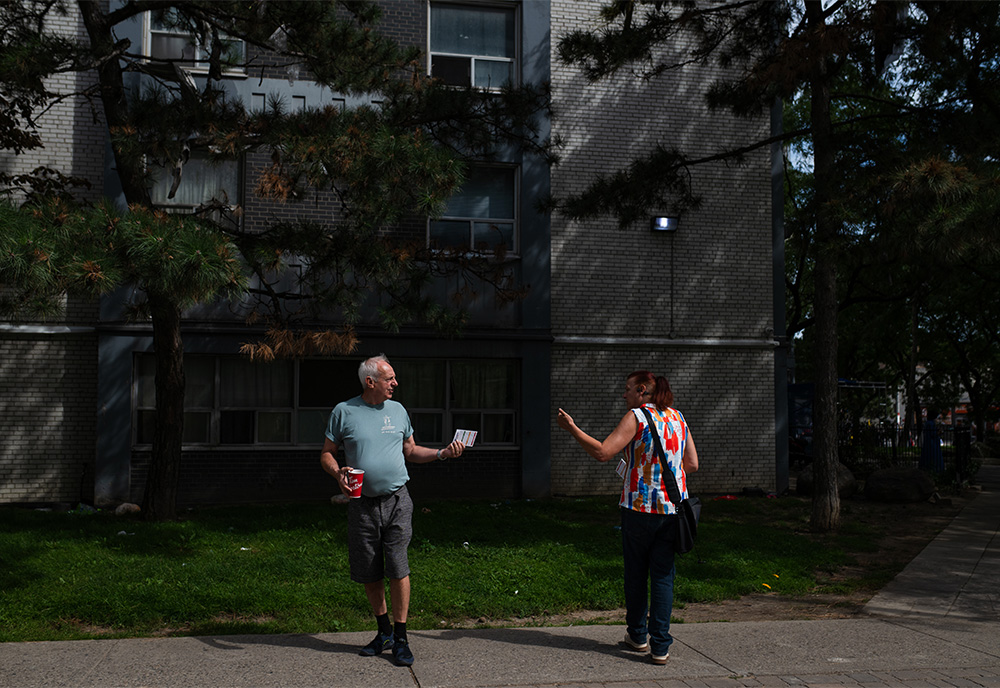
Ward wants to be Toronto’s first openly trans city councillor—an achievement that feels both long overdue, in a diverse and seemingly welcoming urban centre like our own, and completely daunting at a time of rising anti-trans sentiment everywhere. It would also validate the idea that trans women like me can be fully accepted—not just in politics, but in all aspects of society.
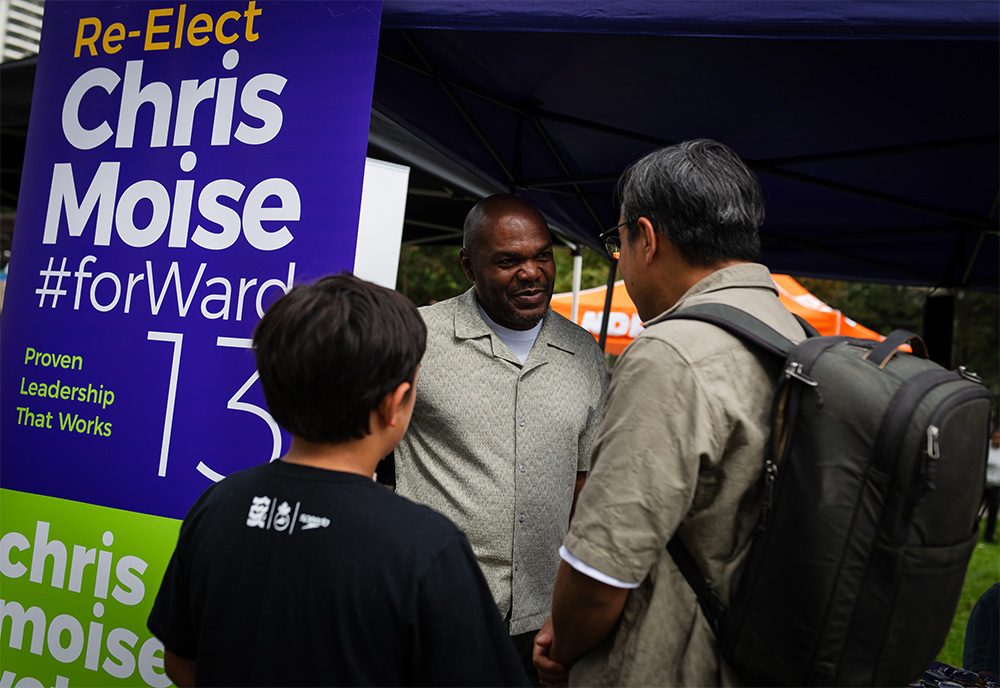
Ward has the chops for the role. She’s a respected community leader and an experienced housing advocate. She’s also run for municipal office before, with admirable results. In 2022, she came in second to Chris Moise—albeit by a margin of 30 percentage points—in the councillor race for Ward 13 — Toronto Centre. A recent poll shows public support for Moise, who is seeking re-election, appears to have declined, and Ward is looking to capitalize on that backslide.
But despite the fact that Toronto is one of the most progressive places in the country, and that Ward is vying for a seat in its most LGBTQ2S+ friendly ward, she’s running against the odds. Toronto voters have historically dismissed trans politicians as fringe candidates, and Ward finds herself having to struggle to be seen as a serious contender.
For a woman to run for councillor, one must be four times as good as a man, she says. “And a trans woman has to be twice as good as any ‘real woman.’”
Ward was born and raised in London, England, in the 1960s. The details of her early life are vague; she declined to discuss much of her personal history with me, explaining she prefers to keep some aspects private. She was, however, willing to share that she studied economics, government, and politics in London before deciding to follow the “American dream” and move to the U.S. in the 1980s to work for an insurance and financial services company. She traveled to Toronto for the first time on a business trip, and found it life-changing.
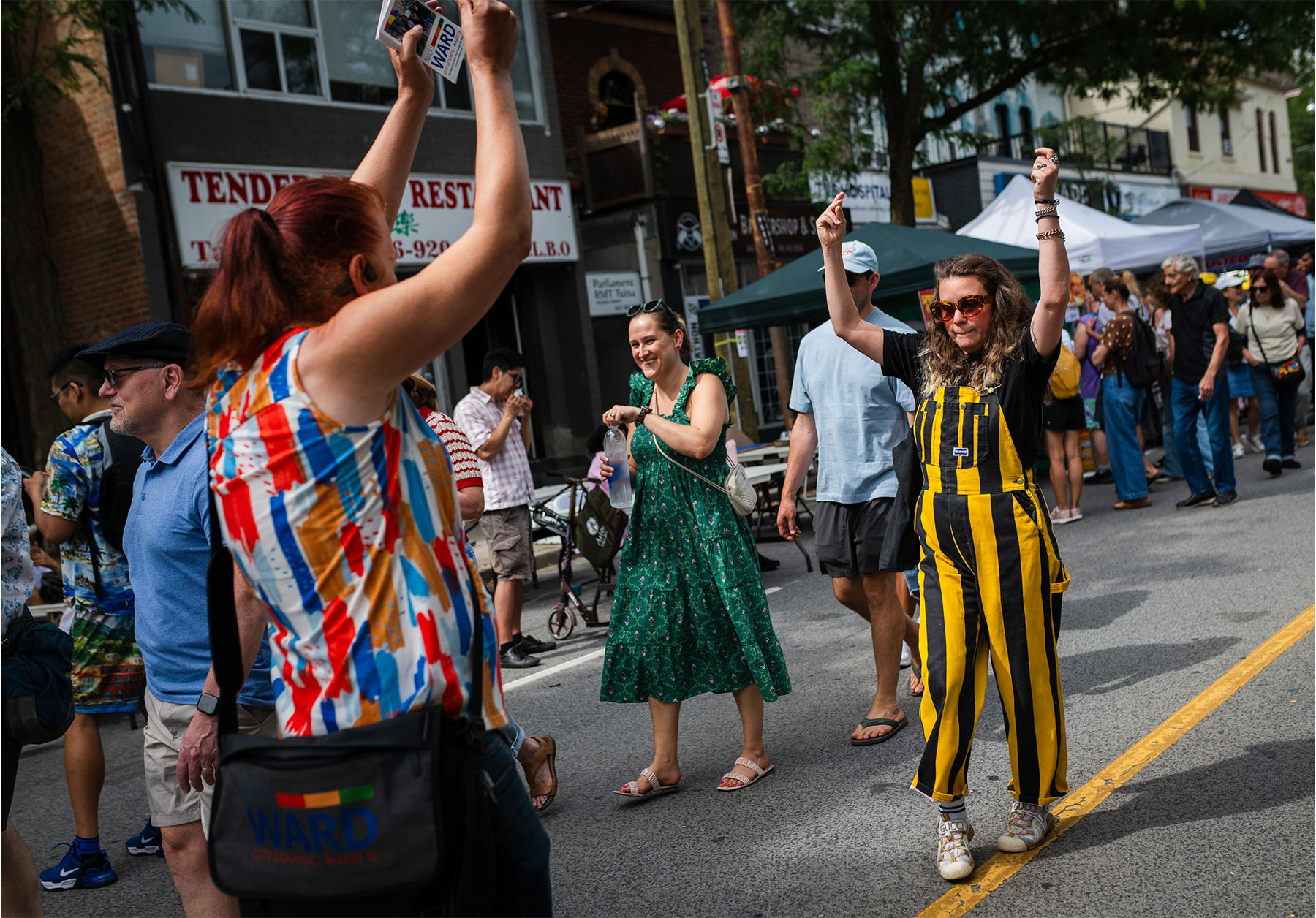
“I felt I could breathe, I didn’t have to pretend anymore,” she says. The Church and Wellesley Village, in particular, “was a place where I could be myself, whatever that was.”
When she eventually moved here in the early 1990s, she settled in Milton, but commuted to downtown Toronto for her senior leadership role at a health insurance company. In 2000, her life was upended. During our interview, Ward told me she came out to her boss, which resulted in the termination of her contract.
“He said ‘I applaud your bravery, and I’d love to get you a job, but I have to think of the team as a whole,” she recalled. She became unemployed overnight. “I didn’t realize what privilege actually was until I lost it.”
Ward managed to make a living by writing for a Torstar magazine called Forever Young about health and finance. She also wrote about LGBTQ2S+ issues for Fab Magazine. But there were other life-altering moments to follow. Among them, Ward was renovicted from her home. While it’s uncertain whether it had anything to do with her trans identity, she says she was determined to stand up for her rights, both as a tenant and as a trans woman.
To protest against her eviction, Ward says, she went to Milton Town Hall, and there she inadvertently stumbled into local politics. The year was 2006. A woman at the town hall stopped her and asked whether she was running in the upcoming election. That wasn’t her initial intention, but she signed up without a second thought. “It kind of illustrates why I got into advocacy,” she says. “It wasn’t about being particularly politically aware, it was just that standing up for my rights meant standing up coincidentally for other people’s rights as well.” Ward did not win in that Milton election, but from then on, she became a more active LGBTQ2S+ advocate.
Join the thousands of GTA readers who've signed up for our free newsletter and get award-winning local journalism delivered to your inbox.
"*" indicates required fields
The list of organizations and causes she’s championed is long, including co-founding the Toronto Trans March, helping erect the Trans Memorial at Barbara Hall Park, becoming the first trans woman on the board of directors at The 519 community centre, and participating on the advisory board to amend the Canadian Human Rights Act and the Criminal Code in 2017 to protect trans and gender diverse people in Canada from discrimination.
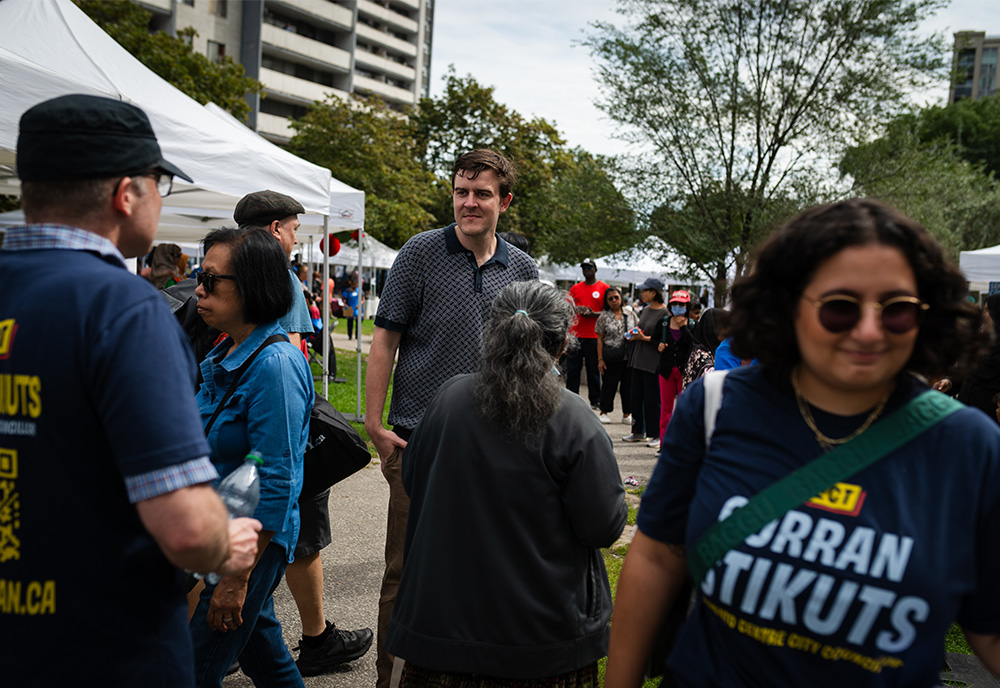
She ran unsuccessfully for Toronto city councillor in 2018 and 2022, and for parliament with the Green Party in the 2019 and 2021 federal elections. But the fact that she came in second among nine candidates in the last municipal election, and still wasn’t named in a recent Forum Research poll, rankles her. That poll, based on a telephone survey of 390 Toronto Centre residents, asked respondents who they would support among candidates Chris Moise, Daniel Tate, Curran Stikuts, and Walied Khogali Ali. Moise led with 24 percent, while the rest received 14 percent, 7 percent, and 4 percent, respectively.
Ward, who won more than 18 percent of the vote in Toronto Centre in 2022, was grouped under the option of “other.”
In an email, Lorne Bozinoff, president and chief executive of Forum Research, explained that their selection of who’s named in their survey is based on their perception of which candidates are most likely to be “successful.” I followed up to ask how they determine that, but did not receive a response.
Ward says she feels this speaks to a broader issue of transmisogyny. “People have tried to dismiss me as a novelty candidate, as somebody who was there just to add a little bit of colour to the discussion, as opposed to someone who was seriously engaged in helping constituents,” she says.
Her campaign proposals do seem to demonstrate she’s sincere about wanting to help constituents. They include pushing for more co-op housing across the ward—something she’s also supported in her former role as the president of a large co-op, CityPark Co-operative Apartments—as well as for a safer TTC, and to increase the transportation and parks budget for Toronto Centre.
Ward emphasizes she has never been a novelty candidate. “I have always run as a candidate who is trans, not as a trans candidate,” she says.
The first trans person to run for municipal office in Toronto was Enza Anderson, who entered the mayoral race in 2000 and ran for city councillor in two subsequent elections. Some of the media’s descriptions of her over the years now seem wildly out of touch and condescending. I was taken aback when I read an old Globe and Mail article from her early mayoral run, calling her a “drag queen,” and a 2014 Toronto Sun article that described her as a “former hairy Italian guy.” At the same time, I wasn’t entirely shocked. The mainstream media have only recently begun tackling LGBTQ2S+ issues with sensitivity.
In some ways, it feels as though social perceptions of trans people have changed for the better since then, but in other ways, it has been concerning to see them regress. A recent Statistics Canada report shows Canadians are now less accepting of transgender and gender-diverse people than they were nearly a decade ago. The proportion of women who agreed people should be free to express their gender however they choose declined from 85 percent in 2018 to 77 percent in 2025. The proportion of men who agreed dropped from 78 percent to 70 percent.
Now working in the banking sector, Anderson declined to be interviewed about her experiences on the campaign trail and to weigh in on the current election. But others who came after her shared their own perspectives.
“I have always run as a candidate who is trans, not as a trans candidate.”
Susan Gapka is a trans trailblazer in Toronto who became the first trans person to be given a key to the City of Toronto for her social justice advocacy. She’s also the current 2SLGBTQI+ council co-chair for the federal New Democratic Party. Gapka ran for city councillor in 2006 and 2010, and lost both times.
Some of her early experiences demonstrate the kind of discrimination trans people faced here in the not-so-distant past. Back in 2000, for instance, when she was volunteering at city hall, Gapka recalls overhearing receptionists for then-mayor Mel Lastman speaking about her, saying, “There’s a man in a dress using the women’s washrooms.” Somehow, she says, a local newspaper journalist caught wind of this and interviewed her a few days later. Luckily for her, the story never ran. Nevertheless, she says, “in one day, my whole world had been turned upside down. I ended up using a washroom down the hallway, a designated washroom, which when you look back on it 26 years later, seems ridiculous…Times were tough back then, things were very different.”
Although Gapka recognizes many things have changed for the better, she still thinks Toronto isn’t ready for its first trans councillor. She’s doubtful a trans candidate can win, especially without major endorsements and enough money to raise a campaign.
“Politics is a ruthless game,” Gapka says. “There’s so much money, power, and influence involved in who gets to be elected a city councillor. That’s why I worry about Nicki’s chances.”
Monica Forrester takes a different view. Forrester, the founder of Trans Pride Toronto who now works as a community mental health worker at Street Health, ran for mayor in 2022. Despite being an established figure in the Church and Wellesley neighbourhood, she earned just 268 votes.
Forrester says she thinks Toronto is, in fact, ready for a trans councillor, but that Ward hasn’t done enough to cultivate support from other neighbourhoods in Toronto Centre beyond the Church and Wellesley Village.
“Toronto is very progressive,” says Forrester, “It’s not that Nicki’s not capable of holding the role of councillor; it’s that she needs to branch out.”
Meanwhile, when it comes to becoming Toronto’s first trans city councillor, Kristyn Wong-Tam says they may have already beaten Ward to that title.
Wong-Tam, the MPP and former city councillor, came out as non-binary in 2022, after leaving city hall at the end of their third term representing Toronto Centre. As the lines between transgender and gender non-binary have blurred over the years, with non-binary identities now often considered part of the trans umbrella, Wong-Tam concedes there’s no concrete answer as to whether they hold the claim of being Toronto’s first trans councillor. But, they say, there is no question they are part of the trans community.
“I belong to the trans community as a non-binary person. Am I transgendered in the full sense of fully transitioning? No, I’m not. Do I get uncomfortable when I have to make a choice around washrooms and am faced with binary choices? I do,” they say. “I think, you know, there is no purity test, and I don’t think that there should be.”
It’s indisputable Wong-Tam has been a strong supporter of the trans community; in 2022, they pushed for a provincial Gender Affirming Health Care Advisory Committee Act that came into effect in 2024. And they recognize the role that early trans candidates have had in paving the way for others. “They are living their life as courageously and honestly as possible, and then the rest of us get to walk through the doors afterwards,” they say.
But, of course, being trans or gender diverse doesn’t automatically mean you align with everyone who’s trans or gender diverse. And Wong-Tam’s support of the trans community doesn’t automatically mean they align with Ward. Last month, they endorsed Stikuts, the former director of communications at The 519. It’s a decision that Wong-Tam says was based on Stikuts’s ability to secure the endorsement of the Toronto and York Region Labour Council. (The council, whose support can significantly boost a candidate’s chances, endorsed Moise in 2022 but is now throwing its support behind Stikuts.)
“If there was a candidate who had the support of the labour movement—and in particular, the labour endorsement in city council—yes, regardless of their gender identity, I would endorse them,” Wong-Tam says.
Ward, however, says she sees Wong-Tam’s endorsement of Stikuts as a clear example of “fake allyship.”
“There’s a lot of party politics,” says Ward. “If you’re a member of a political party, and the party says you have to back this cisgender man, I guess that you’ve got to do what the party tells you. But that’s not allyship in my book.”
It’s tricky. Wong-Tam certainly isn’t obligated to side with a candidate solely based on their gender identity, yet I do feel Ward has a point. This seems like a missed opportunity for Wong-Tam to support a member of their community, a missed opportunity to form a united front in the vicious world of municipal politics.
After our meeting at the Second Cup on that gloomy Friday afternoon, Ward accompanied me to Wellesley station. As I said goodbye and parted ways with her to catch the train, I couldn’t stop thinking about how hopeful she felt about her chances of winning. With her “it’s about time” mentality and undeniably strong credentials, I could almost see it, too: an openly trans councillor in Toronto, a glimmer of hope at a time when it feels as though the only time trans people are visible is amid public debate over our inclusion in sports or as a punching bag for J.K. Rowling’s TERF agenda.
But then my skepticism kicked in, and I feared Gapka may be right. In a perfect world, a candidate’s platform and promising background ought to be enough to win over voters, without the aid of alliances and external parties—but what if we’re not there yet? What will it take to ever be ready?
One thing I feel is certain, though: Nicki Ward deserves a fair shot at city hall. The question remains whether Toronto Centre is willing to grant her one.
More stories about Toronto Votes 2026

Toronto’s Most Well-Known Defender of the Unhoused Runs for Council
As a teenager, Diana Chan McNally was briefly homeless. She’s since worked in drop-in centres and become a prominent advocate for unhoused Torontonians. In the race for Parkdale-High Park, she’s going to need to win over homeowners too.
Doug Ford vs. Toronto
Good news: your community elected a councillor and even a mayor who share your vision for the city. Then the province steps in.
How to Vote in the 2026 Toronto Election
Everything you need to know about voting for mayor, councillor, and trustee in October’s municipal election

The ‘Shadow Parties’ That Could Swing the Toronto Election
The rise of rival non-profits ABC Toronto and Progress Toronto marks a new era of behind-the-scenes political organizing at City Hall—and this October's election is their first real test.
Who Wants to Be a Toronto School Trustee?
The Ford government has cut their pay, disempowered them, and taken over the board. But some candidates say vying to represent their community’s education concerns is more important than ever.
More from this issue
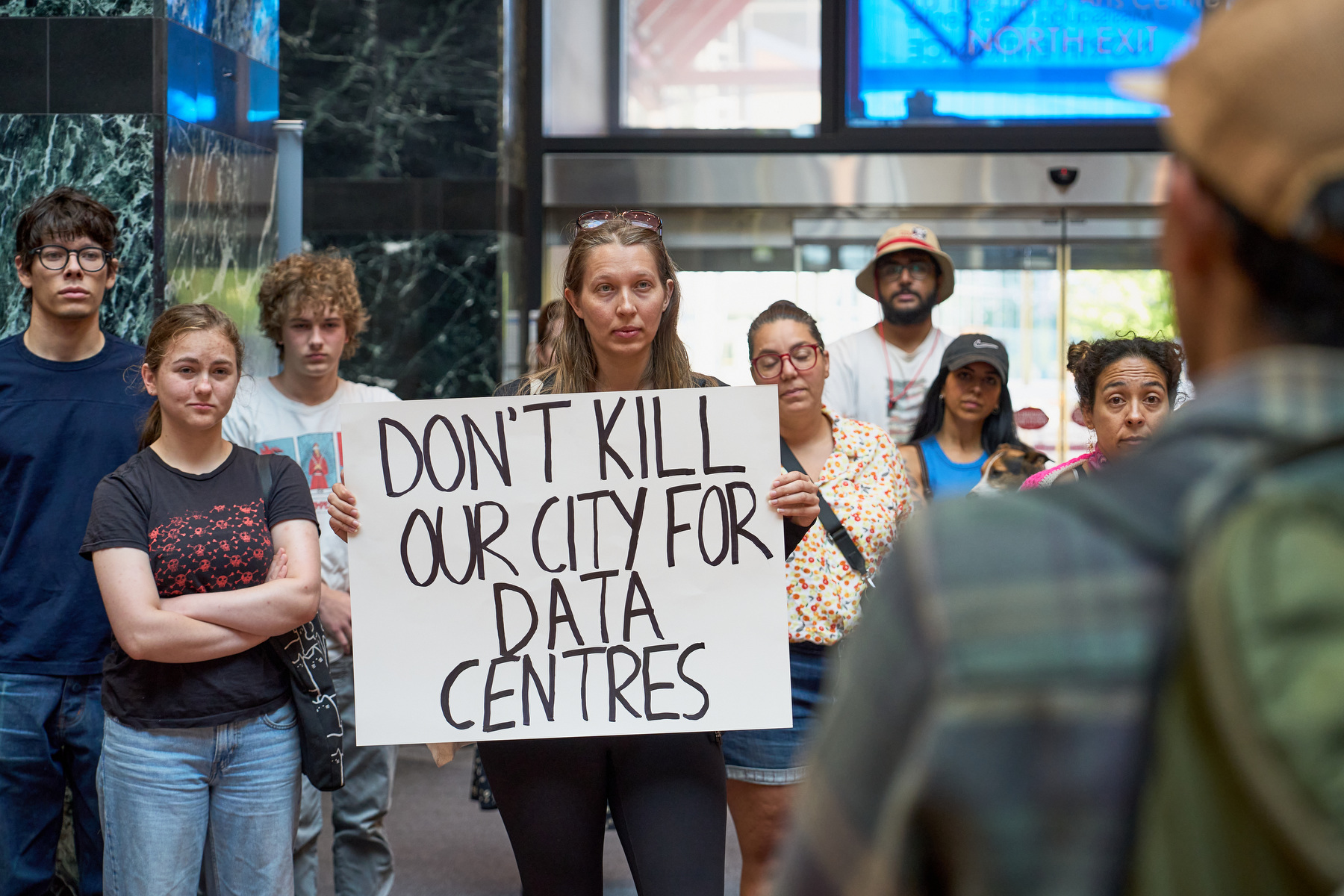
The Data Centre Backlash Has Come to Mississauga—and It’s Swallowing the Municipal Election
Ahead of this week’s vote on whether to freeze data-centre development for a year, city councillors seeking re-election are suddenly taking a firm stance in response to public outcry
Toronto’s Most Well-Known Defender of the Unhoused Runs for Council
As a teenager, Diana Chan McNally was briefly homeless. She’s since worked in drop-in centres and become a prominent advocate for unhoused Torontonians. In the race for Parkdale-High Park, she’s going to need to win over homeowners too.
Doug Ford vs. Toronto
Good news: your community elected a councillor and even a mayor who share your vision for the city. Then the province steps in.
How to Vote in the 2026 Toronto Election
Everything you need to know about voting for mayor, councillor, and trustee in October’s municipal election
How to Vote in the 2026 Mississauga Election
Everything you need to know about voting for mayor, councillor, and trustee in October’s municipal election
How to Vote in the 2026 Brampton Election
Everything you need to know about voting for mayor, councillor, and trustee in October’s municipal election
Debate Tracker
Every mayoral and ward-level debate across Toronto, Mississauga, and Brampton—all in one place.
The ‘Shadow Parties’ That Could Swing the Toronto Election
The rise of rival non-profits ABC Toronto and Progress Toronto marks a new era of behind-the-scenes political organizing at City Hall—and this October's election is their first real test.
Fewer Candidates for Peel School Trustee Following Changes by the Ford Government
This municipal election there’s a steep decline in candidates for trustee at the Peel District School Board and Dufferin-Peel Catholic District School Board.
Who Wants to Be a Toronto School Trustee?
The Ford government has cut their pay, disempowered them, and taken over the board. But some candidates say vying to represent their community’s education concerns is more important than ever.