


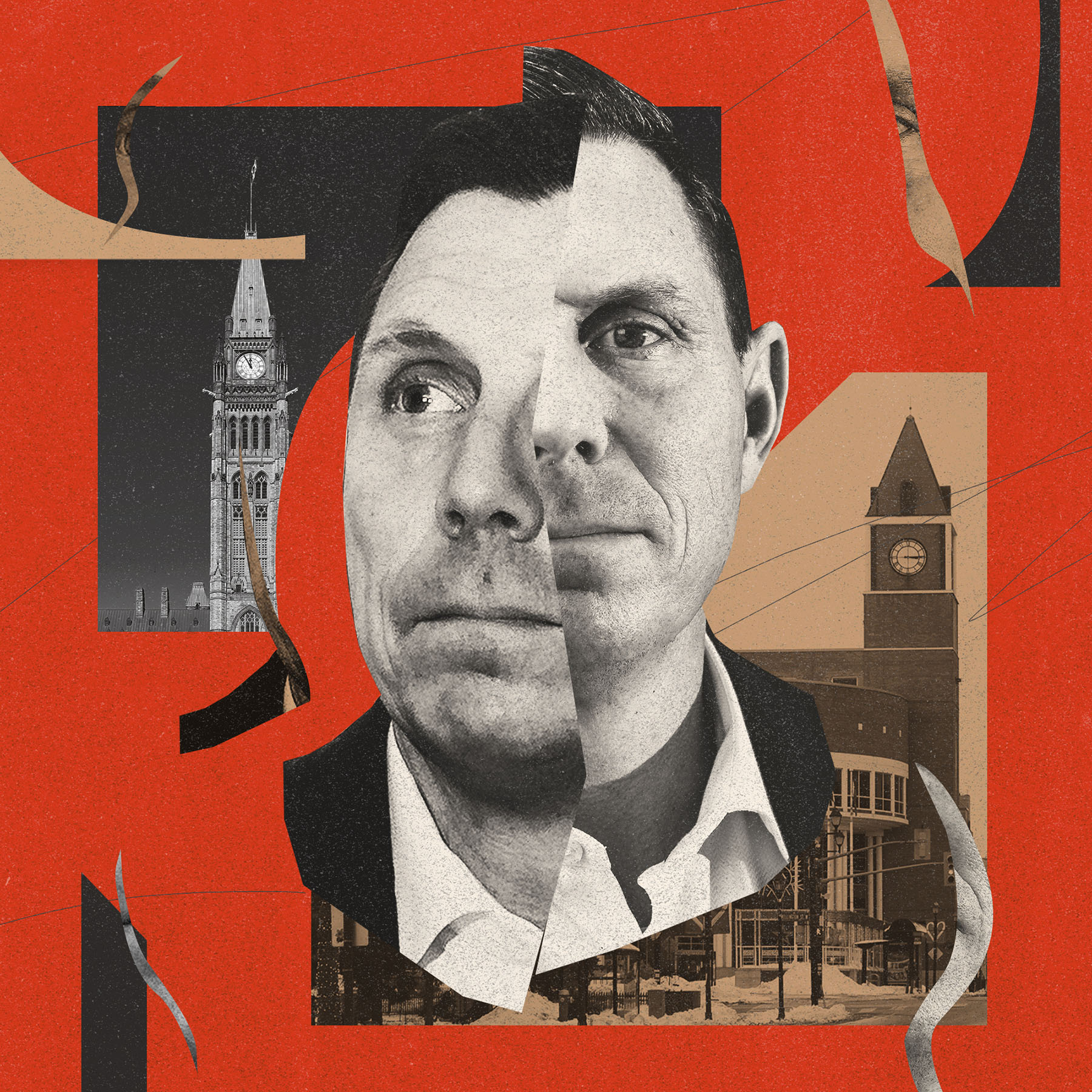
At the start of 2018, everything seemed to be going right for Patrick Brown. Then 39, Brown had risen steadily through Canadian politics: elected to Barrie city council at 22, then to Parliament and, in 2015, to the leadership of Ontario’s Progressive Conservatives (PCs). He had won as an outsider, promising a break from a party establishment that had lost four successive elections to the Liberals.
Brown remained relatively unknown after years as a backbencher in Stephen Harper’s government. Then, as Ontario’s PC leader, he had irritated parts of his base by opposing and then backing Premier Kathleen Wynne’s controversial sex-ed curriculum, as well as supporting carbon pricing. But with Wynne deeply unpopular and the PCs comfortably ahead in polls in the winter before the June 2018 election, Brown appeared poised to become premier, bringing him one step closer to a political prize he would later openly pursue: becoming prime minister.
Then, on Jan. 24, CTV News aired an explosive report in which two women accused Brown of sexual misconduct dating back to his time as an MP. One alleged that, when she was a high school student under the drinking age, Brown met her at a bar before taking her to his Barrie home, where he gave her alcohol, exposed himself, and asked her to perform oral sex. Another woman said she was a university student working in Brown’s constituency office when he allegedly sexually assaulted her at a party at his home. Brown vehemently denied the allegations, calling them “categorically untrue.” Brown’s then-girlfriend and future wife, Genevieve Gualtieri, who was 23 at the time, also emphatically defended him, telling the Toronto Star that he was “one of the most respectful, decent and caring individuals I have ever met.” According to The Star, Gualtieri had interned in Brown’s parliamentary office at 21 and later accompanied him on several overseas trips when he was Ontario PC leader.
In the wake of the scandal, several senior staffers urged Brown to resign. In what would become a recurring pattern whenever he faced a crisis, Brown dug in and initially refused to step aside. His senior staffers resigned instead, and under mounting pressure from caucus, Brown relinquished his post hours later. Even then, he refused to disappear. When the PCs scheduled a leadership race to replace him before the election, Brown astonishingly entered it, arguing he had rebuilt the party and deserved to lead it into the campaign. Ten days later, he withdrew, citing the toll on his family and the distraction his candidacy had become for the party.
CTV would later admit that key details provided for its reporting were factually incorrect: the first accuser revised her account to say she was of legal drinking age and had already graduated high school when the alleged incident occurred. Mikaela Patterson, who was dating Brown at the time, and a friend of Brown’s were both at the party where the incident involving the second accuser allegedly took place and disputed core aspects of her claims. Brown later sued CTV for $8 million, a case that ended in 2022 in a settlement that did not include any payment to Brown. (When asked about the settlement, a spokesperson for Brown wrote: “At the time, the Mayor said the statement spoke for itself, explained that the parties would not discuss the settlement’s details, and expressed his desire to move forward.”) But the political damage was already done, seemingly putting an end to Brown’s larger ambitions.
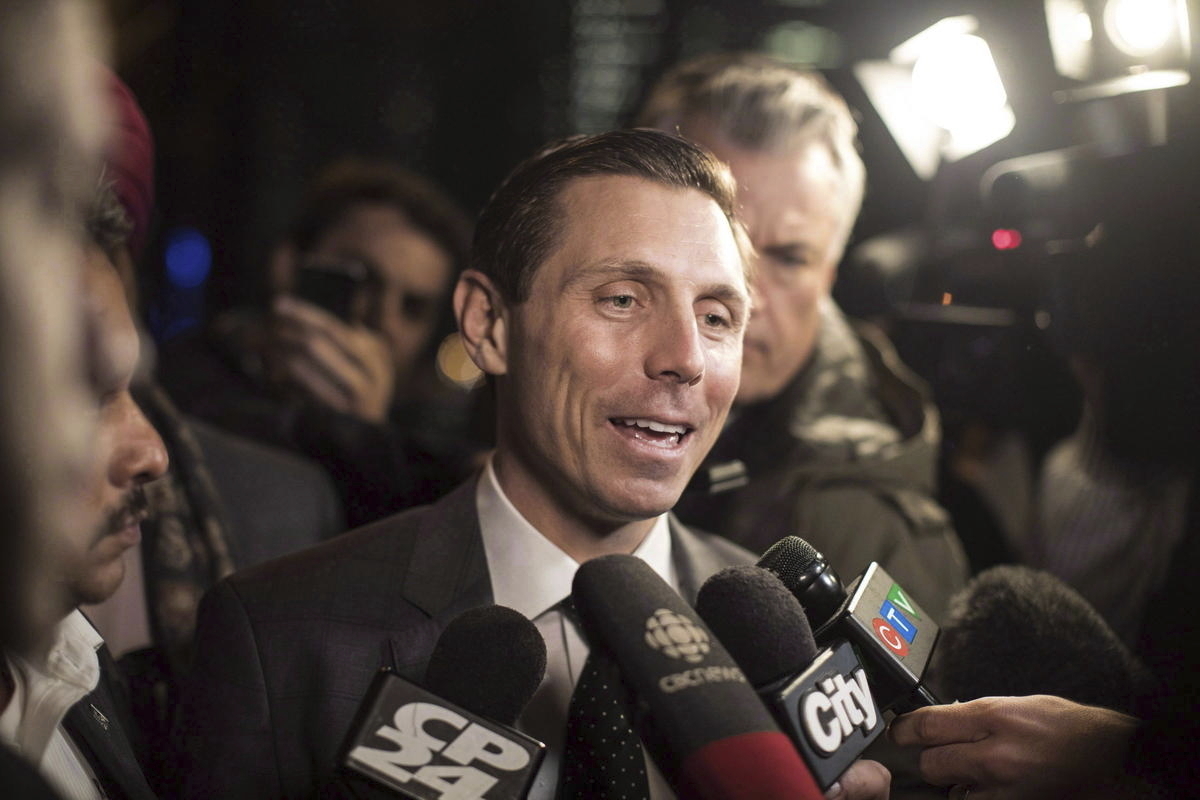
Rather than retreat from public life, he pivoted: on the final day of candidate registration that summer, Brown entered the race for mayor of Brampton, betting that incumbent Linda Jeffrey was vulnerable. He proved himself right, narrowly defeating her by less than four percent of the vote.
Brown has spent the past eight years reinventing himself in municipal politics as mayor of Brampton. But opinions differ on whether that reinvention has been good for the city. After speaking with elected officials, community leaders, and local media, I discovered there are two drastically different versions of Brown, depending on whom you ask.
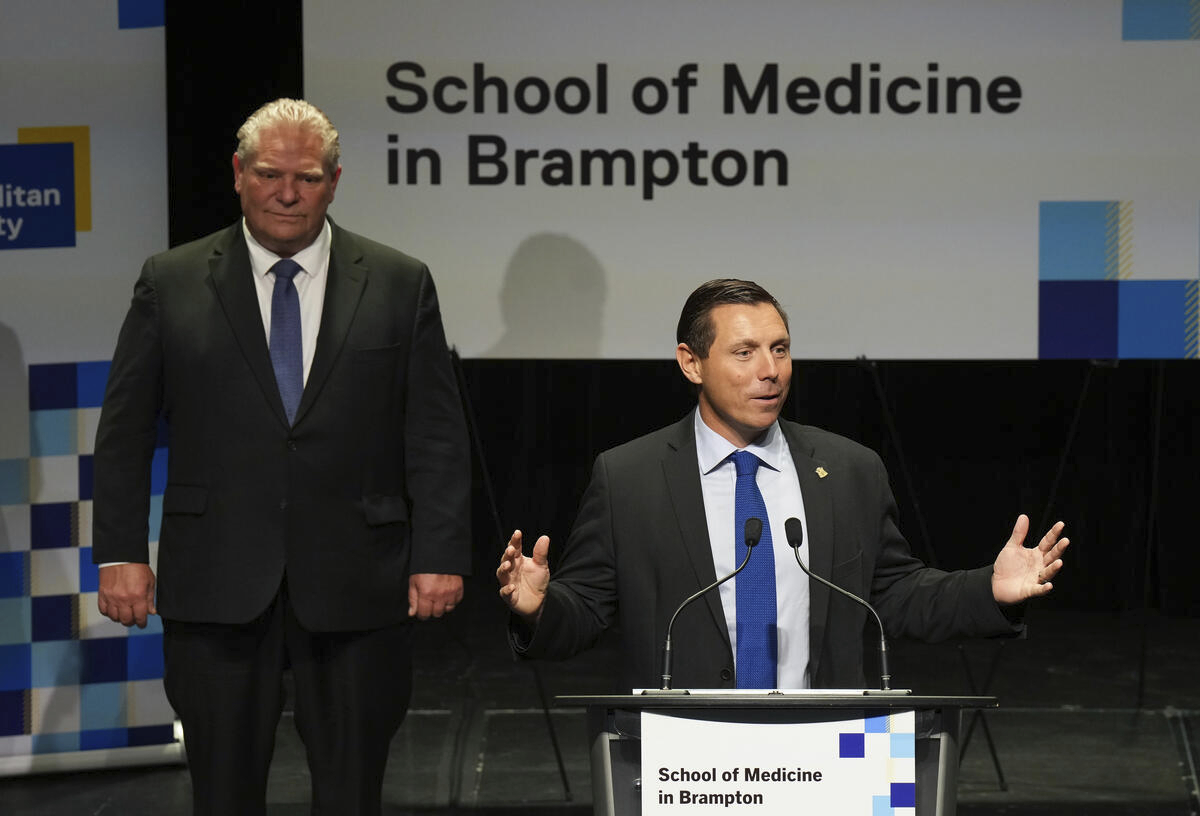
One version is the dedicated public servant who brought political savvy, an extensive network of national and international contacts, and a sense of urgency to a city hall long seen as dysfunctional. His supporters point to a litany of accomplishments under his watch, including the ongoing $23.8-million revitalization of downtown Brampton and the 2025 opening of the Toronto Metropolitan University (TMU) School of Medicine, the first new medical school in the GTA in more than a century. In this telling, Brown’s detractors are entrenched elites whose feathers he has ruffled with a no-nonsense, results-driven approach that occasionally collides with bureaucratic process.
Spend enough time in Brampton, though, and another portrait emerges, one some people are reluctant to voice publicly for fear of political or financial retaliation. In this version, Brown is a self-serving bully who treats Brampton as a personal fiefdom, far from the media scrutiny a politician in Queen’s Park or Ottawa would receive. A recent editorial from The Pointer, a local publication often critical of Brown, isn’t subtle in its perspective on the mayor: “Patrick Brown’s record of lies, broken promises and scandals is a disgrace to Brampton.” His critics accuse him of rewarding allies, bending rules to suit his purposes, and presiding over a culture of barely concealed corruption in a city they believe he privately disdains and regards as a political backwater. And, they say, he is only biding his time until another opportunity arises to pursue the leadership of the Conservative Party of Canada.
Had the sexual misconduct scandal never erupted, Brown might well have become premier of Ontario rather than mayor of Brampton, putting him on a very different path toward his national political ambitions. In an alternate world, perhaps Brown would be prime minister today rather than Mark Carney.
In this reality, though, Brown doesn’t appear to be lamenting the cruel outcome of what he called the 2018 “attempted political assassination” against him in his memoir, Takedown, published shortly after he became mayor. Instead, he says he is happy to be far from what he describes as the “hornet’s nest” of federal politics, and insists Brampton is now his sole political focus. With no big-name challenger yet appearing close to him ahead of the Oct. 26 municipal election, he looks well-positioned to win a third term, despite growing concerns about his administration’s transparency around conflicts of interest and City spending. So which version of Patrick Brown is closer to the truth: the nefarious opportunist or the devoted public servant? I decided to meet the man to find out.
Fact-checked biographies of every candidate running in the Brampton municipal election.
Read More
When I took the GO Train from Toronto to Brampton in late September, I emerged into a downtown in flux. Near city hall, where I was meeting Brown, newer landmarks like the municipally owned, 868-seat Rose Theatre sat alongside non-descript restaurants and dilapidated storefronts for long-shuttered businesses. Construction was everywhere, including hoardings advertising an upcoming “Centre for Innovation,” part of the City’s downtown revitalization plans. Walk a few blocks in almost any direction, though, and the compact core abruptly gives way to the suburban sprawl that defines much of Brampton. As political destinations go, it was a far cry from Queen’s Park or Parliament Hill, seeming less like the seat of power in Ontario’s third-largest city than the civic heart of a quaint rural town.
Greeting me outside his office dressed in a grey suit and red tie, Brown was friendly but not quite warm as we settled in for our interview. Given the bruising media coverage he’s endured through the years, I could understand a certain wariness around journalists. But over the course of our 20-minute conversation, I found him candid in his responses, even when he was careful about how he framed them.
My first question was one he’d surely heard many times before: after the scandal that drove him from the PC leadership, why come to Brampton of all places?
Although Brown grew up in Toronto, his father Edmond practiced law in Brampton. Brown also practiced law in Brampton, he says, after graduating from his father’s alma mater, the University of Windsor, building connections in the city that endured after he entered politics. But he says the strongest pull toward Brampton came from his mentor, the late Bill Davis, Ontario premier from 1971 to 1985 and the local MPP for 26 years.
Nicknamed “Brampton Billy,” Davis had become concerned about allegations of corruption and cronyism at city hall, as well as the political infighting that then-mayor Linda Jeffrey struggled to contain. “Davis was the finest public servant the province has ever seen, and he loved Brampton passionately,” says Brown. “I remember him telling me about how disappointed he was with the leadership in Brampton and the dysfunction.” Aided in part by Davis’s endorsement, Brown won the election and got to work. In his first term, he commissioned KPMG to conduct a third-party value-for-money audit, while launching consultations on Brampton’s first university, the ill-fated BramptonU—a project Brown says came from Davis, who had helped create Ontario’s college system as education minister in the 1960s. Yet before his first term was over, Brown jumped at the opportunity to run for the leadership of the federal Conservatives.
When Conservative MPs removed Erin O’Toole from the leadership in February 2022, an opening presented itself. The early field to replace O’Toole was led by Pierre Poilievre, a long-serving MP then still building a national profile, and Jean Charest, the former federal Progressive Conservative leader and Quebec premier who had been out of elected office for a decade. Brown entered the race in March 2022, days after Charest.
Once again, Brown found himself at a critical juncture. And once again, scandal intervened. That July, roughly two months before election day, the Conservative Party disqualified him over alleged campaign finance violations. At the time, Brown responded to the allegations with one of his own: that the party, and Poilievre’s campaign, conspired against him. “They essentially didn’t want to have me in the race,” he now says. In February 2024, the Office of the Commissioner of Canada Elections dismissed the allegations after a review. “Elections Canada vindicated me and said there was no wrongdoing,” says Brown.
After being stymied at both the provincial and federal levels, many politicians might have given up on public life altogether. But if Brown’s career has been defined by scandal, it has also been defined by tenacity.
An avid hockey fan and player, he offered me a sports analogy that captures his approach to life. “In a hockey game, if you get body-checked, knocked down, you get back up,” he says. “You let those who instigated those acts win if you give up. Part of resilience is knowing that if you’re doing the right thing, you get back up.”
True to those words, Brown got back up once more after his federal campaign disqualification, declaring that he was putting his national ambitions aside to focus fully on Brampton. He announced his bid for mayor on July 18, two weeks after his disqualification from the CPC race. He then cruised to re-election later that year with just under 60 percent of the vote.
As mayor, Brown has thrown himself into a kind of grassroots community outreach he likely never would have practiced as a federal party leader. He regularly responds to Bramptonians’ invitations, posting on social media about local events, no matter how small, and attending cultural celebrations and sporting events hosted by the city’s Indian, Portuguese, Italian, Nepalese, and other communities. “He understands that a lot of these community groups don’t have access to influence in government, and he offers to be that voice,” says Martin Medeiros, regional councillor for Brampton’s Wards 3 and 4.
Brown also launched the annual Hockey Night in Brampton fundraiser in 2019, which has since raised nearly $80 million for community health care programs, according to an August press release. As part of the fundraiser, Brown has taken the ice alongside hockey legends like Mark Messier and current NHL players such as Morgan Rielly.
According to Medeiros, that relentless, boots-on-the-ground approach, coupled with an accessible, down-to-earth manner, has earned Brown fervent support from many Bramptonians. One of them was Azad Goyat, a real estate sales representative who says he voted for Brown in 2018. “People thought that he is a seasoned politician, and Brampton was always ignored by big politicians,” Goyat told me. Brown had been an MP, a provincial leadership candidate—experience Goyat believed would be an asset for his city. “So we gave him our support.”
But the dysfunction Brown aimed to clean up in 2018 has lingered, some say. Concerns about corruption, conflicts of interest, and governance irregularities have persisted throughout his tenure, largely outside the glare of the national media. And some former supporters, Goyat among them, have come to wonder whether Brown’s formidable work ethic is about serving Brampton, or about serving Patrick Brown himself.
Originally from India, Azad Goyat, 56, settled in Brampton in 2004. During the 2018 election, he urged his community to vote for Brown, seduced by his promises of bringing more business to Brampton, building a cricket stadium, and securing a university and second hospital. A photo Brown posted to X on Oct. 15, 2018, days before he was elected mayor, shows him posing with Goyat at what he captions as a birthday party for Goyat’s daughter, referring to him as “my friend.” Since Brown’s election, though, Goyat has turned sharply against him, saying he has witnessed a mind-boggling succession of local controversies, large and small, accumulate around the mayor.
In 2021, senior City staffer Nikki Kaur alleged that Brown directed her and some of her co-workers to help Peter MacKay’s 2020 Conservative leadership campaign sell memberships. According to the Public Service of Ontario Act, public service employees are prohibited from doing external campaign work during hours for which they are being paid by the City, unless authorized by an ethics executive to campaign on behalf of a candidate in a municipal election, typically during an unpaid leave of absence.
That same year, Brown drew criticism after a slip of the tongue during a virtual scholarship event for Black students, referring to Brampton as “Brown-town” before immediately correcting himself. The term is commonly used as a derogatory reference to the city’s large South Asian population. (“The Mayor’s explanation at the time was that he had a cold and stumbled over the word ‘Brampton,’ which he immediately repeated,” a spokesperson for the mayor wrote in response to a question about the incident.)
The controversies mounted in 2022. Early that year, city council ruptured, splitting almost evenly between Brown’s supporters and opponents. A majority bloc of six councillors, including Medeiros, issued a joint statement accusing Brown of running council in an authoritarian manner and warning that democracy in Brampton was “under siege.” They pointed to what they described as a pattern of blocking votes in closed sessions, and of treating new motions as reconsiderations of earlier decisions. That latter classification required a two-thirds majority rather than a simple majority and, according to the councillors, allowed Brown’s side to prevent their six-member bloc from advancing measures they otherwise had the votes to pass.
Journalism this good isn't normally free.
But it is, thanks to our supporters.
Support
The political feuding intensified when Charmaine Williams, one of the six councillors opposed to Brown, left council after winning a provincial seat that spring. Her departure left the two factions deadlocked over who should fill the vacancy, with each side fighting to install an ally who could tip the balance of power. Several meetings were subsequently cancelled as councillors from both camps refused to attend, bringing city hall business to a standstill.
According to Jeff Bowman—then a Brampton councillor, now retired from politics—what alarmed Brown’s council opponents most was City spending on BramptonU, Brown’s faltering plan for a university that eventually collapsed when the province withdrew its commitment. According to reporting from The Pointer, City staff outlined that approximately $629,000 had been paid to consultants working on the project. That reporting found that one firm, initially approved for a contract worth about $170,000, ultimately received more than $500,000, while two consultants involved had personal ties to Brown and his close council ally Rowena Santos: Rob Godfrey was a close friend and an ally of Brown’s during his tenure as Ontario PC leader, while David Wheeler had been introduced as Santos’s mentor, according to Global News.
Brown’s council opponents ordered a forensic investigation. According to multiple reports, preliminary findings said the procurement process had given the consultants advantages unavailable to competing bidders and that some promised work had not been delivered. In August 2022, two months before the municipal election, The Pointer reported Brown and his supporters voted in council to terminate the investigations before they were completed.
The troubling headlines continued into Brown’s second term. He faced scrutiny after Global News reported on the costs of foreign economic development missions by Brampton delegations, with a 2024 report on a Pakistan trip invoiced at $92,600 and a 2025 story on an $8,000-plus chauffeur bill in the U.K. The Pointer has repeatedly scrutinized his taxpayer-funded expenses, claiming he spent them on federal Conservative Party campaign social media posts and personal legal fees, and arguing they far exceed those of his predecessor. Other expenses include $2,874 to frame two hockey jerseys and $917 spent on “coffee and pop” for Brown’s visitors in a single day.
“When you add it all up, he’s definitely on the worst end of the spectrum of what politicians do at the municipal level in Ontario,” says Duff Conacher, co-founder and director of Democracy Watch, a nonprofit that advocates for government accountability and democratic reform.
As one example, Conacher points to Brown’s relationship with lawyer Muneeza Sheikh, whom Brown supported for appointment as Brampton’s integrity commissioner in 2019. According to reporting from The Globe and Mail, before taking the job, Sheikh had publicly defended Brown after the sexual misconduct allegations against him, appeared with him at public events, and at the time, her husband’s company had done paid work for the PCs while Brown was leader. Conacher argues that those connections created a clear conflict and that Brown should not have participated in her appointment.
Council terminated Sheikh’s contract in March 2022 amid concerns about her billings, which totalled roughly $662,000 over 2020 and 2021, according to The Pointer, for part-time work as integrity commissioner while simultaneously working as a partner at her law firm. She filed a $20-million lawsuit after she was let go, and hired her own law firm to lead it. She was rehired the following year after the City apologized for “inaccurate and defamatory comments” made by some councillors around her departure. For Conacher, the episode points to a structural problem that goes beyond Brown: allowing politicians to choose the watchdog responsible for policing their own conduct is, he says, “a violation of every democratic government principle.”
Frustrated by the turmoil at city hall and the lack of progress on BramptonU and other Brown promises, Goyat began following Brown more closely, scrutinizing media reports and listening to what people in the community were telling him. In early 2025, a Brampton councillor whom Goyat declined to name tipped him off to a deal they described as emblematic of the corruption and sweetheart arrangements they believed were taking place at city hall: Brampton’s 2023 purchase of an office building on Sandalwood Parkway West. Goyat passed what he had learned to The Pointer, which reported on the transaction. The Toronto Star pursued the deal in a detailed investigative piece.
According to the Star, the building had been purchased in 2020 for $32.5 million by a company controlled by Bikram Dhillon, a prominent local businessman. Three years later, Brampton bought it from him for $77.9 million. The Star reported that Brown considered the property essential and pushed to complete the purchase before an independent appraisal requested by City staff was finalized. The City-commissioned appraisal ultimately valued the property at $67.5 million.
In his motion to authorize the purchase, Brown said the building would be used as a speed-camera processing centre. City documents released after the Star investigation showed that staff were also considering recreation offices, parkland, a cricket field and other uses for the site. Two years after the purchase, however, the Star found the building largely empty, with just 11 people working in a space designed for 180. (When approached for comment on this, Brown’s spokesperson said the City disputed aspects of the Star’s reporting and outlined various planned usages for the site besides being a speed-camera processing centre.)
By then, Goyat had begun protesting Brown publicly, sometimes alongside only a handful of other residents. Matters escalated last November, when Goyat and three other protesters gathered in a downtown square carrying signs that read “No More Dictators at City Hall” and “Do your job, not corruption!” City security asked the group to leave. When Goyat refused, police arrested him and charged him with trespassing. Goyat insists he was peacefully demonstrating on public property.
For Goyat, it completed his break with a politician he had once enthusiastically supported. Brown, he says, has since blocked him on social media. He now regrets ever voting for him. “My perception of Patrick Brown today is that he is a cancer on Brampton,” says Goyat, who is running for city council in Wards 9 and 10 against incumbent Harkirat Singh—deputy mayor and a close Brown ally—in the upcoming election, with hopes to take on Brown from inside city hall.
Brown sees the controversies swirling around him very differently. The partial audit of the BramptonU project, which city hall promptly halted, revealed procurement irregularities. But Brown views any critique of the project as coming from “people that were always destructive and negative.” And while BramptonU never materialized, Brown argues that the effort helped pave the way for TMU’s School of Medicine.
Nor did several of the major allegations surrounding his administration produce definitive findings of wrongdoing. A 2021 Deloitte investigation into City employee Nikki Kaur’s allegations of administrative misconduct found two instances of non-compliance with City policies but said the majority of her allegations were unsubstantiated. The Pointer later noted that the report authors said their review was incomplete, that a final interview with Kaur was never conducted, and that Deloitte’s investigators allegedly refused to present their report to Brampton’s city council.
According to Global News, Brown’s office defended Brampton’s overseas travel spending, calling the $92,570 Pakistan trip “a success which generated investment leads,” and saying that Brown went to London, but paid for his own hotel and airfare.
To press his case that the accusations against him were baseless, Brown points to the 2022 election. One of the councillors who pushed for investigations into BramptonU lost his seat, while two others didn’t seek re-election—Brown suggests they stayed out because they knew they would lose. Kaur, whose allegations helped ignite scrutiny of his administration, also challenged Brown for mayor and lost decisively. She was fired the day after the election. “I have confidence that voters see through the B.S., and the 2022 election was really a turning point where those that wanted to fight and be destructive were left behind by the voting public,” Brown says.
One of Brown’s council critics was Jeff Bowman, who was named by Brown in our interview as an example of rampant nepotism he encountered at city hall after his arrival, claiming that Bowman had a son who worked for the City. Bowman flatly disputes that. “I can categorically tell you that he is full of crap,” he says during a phone interview, explaining that a City employee happened to share his son’s name but was not related to him.
Bowman remembers the incendiary year of 2022 as emblematic of how Brown wields power at city hall. The vote that ended the BramptonU investigations particularly troubles him. According to Bowman, council was normally split 5–5, meaning any motion to terminate the probes would not have passed. But Bowman says that then-councillor Gurpreet Dhillon, who supported the audit, didn’t attend a snap meeting called by Brown with just 24 hours’ notice, giving Brown the win. “The question is, how did Brown know [Dhillon’s absence] was going to happen, and that he could put his motion forward and win with a five-four vote?” Bowman says.
What happened next disturbed Bowman even more. He says Brown cancelled most of the remaining council meetings before the municipal election, leaving his opponents with few opportunities to continue pressing questions about the abandoned investigations. Bowman believes Brown’s strategy was simply to wait out the election, when several of his fiercest opponents might be gone. “He’s got city hall completely locked down right now,” Bowman says.
When asked for comment on the vote to end the BramptonU investigations, Brown’s team reiterated what he shared with me during our interview, that the “Mayor’s publicly stated position was that the process had become politicized and that the integrity commissioner should determine whether matters warranted investigation.”
But not everyone looks back on that period, or on Brown, the same way. Martin Medeiros was once part of the bloc of councillors that accused him of putting democracy in Brampton “under siege.” His perspective has changed over time. He now believes that while Brown has sometimes pushed against bureaucratic processes, his intention has generally been to move quickly, deliver results, and do what he believes is best for the city, including on projects such as BramptonU.
Medeiros also accepts some responsibility for how poisonous the relationship became during Brown’s first term. Looking back, he says, “I would have handled things very differently.”
“I could have shown more maturity in trying to work with Mayor Brown and my other colleagues,” says Medeiros. Brown could have held a grudge, he says, but instead found ways to “work constructively” with him and also “bring the rest of us together as a cohesive team.”
Join the thousands of readers who've signed up for our free newsletter and get award-winning local journalism delivered to your inbox.
"*" indicates required fields

A few hours before our interview, I watched Brown take the stage at a Brampton Board of Trade summit to deliver the opening address to about 60 local business leaders, who greeted him with warm applause. As a relaxed Brown spoke, he seemed less like a politician fighting for his job than a mayor going through another day at work. But the speech was a campaign pitch nonetheless. With the election less than a month away, he emphasized major construction projects underway across Brampton under his watch, including the city’s second hospital and the 18-kilometre Hazel McCallion light-rail line, connecting Mississauga to Brampton, while also touching on other issues important to voters, such as purpose-built rentals and public safety.
It was difficult to reconcile the polished, polite man I interviewed, and the mayor I had just watched bantering comfortably with business leaders, with the reckless operator and bullying figure described to me by Bowman, Goyat, and others.
I was also keenly aware that Brown remains dogged by suspicions that he’d abandon Brampton if another path to federal power manifested. One longtime City of Brampton employee, who asked not to be named, told me that Brown’s lingering ambition to become prime minister is widely understood inside city hall, adding that the mayor privately complains about being stuck in Brampton and regards his time there as an obstacle to his larger ambitions.
One of my final questions for Brown was hypothetical: if someone from the future told him being Brampton mayor would be the last public office he ever held, how would he feel?
“I hope that person would say you turned Brampton around, that you were efficient in dealing with the challenges Brampton faced,” Brown says. “I hope when I leave this office, it will be with a legacy that I’m proud of, and that I’ve moved the city forward through difficult waters.”
Perhaps Brown really has lost interest in becoming prime minister. Time will tell. His critics offer a darker interpretation: that he has simply discovered a comfortable political home where the scrutiny is lower and his control is greater.
Even as I was writing this article, fresh questions about transparency continued to surface. In early October, the Toronto Star reported that the City of Brampton refused to release documents concerning renovations to Brown’s $3-million downtown home, a move that freedom-of-information law experts say is “out of step with transparency legislation.” Brampton officials, according to the Star, said that releasing information on building permits would endanger the “life and physical safety” of an unnamed individual, who is believed to be Brown, according to the Star’s sources.
Unsurprisingly, several of Brown’s mayoral challengers have made accountability and transparency central themes of their campaigns.
That leaves the central question hanging over Brown’s career. Are the controversies that have clung to him for much of his political career evidence of a pattern of questionable judgment and conduct that warrants the scrutiny it has attracted, or simply the inevitable residue of a combative political life from someone willing to bend the occasional rule and take his opponents head-on?
That’s a question Brampton voters will have to ask themselves as they head to the polls on Oct. 26.
More stories about Brampton Votes 2026
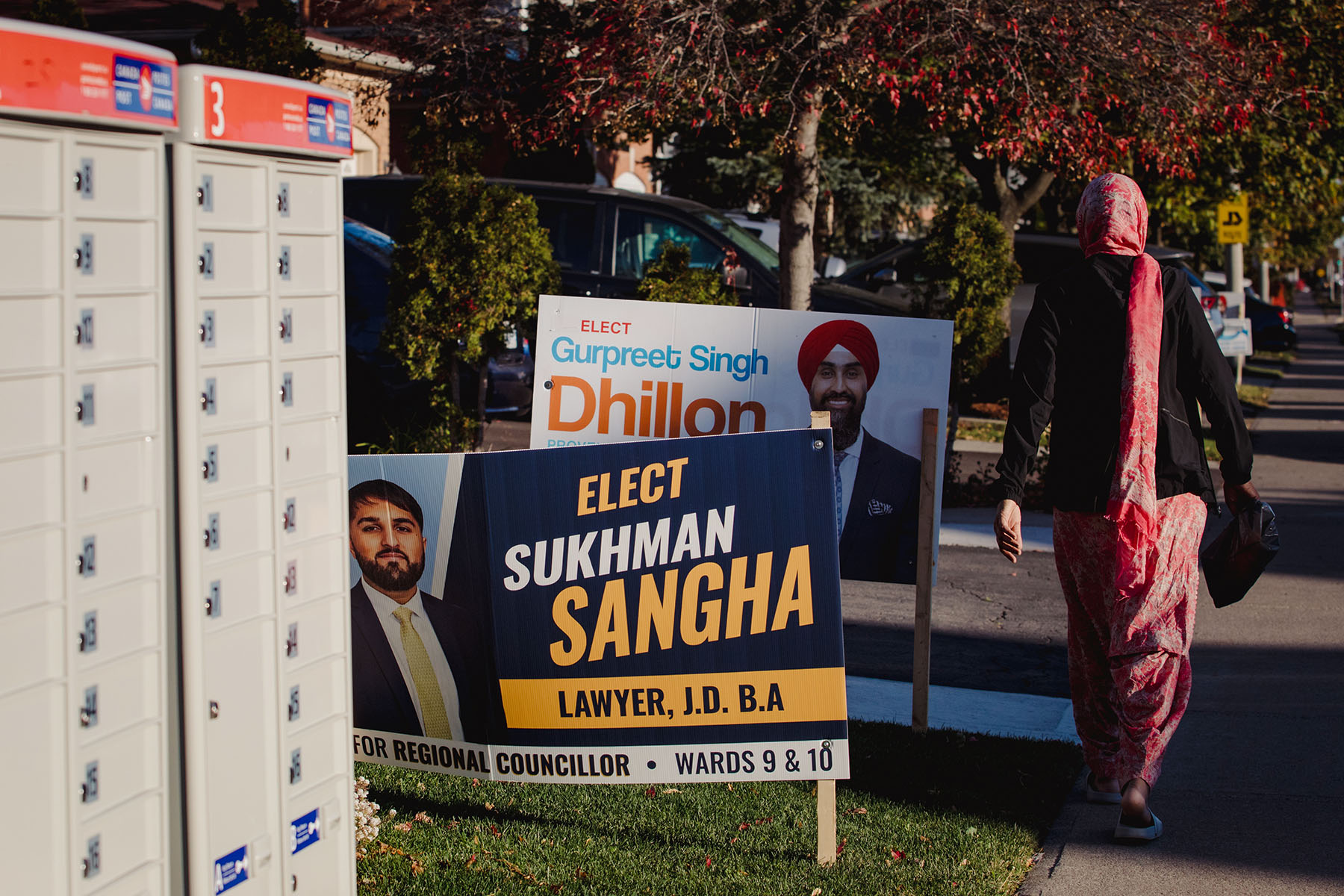
In Brampton’s Northeast, Old Allegations Loom Over the Race for Regional Councillor
The race for regional councillor in Wards 9 and 10 is one of the most crowded in the city. One frontrunner is campaigning in spite of a lingering controversy at city council.
Candidate Tracker: Brampton 2026
The only place to find reported, fact-checked biographies and platform summaries for every candidate running in the 2026 Brampton municipal election. No AI, no campaign talking points, just a team of journalists double-checking candidate records and analyzing policies.
Brampton Mayoral Candidates
Fact-checked biographies and platform summaries for all the candidates for mayor of Brampton.
How to Vote in the 2026 Brampton Election
Everything you need to know about voting for mayor, councillor, and trustee in October’s municipal election
Debate Tracker
Every mayoral and ward-level debate across Toronto, Mississauga, and Brampton—all in one place.
More from this issue
In Brampton’s Northeast, Old Allegations Loom Over the Race for Regional Councillor
The race for regional councillor in Wards 9 and 10 is one of the most crowded in the city. One frontrunner is campaigning in spite of a lingering controversy at city council.
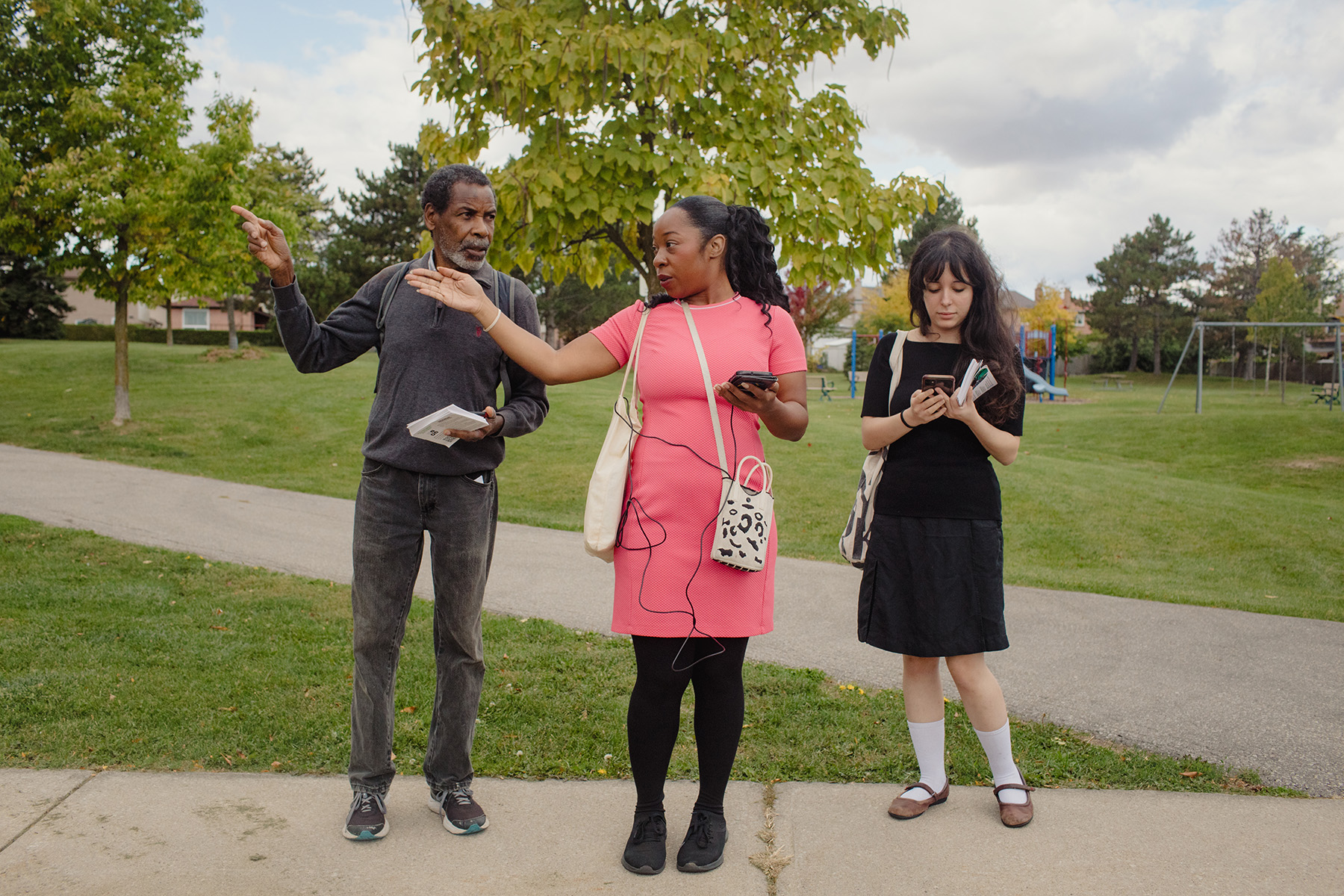
The Young Progressives Hoping to Unseat Vincent Crisanti in Etobicoke North
Policy analyst Chloe Brown made a name for herself challenging some of the biggest names in the city during her 2022 and 2023 mayoral runs. Now, she faces a different challenge—convincing residents of the neighbourhood she grew up in to send her to city hall.
The Biggest Winner of This Election: The Toronto Police
Despite being rocked by one of the biggest scandals in its history, the city’s police force is getting nothing but support from major candidates in the municipal election.
Has Olivia Chow Been an Effective Mayor?
I followed Olivia Chow over a summer of announcements and events to try to understand how she's fared as a leader. I came back with a more fundamental question about what it means to be mayor of Toronto when real power lies elsewhere.
In York South-Weston, Old Opponents Face Off for a Third Time
Frances Nunziata, Toronto’s longest serving city councillor, is ready for another term in office. Do her constituents feel the same?
North of the Tracks: The Election From Main and Danforth
With thousands of new units coming, Danforth Village in the corner of Beaches-East York is a microcosm of a changing city. In today’s sprawling wards, can voters make their local issues heard?
In Mississauga’s Ward 2, Candidates Spar Over Crime, Housing, and Property Taxes
With popular incumbent Alvin Tedjo stepping aside for a mayoral run, 14 candidates present their vision for one of the busiest, and wealthiest, wards in the city. Photos by Chloë Ellingson / The Local
Dianne Saxe Needs to Convince Danforth Voters She’s No Outsider
A walk through Toronto-Danforth with the former environmental lawyer, who jumped into the ward race just minutes before registration closed.
Brad Bradford Seems Angry—He’s Betting Torontonians Are Too
Former staffers say he drove them to tears. Colleagues say he’s a bully. The Bradford campaign says his passion is just what this city needs.
The Incumbent Is Under OPP Investigation. In Scarborough Southwest, Voters Are Focused on Other Issues
In a rematch of a close 2023 by-election, incumbent Parthi Kandavel and Kevin Rupasinghe offer very different visions of a growing suburb.