

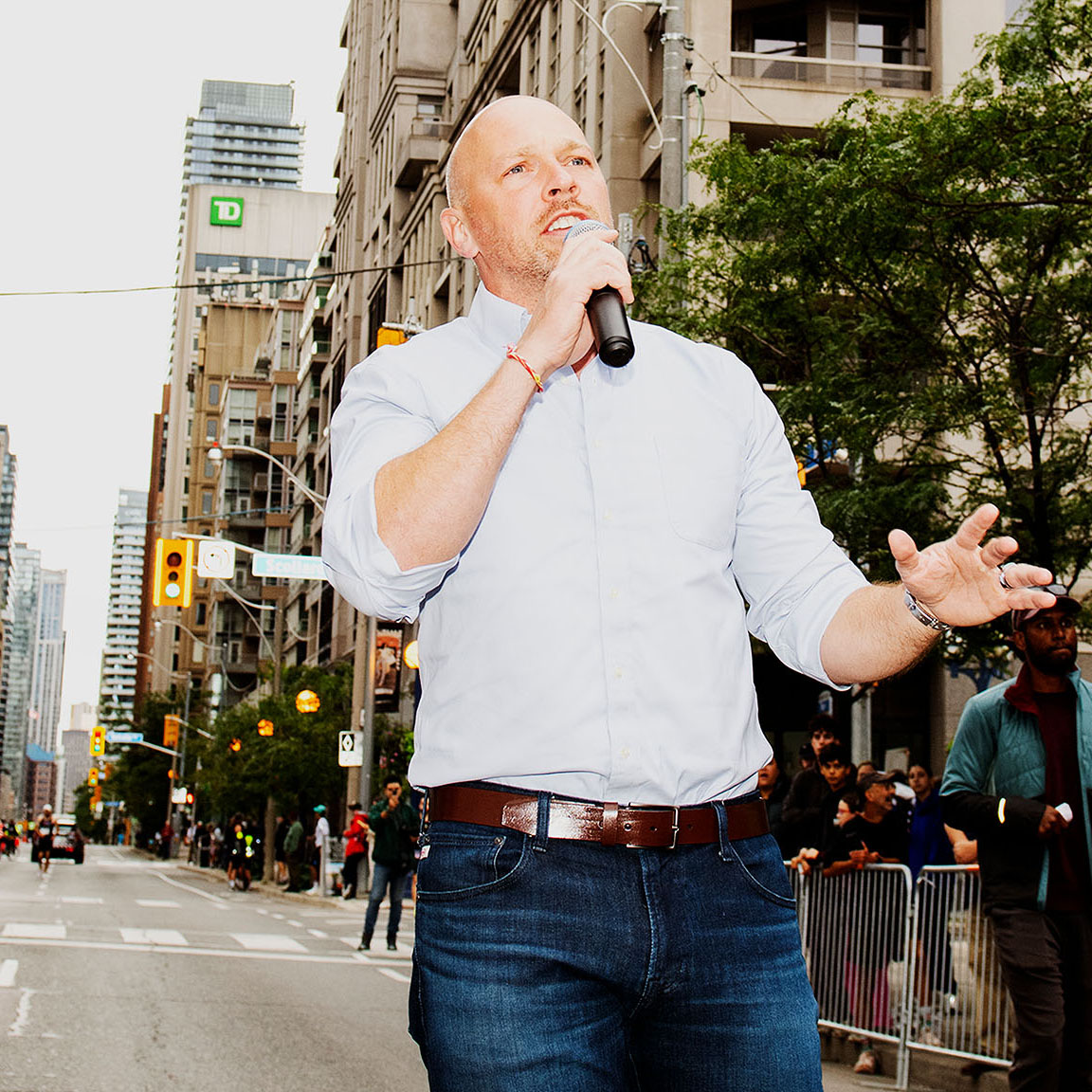
The first person to stand up and speak at Brad Bradford’s July 15 crime and safety townhall said he wanted to buy a gun.
The declaration didn’t seem to perturb the audience of roughly 40 people gathered in the small, brightly lit hall at Glenview Presbyterian Church in North Toronto. Mayoral hopeful Brad Bradford was seated, listening, at the front of the room, his features arranged into a look of grim concern. It had been just four days since a shooting at a street festival on St. Clair Avenue West had killed two and injured five others, and the forum was supposed to be an opportunity for residents to air their concerns about violence in the city. Held in one of the city’s wealthy garden suburbs, Lawrence Park South, the conversation was dominated primarily by fears about property theft and break-ins. Hence, the gun. Fears of a home invasion had driven both of the speaker’s grown children to get their gun licenses, he told the room. “I’m going to get my gun license,” he said, his voice steely. “It’s time to be proactive. We can’t be reactive. We can’t just wait.”
His anger was not out of place at the townhall. It did not matter, in this room—the first public event after Bradford’s campaign launch—that break-ins in the city had in fact plummeted during the pandemic and have never returned to their pre-2020 levels. Nor did it matter that, after rising briefly between 2022 and 2023, they’ve gone down during Chow’s time as mayor. What mattered to Bradford was how you felt. When Toronto’s deputy chief of police said after the St. Clair shooting that Toronto remained one of the safest cities in the world (gun deaths and injuries have trended steadily downward since 2019), Bradford seized the opportunity to criticize the city’s leadership. “People don’t experience life in a spreadsheet,” he repeated, first in a campaign video set to tense violin strings, then at a press conference. “They ask one simple question: do I feel safe?”
The moment—criticized by some as a cynical exploitation of tragedy early in the lead up to the Oct. 26 municipal election—appears to have solidified a principle of Bradford’s campaign: feelings trumped facts. And the overarching feeling that has characterized his run at mayor seems to be anger. Anger at incumbent mayor Olivia Chow, primarily. But also, in some ways, anger at the police force, and at the visible crisis of homelessness and addiction on city streets. It’s a feeling shared by a not insignificant number of Torontonians.
Publicly, Bradford’s image is characterized by a relentless drive to win in the race for mayor, and particularly to win against Chow. There’s little else that one really knows about the candidate or his interiority. In wanting to learn more, I spoke with his former staff, with his colleagues and critics on city council, with constituents and old friends and mentors. Many of them struggled to pin down what Bradford really believes, or who his friends on council are, or what changed in his two-term arc to the political right. They agree he is driven, and capable of being incredibly hardworking. But former staff allege that Bradford has screamed and sworn at his employees, sometimes pushing them to tears. Colleagues describe him as a bully on the council floor. And almost everyone I spoke to identified, under layers of unyielding energy and intensity and ambition, that Brad Bradford seems pretty angry.
Join the thousands of readers who've signed up for our free newsletter and get award-winning local journalism delivered to your inbox.
"*" indicates required fields
Bradford’s most famous war, and the one that has most fuelled his critics, is with himself. First-term Beaches-East York councillor Bradford, in particular, has been a scourge to the campaign of mayoral hopeful Bradford.
When he was first elected to represent Ward 19, Bradford was an eager, bike-riding city planner in his early thirties, with a young family. He enjoyed the rare dual endorsements of both the mayoral frontrunners, John Tory and progressive Jennifer Keesmaat. His biggest priority, he told the Toronto Star after his win in 2018, was road safety.
Bradford was, perhaps, overestimated as progressive by virtue of his age—in his first term, he voted with Mayor Tory 93.7 percent of the time. But he took vocal stances on things that he has since had to publicly, repeatedly disavow. In 2020, he voted alongside the City’s progressive bloc in favour of cutting 10 percent of the police budget, and later that year, largely in favour of a raft of policing reforms. In fact, he was one of the small number of councillors who voted in favour of consultation with municipal bodies representing Black and Indigenous communities in establishing these reforms. Today, the hiring of 1,000 police officers is one of the cornerstones of his campaign.
While he voted in favour of renaming Yonge-Dundas Square to Sankofa Square in 2023, Bradford spent the early part of his campaign this summer criticizing the move, and proposed renaming it Toronto Square. And of course, there’s the bike lane issue. Bradford’s early identity was so tied up with bike-riding that it was the one thing people knew about him if they didn’t know anything else. Now, he’s proposing the removal of bike lanes on part of Bloor Street West that he himself voted to implement, and promising not to build bike lanes on arterial roads (he says he remains supportive of the lanes on Adelaide, Richmond, and Sherbourne Streets, which he helped initially vote in).
In the press, Bradford has characterized these changes of heart not as ideological, but as a response to evidence that has emerged in the aftermath of the decisions. “We were able to see and feel the real-world feedback,” he said about the Bloor Street West bike lanes in an August press conference. “It became clear that council, including me, got this one wrong.”
“Some people are going to want me to double down on a bad take…I will not do that.”
Early in his time as councillor, Bradford’s policy ideas weren’t tied to any particular side of the political spectrum. He was an action guy—he seemed to really care about bike lanes, road safety, and housing—and he was adept at navigating the bureaucracy of city hall using the experience he’d gained as a planner with the City.
This was the context in which I first noticed Bradford, when I investigated the road safety records of city councillors in the 2018-2022 city hall term. The Beaches-East York councillor was leagues ahead of his colleagues in improving road safety in his ward because he regularly waived long, bureaucratic processes in favour of simply installing speed bumps or stop signs because the community wanted them. “The local residents on the local street know their street better than the bureaucrats at city hall,” he told me in 2022. “If they think traffic calming measures are necessary, I’m going to be there to support them, and move that through the machinery of government.”
In my conversations with former Bradford staffers and with his colleagues on council, I’ve been searching for a particular turning point, a catalyst that helped form the Bradford we recognize today—or even a clear answer on when that transformation really happened. No single answer emerges. It’s not just that Bradford is distinctly more right-leaning now than he was even a mere four years ago. Perhaps more importantly, it’s that he today appears to be driven not by an enthusiasm for the policies he’s advocating for, but by a contempt for the ones he’s advocating against.
First-term Bradford wavered between passionate and aggressive, says Jessica, a former senior staffer who worked with Bradford through part of his first and second terms. “But I think rather than staying true to that,” Jessica says, “he’s definitely leaned quite heavily into the anger, frustration, aggression.”
For this story, I independently spoke with three former staffers from Bradford’s office who were willing to share their experiences with me. Their stories were verified against each other, and using contemporaneous correspondence from that time sent via email and text. The Local viewed messages sent and received by the sources at the time that mentioned Bradford’s anger, yelling, and instances of staff crying. In politics, employees are expected to never speak openly about current or former employers—the staffers quoted in this story have been given pseudonyms to protect their employment.
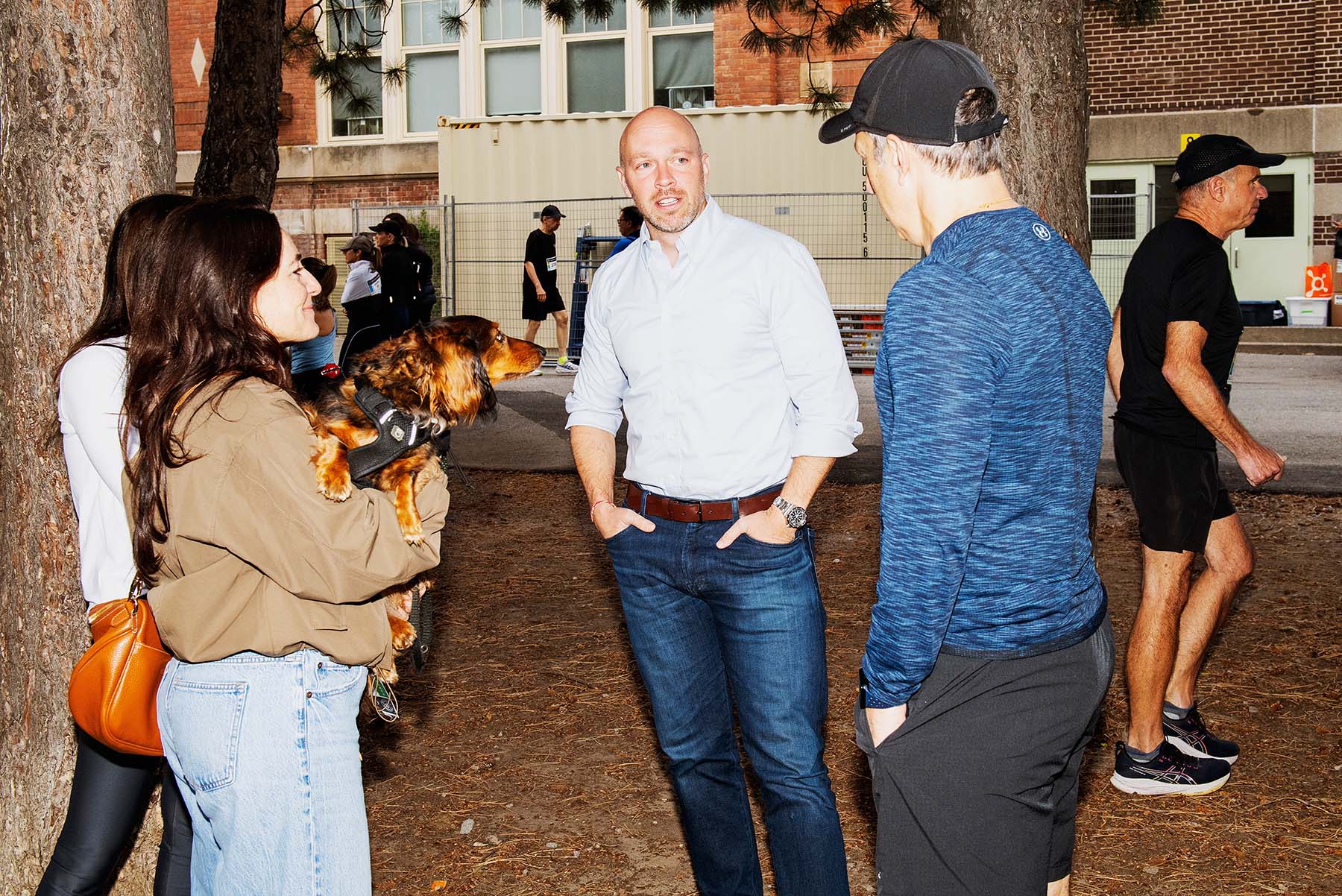
In the earlier years, there was a puerile, bro-y energy in the Bradford office, the staffers say. This atmosphere became more professional, and more demanding, in his second term, sources say. Bradford would change into his cycling kit and get on his exercise bike in the office, they say, sometimes having staff read him prep notes while he worked out . Jessica and another staffer, Tim (also a pseudonym), both recall him employing the term “BDE”—big dick energy, a slang term that captured the public imagination for a hot minute in 2018—when he wanted his staff to pursue something aggressively. They say he would frequently do things an employer doesn’t usually do: ask about peoples’ love lives, share personal details, pal around with the staff.
These purported quirks could, if one were feeling generous, be chalked up to the tone-deaf idiosyncrasies of a man who had grown up playing sports. (In his youth, Bradford was a figure skater—a talent that many only found out he had after he made a video with Tessa Virtue this year. He played rugby in university, and following a knee injury, took up cycling and co-founded a competitive team, Toronto Hustle.) But the staffers paint a less generous picture, of a boss who wasn’t afraid to occasionally venture to the outer boundary of appropriate office behaviour.
Towards the later part of Bradford’s first term, Tim tells me, Bradford began to show a disdain for the people who disagreed with him. “It kind of became this constant barrage of, ‘let’s openly complain about people who disagree with us,’” Tim says. No one was off limits: constituents, average-joe social media commentators, fellow councillors, he adds.
There were times when Bradford would come back from having an argument at city council or a committee meeting and would perch at the edge of a staffer’s desk in the main office, Tim says, and lead the office in a group discussion about how his opposition was wrong and he was right. Tim and Jessica both say that he was harsher about female councillors, and on occasion, that they heard Bradford use the word “bitch” to describe them.
Jessica says that Bradford “couldn’t talk to certain staff without being really belligerent, yelling or screaming at them.” It wasn’t uncommon, she adds, for staff to cry during or after these encounters. Sometimes, to some people, he would apologize, she says, but his actions did not meaningfully change in the time she worked for him.
“Brad kind of created an environment of fear where he yelled and swore a lot at staff, and would throw mini-tantrums if he didn’t feel like he was getting what he needed,” says Tim, describing some of the incidents as akin to “verbal abuse”.
A former staffer who declined to be quoted for this story described having the same experience working under the councillor—that he would lose his temper easily, yell and swear, and, they feel, fail to conduct himself as an employer should.
I ask Bradford about these allegations on a sunny Monday morning in mid-September, over coffee at the Marriott bistro across from city hall. Bradford, who is compact, clean-cut, and perpetually clad in business casual, is unfazed by the question. He puts his coffee—black, no milk, no sugar—down. “I don’t think I’ve really had a lot of conflict with my staff.”
“[But] I hold myself to a very high standard when it comes to performance on the job,” he says. His voice is level, and sincere—he’s not grandstanding. “You know, we all need to perform. We owe it to the people who have invested their trust in us to lead. So I’m not a guy who does well with mediocrity. I’m not a guy who responds well, if the effort doesn’t match the urgency of the issues that we’re dealing with.”
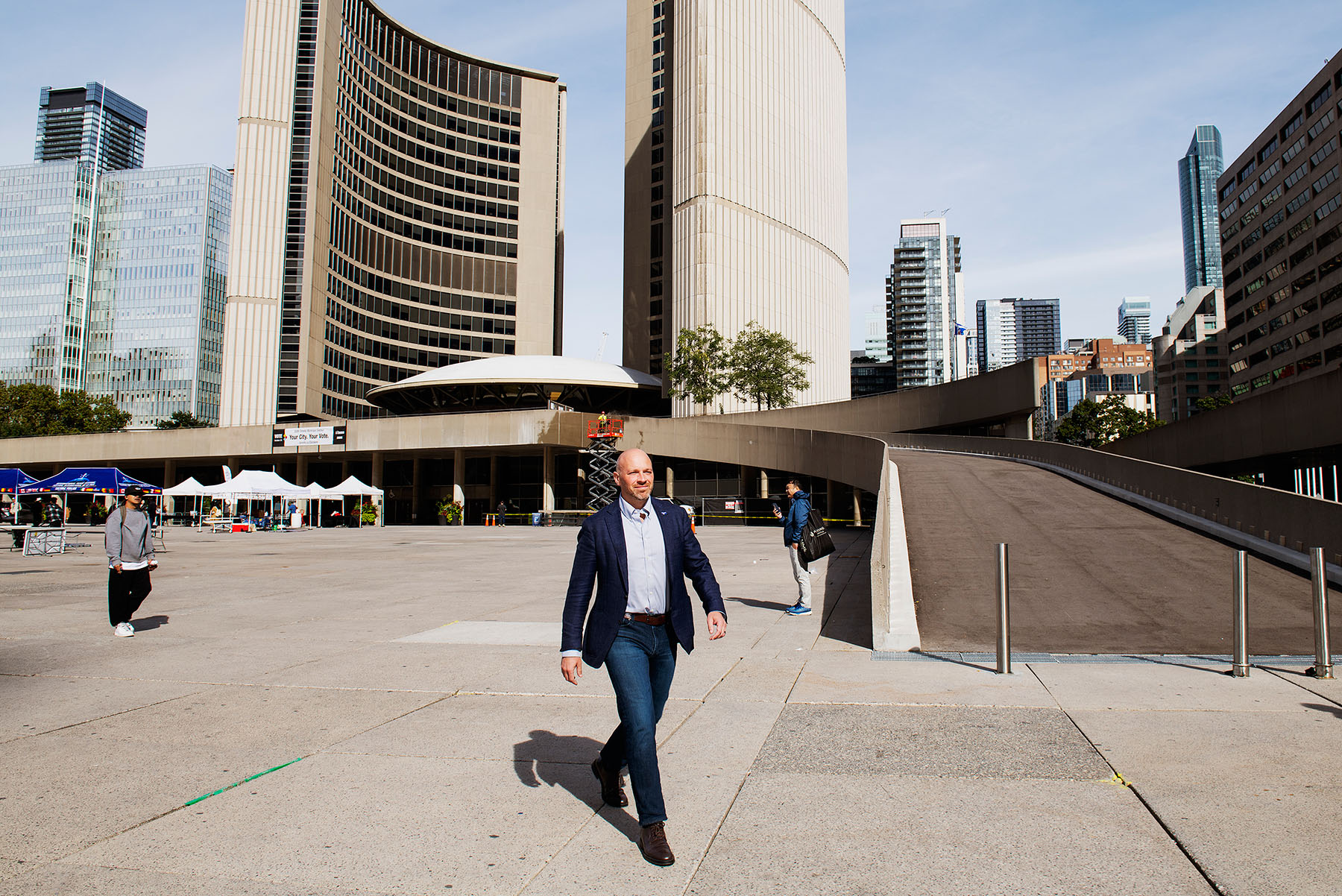
Prior to publishing, The Local sent the Bradford campaign a detailed list of every allegation from former staff. “You spoke with 3 former staffers, unnamed. Brad has worked with hundreds of staff, colleagues and volunteers over 8 years at City Hall,” wrote campaign spokesperson Laryssa Waler. “We’re not going to spend the final weeks of the campaign responding line by line to anonymous accusations from people who won’t attach their names to them.” Neither Bradford nor the campaign denied any allegations.
The next day, the Bradford campaign attempted to connect me with a former staffer. After I described the allegations in this story, the staffer decided not to go on the record.
The Local then heard from two current staffers who describe having good relationships with Bradford. Both describe the office as a high-intensity workplace, but they say they’ve never heard Bradford swear at his staff, or refer to a fellow councillor as a “bitch.” Craig Ruttan, Bradford’s chief of staff the last three years, says he “can’t recall” a time when Bradford’s actions made staff cry, and that he hasn’t heard or experienced Bradford yelling and berating employees in the way he’s seen in other councillors offices. “Can I say, definitively, [that] I’ve never heard him yell? No,” he continues. “There have been some times where something quite bad happened, and he had a response to it. But I wouldn’t say it’s something that was typical or characteristic of him.”
Heather Purdon, who has worked as office manager for Bradford for two years, says that while she’s seen Bradford get upset and yell, she’s never seen him yell at staff, nor make anyone cry. She described Bradford as patient and supportive.
Some of Bradford’s colleagues on council attest to his temper. Gord Perks, outgoing councillor for Ward 4 — Parkdale-High Park, 20-year veteran at city council, and prominent ally of Chow, had one of the most visibly tense relationships with Bradford of anyone on council. Over the years, the two have exchanged sharp words, eye rolls, and occasional passive-aggressive snubs. “From day one, he’s been very competitive with other members of council, and been quite an attention-seeker. That’s been a consistent pattern all the way through,” says Perks. “The one thing that’s changed, though, is he’s gotten even angrier.”
At least while the livestream cameras are on, city council tends, on most days, to be a fairly subdued, collegial place, dominated more by finicky bureaucratic process than by impassioned arguments about principles. But Bradford has occasionally attracted attention for his demeanour on the floor of council—for sparring with progressive councillors like Alejandra Bravo and Gord Perks, for example, or for the time he described Toronto-Danforth councillor Paula Fletcher’s behaviour as “hysteria.”
According to Perks, it’s not beyond Bradford to swear at his colleagues off-mic. “He storms around like a bull, and tries to use swagger and intimidation to get his way,” he says.
When I ask Bravo, she is measured in her response. “He doesn’t work well with his colleagues,” she tells me, “and it will be challenging for him to be able to govern with a majority of council.”
Perks and Bravo are, of course, all part of Chow’s progressive coalition. For this story, I also tried to speak to councillors who had a more positive relationship with Bradford, like Stephen Holyday or Jon Burnside, or those who have endorsed Bradford for mayor, including James Pasternak and Vincent Crisanti. Holyday declined to speak; everyone else did not respond to multiple attempts to reach them.
Jennifer McKelvie, former city councillor for Ward 25 — Scarborough-Rouge Park and current Liberal MP for Ajax, joined council at the same time as Bradford, in 2018. “He’s smart, he works hard, and he cares,” she told me.
During her time at city hall, McKelvie worked with Bradford on key policy pushes, she tells me: the legalization of muti-tenant housing, setting a goal to build 285,000 homes over 10 years, reducing red tape and zoning barriers to build faster. She has now endorsed him for mayor.
When I ask her about the allegations of bullying and anger fellow councillors and former staff have raised against Bradford, she says, “I’ve also seen how very kind he is to the residents…I know there’s many employees of his that are currently working on his campaign and also hold the utmost respect for him as well.”
Introducing the Toronto Candidate Tracker
Fact-checked information about every single candidate running in the 2026 Toronto municipal election. No AI, no campaign talking points, just good journalism.
Observers say that Bradford’s anger—and his willingness to make it known to others—escalated during his 2023 run in Toronto’s mayoral by-election.
Among the sources I spoke to for this story, the consensus was that Bradford hadn’t necessarily entered the role of city councillor aiming to one day be mayor. But it seemed his unrelenting ambition needed a natural home after his tenure on council ended (Bradford has been committed, throughout his time as councillor for Beaches-East York, to only being in that office for two terms). The 2023 revelation of former Toronto mayor John Tory’s extramarital affair and subsequent resignation seemed to present the perfect opportunity. Despite Bradford’s close working relationship with Tory, the outgoing mayor endorsed then-councillor and former deputy mayor Ana Bailão.
Toronto-Danforth councillor Fletcher, another councillor who has had an openly adversarial relationship with Bradford, describes him as disruptive, rude, and belligerent once he began campaigning. She was particularly struck by it because she felt they’d gotten along well when working on the Danforth bike lane before the pandemic. “There was a marked change once he decided to run for mayor,” she says.
Fletcher points out that historically, she didn’t align politically with former mayor John Tory, but that disagreements with his allies on council didn’t have to mean animosity between colleagues. “I may have an argument with one of the councillors, but afterward, it’s very genuinely friendly,” she says. “I did not find that with Councillor Bradford, once he decided he was running for mayor. He was in fight mode every minute.”
In June of 2023, Bradford lost his first run for mayor. He came eighth in a crowded field of 102 candidates, winning only 1.28 percent of the vote, sandwiched, astonishingly, between a right-wing media commentator and an actual Holocaust denier. He’d gotten fewer votes city-wide than he had the previous year in just his own ward. It was a loss so humiliating that even some of his critics were surprised. Bradford himself seems resigned to recognize some humour in it: both at the safety townhall from July, and during our interview, when he mentions the first time he ran for mayor, he looks off to the side and laughs a little.
After Chow’s election win, it seems much of Bradford’s ire and intensity turned towards her. On the floor of council, he has become Chow’s most vocal opponent, frequently disagreeing with the mayor despite the futility of whatever motion or argument he’s trying to make—perhaps specifically so that he can be seen, on record at city council and under the watchful eye of the livestream, as council’s primary foil for Chow. At the last council meeting before the election, held at the end of July, the two had a terse exchange over how much Chow may have known about the province’s plans to expand the island airport before they were announced. “I don’t know where you’re at, at this point,” she shot back a little defensively, in response to his question, and in reference to Bradford’s prior support of a longer runway. “At some point, you need to make your decision clear—what side are you on?”
“Let’s not confuse the issues,” he retorted. “You sound confused.”
She was visibly peeved, a side of the mayor the public doesn’t often see. The contrast between this exchange and the one before it—Chow’s interactions with the rather soft-spoken, unassuming Etobicoke Centre councillor Stephen Holyday, who frequently votes against her and also had questions about the airport—were night and day.
In February of this year, Bradford spent $13,602 on a telephone townhall for constituents of Beaches-East York, opening the phone lines for them to call in with grievances about Chow’s budget. No other councillor did anything similar, or for this much money—except the mayor’s office. More than a year ago, Bradford was on the cover of the Toronto Sun wielding a baseball bat he claimed to keep under his bed at night to protect his family from—there’s that familiar threat again—armed home invaders. He was making an impression on the public, giving them a chance to know him ahead of his second run. It is, perhaps, the most overt years-long campaign for mayor that this city has ever seen.
If you spend any time with Bradford, you do notice traits that are well suited to the role of mayor. He’s a remarkably well-spoken person. When he chooses to be, he can be affable, even charming. There is a consensus, even among his most vocal critics, that he is extremely hardworking. The selling point is: what if his churning, unyielding drive were harnessed in service of improving the city?
“I was terribly impressed with his enormous work capacity and energy, and ability to meet so many people, and be so sharp, and connected, and involved,” says Kent Hakull, a friend of Bradford’s from his Masters degree at the University of Waterloo. The two of them were student leaders with the Canadian Association of Planning Students, organizing and attending urban planning conferences and events while working on their degrees. While the two haven’t stayed in touch much over the past 14 years, and Hakull, a soft-spoken city planner in Haugesund, a small coastal municipality in Norway, doesn’t keep up with Bradford’s politics, he does remember the distinct impression a young Bradford had made upon him.
In their small program of 30 or 40 students, “He was extremely inviting, open, curious,” Hakull says. Bradford gave the outward appearance of a pure extrovert—“he got to know everybody quite quickly, and developed friendly relations really fast.” In fact, when Hakull in his work today has to meet new people, work a room, he uses the skills he learned from Bradford. “People think I’m an extrovert, and I often credit that to Brad.”
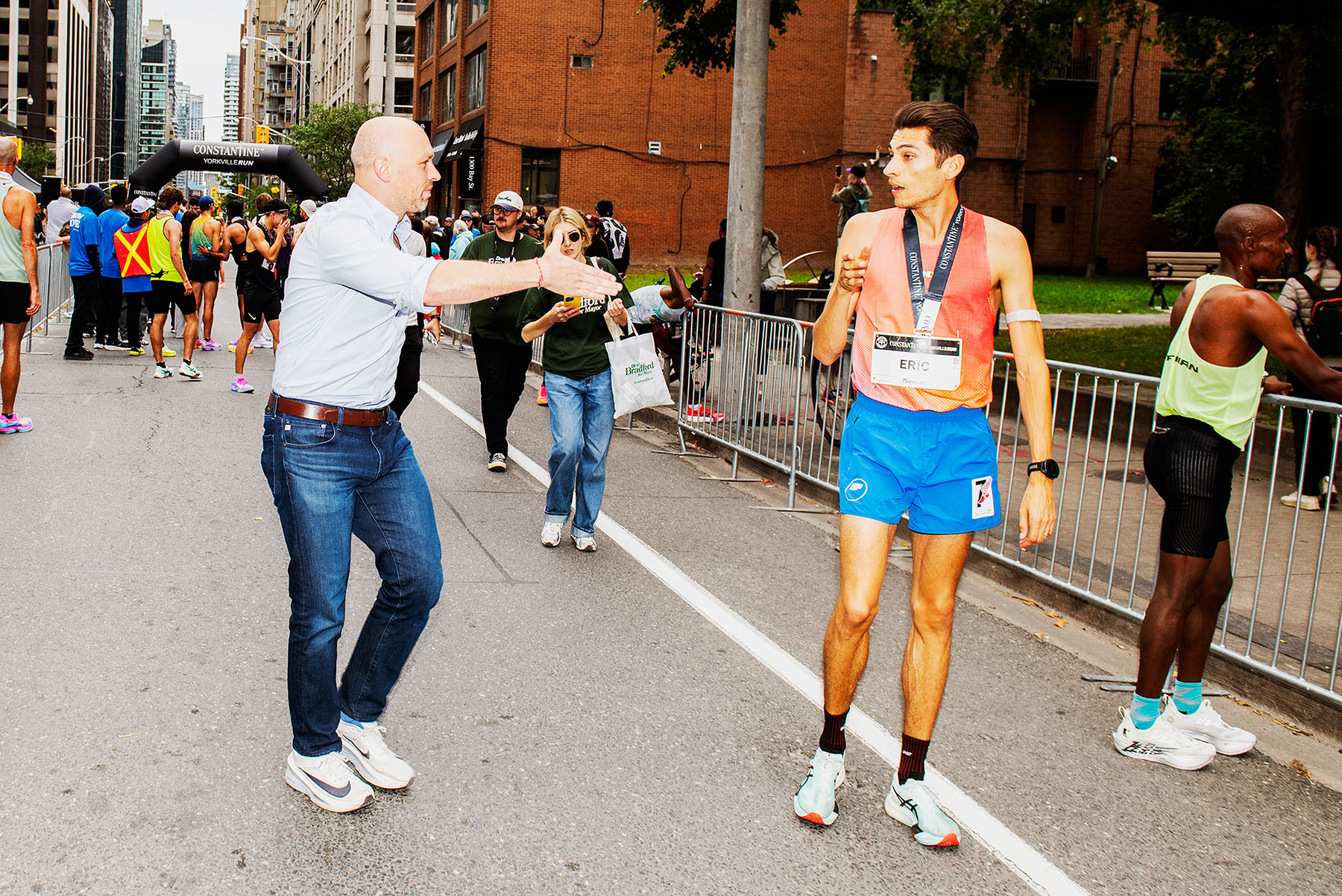
Bradford’s ambition and his skill were apparent to Hakull even then. One night, driving back from a conference together in Bradford’s little car, the Norwegian remembers telling Bradford, whatever he did, to aim high. “I think he had the ambition of being a leader,” Hakull says. At that stage of their life, there were a million possibilities for where that could take them.
Many of the better traits Bradford projects outwardly make him a natural fit for political leadership. In fact, it’s puzzling to me that he doesn’t mine his inarguably compelling personal history to build a public persona with more layers to it. Even the story behind his full name, which is in fact Bradford Bradford—he was named for his mother’s last name, but then changed his own last name to match hers after his parents split—is a humanizing detail that could engender sympathy from voters.
During the July safety townhall, Bradford briefly mentioned his father in the context of addiction treatment for people in crisis. “People who are struggling need treatment. You know, my dad left us when we were six. He had some issues with addiction and mental health.” And then, before the supporters in the room could get to know Bradford any further as a person—rather than as a politician—he pivoted to talking about his drug treatment policy. (Bradford has campaigned on mandatory treatment for people experiencing addiction, which many health professionals and critics say is not backed by science: some studies have found that people experiencing addiction who are forced into treatment are more likely to relapse upon release, and have higher risks of adverse health outcomes and death.)
When I ask him about his family history in person, he’s similarly reticent. “Without getting into too many of the personal details of my own family’s experience,” he prefaces, before gently turning to policy. There are only two things he always mentions. The first is his family—two daughters and his wife, urban planner Kathryn Randle, who all frequently appear on his social media and in campaign material. And the second is his appreciation for his mother, who made the decision to raise three kids under six on her own. “I saw how hard she worked, the sacrifices that she made, everything that she did to provide for us, and all the challenges that come with it,” he tells me. Another graceful pivot, like political figure skating. “I think that gives me a firsthand perspective of what it’s like for so many families here in the city…”
The walled-off part of Bradford’s public persona is an interesting choice in comparison to Chow’s open-book approach to talking about her family and the strife that shaped her childhood: the abuse her mother and brother faced at the hands of her father, who also struggled with mental health issues. We live in an age when the most successful mayoral campaign in public memory is New York mayor Zohran Mamdani’s—a candidate whose smiley, man-of-the-people optimism far more resembles Chow’s (famously dance-friendly, however one may feel about that) campaign than Bradford’s. He seems to recognize this tension, though I don’t get the sense he’s rushing to kiss any babies on the campaign trail. He mentions it briefly, laughing, when we meet: “Yeah, the Star was saying I need to smile more.”
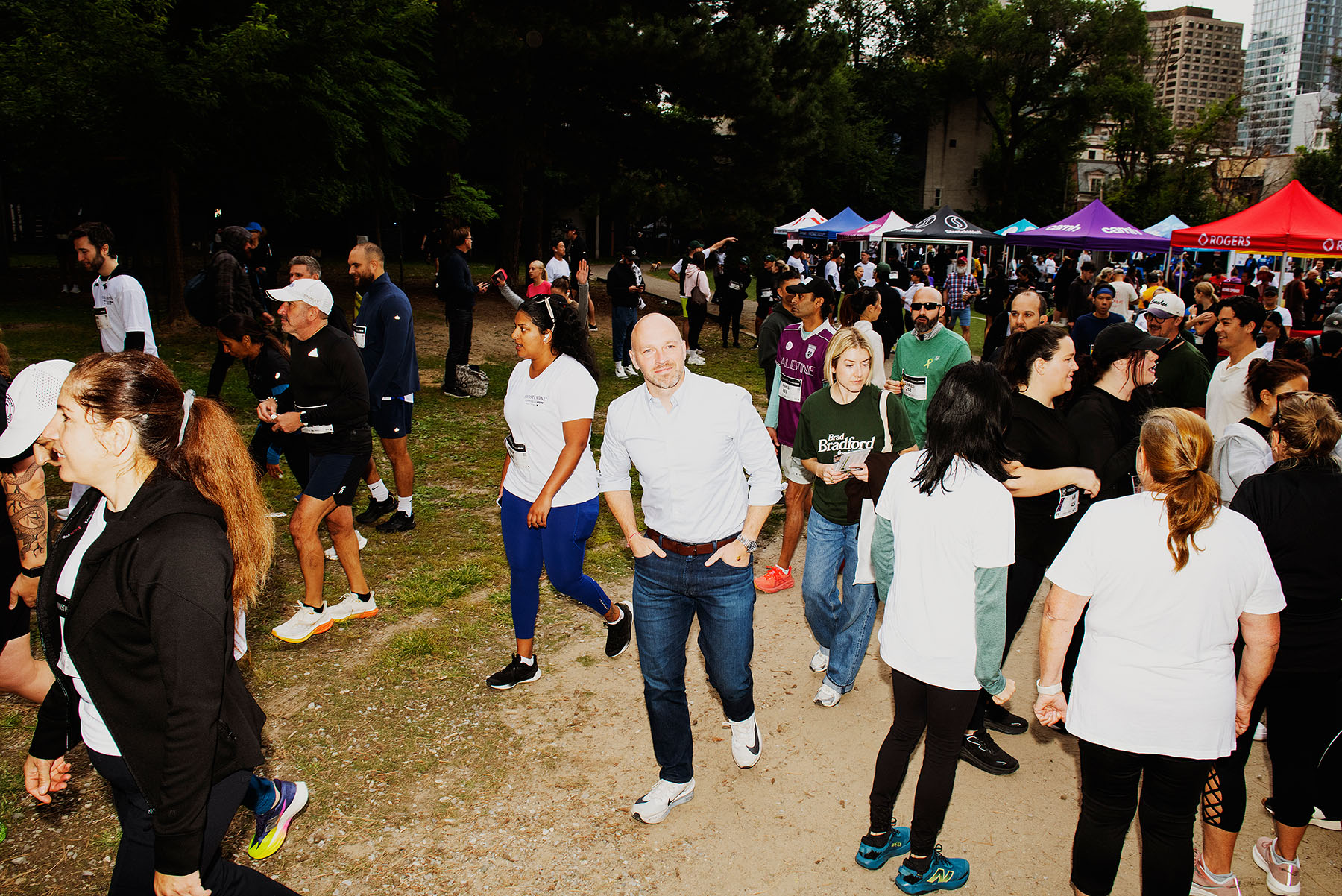
In pre-election polling, 40 percent of city voters favour Bradford. In his own ward, if there are many supporters, they’re being drowned out by his vocal critics. In the 2023 mayoral by-election, only 4.7 percent of voters in Beaches-East York voted for their councillor, leaving Bradford sixth in the ward’s ranking. Many feel that he’s neglected the ward in favour of his three-year run for mayor—constituents I spoke to from the ward described him as impossible to get a hold of, and ineffective at managing the tasks that a city councillor is meant to, like clearing snow from a school bus lane used by paratransit for elementary school children. Despite Bradford’s campaign team sending out a press release criticizing Olivia Chow for her inaction at 500 Dawes Road, an apartment building known in the ward for its appalling living conditions, tenant organizer Ryan Endoh told me that Bradford didn’t respond to their advocacy work for years before it became a broader issue taken up by the mayor’s office. “I gave him every opportunity,” Endoh says. “I don’t actually think that he’s ever really committed himself to doing anything consequential or meaningful.”
Bradford also appears to have broken from the prior mentors who helped put him in the role he has now. His relationship with former mayor John Tory is unclear, and politicos close to Tory have distanced themselves from Bradford. Nick Kouvalis, in particular, who had a hand in both Tory and Ford’s ascent to mayor, told the Toronto Star earlier this year, “There is zero chance that I will work for Brad. I would sooner help Olivia defeat Brad.” (Kouvalis did not reply to my multiple requests for comment). Jennifer Keesmaat, who endorsed Bradford in his first run for council, said on social media earlier this month that Bradford “just makes things up, even when the facts are readily available.” (Keesmaat did not reply to multiple requests for comment.) Mary-Margaret McMahon, current Liberal MPP for Beaches-East York and city councillor for the ward preceding Bradford, told me, “He’s not the person I thought he was when I endorsed him.”
Bradford has instead surrounded himself, in this phase of his political life, with a team of mixed Liberal- and Conservative-affiliated advisors and staff who, for the most part, lean further to the right. His campaign manager, John Sinclair, was former deputy chief of staff for federal Conservatives leader Pierre Poilievre, and Bradford has hired members of Premier Doug Ford government’s communications and press staff.
Those advisors have helped Bradford construct a platform that emphasizes crime, and saving voters money on taxes. Besides that, he wants to establish a 15-minute money-back guarantee for delays on the TTC, and remove 12 km worth of Scarborough priority bus lanes, while also pushing for the suburb’s Eglinton East LRT. He’s talked about job creation for young people. He proposes the bureaucratic-but-genuinely-impactful elimination of the municipal land transfer tax for homes under $1.1 million (which critics say could take hundreds of millions of dollars from the City’s already flagging coffers).
His mayoral run has had mixed reception even among presumed supporters. Despite Bradford being the law-and-order candidate this election season, the head of the Toronto police union has praised Chow and criticized Bradford. Many assume that Doug Ford would align with Bradford, but there’s no sign this is the case—in fact, Ford gave a peculiar wink-and-nudge almost-endorsement of Chow earlier this fall, only to walk it back the next day. But Bradford is endorsed by the centre-right non-profit A Better City Toronto. “Anybody who comes to this role with a clear-eyed assessment of the state of the city, to say, ‘Things aren’t working right now, and I have a plan to fix them’—to me, that is a powerful candidate,” the organization’s executive director Kelly Aizicowitz told me.
Vastly outperforming his 2023 self, Bradford has found definite purchase with a few groups this election season. People who are alienated by the visible crisis of homelessness and addiction on city streets, and who feel that this crisis is the result of a culture of permissiveness at city hall (particularly through the existence of safe consumption sites), rather than, say, a chronic underfunding of social services and a housing affordability crisis. People who harbour a specific resentment against the Bloor West bike lane, or Scarborough rapid transit bus lanes. Some who are passionately pro-Israel, and want the police and the City to crack down on the regular pro-Palestine protests that have taken place in the city since Israel’s bombing of Gaza began; others who feel Chow has failed them on the more than doubling of antisemitic hate crimes reported to the police since 2022; and some who feel both. (Bradford’s reception at the candidates’ forum on antisemitism in early September was fervent—the only time distant third-place candidate Chris Alexander received anywhere near as much applause was when he admitted he was open to withdrawing from the race, which he since has.)
But beyond those narrow constituencies, the central bet of the Bradford campaign is that there are enough people in Toronto who are as angry as he is. Traffic in the city is terrible. The cost of living is debilitating. There is a distressing, sometimes frightening crisis of addiction in the city. These are real issues—complicated issues, issues that should make you upset. Bradford seems to hope that, coloured by frustration and fear, voters will attribute all of that to one person, and to her decisions.
Whether this sentiment is pervasive enough to win Bradford the mayor’s race is uncertain. According to some polls, Chow’s lead has grown slimmer over the course of the race, currently sitting somewhere between four and eight points, with Alexander’s withdrawal almost certainly sending some voters towards Bradford. The race is closer than any re-election campaign for an incumbent mayor in decades. If Bradford’s apparent anger really does reflect enough of the city he wants to lead, he’ll finally have the seat he’s single-mindedly coveted these last few years.
There’s something Kent Hakull mentioned about going to school with Bradford that stuck with me long after our conversation. In grad school, he explained, they learned that in planning, “leaders cannot be only skeptical of developers.” It’s a belief that Hakull and Bradford shared in these formative years, that they maybe still share, he said. It’s a lesson that applies to city planners, but also to anyone who wants to be a responsible leader. “Being close to power, being close to actors of both ‘good’ and ‘bad’, essentially requires skill,” said Hakull. “You have to know who you are and where you stand.”
Bradford has mastered the first part, being close to power. For the people I spoke to who have known him, worked for him, or once voted for him, it’s the second part, about knowing where you stand, that makes them worry.
More stories about Toronto Votes 2026
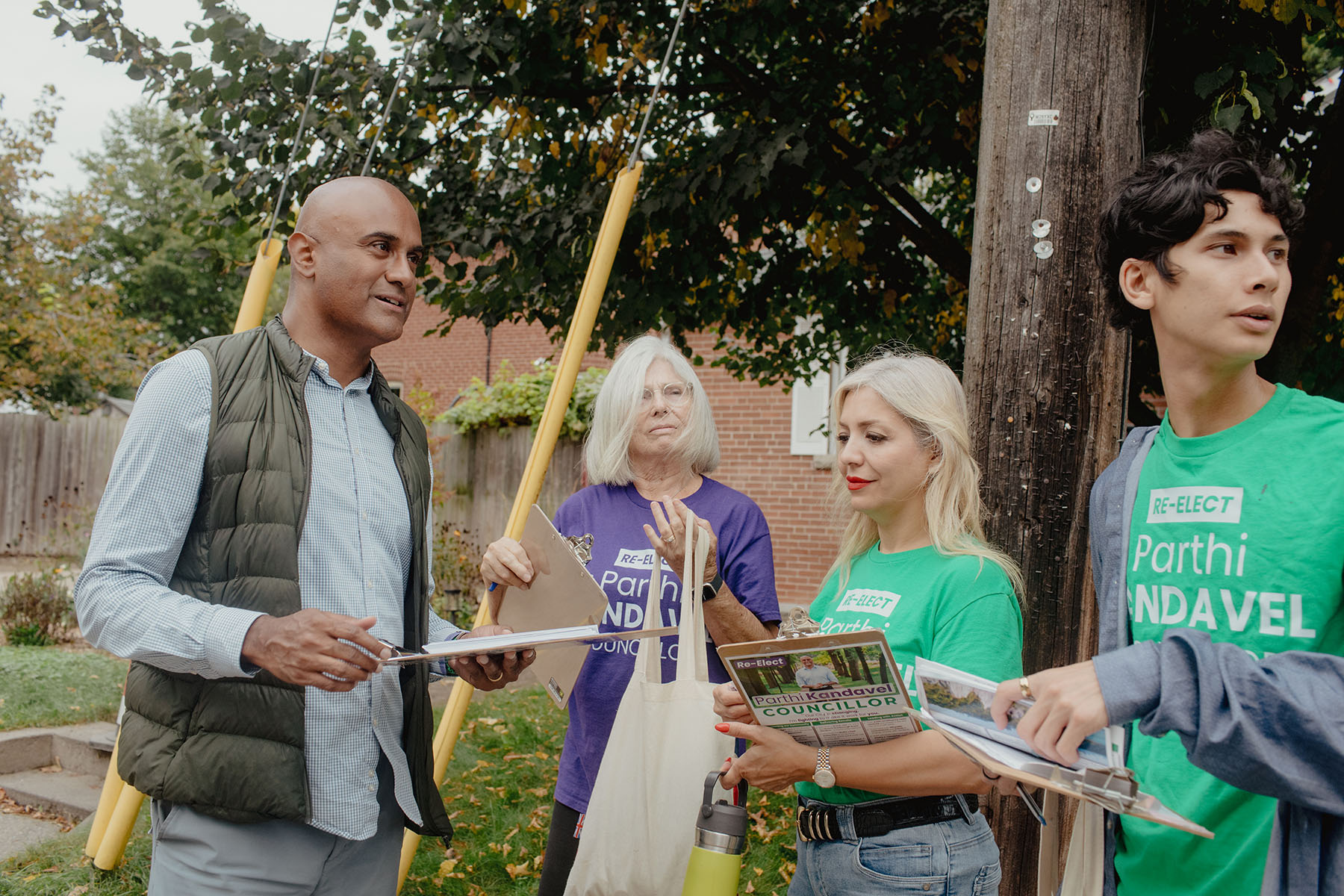
The Incumbent Is Under OPP Investigation. In Scarborough Southwest, Voters Are Focused on Other Issues
In a rematch of a close 2023 by-election, incumbent Parthi Kandavel and Kevin Rupasinghe offer very different visions of a growing suburb.
The Battle Over Sixplexes in Scarborough North
Last year, the ward became the first suburban ward to legalize the construction of sixplexes as-of-right. Now, in a race between incumbent Jamaal Myers and former Liberal MPs Shaun Chen and Han Dong, it’s become the defining issue of the election.
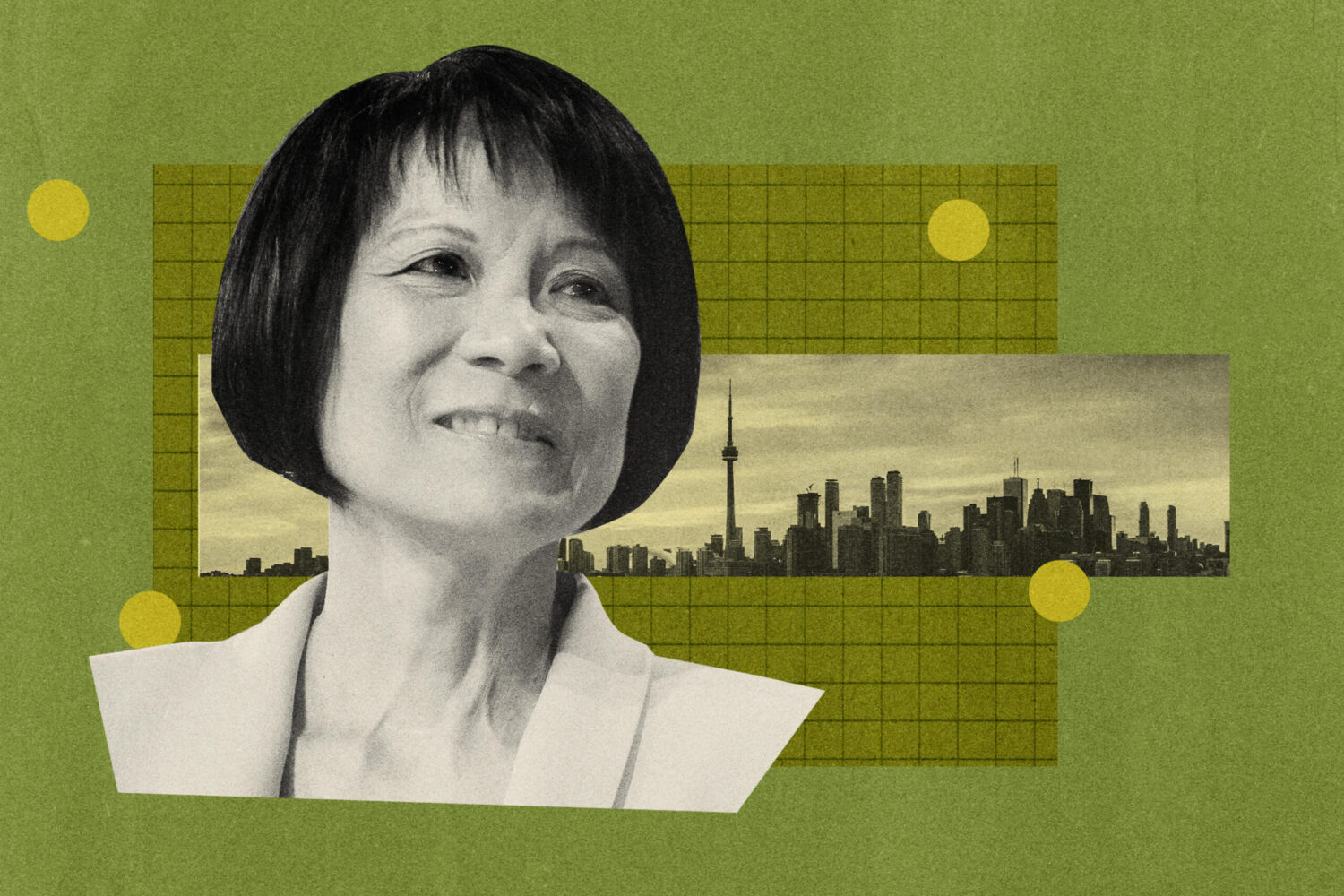
Toronto Mayor Olivia Chow: What She’s Done and What She’s Promising in 2026
Olivia Chow’s platform for re-election is all about building on her achievements, like a renovictions bylaw, TTC fare freeze, and new funding deal with the provincial government.
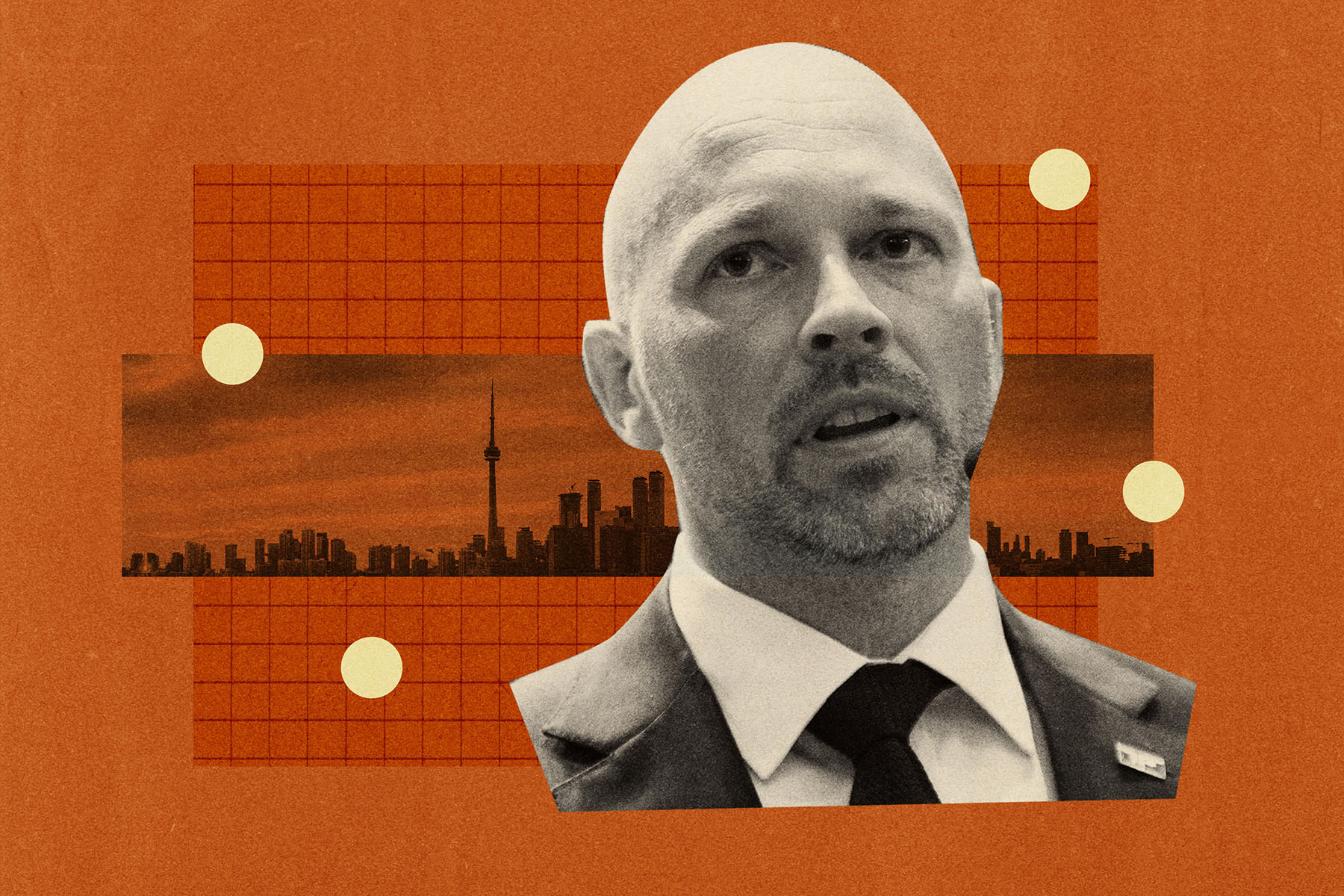
Brad Bradford, Toronto Mayoral Candidate, Campaigns For Change
Mayoral hopeful Brad Bradford’s platform for 2026 revolves around crime, congestion and cost of living.
Candidate Tracker: Toronto Election 2026
The only place to find reported, fact-checked biographies and platform summaries for every candidate running in the 2026 Toronto municipal election. No AI, no campaign talking points, just a team of journalists double-checking candidate records and analyzing policies.
Toronto Mayoral Candidates 2026
Fact-checked biographies and platform summaries for all 53 candidates for mayor of Toronto.
More from this issue
The Incumbent Is Under OPP Investigation. In Scarborough Southwest, Voters Are Focused on Other Issues
In a rematch of a close 2023 by-election, incumbent Parthi Kandavel and Kevin Rupasinghe offer very different visions of a growing suburb.
The Battle Over Sixplexes in Scarborough North
Last year, the ward became the first suburban ward to legalize the construction of sixplexes as-of-right. Now, in a race between incumbent Jamaal Myers and former Liberal MPs Shaun Chen and Han Dong, it’s become the defining issue of the election.
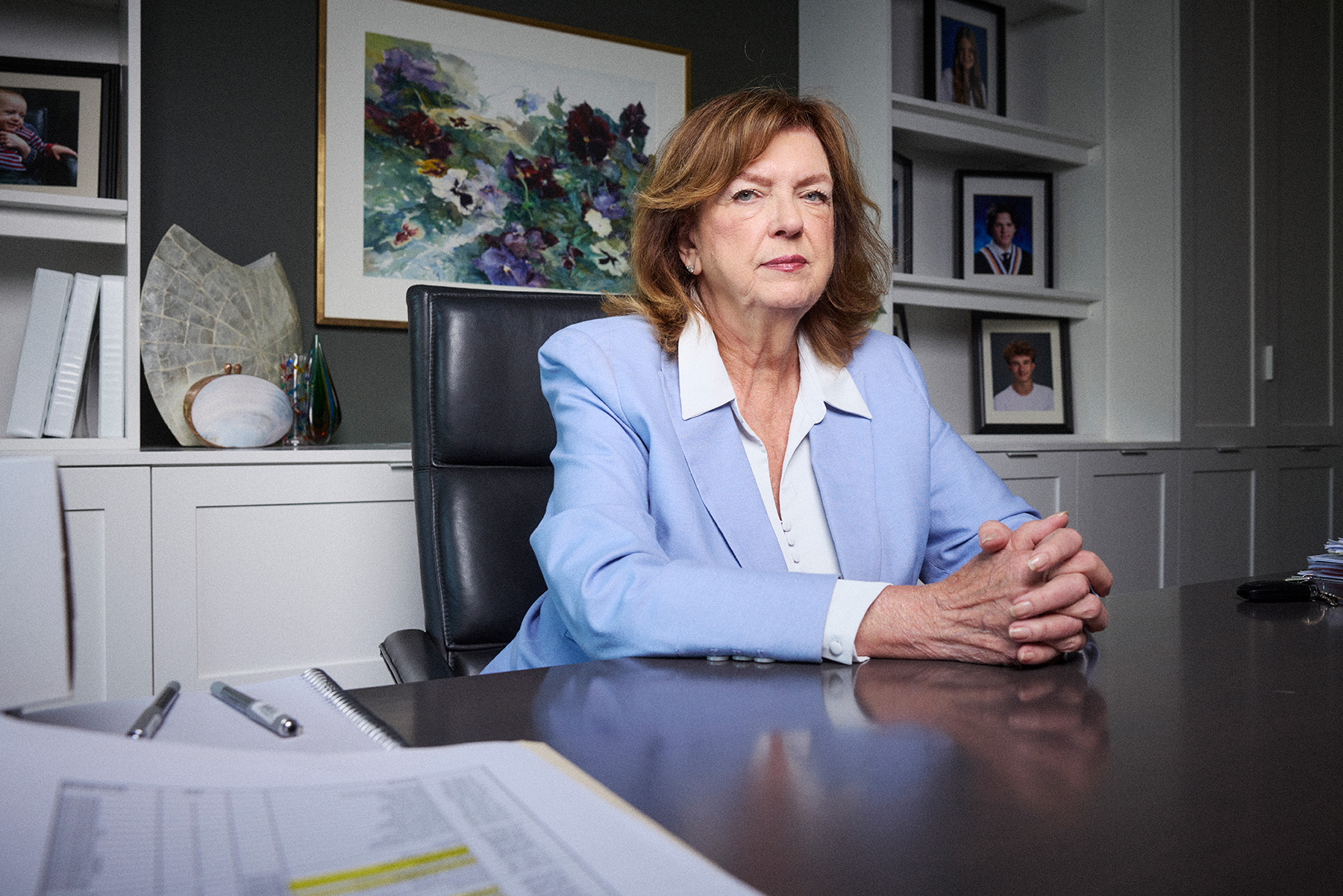
Carolyn Parrish Loves a Fight—Now She’s Up Against Her Fiercest Opponent
The Mississauga mayor has never backed down from a battle—not from Hazel McCallion, George W. Bush, or the Peel police budget. In the heated rematch against Bonnie Crombie, however, some wonder if all the scrapping has become an end in itself.
Candidate Tracker: Mississauga 2026
The only place to find reported, fact-checked biographies and platform summaries for every candidate running in the 2026 Mississauga municipal election. No AI, no campaign talking points, just a team of journalists double-checking candidate records and analyzing policies.
Candidate Tracker: Brampton 2026
The only place to find reported, fact-checked biographies and platform summaries for every candidate running in the 2026 Brampton municipal election. No AI, no campaign talking points, just a team of journalists double-checking candidate records and analyzing policies.
Toronto Mayor Olivia Chow: What She’s Done and What She’s Promising in 2026
Olivia Chow’s platform for re-election is all about building on her achievements, like a renovictions bylaw, TTC fare freeze, and new funding deal with the provincial government.
Brad Bradford, Toronto Mayoral Candidate, Campaigns For Change
Mayoral hopeful Brad Bradford’s platform for 2026 revolves around crime, congestion and cost of living.
Candidate Tracker: Toronto Election 2026
The only place to find reported, fact-checked biographies and platform summaries for every candidate running in the 2026 Toronto municipal election. No AI, no campaign talking points, just a team of journalists double-checking candidate records and analyzing policies.
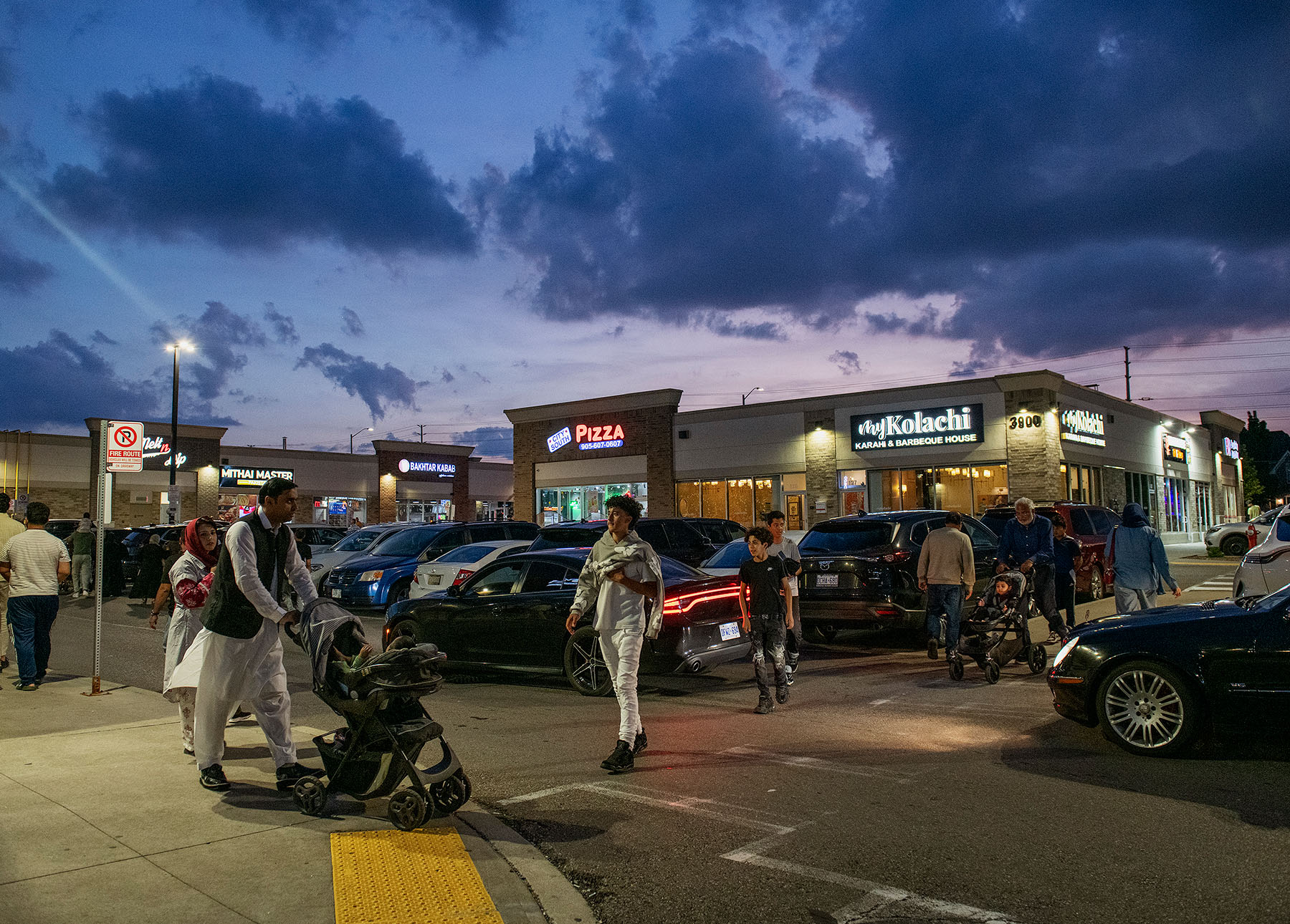
How a Suburban Strip Mall Became a Buzzing Community Hub, and a Political Flashpoint
Mississauga’s immigrant communities made Ridgeway Plaza one of the city’s most vibrant cultural spaces—and also one of its most contested. This municipal election could decide its future.
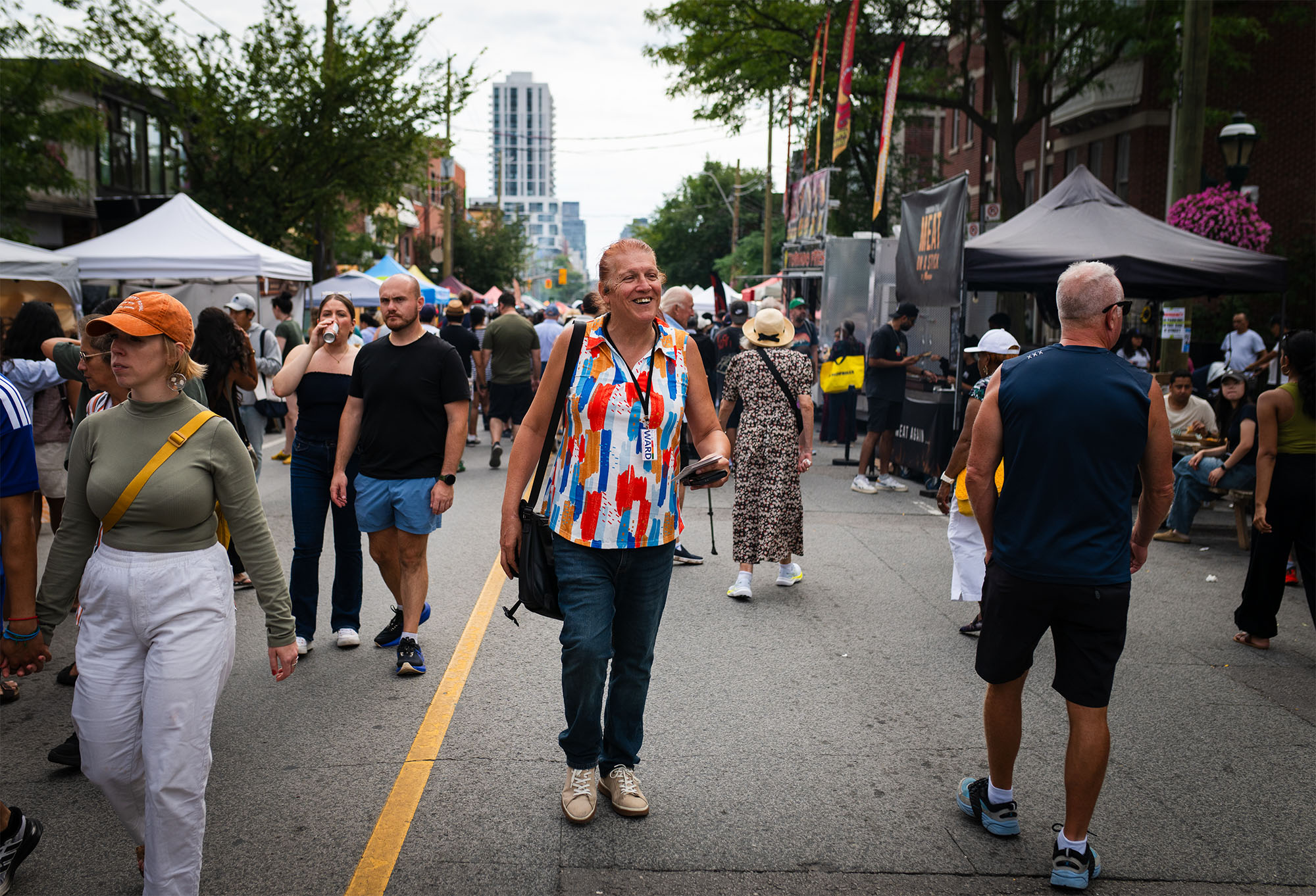
Is Toronto Ready for Its First Openly Trans Councillor?
Toronto has a history of dismissing trans politicians as fringe candidates. In Toronto Centre, Nicki Ward is fighting for a fair shot.