

The Race in Beaches-East York at a Glance:
- Current Councillor: Brad Bradford stepped down to run for mayor, leaving the seat open.
- Major Candidates: Former Liberal MP Nate Erskine-Smith, former CTV News reporter Natalie Johnson, and 11 others, including housing advocate Jennie Worden, former waterfront parks manager James Dann, and former TCDSB Trustee Kevin Morrison.
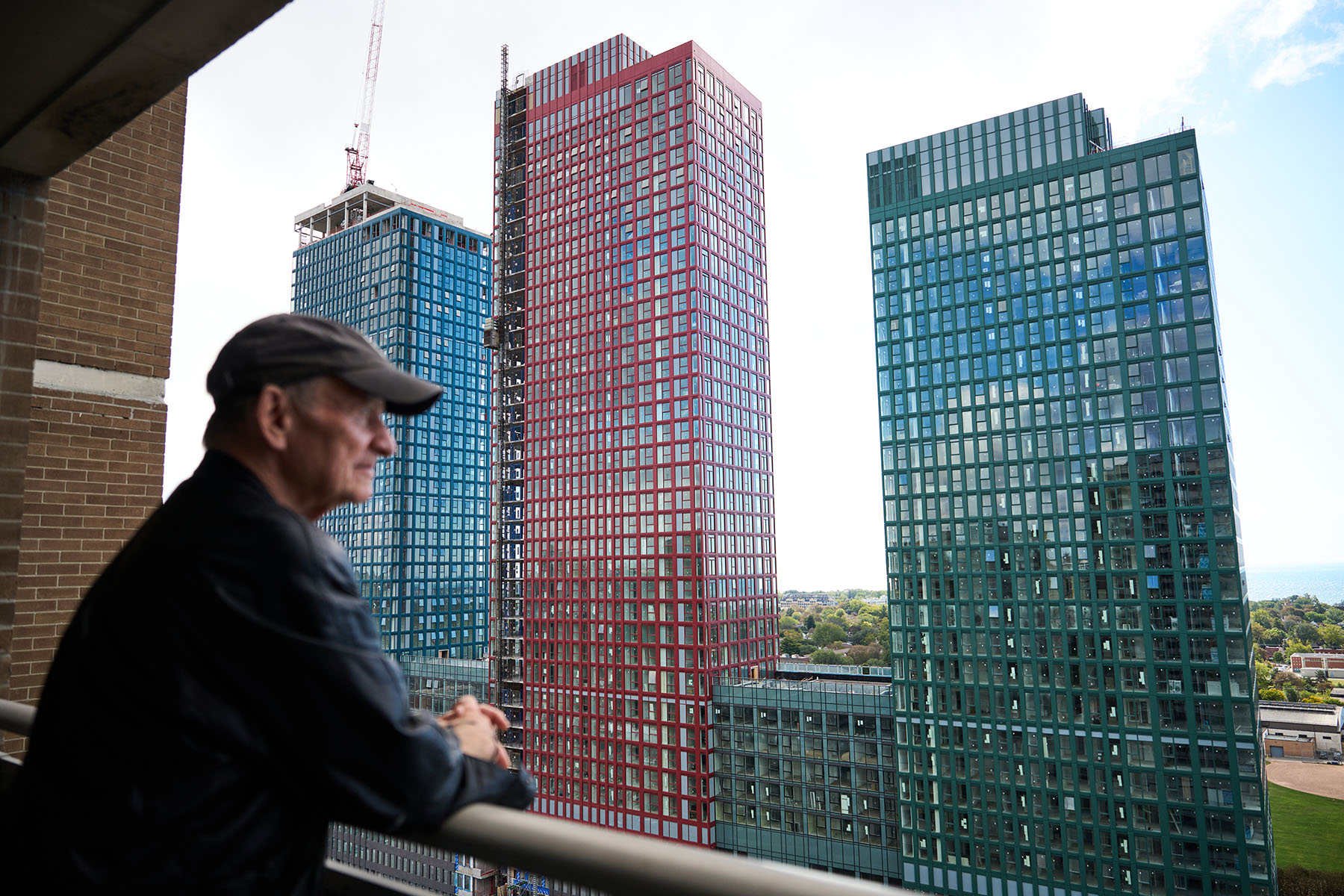
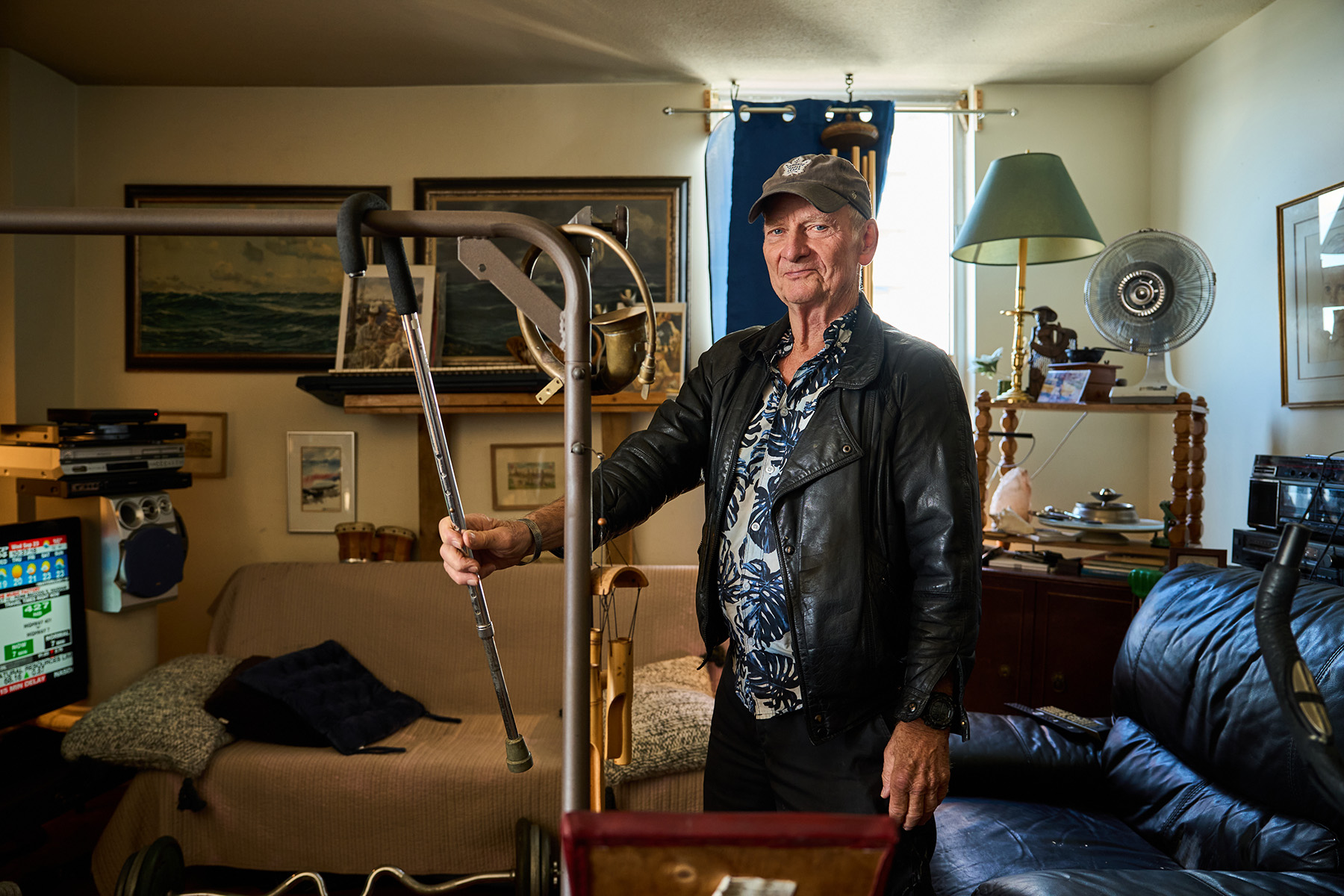
On a windy Saturday morning in mid-September, I step outside Main Street Station onto the intersection of Main and Danforth. The blaring noise of car horns embraces me as I cross the street to Jennie Worden’s campaign office. I ring the bell and Worden, a candidate in the upcoming municipal election, ushers me upstairs where she is hosting a pre-canvas breakfast. The smell of pancakes fills the room. In the corner, 81-year-old Gary Kassbaum plays what he calls a “few improvisations by Andrés Segovia” on the piano.
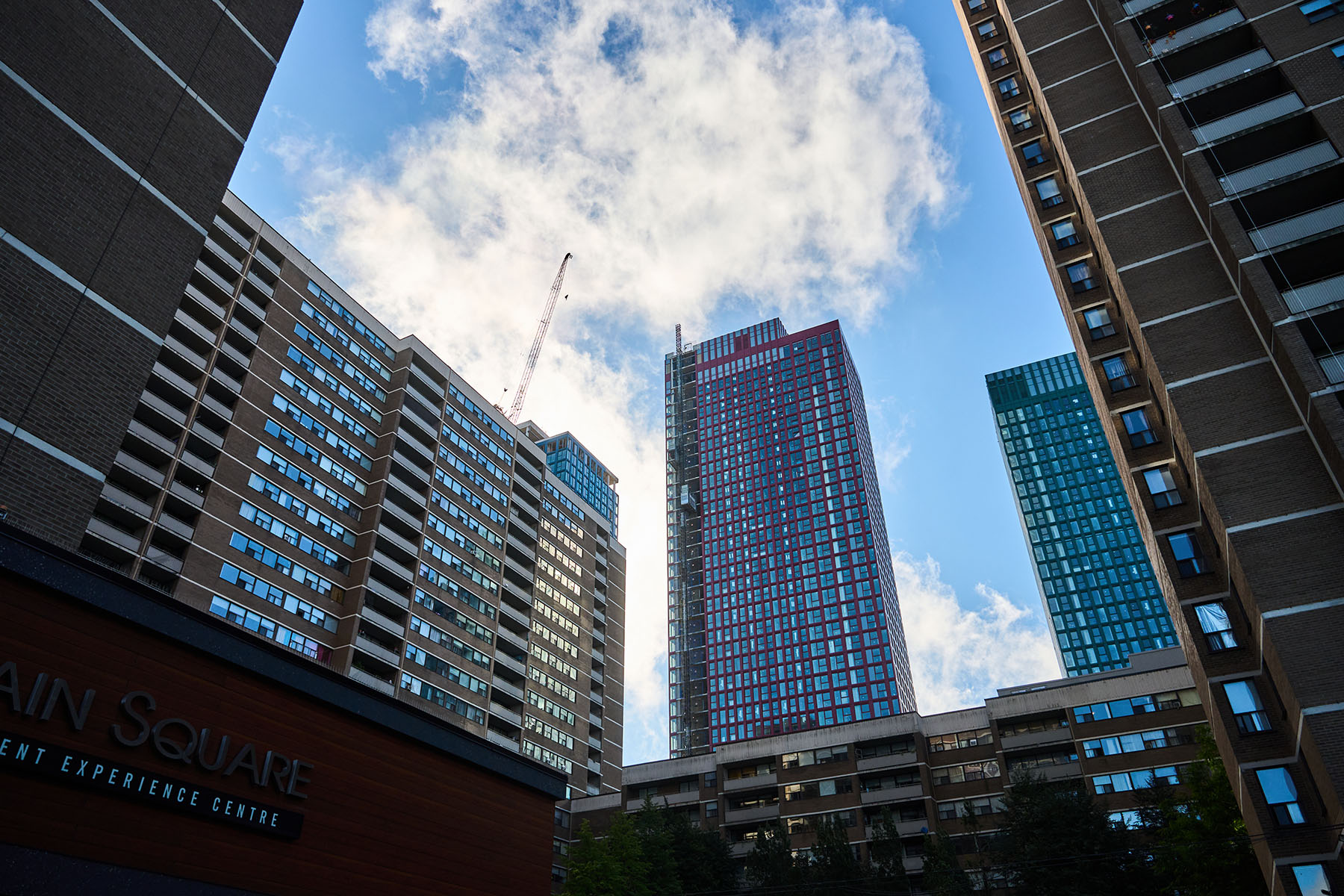
Born in Plön, Germany, Kassbaum moved to Toronto in 1951, and has spent the last 15 years in Danforth Village—specifically at the Main Square Apartments down the road. Behind his building, a cluster of new towers up to 55 storeys tall are set to be constructed. They will bring 1,649 new residential units to the neighbourhood, part of a planned 7,000 new units coming to Danforth Village in the next few years.
But his concern is not the construction noise or the people coming into the neighbourhood. After all, in the last seven decades, Kassbaum has seen the Greater Toronto Area’s population expand rapidly, from roughly over 1 million people to over 7 million.
“Noise is always there at the beginning of new construction,” he says. “I think we all have to live with that.”
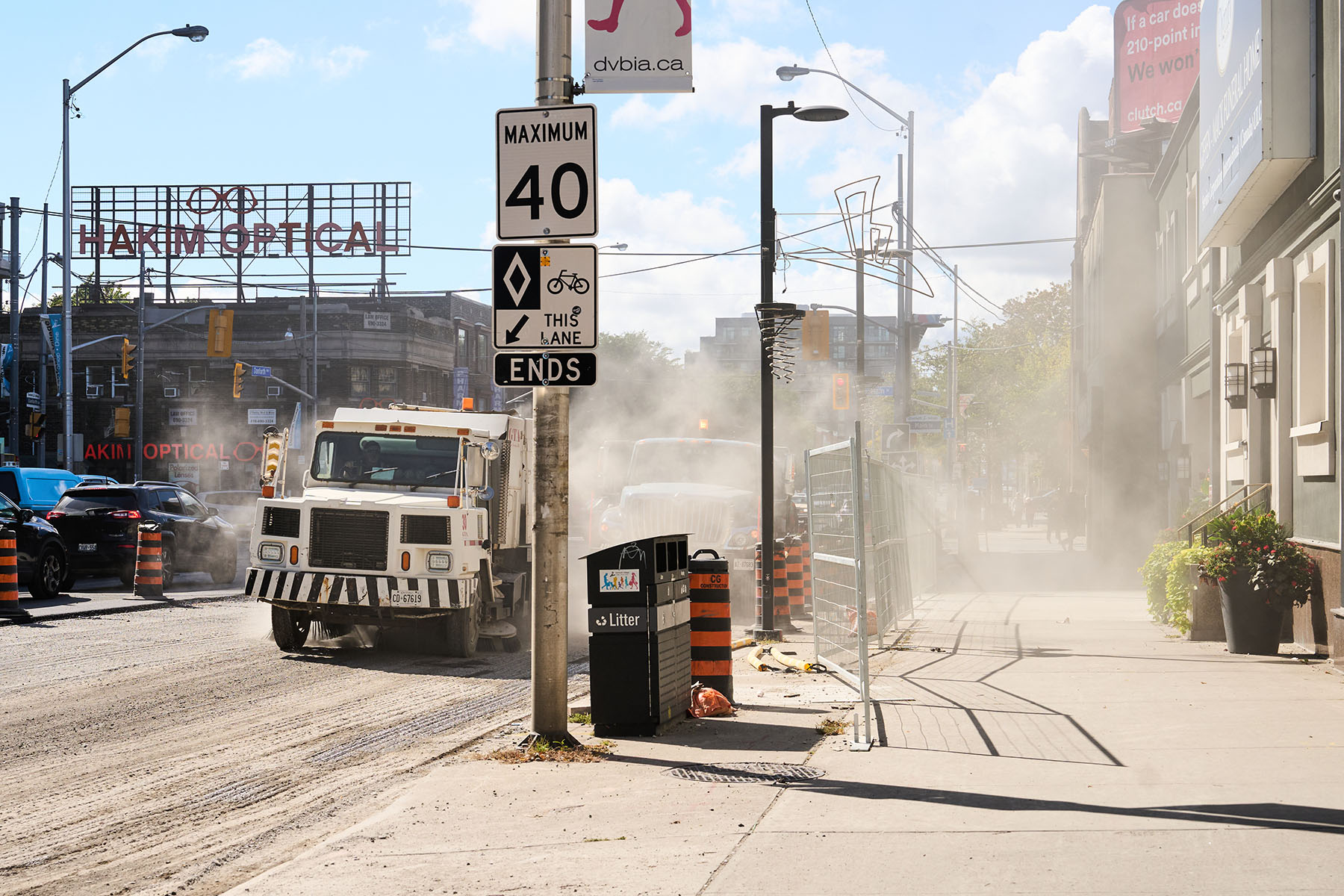
Instead, he’s concerned about the timing. On Danforth Avenue, the City has been conducting major upgrades to watermains, sewers, and catch basins that have been congesting traffic for the past few months. Businesses are suffering. While that project is set to be completed by December, Kassbaum expects further disruption when the towers start going up.
“Change is good, but change too fast, change just for the sake of change is not good,” he says. He believes businesses should be compensated for losses incurred from construction. “While at a snail’s pace, the Danforth is still a viable means to get back and forth. When the construction’s over, it will worsen, because the population will increase.”
Danforth Village, a multicultural neighbourhood stretching from Greenwood Avenue to Victoria Park Avenue, centered around the bustling commercial strip of the Danforth, is part of the ward of Beaches-East York. Bound by Coxwell Avenue to the west and Victoria Park Avenue to the east, stretching south from Sunrise Avenue all the way down to the lake, the ward includes a diverse cross-section of neighbourhoods including the Beaches, Upper Beaches, East Danforth, O’Connor-Parkview, Taylor-Massey, Woodbine-Lumsden, and parts of Old East York. For the past eight years, it has been represented at City Hall by Councillor Brad Bradford. When he stepped down to pursue a run for mayor, the race for new city councillor opened up.
Fact-checked biographies of every candidate running in Beaches-East York.
Read More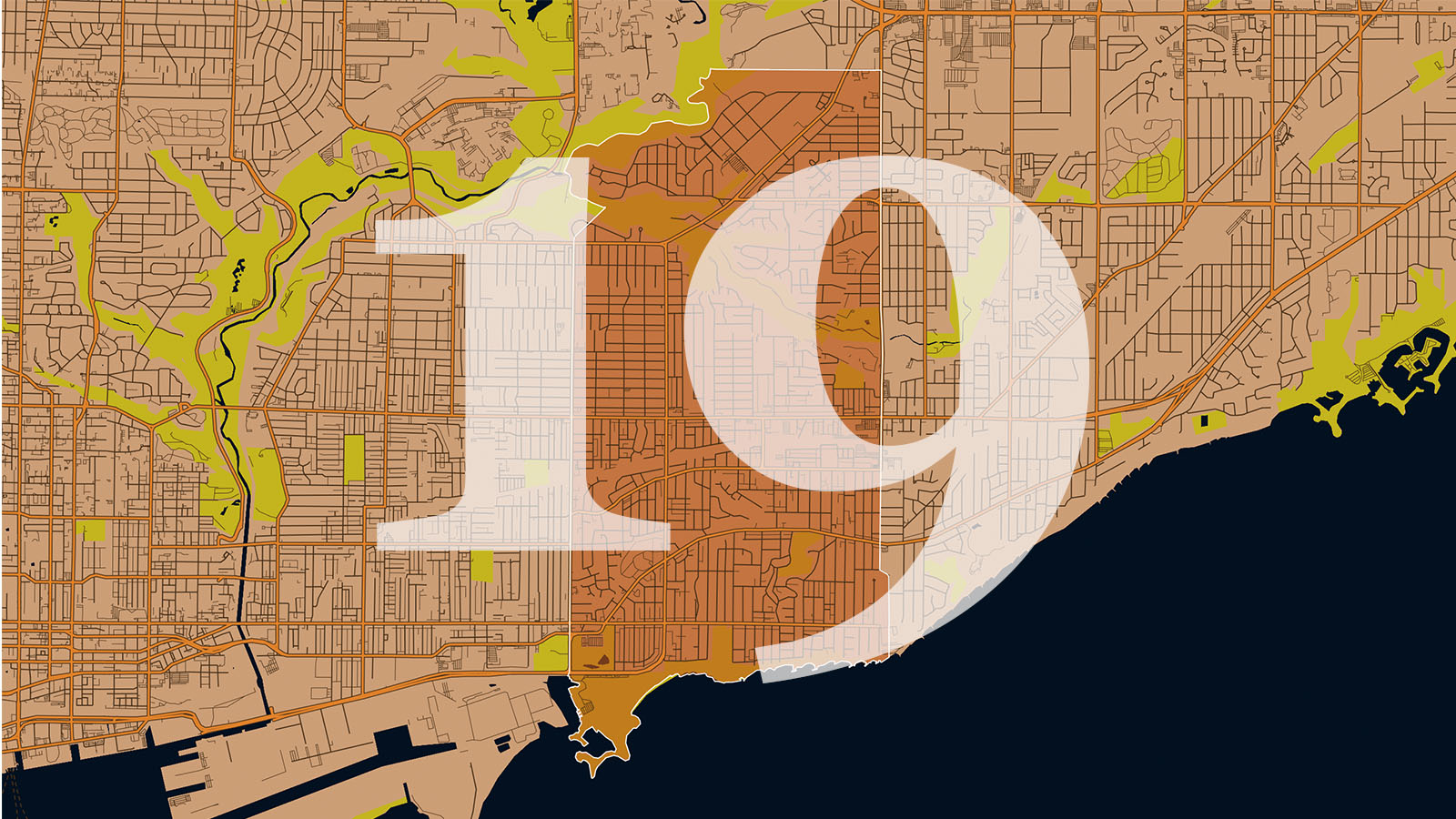
Among those throwing their hat in the ring are Nate Erskine-Smith, former MP for the ward who stepped down from federal politics to attempt a run, unsuccessfully, for the provincial Liberal nomination in Scarborough Southwest; and Natalie Johnson, former CTV News City Hall reporter. Also running are 11 other candidates, including long-time housing advocate Jennie Worden, former waterfront parks manager James Dann, and former Toronto Catholic District School Board (TCDSB) Trustee for Ward 9 Kevin Morrison.
The issues at the forefront of the race have revolved around the residents of the relatively wealthy community of the Beaches—including persistent flooding in houses just north of Kew-Balmy Beach, and whether the City should rebuild its east-end ramp onto the Gardiner. But here, north of the GO Tracks that divide the ward, the residents I speak to express different concerns: The impact of construction on local businesses, chronic overcrowding at nearby Secord Elementary School, a lack of full-service community centres, and the pressing sense of being ignored for years by a councillor gunning for mayor.
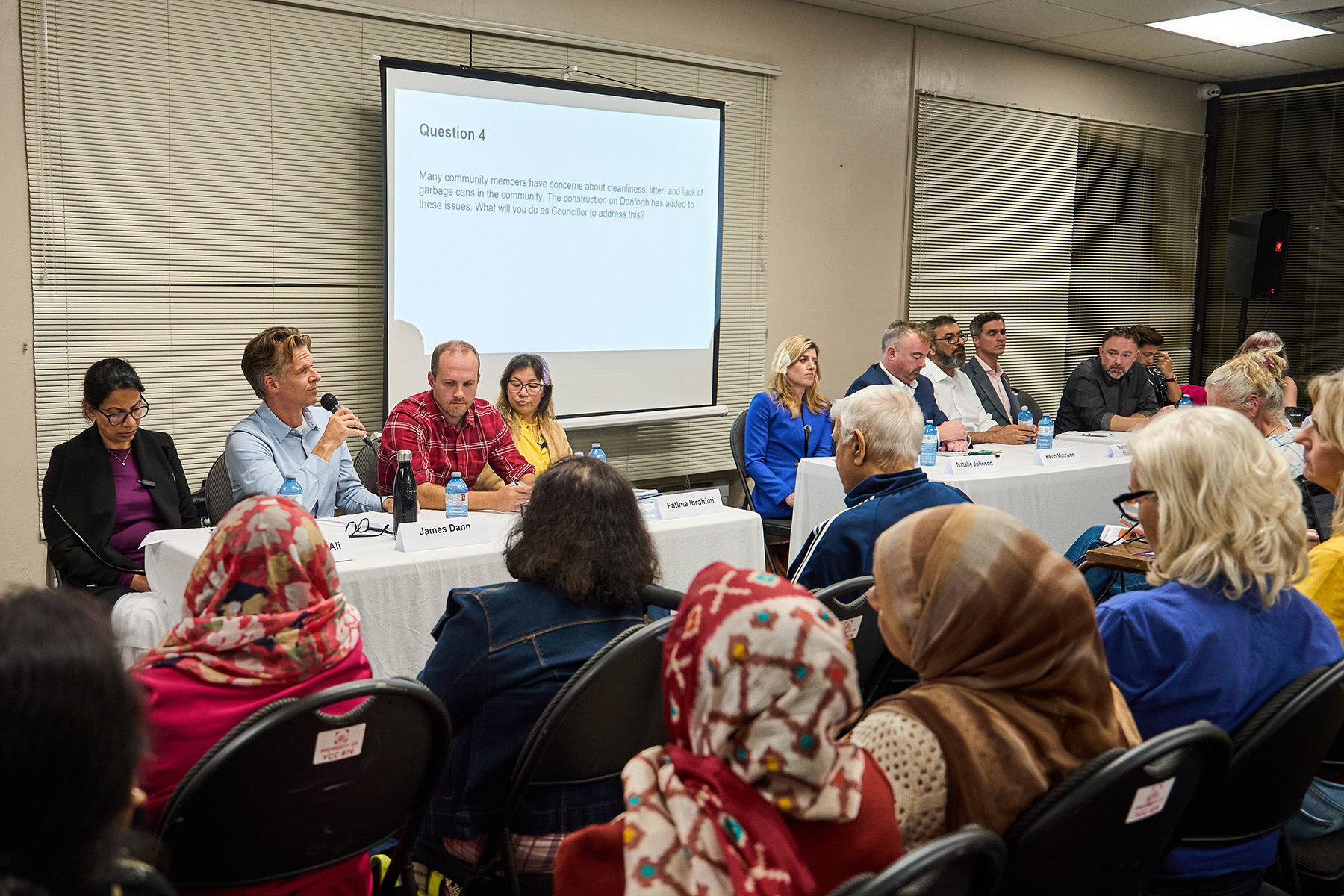
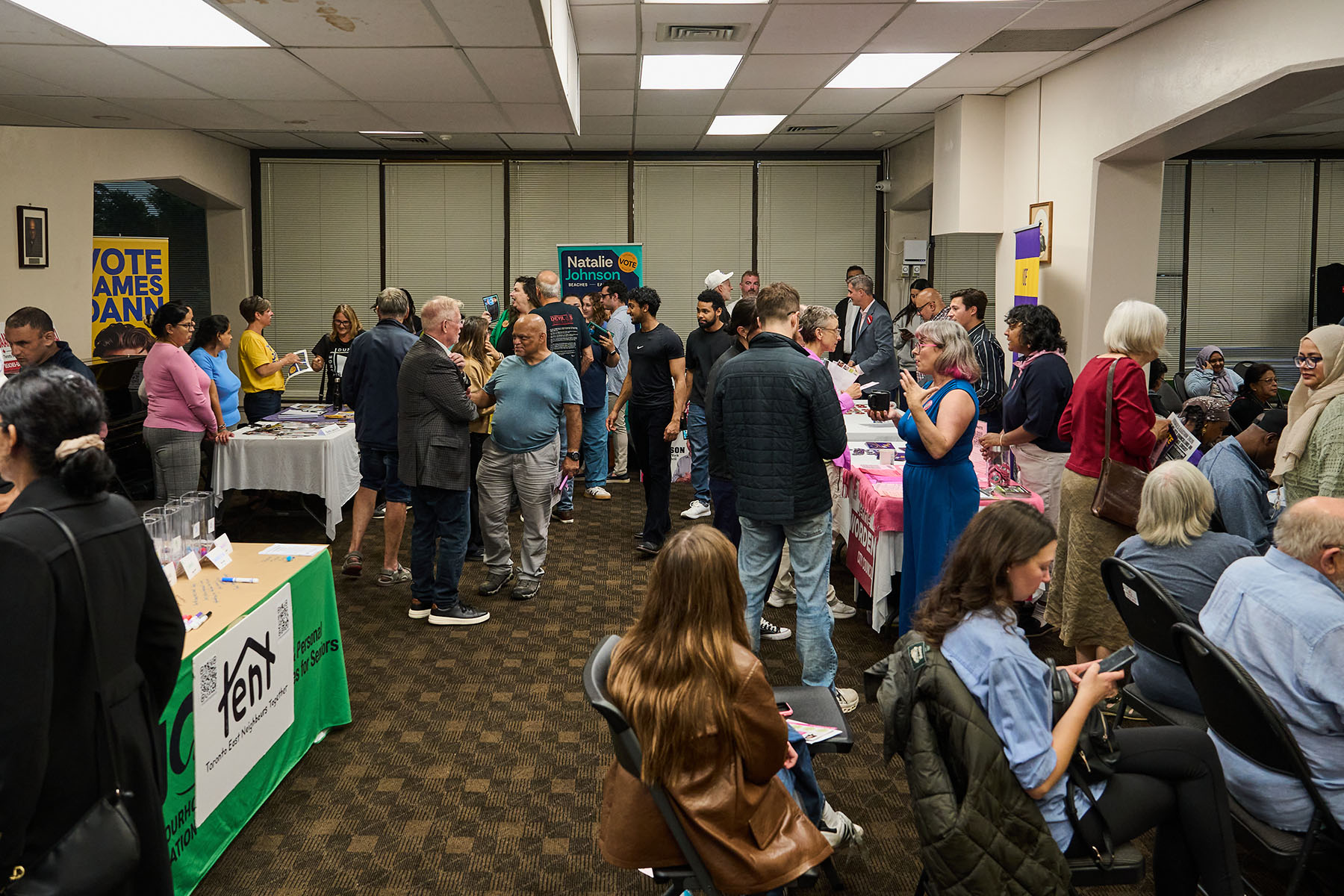
In this way, this corner of Ward 19 is a microcosm of a changing city. The views from Danforth Village are representative of how, in today’s sprawling electoral catchments, specific local issues—experienced by those without the political cachet to have them heard—are all too easily subsumed by the political desires of the rest of the ward.
A short walk north from Main Street station, Stephen Fountain, the manager of Buy & Sell Kings which specializes in second-hand goods, says sales have plummeted since the City began its upgrades on the Danforth. When crews installed gates outside of his store in September, the situation only worsened.
“It’s been pretty much a ghost town ever since,” he says.
In practical terms, he says the business used to make between three and four thousand dollars in sales on Saturdays, their best day. After the fences went up, they fell to around $900. Fountain chalks this up to the lack of accessible parking.
“How are customers bringing us heavier items if they can’t park?” he says. “No one wants to park at Shoppers World and bring over a 65-inch TV.”
From February through June 2026, the Danforth Avenue upgrades began underground with crews replacing watermains and sewers, while removing old streetcar tracks buried between Dawes Road and Luttrell Avenue. Work shifted above ground from July onward, moving in phases from Main Street toward Victoria Park Avenue to build permanent separated cycle tracks, sidewalks, bioretention planters, and raised TTC bus platforms. Initially set to be completed in September, the City now says the project has a new end date of mid-December.
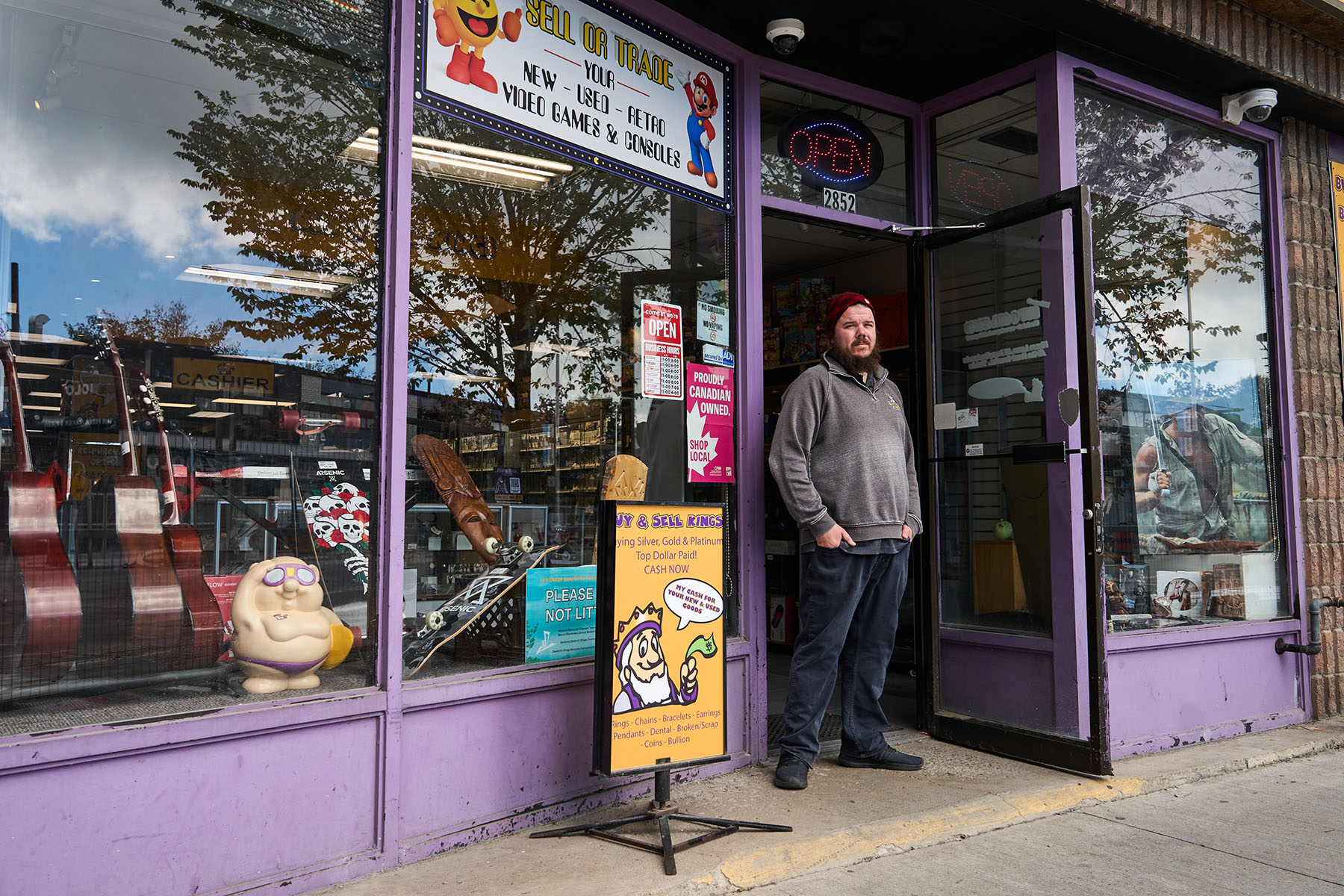
Fountain hopes the next city councillor pushes the City to support more businesses and navigate changes in the area that unavoidably affect businesses.
“During COVID-19, they didn’t really do much for us when it came to business support,” he says. “I’m hoping with the pressure of the Danforth BIA, they will provide some sort of support to us, like a tax rebate.”
The Danforth Village Business Improvement Area (BIA) is pushing the City to stick to the December completion date, and in September, they released a survey showing that among 96 businesses surveyed, 95.8 percent reported a decrease in foot traffic, and a third reported revenue losses of more than 60 percent.
It’s the same story all the way down the strip. Just a few doors west, John Sapione, the owner of Bike and Forth, says sales have dropped by 50 percent. “There’s not much foot traffic because people can’t park here to drop their bikes off for repairs,” he says. “They just keep on going, and my business is only seasonal business. I only have six good months, and the rest, you pay back what you make for the year.”
Sapione, who has lived in the neighbourhood for a dozen years, and first opened his business 17 years ago, says Brad Bradford hasn’t paid attention to the struggles of local business on the block: “He’s avoiding the issues, he’s not coming by and seeing how people are doing.”
On a sunny afternoon in late September, Eden Ramos drops her 6-year-old daughter off at Secord Elementary School. It’s the first day of fall, and Ramos is wearing light brown boots, skinny jeans, and a black t-shirt with a sheer cardigan.
Ramos was born in Ethiopia, but her family moved to Ottawa when she was five years old. They moved to Danforth Village in 1993, and she has been living here ever since. Before moving close to Secord Elementary School in the fall of 2025, she lived in one of the Main Square buildings for over 17 years.
A member of Secord’s school council, and formerly part of the Toronto District School Board (TDSB) Parent Involvement Advisory Committee, Ramos is a mother of four, two of whom are currently enrolled at Secord. One of her children has been attending classes in the school’s decades-old port-a-pack—a collection of 14 portable classrooms sitting outside the building, with plumbing, flooding, and mould issues that have been documented for over 10 years. In September 2024, the TDSB submitted a business case to the Ministry of Education for a new school with space for 940 students. (As of now, it can only accommodate 591, despite already serving nearly 800.) But the ministry has repeatedly left Secord out of its provincial funding allocations—and all schools in Toronto for that matter.
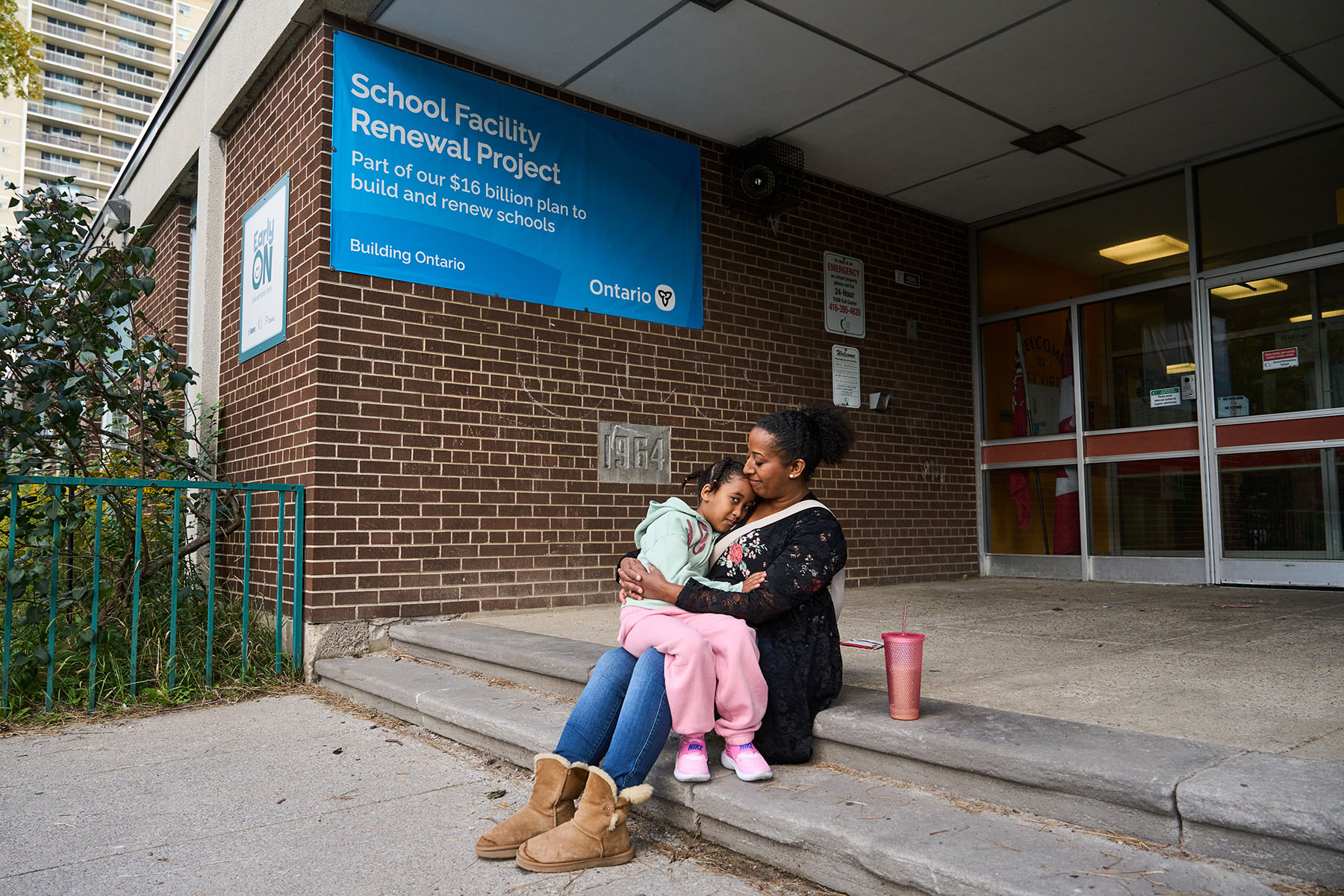
If the business case were to be approved by the ministry, this, in theory, would accommodate nearly 900 students that are expected to be enrolled by 2033, but rebuilding could mean the loss of the attached Secord Community Centre. The business case doesn’t include a plan to build a new community centre, and Ramos is among the parents who have signed a petition for a feasibility study.
It’s only one of two community centres in the neighbourhood, with the other—the Main Square Community Recreation Centre (CRC)— originally proposed for demolition to accommodate the construction of the new rental buildings.
Ramos says this is a prime example of the needs of residents becoming afterthought. “If you move Main Square Community Recreation Centre, and then, if Secord Community Centre no longer exists because we’re rebuilding the school, now we have no community centre in this neighborhood,” she says.
Jennie Worden, a housing advocate who came second to Bradford in the 2022 municipal election and is running again, shares Ramos’ frustration.
“We know that moving forward with a replacement community centre, at least studying the feasibility, would bolster the case for a new school,” she says. But, she adds, attempts to work with the Ministry of Education have been met with silence. “We never get feedback from the ministry when they don’t approve our projects, they just don’t approve them.”
Kevin Morrisson, another candidate, says this is a pattern of neglect that feeds into the sense that this pocket of Ward 19 is being ignored. Morrisson is running for council for the first time.
As TCDSB trustee, he says, he represented neighbourhoods including Regent Park and Canoe Landing–both of which have undergone a rapid transformation in the last two decades, as intensification brought with it new and revitalized schools, community centres, and recreation spaces.
“When you look at downtown and you see all the changes that are happening, we don’t get that,” he says. “It’s like we get forgotten about.”
After the past eight years, the constituents of Danforth Village are skeptical of the extent to which their councillor can help them navigate the challenges of a rapidly-changing neighbourhood. In this neighbourhood, it is likely that the biggest hurdle the next councillor will encounter is not just school expansion, or helping businesses recover the costs of construction, or expanding access to community centres—it will be re-gaining the trust of their constituents.
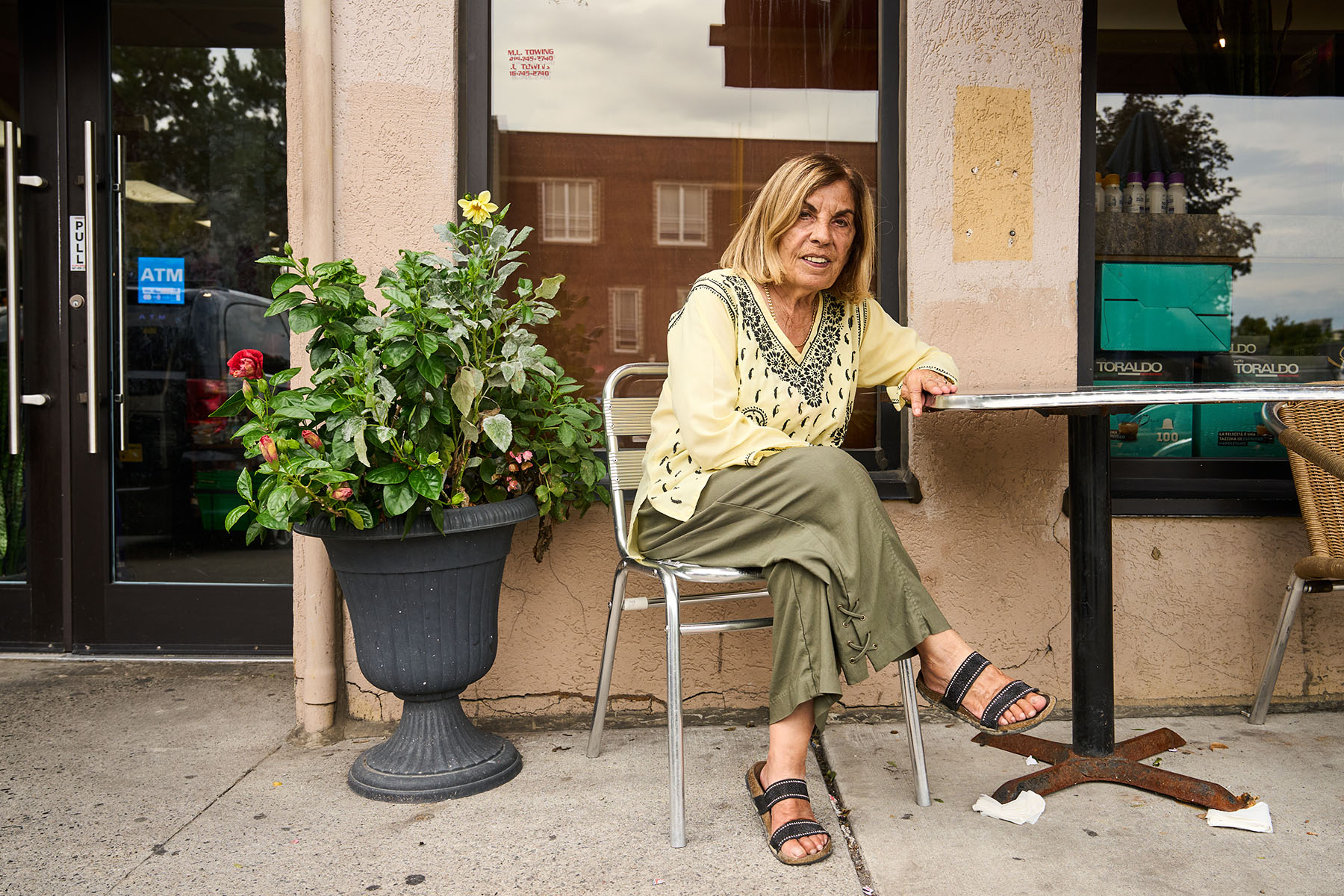
Phil Pothen, a program manager at Environmental Defence—a leading Canadian environmental advocacy group—has been living in Danforth Village since 2014. He says there has been a “radical shift” since he first moved into the neighbourhood. Back then, the area had been split into two wards, one beginning above the Danforth and one below, each covering a smaller geographical area.
“When I came here, we had two councillors who were very interested in, and focused on, this part of the ward and spent a lot of time here,” Pothen says, referring to former councillors Janet Davis and Mary-Margaret McMahon. “They cared about what people in this neighbourhood thought, and they were really invested in improving the quality of life.”
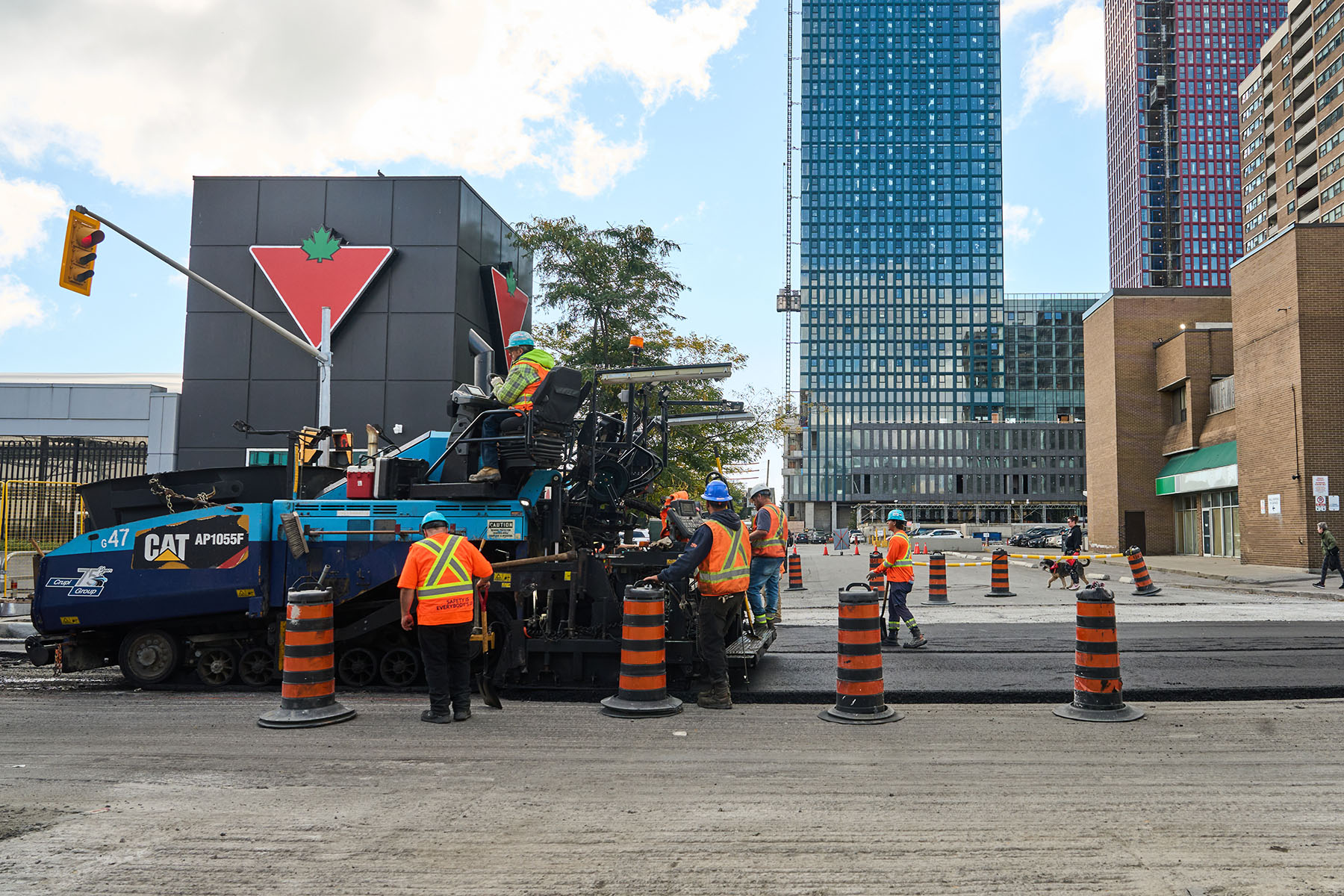
Pothen says this changed in 2018, after Doug Ford’s provincial government shrunk the city’s 47 council seats to 25 in 2018, nearly halving the size of city council, creating the Beaches-East York we see today. The same year, Brad Bradford won the municipal election to represent the new ward on council.
Despite the sense of neglect since, Pothen says there isn’t another neighbourhood he would move to even “given an unlimited budget.” As a father of mixed-race children, he says the diversity in the neighbourhood is precisely what helps them feel at home. “This is a place where that doesn’t even register for them as unusual, or anything at all.”
He hopes that with the new councillor, there will be more of a focus on pedestrian safety and convenience, cycling infrastructure, and walkability. As Main Square is redeveloped, he hopes to see a community centre on “this side of the tracks, within easy walking distance”, and Secord Community Centre expanded into a full-service community centre.
“Their job should be to improve the quality of life throughout this ward,” he says. “And ensure that a kid who lives on Dawes Road, Crescent Town, or Main Square has the same quality of life as a kid who lives in the Beaches.”
More stories about Toronto Votes 2026
In York South-Weston, Old Opponents Face Off for a Third Time
Frances Nunziata, Toronto’s longest serving city councillor, is ready for another term in office. Do her constituents feel the same?
Dianne Saxe Needs to Convince Danforth Voters She’s No Outsider
A walk through Toronto-Danforth with the former environmental lawyer, who jumped into the ward race just minutes before registration closed.
Brad Bradford Seems Angry—He’s Betting Torontonians Are Too
Former staffers say he drove them to tears. Colleagues say he’s a bully. The Bradford campaign says his passion is just what this city needs.
The Incumbent Is Under OPP Investigation. In Scarborough Southwest, Voters Are Focused on Other Issues
In a rematch of a close 2023 by-election, incumbent Parthi Kandavel and Kevin Rupasinghe offer very different visions of a growing suburb.
The Battle Over Sixplexes in Scarborough North
Last year, the ward became the first suburban ward to legalize the construction of sixplexes as-of-right. Now, in a race between incumbent Jamaal Myers and former Liberal MPs Shaun Chen and Han Dong, it’s become the defining issue of the election.

Toronto Mayor Olivia Chow: What She’s Done and What She’s Promising in 2026
Olivia Chow’s platform for re-election is all about building on her achievements, like a renovictions bylaw, TTC fare freeze, and new funding deal with the provincial government.
More from this issue

In York South-Weston, Old Opponents Face Off for a Third Time
Frances Nunziata, Toronto’s longest serving city councillor, is ready for another term in office. Do her constituents feel the same?
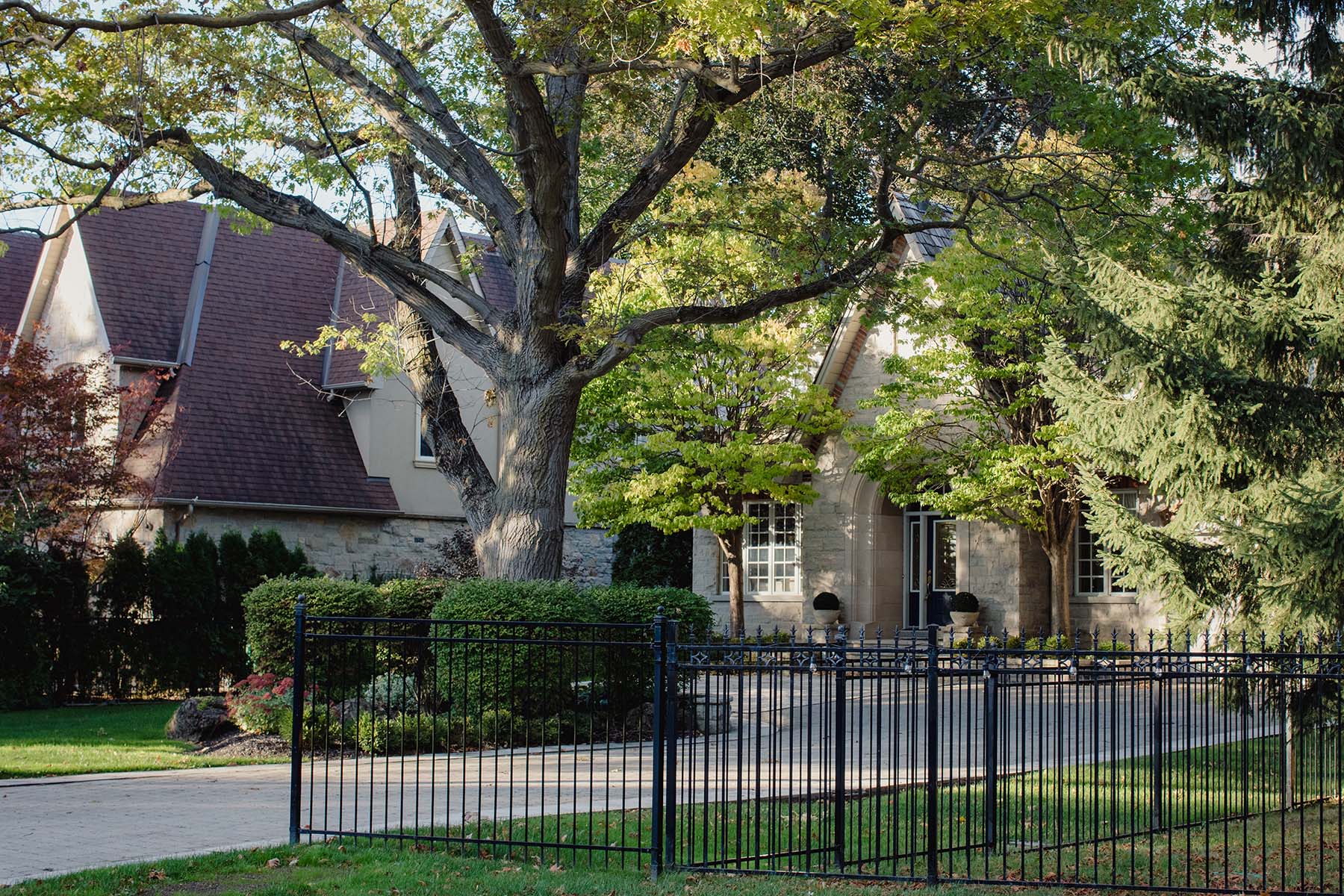
In Mississauga’s Ward 2, Candidates Spar Over Crime, Housing, and Property Taxes
With popular incumbent Alvin Tedjo stepping aside for a mayoral run, 14 candidates present their vision for one of the busiest, and wealthiest, wards in the city.
Dianne Saxe Needs to Convince Danforth Voters She’s No Outsider
A walk through Toronto-Danforth with the former environmental lawyer, who jumped into the ward race just minutes before registration closed.
Brad Bradford Seems Angry—He’s Betting Torontonians Are Too
Former staffers say he drove them to tears. Colleagues say he’s a bully. The Bradford campaign says his passion is just what this city needs.
The Incumbent Is Under OPP Investigation. In Scarborough Southwest, Voters Are Focused on Other Issues
In a rematch of a close 2023 by-election, incumbent Parthi Kandavel and Kevin Rupasinghe offer very different visions of a growing suburb.
The Battle Over Sixplexes in Scarborough North
Last year, the ward became the first suburban ward to legalize the construction of sixplexes as-of-right. Now, in a race between incumbent Jamaal Myers and former Liberal MPs Shaun Chen and Han Dong, it’s become the defining issue of the election.
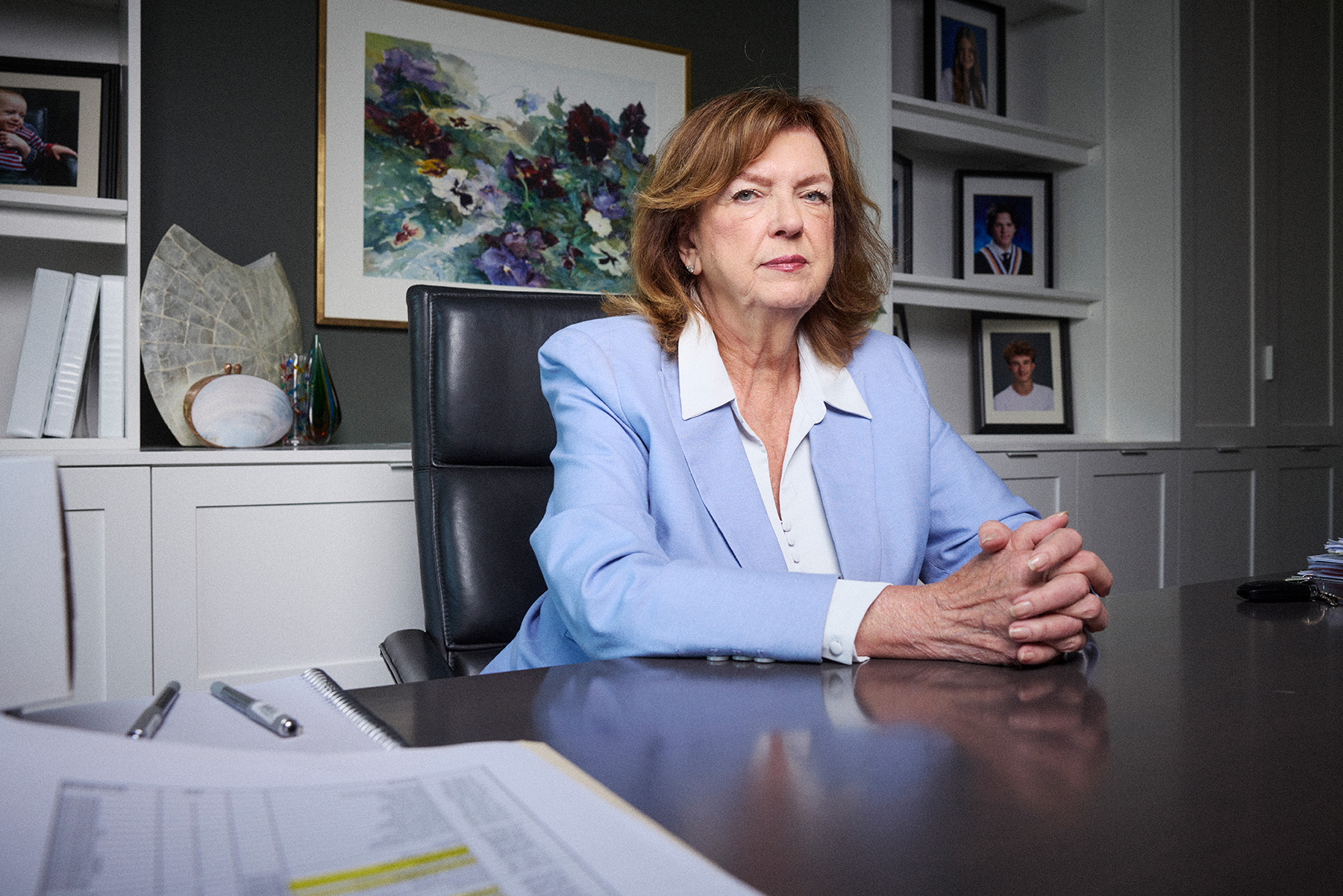
Carolyn Parrish Loves a Fight—Now She’s Up Against Her Fiercest Opponent
The Mississauga mayor has never backed down from a battle—not from Hazel McCallion, George W. Bush, or the Peel police budget. In the heated rematch against Bonnie Crombie, however, some wonder if all the scrapping has become an end in itself.
Candidate Tracker: Mississauga 2026
The only place to find reported, fact-checked biographies and platform summaries for every candidate running in the 2026 Mississauga municipal election. No AI, no campaign talking points, just a team of journalists double-checking candidate records and analyzing policies.
Candidate Tracker: Brampton 2026
The only place to find reported, fact-checked biographies and platform summaries for every candidate running in the 2026 Brampton municipal election. No AI, no campaign talking points, just a team of journalists double-checking candidate records and analyzing policies.
Toronto Mayor Olivia Chow: What She’s Done and What She’s Promising in 2026
Olivia Chow’s platform for re-election is all about building on her achievements, like a renovictions bylaw, TTC fare freeze, and new funding deal with the provincial government.