

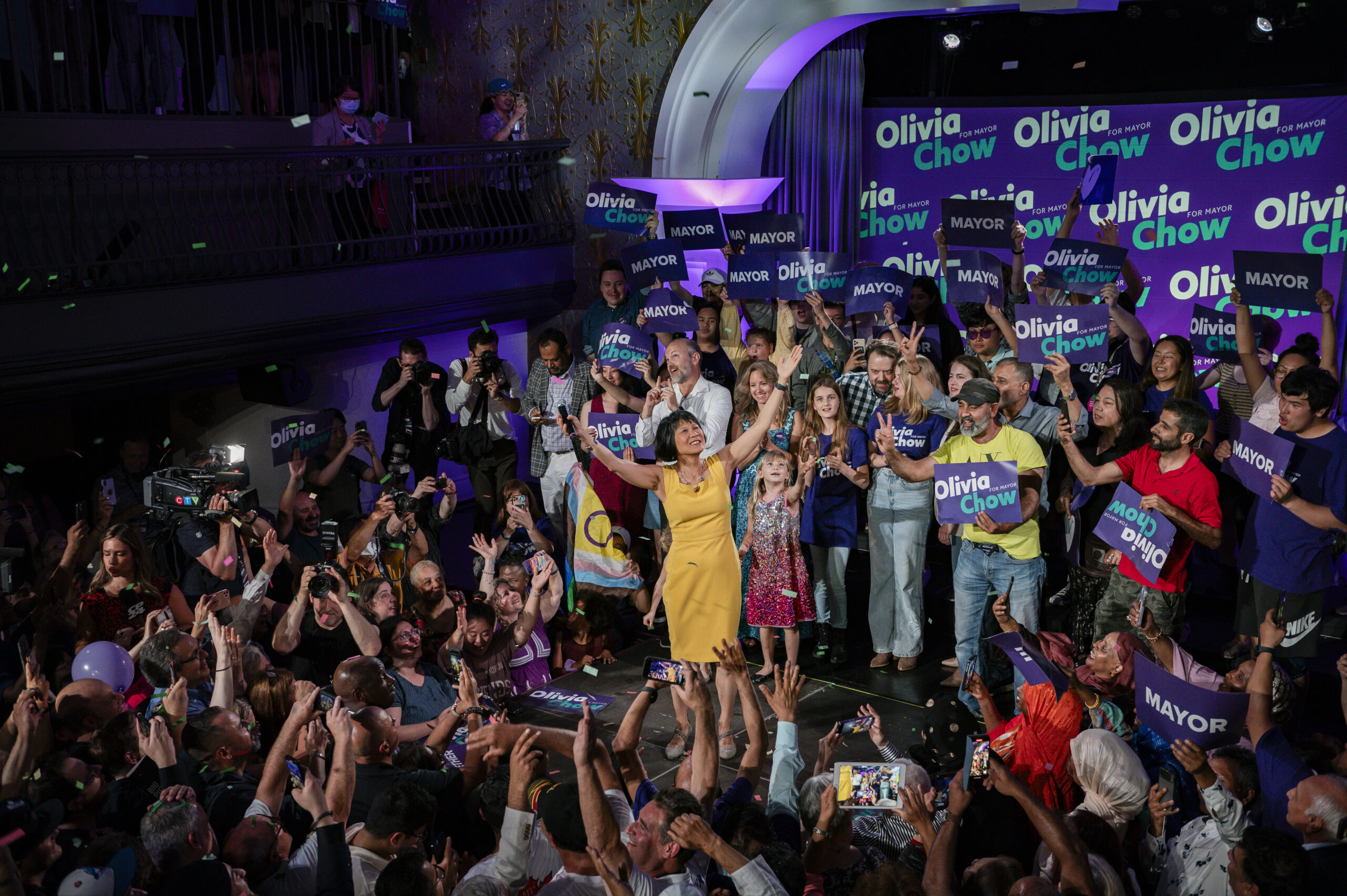
The night Olivia Chow was elected mayor in 2023, Jeffrey Kroeker went to the bar. It was not the evening he’d been hoping for. The CFO for Mark Saunders’ mayoral campaign, Kroeker was rooting for the former police chief, but Saunders earned less than 9 percent of the vote, finishing in a distant third behind Chow and runner-up Ana Bailão. Which is to say, it was time for a drink.
At the pub, Kroeker commiserated and debriefed with aides and advisers to the race’s other also-rans. The general consensus among these insiders, he recalls, was that their candidates had lost because they’d split the centre-right vote while Chow united the left. Kroeker advanced an additional theory: that the race had been swayed by Progress Toronto, a non-profit advocacy group that was acting as a kind of left-wing “shadow party”—raising money, recruiting volunteers, knocking on doors, running attack ads, and backing slates of candidates. As a registered third-party advertiser, the organization had helped five progressive councillors get elected in 2022. Now, with its help, Chow was mayor, and Progress Toronto’s founder, Michal Hay, was about to become her chief of staff. In less than a year, the group had arguably become one of the most powerful players in the city’s political arena.
Kroeker didn’t agree with Progress Toronto’s ideology—he describes himself as a moderate, small-government conservative—but he was impressed by what it had achieved. “They basically created a political party in the form of a not-for-profit,” he said. Kroeker didn’t understand why the centre-right didn’t have a non-profit pseudo-party of its own. “We need to be doing this,” he kept telling people between sips of beer.
Smart Election Coverage in Your Inbox
Sign up for our free newsletter to get the latest election news, profiles, and analysis.
"*" indicates required fields
Later that evening, when the eighth-place mayoral candidate Brad Bradford walked into the bar, Kroeker again delivered his Progress Toronto spiel. According to Kroeker, Bradford agreed they needed to mount a defence and told Kroeker to stop talking and do something about it. (Brad Bradford’s campaign did not respond to multiple requests for comment for this story). After all, Kroeker was as equipped as anyone in that bar. As a downtown Toronto business lawyer who’d advised John Tory and Tim Hudak and served as campaign CFO for Erin O’Toole and Christine Elliott, it would be an understatement to call Kroeker well-connected; strategist Nick Kouvalis, the kingmaker who helped put Rob Ford and John Tory in the mayor’s office in 2014, is his sailing buddy.
A little over a year later, in the fall of 2024, Kroeker heeded Bradford’s advice and founded ABC Toronto, a centre-right rebuttal to Progress Toronto. (Officially, ABC stands for “A Better City”; unofficially, “Anyone But Chow.”) Staffed and steered by a small team of Conservative and Liberal veterans—including former Dalton McGuinty staffer Kelly Aizicowitz—ABC is following in its counterpart’s footsteps: fundraising, holding press conferences, recruiting volunteers, and collecting voter data. You may have seen one of ABC’s ads on social media, lamenting Toronto’s affordability crisis, complaining about gridlock, balking at crime on the TTC, and proclaiming that “Olivia has failed as mayor.” Kroeker hasn’t thrown the organization’s support behind any specific candidates yet—he says the group’s board will decide who to endorse closer to election day—but it’s obvious who they’re rooting for: Brad Bradford, the mayoral hopeful who spurred the group into being.
In July, when former Conservative MP Chris Alexander entered the mayoral race, threatening to split the centre-right vote again, ABC went on the offensive, calling Alexander “a distraction” with “no credible path to victory.” In a News Forum interview, Kroeker called his candidacy “a bit of a joke,” saying “any support and any endorsement of Chris Alexander is a support and endorsement for Olivia Chow.”
ABC’s arrival denotes a subtle but significant shift in municipal politics. While Toronto’s mayors and councillors have always had unofficial ties to federal and provincial parties—Chow enjoys the support of the NDP apparatus, Tory was allied with the Tories—municipal politicians were officially and legally independent. Now, more and more candidates are aligning with one of a few behind-the-scenes, largely unregulated political institutions competing for control of City Hall. On October 26, these powers will face off for the first time. Whoever wins, the election will be about much more than who serves the next four-year term. It will mark another step toward a political reality in which decisions about our everyday experience of the city—our taxes, transit, libraries, pools, parks and police—are made not only by the people elected to City Hall, but also by the backstage forces that help put them there.
Toronto has flirted with political parties once before. In the run-up to the 1969 election, a coalition of teachers, lawyers and businessmen who were unsatisfied with City Hall banded together to form the Civic Action Party (CIVAC). In response, the provincial Liberals and NDP formed their own municipal offshoots and threw their weight behind their preferred candidates. The sudden and spontaneous arrival of these parties was a matter of considerable debate; a number of prominent politicians and newspapers opposed the idea, preferring to keep the council free from organizational influence. But none of the new parties performed particularly well and, in the end, they folded about as fast as they’d formed. In 1971, an essay in a Bureau of Municipal Research anthology began: “The entrance of political parties into the Toronto municipal election in 1969 hardly made a great splash even in the comparatively tranquil waters of Ontario municipal politics.”
Since then, all of Toronto’s mayors, councillors and school board trustees have been independents. Alliances and voting blocs emerge, of course, but no elected official is formally tied to a political party. This is often celebrated as a unique feature of City Hall: councillors can vote as they please, ostensibly loyal to their constituents, not the party line.
By the late 2010s, however, the prospect of a political party was beginning to appeal to Toronto’s progressives again. After the departure of Mayor David Miller, they’d suffered a string of political defeats, resulting in the back-to-back mayoralties (and scandalous collapses) of Ford and Tory. To return to power, it seemed, the left needed to get organized.
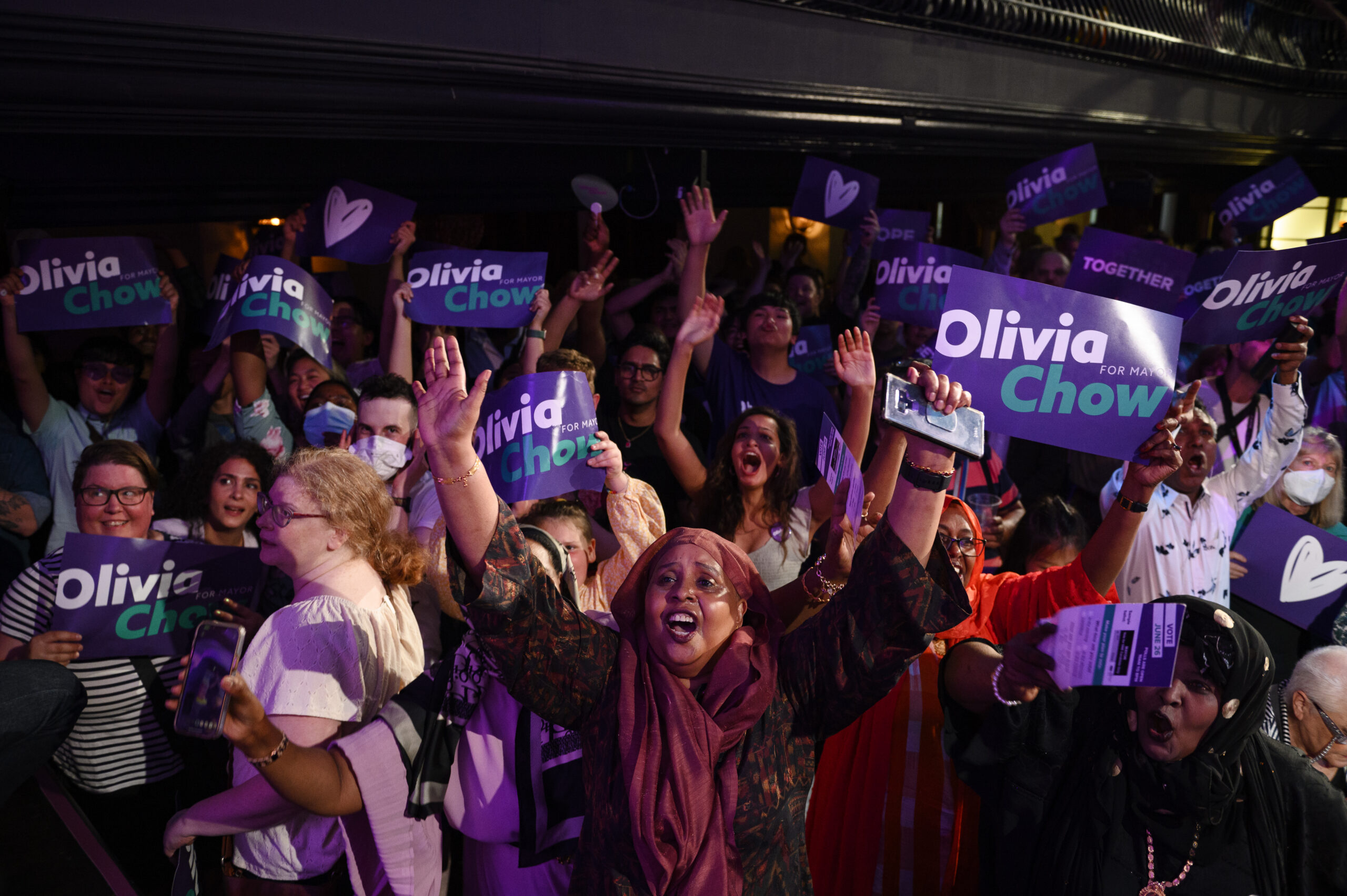
To that end, a prominent left-wing strategist named Michal Hay founded Progress Toronto in 2018. From the outset, the group had deep NDP roots. Hay had worked for councillor Mike Layton—son of Jack, stepson of Chow, who recently announced his bid to retake his old council seat representing University-Rosedale—and then directed Jagmeet Singh’s successful bid to lead the federal New Democrats.
You’re most likely to encounter Progress Toronto on social media, where it runs ads attacking Brad Bradford’s voting record and Doug Ford’s low approval ratings. But its true impact is offline: Progress Toronto recruits volunteers to go door to door in battleground ridings, trains average Torontonians on how to present at committee meetings, and finds ways to get voters to the polls. The organization ramps up during election cycles, but it’s active term-round, mobilizing its members to, for example, speak with TTC riders about Doug Ford’s transit policies, or to sign petitions opposing the island airport expansion. If Progress Toronto sets its sights on an issue, project or piece of legislation, elected officials at all levels of government often hear about it. “I’ve received thousands of emails through their petitions and heard many deputations from their residents and volunteers who care about a more equal city,” says deputy mayor Ausma Malik. Davenport councillor Alejandra Bravo says that the group’s volunteer training and education sessions have enabled everyday Torontonians to push for policy changes—like the vacant homes tax, which has raised millions for affordable housing. Bravo has been involved with the organization since it was formed, she says, “because I want to see people who haven’t previously raised their voices get involved in the decisions that shape their lives.”
When Hay joined Chow at City Hall, Saman Tabasinejad took over as executive director of Progress Toronto. Raised in Toronto and a lifelong progressive, Tabasinejad was immediately drawn to the organization, attending its launch party in 2018. That year, she ran for council in Willowdale but lost to the incumbent, John Filion, who’d originally planned to retire but returned to the race when Doug Ford halved the number of wards. “Voters like people they know,” says Tabasinejad. “And that makes it very hard for challengers.” To her mind, Progress Toronto represented a counterweight to the incumbency advantage—a grassroots group that could help candidates like her unseat long-sitting councillors with more name recognition. She joined the non-profit’s staff in 2019.
It was three years later that the group made its true mark. In the 2022 election, Progress Toronto mobilized its door-knockers and pamphleteers—an army of 3,000, according to Tabasinejad—in support of nine progressive candidates, chosen not only for their platforms but also for their chances of winning their wards. Ultimately, five did: Bravo and Malik as well as Chris Moise, Amber Morley, and Jamaal Myers. In addition to rallying behind these hopefuls, Progress also unleashed attacks on the sitting councillors it wished to unseat, distributing flyers that, for example, criticized Mark Grimes’ relationships with real estate developers and poor council attendance. To decide who gets Progress Toronto’s support this election, Tabasinejad says, the group conducted both a public survey and a questionnaire for those running, looking at what voters want and which candidates best match their members’ wishes.
Holding councillors accountable, exposing impropriety, educating constituents about their representatives’ voting records—Tabasinejad sees these efforts as central to Progress Toronto’s role. “No one knows what’s happening in city council…and I don’t blame them, because people are busy,” she says. “They have jobs to go to, kids to pick up and drop off and cook meals for.” And so, part of the group’s job is to simply keep voters informed.
But as for actually swaying elections, Tabasinejad tries not to overstate Progress Toronto’s influence. “We’re not the be all and end all,” she says. Rather, she argues, the group is part of an electoral ecosystem that also includes candidates themselves, their campaigns, the political press, organized labour, and the fickle winds of momentum. “We can’t deliver a victory by taking a candidate from zero to hero,” she says. “But what we can do is move two to five percent of the vote, which can be the difference between a win and a loss.”
Moise, who won Toronto Centre with Progress Toronto’s support, says that part of the value of third parties is that they can help make City Hall more legible to voters: “At a ward level, their impact probably consists of helping their followers find their way to candidates that share their values—which never hurts. Especially if a race is neck and neck, and even the tiniest things can help.” But, he adds, “I think the role they can and should play, first and foremost, is to spark conversations about issues and values, and help bring policies, choices, and debates into clearer focus.”
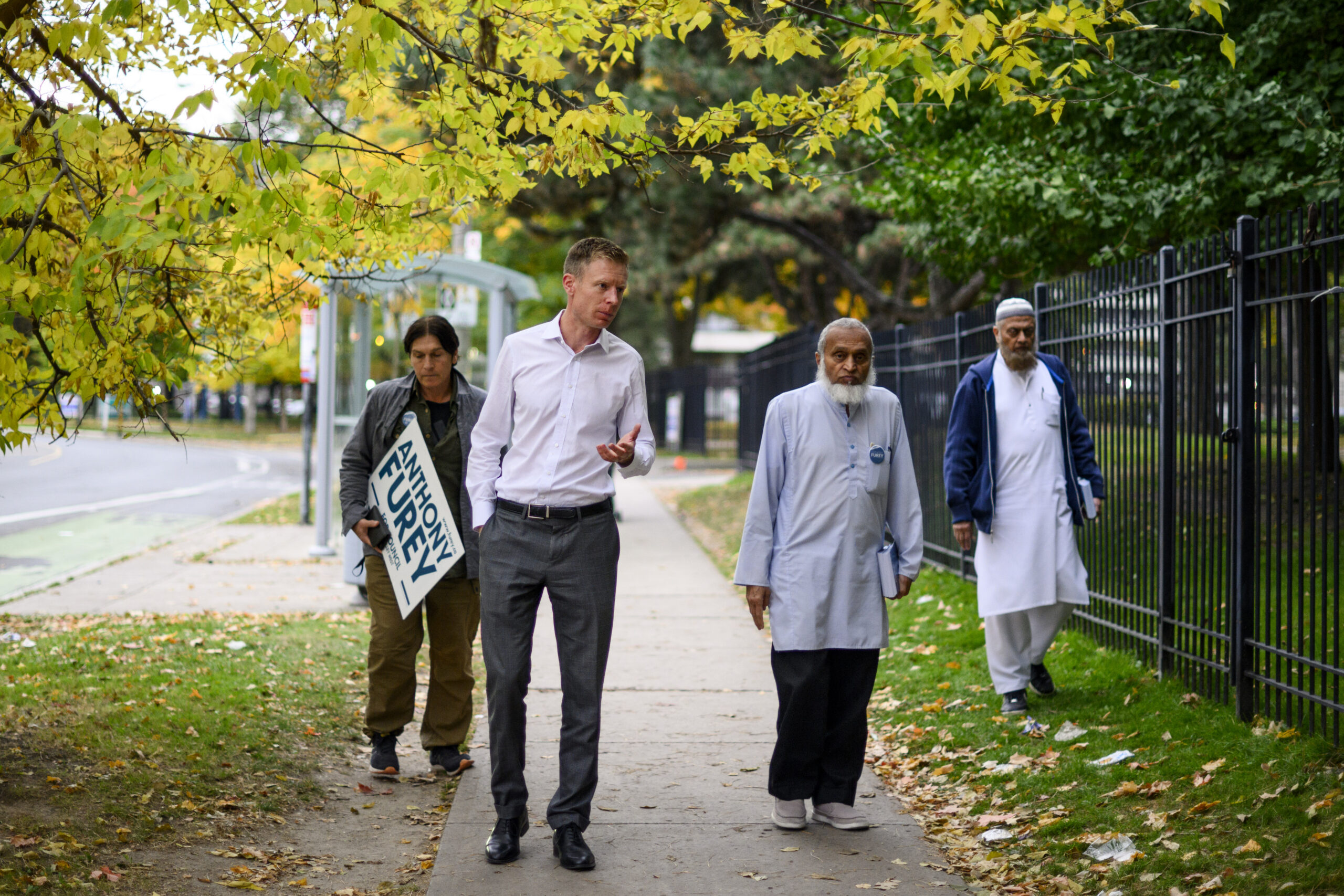
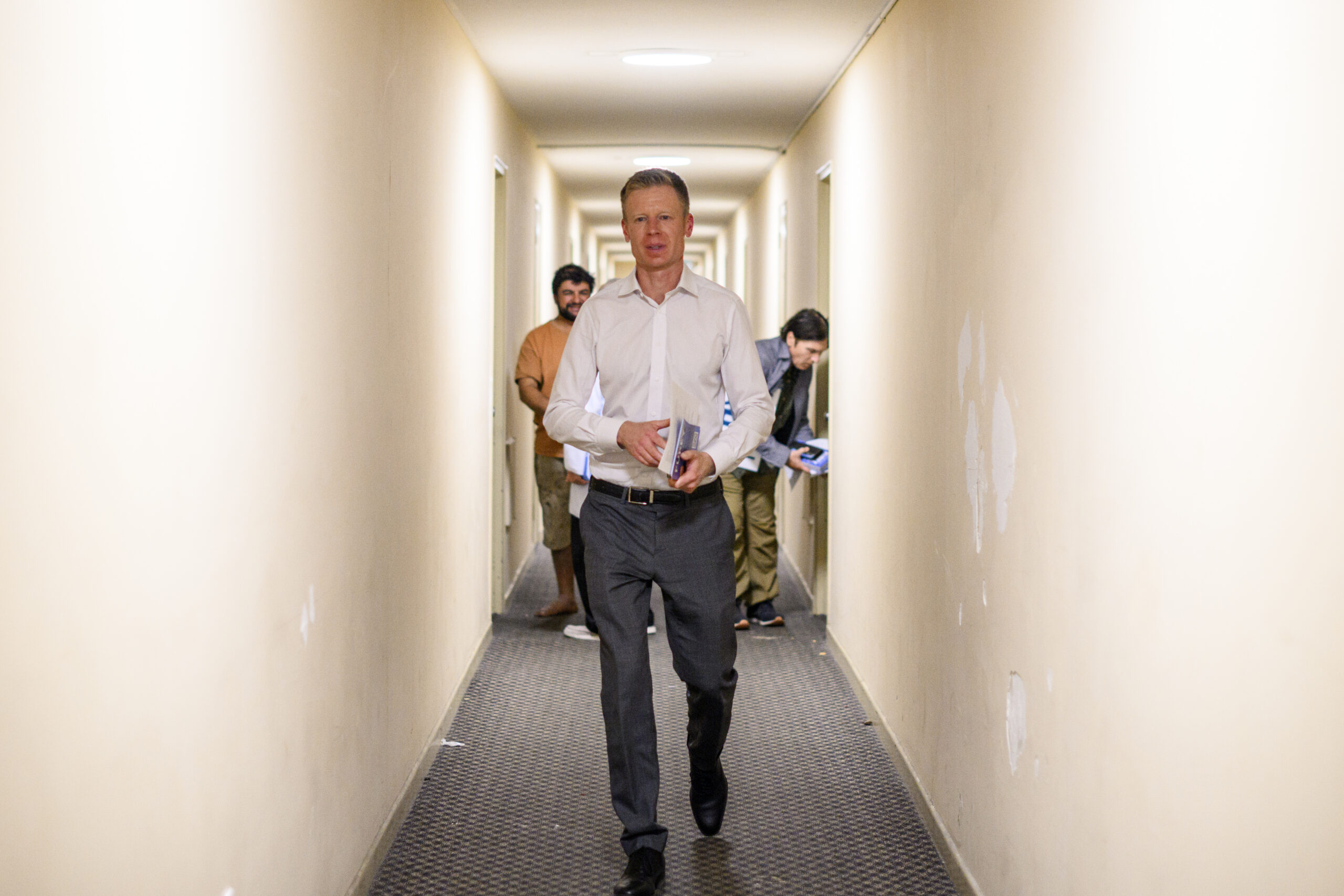
Progress Toronto certainly sparked conversations in November 2024, when it sent its volunteers to Don Valley West to distribute more than 20,000 flyers attacking the controversial by-election candidate Anthony Furey. Progress talked to residents of Thorncliffe Park, a neighbourhood with a large Muslim population, accusing Furey of spreading “hate about Muslims.” For example, in a 2012 column Furey wrote that it’s “always sad to see a strong-willed young person, particularly a girl, gladly take up symbols of Islam.” Furey had been leading in the polls, but after Progress Toronto’s intervention his support plummeted, and he lost to former school board trustee Rachel Chernos Lin. Furey’s own campaign co-manager admitted that Progress Toronto’s tactics probably had something to do it. “We made people realize that just because someone has name recognition, doesn’t mean it’s positive,” says Tabasinejad. “That campaign, it felt like we really moved the needle.”
In the wake of Furey’s loss, Toronto’s conservatives decided they couldn’t sit idle any longer. If they wanted to succeed at City Hall, they’d need a non-profit of their own to counter Progress Toronto’s influence. That fall, they birthed two.
While Kroeker was busy building ABC Toronto, a controversial online activist named Daniel Tate launched IntegrityTO, an edgier advocacy group. Originally created in protest of the renaming of Yonge-Dundas Square, IntegrityTO has since adopted a broader “anti-woke” agenda—“shitposting” about bike lanes, safe injection sites, homeless shelters, and Indigenous land acknowledgements. Tate has reposted videos mocking Mayor Chow’s accent, and posted what some critics have called dehumanizing photos of drug users and the homeless. “IntegrityTO does what any journalistic entity does: documents reality. The difference is that we don’t just show what’s happening—we examine how leadership and policy failures have contributed to these conditions and often propose solutions,” Tate argues. “We do not malign, slander, or insult people. But when someone in the grips of addiction is defiling public parks or openly using drugs on the TTC, we will show that reality and advocate for policy changes, including a stronger police presence on the transit system.”
One of Tate’s favourite punching bags is councillor Moise, who was once reprimanded by the integrity commissioner, but not officially sanctioned by council, for accusing Tate of holding a “white supremacy view.” Tate is now running against Moise in Toronto Centre; it could well turn into this election’s ugliest race. “Any organization with an ideological agenda that’s far outside of the mainstream could potentially have the ability to incentivize and cause increased polarization—like some of the U.S. Super PACs do,” Moise told me.
IntegrityTO isn’t a perfect parallel to Progress Toronto. For all his online success, Tate lacks the connections, funding and critical mass of on-the-ground volunteers that makes the non-profit so powerful. Kroeker is hoping that ABC Toronto can hew closer to the Progress model and tone: less MAGA and more “Premier Dad”—a moderate option that he believes will appeal to a majority of Torontonians. “Red Tories and Blue Liberals make up a huge chunk of Toronto, and people just want shit to work,” he says. The way he sees it, most Torontonians don’t want bike lanes and homeless encampments and higher property taxes: “They want their garbage picked up. They want their trains to run on time. They want to let their teenage kids go out on a Friday night and have some fun and not worry about them.”
If ABC’s launch party was any indication, Kroeker is onto something. Roughly 400 people showed up—“in a snowstorm,” he specifies—to the College Street venue Revival to christen the new non-profit. Bradford was among those in attendance, as were Liberal MP Marco Mendicino, former deputy mayor Denzil Minnan-Wong, current provincial Liberal leadership candidate Eric Lombardi, and a legion of Bay Street types and City Hall staffers.
Much like Bradford’s campaign, ABC Toronto is laser-focused on three easy-sell issues: congestion, crime, and the cost of living. It advocates for some uncontroversial ideas: fix roads, improve the summer camp registration system, and modernize City Hall with new technologies. Other stances are less universally shared, like ABC’s calls to remove bike lanes, hire more police officers, and kick drug users off the TTC. But few of their proposals would qualify as extreme.
That’s not to say ABC doesn’t push voters’ buttons. Many of its ads paint a frightening picture of Toronto: streets clogged with angry drivers, parks overrun with addicts, homes being invaded by masked men. ABC’s strategy is to draw attention to the ugliest aspects of Toronto and pin them on Chow, deservedly or not. The group frequently piggybacks on hot-button breaking news; it invited Torontonians to share stories of crime and carjackings outside City Hall, shortly after Toronto constable Marc Pinizzotto was killed in the line of duty.
As non-profits, ABC and Progress Toronto are not governed by the same rules as, say, the provincial Liberals or federal Conservatives. While large donations to those parties must be made public, there are fewer restrictions on how much money non-profits can privately receive or spend. Progress says it is largely funded by donations from individuals, and its events are sponsored by labour unions; ABC Toronto declined to disclose its funders. Most of the time, these groups can accept donations from anonymous individuals and groups—billionaires, corporations, labour orgnizations—and then spend that money largely as they see fit, funding attack ads and hosting events. To some, this wrinkle in elections law is worrying, a way for big money to clandestinely bend elections to its will.
But non-profits are not allowed to endorse political candidates. And so, at some point in this race, both ABC and Progress Toronto are likely to register as third-party advertisers. Attaining that status will allow them to officially support and run ads for specific candidates. It will also legally cap the amount they’re allowed to spend on advertising at $25,000. For the time being, however, both non-profits seem content to simply attack the opponent.
ABC will eventually go all in for Bradford, but Kroeker is already looking well beyond this election. He’s got a longer-term mission to bring party politics to City Hall. “I think the political party-ization of municipal politics is necessary,” he says. And beneficial for democracy, too, he argues. At the moment, incumbents enjoy an enormous advantage, making it all but impossible for an outsider to win a seat on city council. “If people view challenging an incumbent as an impossible mountain to climb, they just won’t.”
Kroeker believes that political parties level the playing field. They can identify and vet quality candidates, provide them with campaign infrastructure, and grant them access to a database of voters and volunteers. Of course, parties typically expect a certain level of loyalty in return. Critics have warned that ABC and Progress Toronto, political parties or not, may engender more partisanship on council, thereby jeopardizing the kind of cooperation and compromise that makes an independent City Hall so special. Kroeker doesn’t buy it. He says he regularly worked with people from other provincial and federal parties behind closed doors, to get bills passed at Queen’s Park and on Parliament Hill, no matter how loudly those representatives might have screamed at one another in the commons. Besides, Kroeker says, “I’m not going to be a caucus whip.”
Ultimately, it’s not up to the City to decide whether Toronto should have political parties. That power rests with the province. Under the Municipal Elections Act, Ontario’s mayors and councillors are treated as independents, ineligible to receive funding from provincial and federal parties. An amendment to the Act could change that, but, outside the chattering class, there doesn’t seem to be much of an appetite to do so. And so, for the time being, ABC and Progress Toronto will remain what they are: influential outsiders pacing the sidelines of City Hall.
As election day nears, they may nonetheless become impossible to ignore. “Are we going to get a little edgier as we get closer to the election? Probably,” says Kroeker. “I’m a political animal, and I know what moves votes.” If ABC manages to move enough of them, his candidate will take the mayor’s office and he’ll have proven himself to be a powerful new player in Toronto politics. But if Alexander stays in the race, Chow maintains her lead, and Bradford loses? Well, Kroeker will be where he was three years ago—at the bar, bruised but not broken, determined to bounce back stronger than before.
More from this issue
The Biggest Winner of This Election: The Toronto Police
Despite being rocked by one of the biggest scandals in its history, the city’s police force is getting nothing but support from major candidates in the municipal election.
Has Olivia Chow Been an Effective Mayor?
I followed Olivia Chow over a summer of announcements and events to try to understand how she's fared as a leader. I came back with a more fundamental question about what it means to be mayor of Toronto when real power lies elsewhere.
In York South-Weston, Old Opponents Face Off for a Third Time
Frances Nunziata, Toronto’s longest serving city councillor, is ready for another term in office. Do her constituents feel the same?
North of the Tracks: The Election From Main and Danforth
With thousands of new units coming, Danforth Village in the corner of Beaches-East York is a microcosm of a changing city. In today’s sprawling wards, can voters make their local issues heard?
In Mississauga’s Ward 2, Candidates Spar Over Crime, Housing, and Property Taxes
With popular incumbent Alvin Tedjo stepping aside for a mayoral run, 14 candidates present their vision for one of the busiest, and wealthiest, wards in the city. Photos by Chloë Ellingson / The Local
Dianne Saxe Needs to Convince Danforth Voters She’s No Outsider
A walk through Toronto-Danforth with the former environmental lawyer, who jumped into the ward race just minutes before registration closed.
Brad Bradford Seems Angry—He’s Betting Torontonians Are Too
Former staffers say he drove them to tears. Colleagues say he’s a bully. The Bradford campaign says his passion is just what this city needs.
The Incumbent Is Under OPP Investigation. In Scarborough Southwest, Voters Are Focused on Other Issues
In a rematch of a close 2023 by-election, incumbent Parthi Kandavel and Kevin Rupasinghe offer very different visions of a growing suburb.
The Battle Over Sixplexes in Scarborough North
Last year, the ward became the first suburban ward to legalize the construction of sixplexes as-of-right. Now, in a race between incumbent Jamaal Myers and former Liberal MPs Shaun Chen and Han Dong, it’s become the defining issue of the election.
Carolyn Parrish Loves a Fight—Now She’s Up Against Her Fiercest Opponent
The Mississauga mayor has never backed down from a battle—not from Hazel McCallion, George W. Bush, or the Peel police budget. In the heated rematch against Bonnie Crombie, however, some wonder if all the scrapping has become an end in itself.