


Update, Sept. 16: On September 16, Mississauga city council unanimously passed a bylaw pausing new large-scale data centre development for up to one year, as the city reviews its policies and regulations.
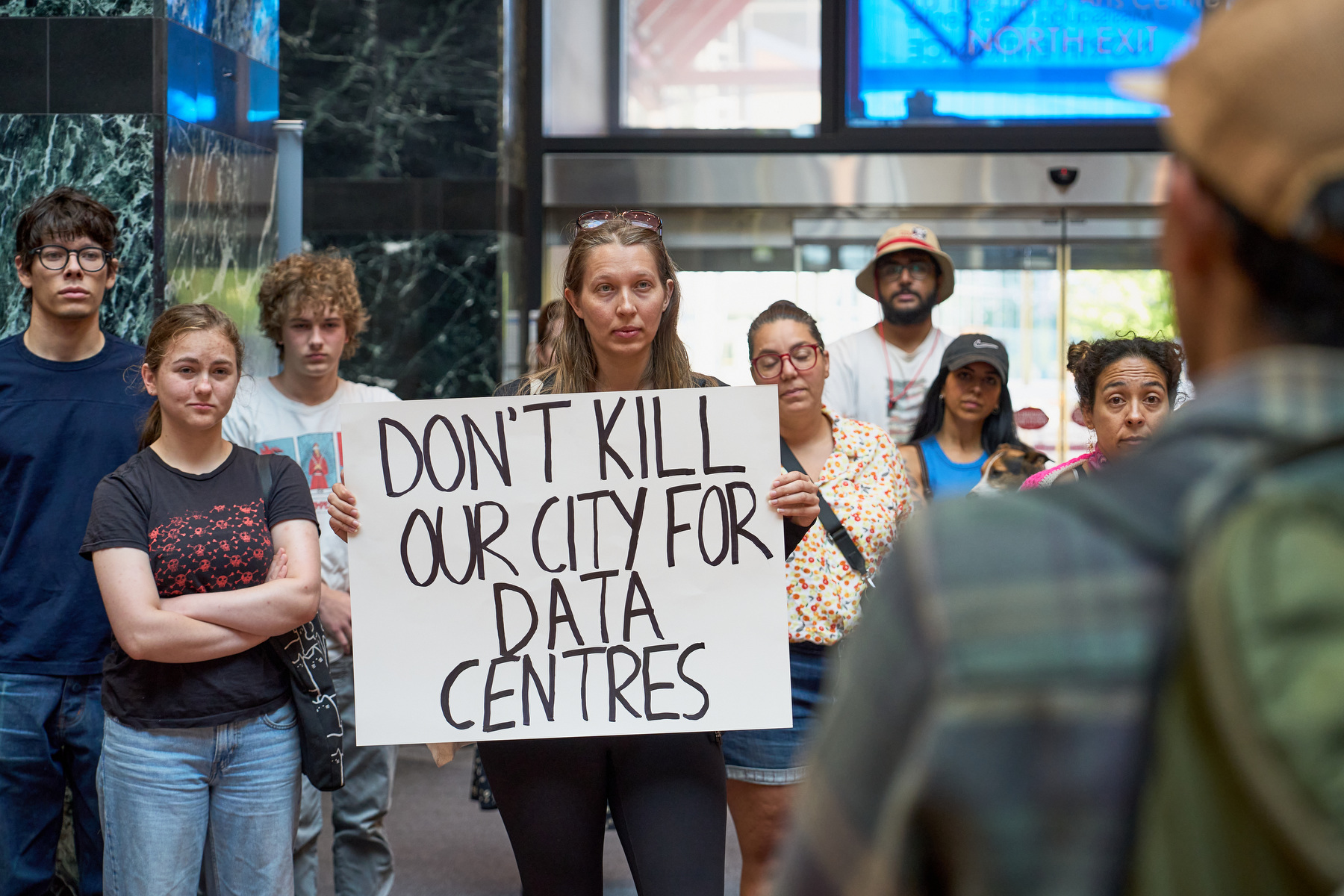
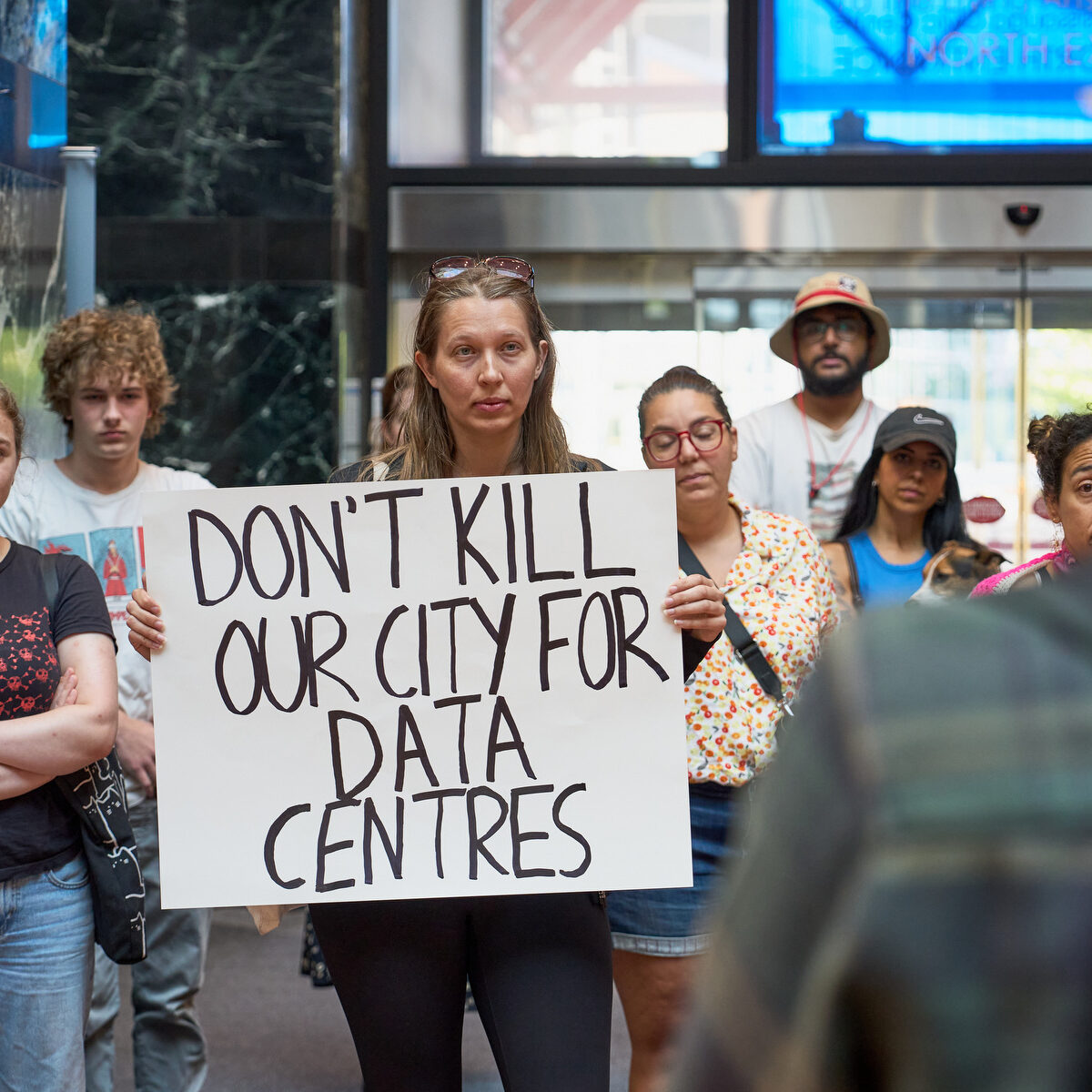
On a Thursday evening in late June, Martin Reid appeared flustered. An estimated 100-plus residents had gathered at a town hall he’d organized at Mississauga’s Erin Meadows Community Centre to hear about a proposed large-scale data centre in their corner of the city.
Despite the turnout, the meeting didn’t seem to be going as Reid, city councillor for Ward 9, had expected. As higher-ups from the company Prologis presented their plan, the crowd kept interrupting, calling out questions and rebuttals.
“Excuse me, we’ll have time to answer all of these questions,” Reid said, as he tried again and again to steer the room back to the presentation.
Just a few months earlier, though cognizant of concerns, Reid had been enthusiastic about the proposed two-storey, 220,015-square-foot data centre in his ward on Tenth Line West, north-west of Argentia Road. “I’m excited about having this in the Meadowvale Business Park and what that means for information and technology coming to Mississauga,” Reid told the City’s Planning and Development Committee at a March 30 meeting. The data centre, he said at the time, would likely be among the biggest in the GTA, and would be “great for the tax impact, fantastic for what’s going to happen in terms of employment and all those things. So in principle, I am very supportive at this time.”
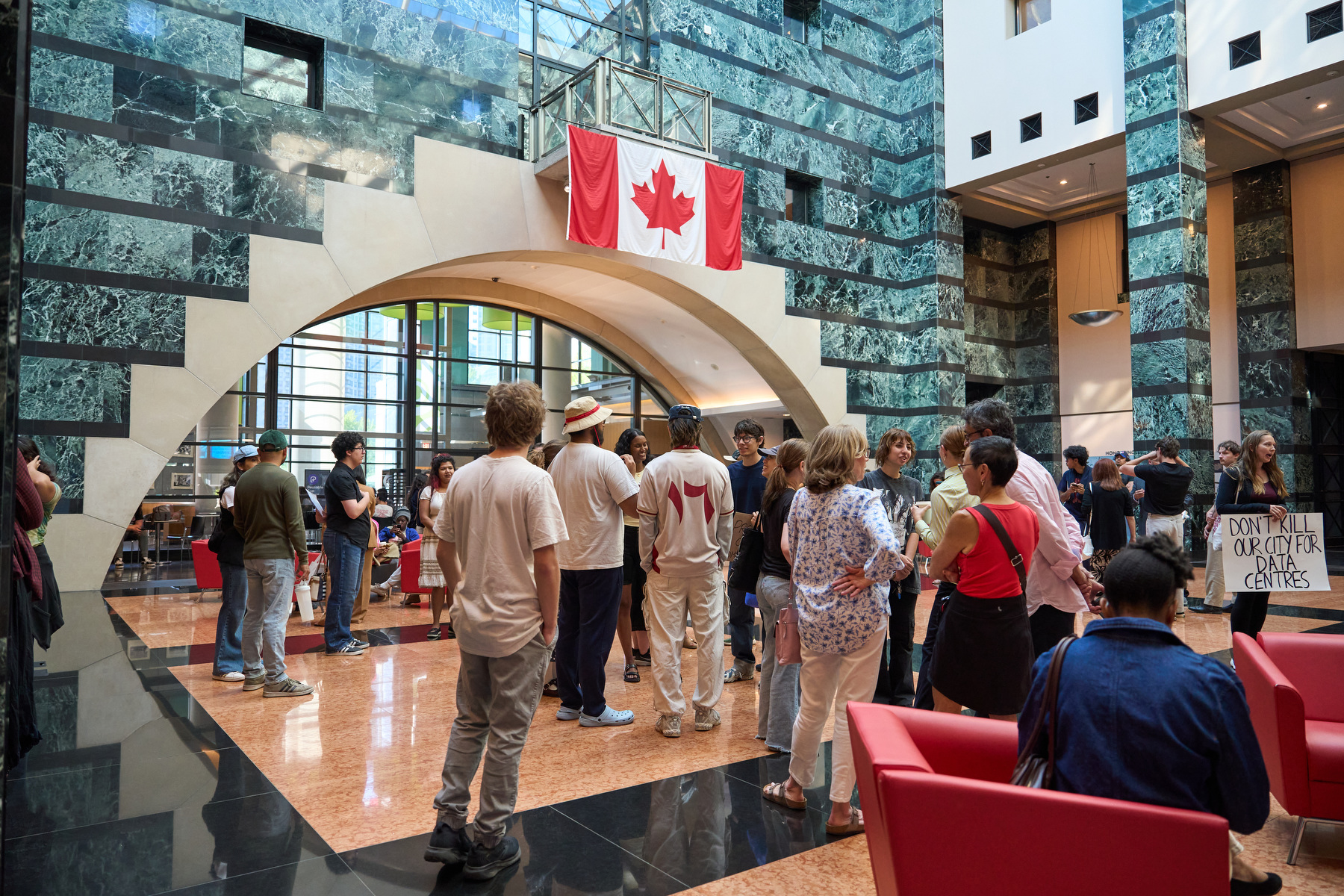
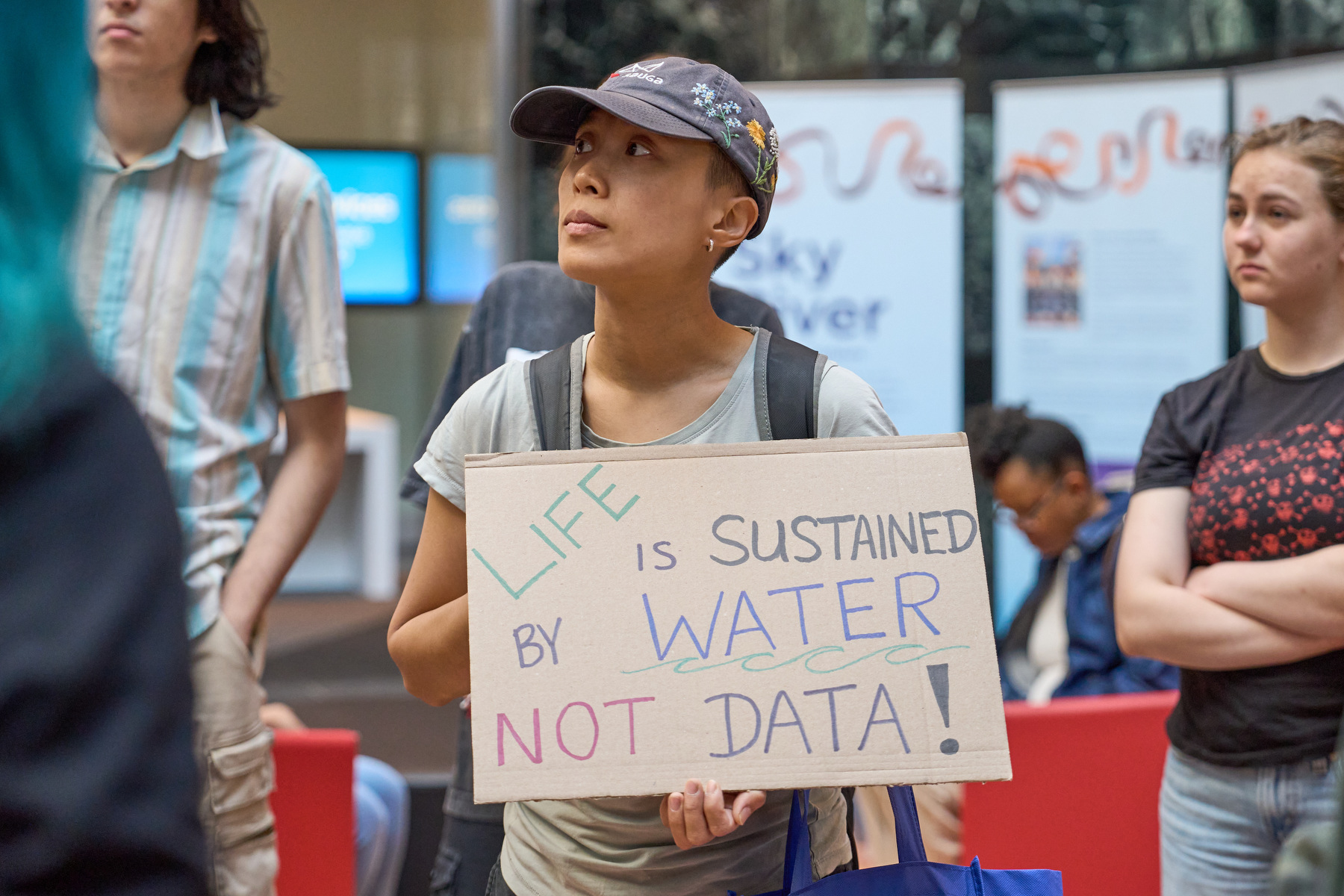
But as he faced the tense crowd at the town hall in June, Reid was more restrained about his support. And by the next day, with four months left in his re-election campaign, it was clear he had changed his mind altogether. The following day, Reid shared a post across his social media accounts, stating that he would no longer support data centre development in his ward, and was now calling for a comprehensive study of its long-term impacts and a potential one-year pause on new data centre applications. “Technology is important. Economic development is important. But so are the people who already call these neighbourhoods home,” he wrote.
The community resistance that Reid encountered in Mississauga is part of a broader wave of anti-data centre activism that has upturned conventional politics across North America, with protests flaring up from Arkansas to Minnesota to New Brunswick. In Mississauga, the fight over data centres has become a major issue in the upcoming Oct. 26 municipal election. Residents’ concerns about noise pollution and the amount of water and energy these massive buildings require are threatening to eclipse more predictable election issues, like tackling urban sprawl or even crime. And the fast-growing public opposition to data centres in this city has caught city councillors off-guard, forcing some to reverse their approval and others to take a firm stance against proposed developments in the area as they seek re-election.
On Sept. 16, councillors are expected to vote on a bylaw that will freeze data centre development in the city for one year—a vote that residents say they’re following closely as they decide whom to elect this fall.
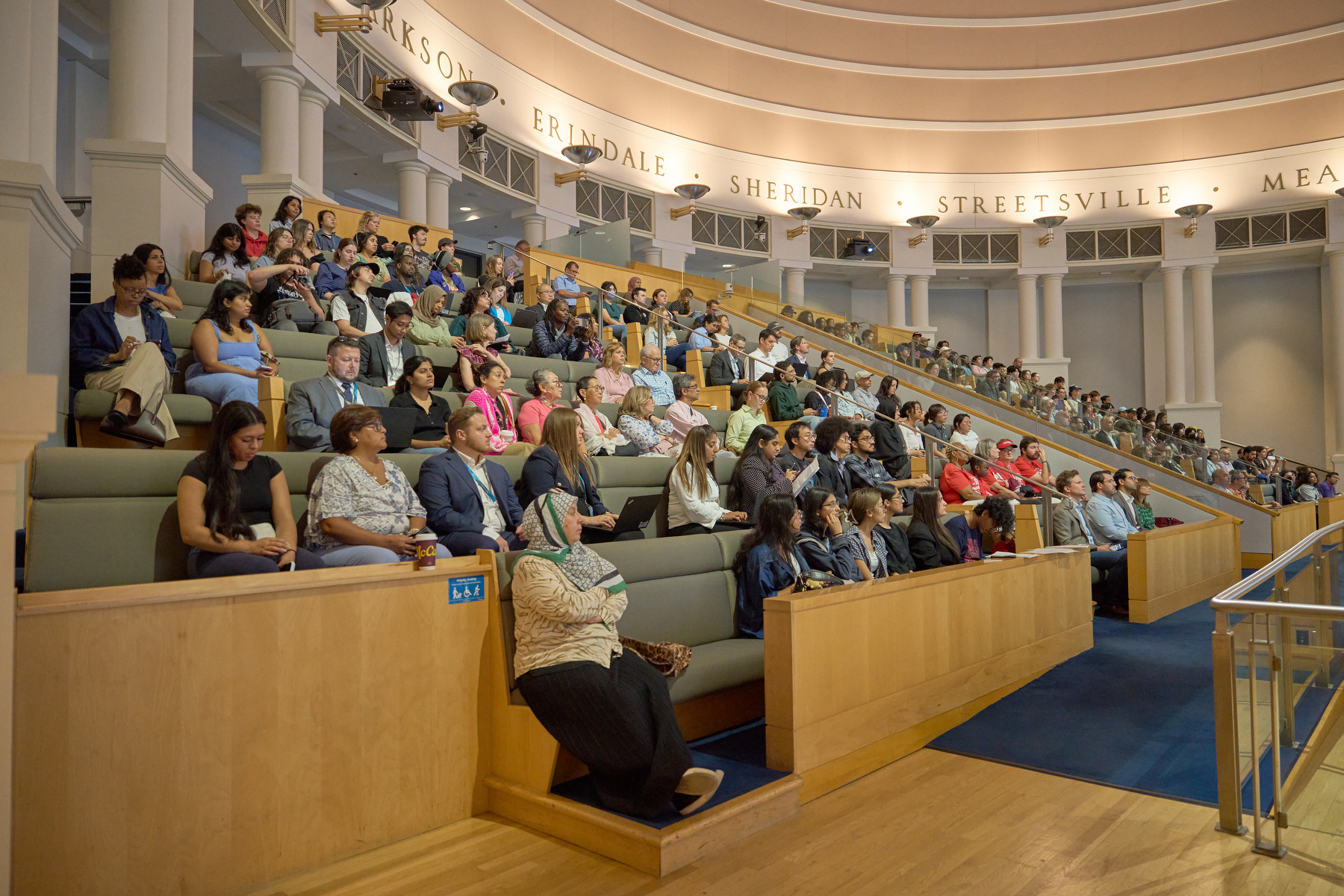
Long-time Mississauga resident Nina D’Souza says she sees the council vote on the bylaw as a test for candidates, not only of where they stand on the proposed project but of what kind of development they envision for Mississauga: “A municipal election is the best place to ask, what kind of development do we want in our community and who pays for the infrastructure required and eventually who benefits from it.” D’Souza says she’d rather see new parks or other public recreational spaces in the city than “an eyesore of a data centre.”
In August 2025, a site plan application was submitted on behalf of Prologis, a real estate investment trust headquartered in San Francisco that builds and manages logistics and industrial properties including data centres, for the data centre in Ward 9—a facility with a total square footage that’s roughly equivalent to four football fields. At the March Planning and Development Committee meeting, the councillors unanimously voted to bring the company’s application back to city staff for further review, seeking more information before deciding whether to move forward with it or not.
Reid concedes he was perhaps prematurely supportive of the proposal. “There were some comments that were made by myself, you know, around the excitement to see [the data centre proposal] coming to council, coming to the city, because of the job opportunities,” he told The Local, noting that the June town hall was, “in a sense” a turning point.
During their presentation at the town hall, Prologis representatives revealed the number of full-time jobs the facility was expected to create: Roughly 75, a number that elicited laughter and heckling from the crowd. Reid commends the residents for voicing their opposition to the proposal. “Coming out of the town hall, we discovered how much uncertainty there was and how much unease there really was with the community when Prologis could not answer the questions that were coming to them,” he says.
In an email to The Local, Prologis said the company has followed the City’s requirements “precisely” since it entered its planning process last year, and has completed extensive consultation. While Prologis supports the City’s decision to develop a framework for future data centres, the company said the council’s decision to develop a moratorium bylaw changed the policy context for their completed application while it was under review. “[W]e are disappointed that its approach does not preserve procedural fairness for applications already in the process,” it said.
On July 29, Reid brought forward a motion for a one-year moratorium on new data centre developments in the city, giving Mississauga more time to determine what kinds of regulations they’d need. His motion received overwhelming support from council. For a moratorium to actually take effect, however, the council would have to pass the bylaw on Sept. 16.
Two weeks before the council vote on the moratorium bylaw, the federal government introduced new principles for responsible data centre development. Canada’s Responsible Data Centre Development Principles calls on projects to create lasting local benefits, with measures aimed at not burdening households with electricity costs, minimizing water use, and transparency regarding impacts on local communities.
Ward 2 councillor Alvin Tedjo wasn’t immediately opposed to data centre development—he was curious, and wanted to ensure they were properly regulated. “I think the truth of the matter is that we know that we need data centers, and we know that they already exist,” says Tedjo, referring to smaller data centers in the city, while acknowledging AI companies’ need for much larger facilities.
But in recent months, Tedjo, who is now running for mayor, has taken a stronger position against them. On June 26, a day after the town hall meeting, Tedjo posted a video to his Instagram captioned “NO. NEW. DATA CENTRES.” Given the limited number of jobs expected, he questioned whether the City should support a project that benefits a U.S.-based conglomerate rather than serving Canadian businesses. “I stand against American profiteering in Mississauga,” said Tedjo in his video. He believes that data centres need to exist in some form, but he’s opposed to what’s currently being proposed—until there are guarantees against negative impacts on the quality of life for local residents.
Ward 7 councillor Dipika Damerla says her position is simple: She believes the City needs to update its laws before anything moves forward. She says the March vote to have city staff further review Prologis’s application was never about approving it, but about requesting more information about the proposal—and she was comfortable supporting that. But since the June town hall, Damerla, who is also running for mayor, has become much more vocal about her support for the moratorium. “I’ve taken a very clear position that I’m supporting the moratorium. I was the first councillor to say we need a pause, and then others followed publicly,” Damerla says. Through a series of social media videos, she has sought to inform the public about the proposed facility, explaining the moratorium, and encouraging residents to make their voices heard ahead of the Sept. 16 vote.
She says she believes the moratorium will give the City time to do its homework: “Hyperscale data centers are a new beast, and our zoning bylaws need to catch up with that.”
Meanwhile, Mayor Carolyn Parrish has been less clear about where she stands. Unlike Tedjo and Damerla, she has not made any public declarations about her position. And at the July 29 council vote on Reid’s motion for the moratorium, Parrish did not vote—a decision that has since drawn scrutiny from residents and her opponents. “I think the mayor was quite wishy-washy on it,” said Tedjo.
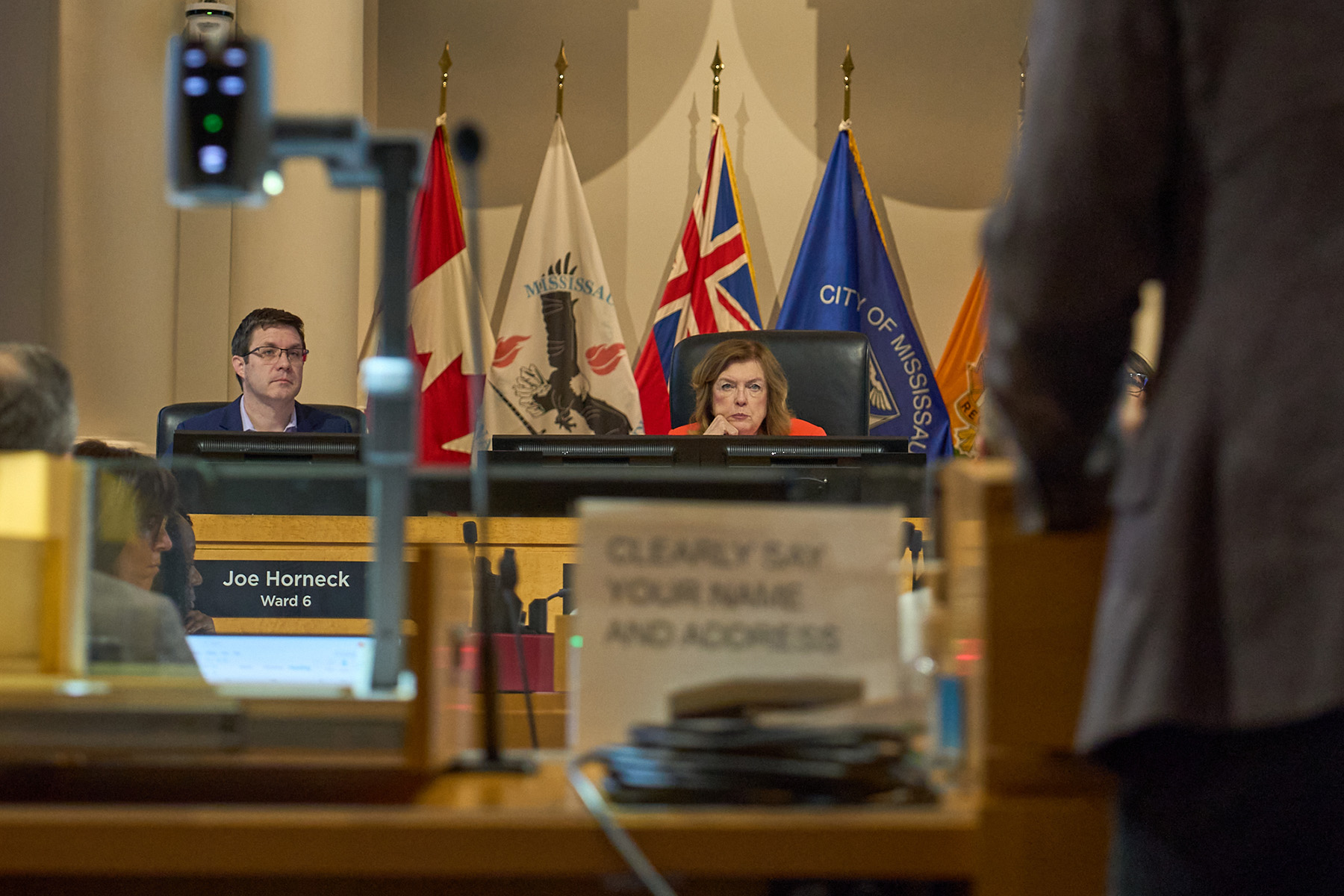
In an email to The Local, a spokesperson for the mayor’s office wrote that mayor Parrish and council are “very much looking forward” to the Sept. 16 meeting, when council is expected to receive a staff report and proposed draft of the bylaw. “We have been responsive to community concerns on this issue. We will continue to be responsive,” they wrote.
Join the thousands of GTA readers who've signed up for our free newsletter and get award-winning local journalism delivered to your inbox.
"*" indicates required fields

Rahul Mehta is a candidate for Ward 8, who has been rallying residents and community organizations to oppose the proposed data centre. He says part of him hopes the issue encourages higher voter turnout. (Less than 22 percent of registered voters in Mississauga participated in the 2022 municipal election.) But he worries that the fight to stop data centre development also risks pulling attention away from the “bigger picture” in the coming election, and overshadows important debate over the city’s sprawling plazas, warehouses, and other large-scale projects. Mehta believes voters should consider a range of issues and what they want from their elected councillor, rather than letting a single development proposal determine their vote.
He also believes the anger surrounding the proposal points to a deeper problem: The City and councillors need to do a better job of reaching out to residents about major plans and including them in the decision-making process. “You’re a little late when you’re at the point where, you know, people are taking sides and saying it’s us versus them,” Mehta says.
As the Sept. 16 bylaw vote draws closer, some residents, like Kendrah Eff, worry that the outcome will be similar to what happened in Hamilton, where at the 11th hour, council ultimately voted 10-6 against their bylaw for a moratorium, despite an earlier majority pushing for one. “Just because a politician says something, doesn’t make it true to what they believe or what they’re going to do,” says Eff. Although she’s concerned that some councillors may change their positions the day of the vote, she has faith that those who’ve strongly called for a moratorium in Mississauga will stay true to their word.
Eff, founder of Ontarians Against Corruption, said she first became aware of the data centre boom across the province from Hamilton-based journalist and community organizer Nick Tsergas, who created “Stop the Data Centre(s).” The website features an election tracker for each municipality where a data centre has been proposed, allowing voters to see where candidates stand on the issue. Eff says it’s run by organizers in each municipality, tracking campaigns and changes in candidates’ positions. Together with the Mississauga organizers, Eff began reaching out to residents, and gave a deputation during the July 29 vote on Reid’s motion.
She said she isn’t bothered that councillors, like Reid, have changed their tune about data centre development—she welcomes it. “[Reid] got some new information, changed his mind, and is now championing against them or for a [moratorium],” she said.
Tedjo, Damerla, and Reid all say they intend to vote in favour of the bylaw on Sept. 16.
If it passes, however, the fight over data centre development in Mississauga won’t end there. The bylaw will only pause new development for a year, while the City studies how to regulate major infrastructure, leaving council to determine whether the Prologis application will proceed next year and what the permanent rules and regulations will be. But with so many voters keenly following the developments, the bylaw vote could determine who makes it on to that council.
The Local’s election coverage in Peel region was made possible through generous support from United Way Greater Toronto. All stories were produced independently by The Local.
More stories about Mississauga Votes 2026
In Mississauga’s Ward 2, Candidates Spar Over Crime, Housing, and Property Taxes
With popular incumbent Alvin Tedjo stepping aside for a mayoral run, 14 candidates present their vision for one of the busiest, and wealthiest, wards in the city. Photos by Chloë Ellingson / The Local

Carolyn Parrish Loves a Fight—Now She’s Up Against Her Fiercest Opponent
The Mississauga mayor has never backed down from a battle—not from Hazel McCallion, George W. Bush, or the Peel police budget. In the heated rematch against Bonnie Crombie, however, some wonder if all the scrapping has become an end in itself.

Candidate Tracker: Mississauga 2026
The only place to find reported, fact-checked biographies and platform summaries for every candidate running in the 2026 Mississauga municipal election. No AI, no campaign talking points, just a team of journalists double-checking candidate records and analyzing policies.
Mississauga Mayoral 2026 Candidates
Fact-checked biographies and platform summaries for all the candidates for mayor of Mississauga.
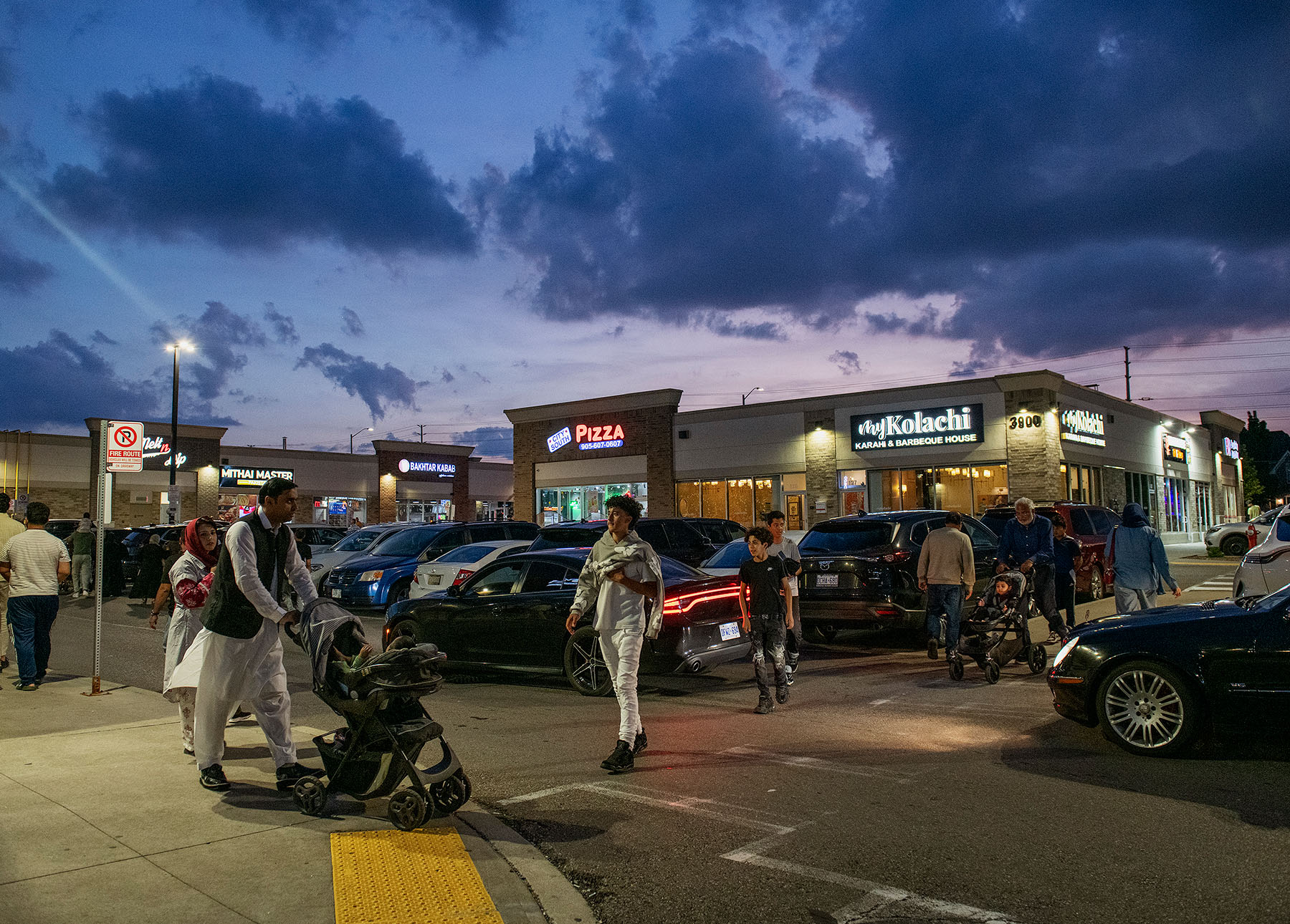
How a Suburban Strip Mall Became a Buzzing Community Hub, and a Political Flashpoint
Mississauga’s immigrant communities made Ridgeway Plaza one of the city’s most vibrant cultural spaces—and also one of its most contested. This municipal election could decide its future.

How to Vote in the 2026 Mississauga Election
Everything you need to know about voting for mayor, councillor, and trustee in October’s municipal election
More from this issue


Lessons From Covering Toronto’s First AI Election
I’ve looked at nearly every candidate running for municipal election across three cities. A lot of their campaigns look the same. What does it mean for democracy?

The Two Patrick Browns
Eight years into a scandal-filled tenure as Brampton’s mayor, one version of Patrick Brown is a tireless public servant who transformed a dysfunctional city hall. The other is something else entirely.

In Brampton’s Northeast, Old Allegations Loom Over the Race for Regional Councillor
The race for regional councillor in Wards 9 and 10 is one of the most crowded in the city. One frontrunner is campaigning in spite of a lingering controversy at city council.

The Young Progressives Hoping to Unseat Vincent Crisanti in Etobicoke North
Policy analyst Chloe Brown made a name for herself challenging some of the biggest names in the city during her 2022 and 2023 mayoral runs. Now, she faces a different challenge—convincing residents of the neighbourhood she grew up in to send her to city hall.

The Biggest Winner of This Election: The Toronto Police
Despite being rocked by one of the biggest scandals in its history, the city’s police force is getting nothing but support from major candidates in the municipal election.

Has Olivia Chow Been an Effective Mayor?
I followed Olivia Chow over a summer of announcements and events to try to understand how she's fared as a leader. I came back with a more fundamental question about what it means to be mayor of Toronto when real power lies elsewhere.

In York South-Weston, Old Opponents Face Off for a Third Time
Frances Nunziata, Toronto’s longest serving city councillor, is ready for another term in office. Do her constituents feel the same?

North of the Tracks: The Election From Main and Danforth
With thousands of new units coming, Danforth Village in the corner of Beaches-East York is a microcosm of a changing city. In today’s sprawling wards, can voters make their local issues heard?
In Mississauga’s Ward 2, Candidates Spar Over Crime, Housing, and Property Taxes
With popular incumbent Alvin Tedjo stepping aside for a mayoral run, 14 candidates present their vision for one of the busiest, and wealthiest, wards in the city. Photos by Chloë Ellingson / The Local

Dianne Saxe Needs to Convince Danforth Voters She’s No Outsider
A walk through Toronto-Danforth with the former environmental lawyer, who jumped into the ward race just minutes before registration closed.