

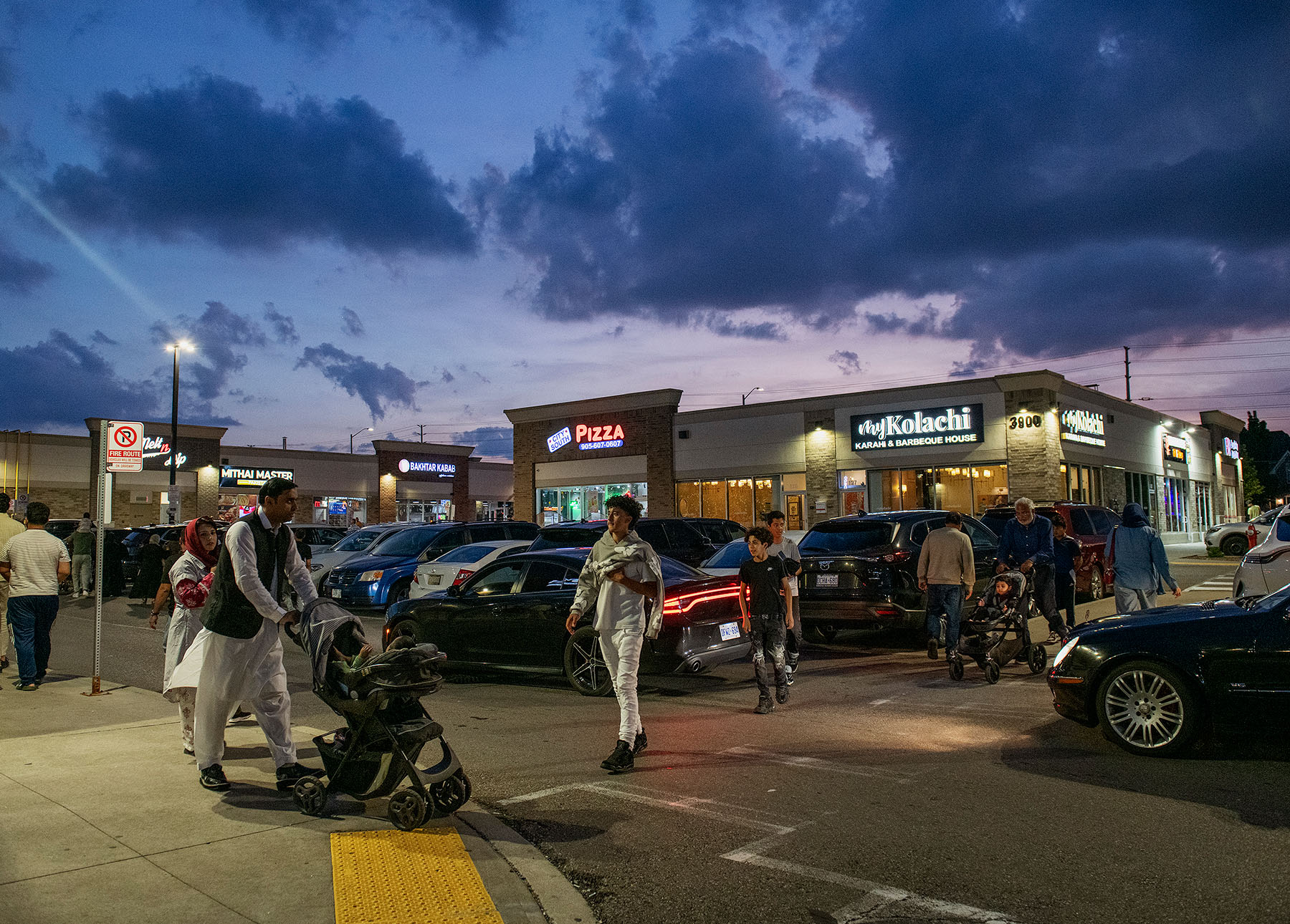
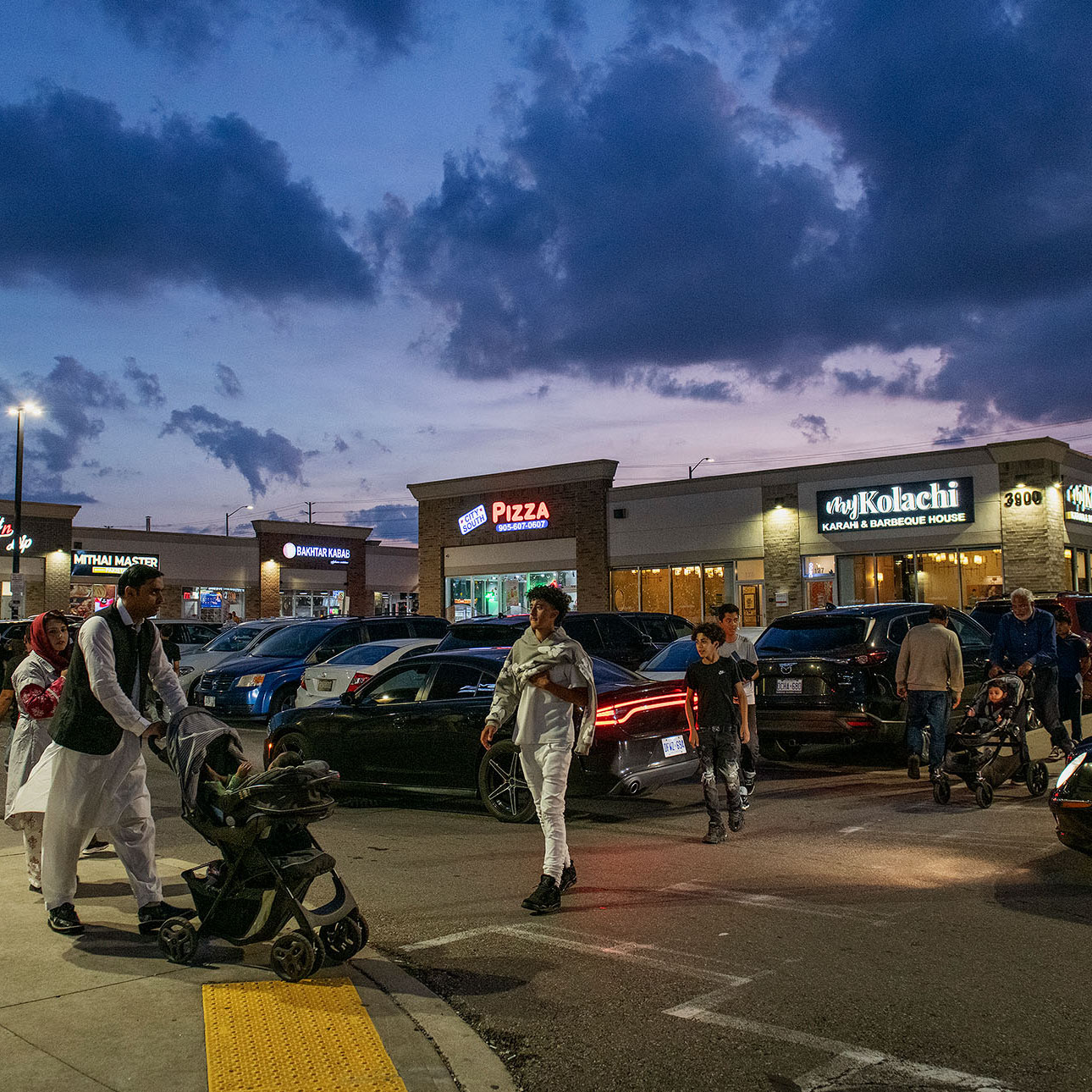
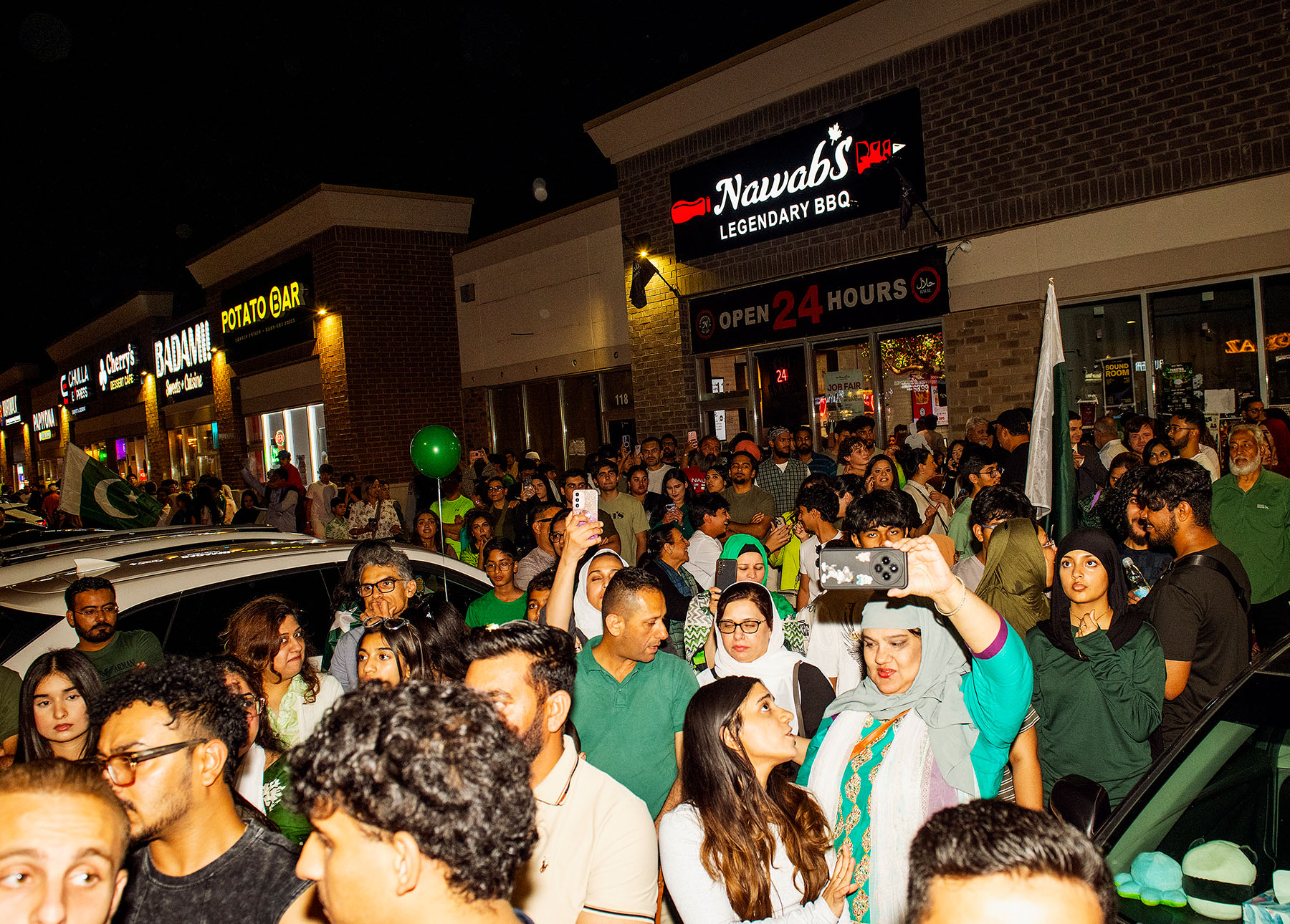
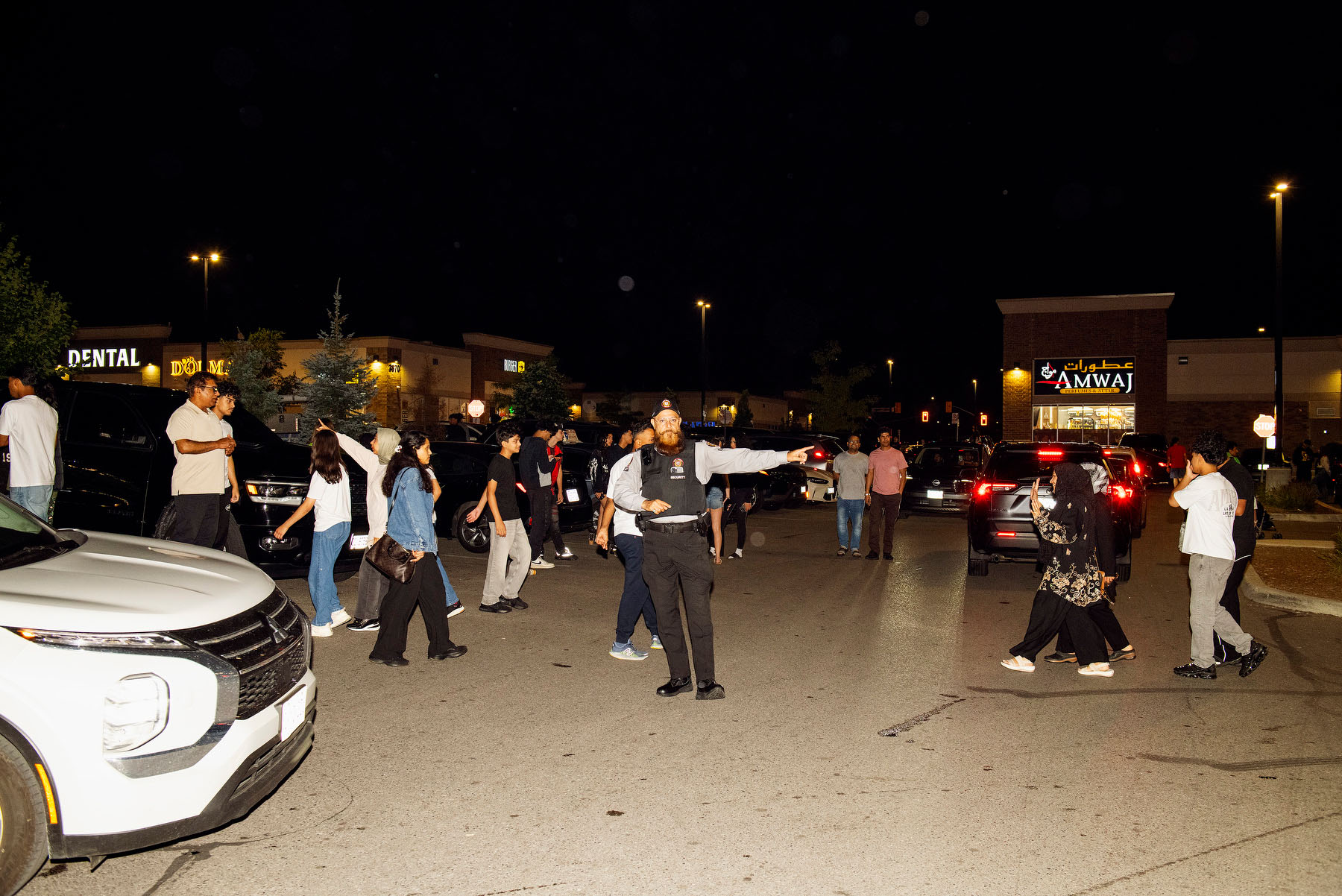
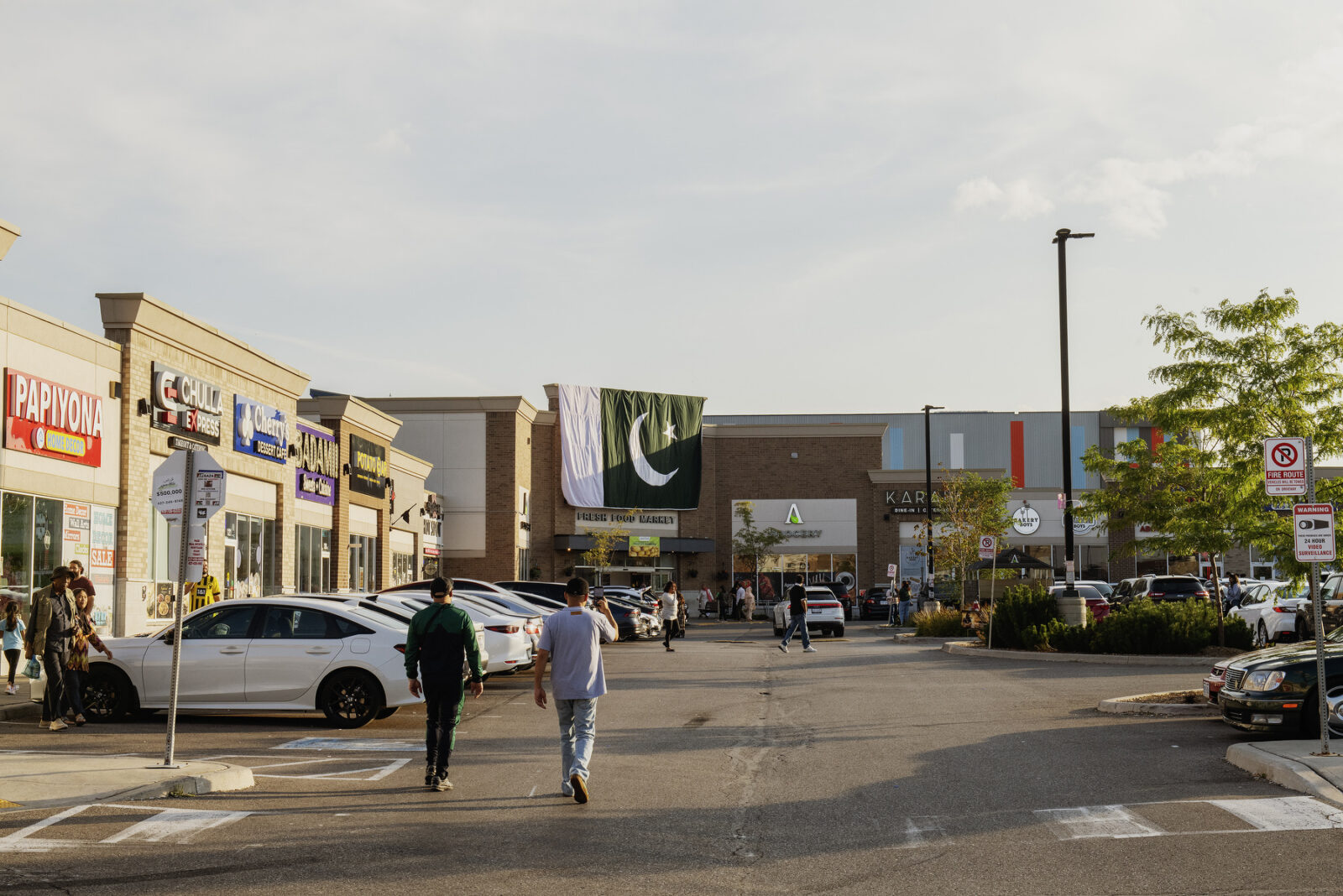
On the evening of August 14, Pakistan’s Independence Day, Mississauga’s Ridgeway Plaza was teeming with life. In the hours before sunset, sports cars and motorcycles had poured in. Uncles smoked shisha in camping chairs along the sidewalk, while aunties squeezed picnic blankets onto the strips of grass between parking rows. Teen boys in cricket jerseys mingled with girls with green-tipped nails and matching hijabs. Under a massive Pakistan flag, draped over the side of a grocery store, a group of men danced to Punjabi and Urdu music.
Since Ridgeway Plaza opened on the western edge of Mississauga in 2022, the strip mall has become a community hub, particularly for the city’s South Asian and Middle Eastern communities. But Ridgeway’s popularity has also drawn the ire of some of its neighbours: As the parking lots fill with people on weekends and holidays, music, honking, and revving engines carry into the surrounding neighbourhoods, so much so that roughly 1,800 residents signed a petition, started in October 2023, for more police presence. The public conversation about Ridgeway has become, in certain forums, tainted by misinformation, racism, and anti-Muslim sentiment. And just a year ago, a celebration like the one on Pakistan’s Independence Day may not have been possible, after a temporary court injunction banned “nuisance gatherings” at Ridgeway. This past April, following a mediation with the City, Ridgeway’s condo corporations agreed to tighten security at the plaza, adding permanent access gates, speed bumps, cameras, and no-loitering signs, all on their own dime. Within a month, most of the changes were in place.
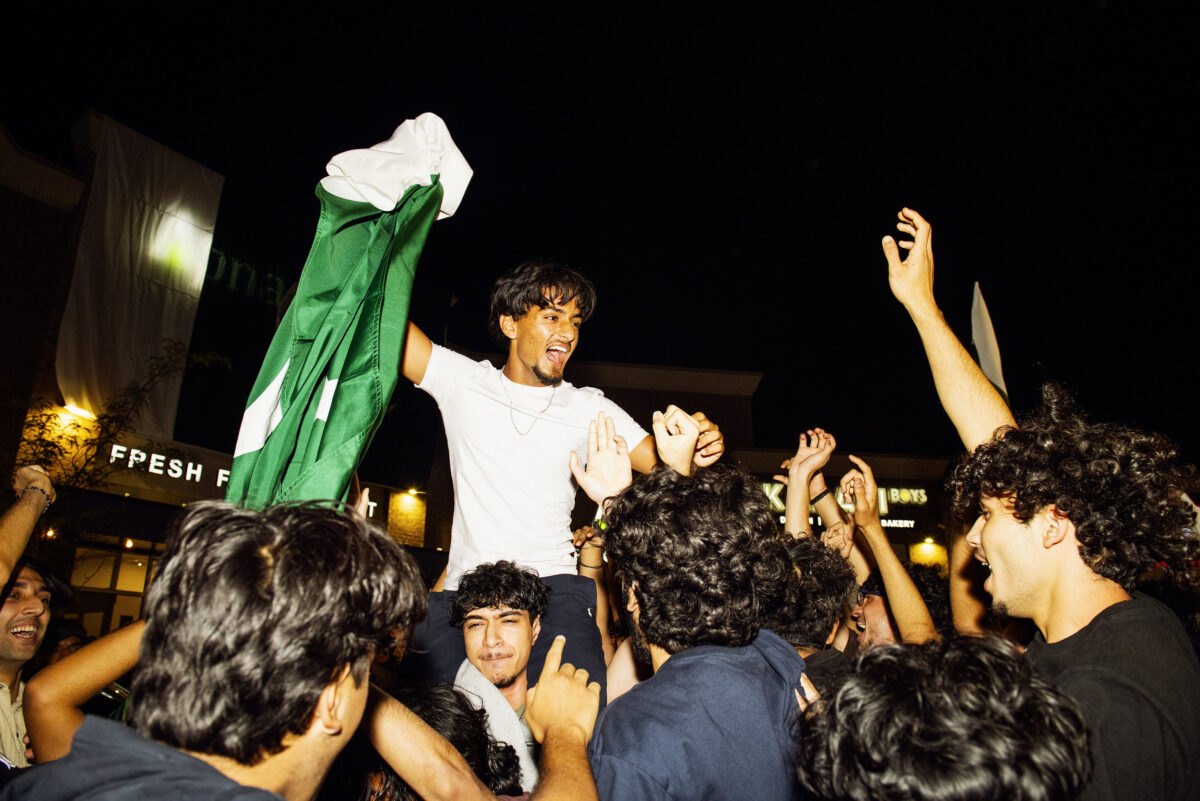
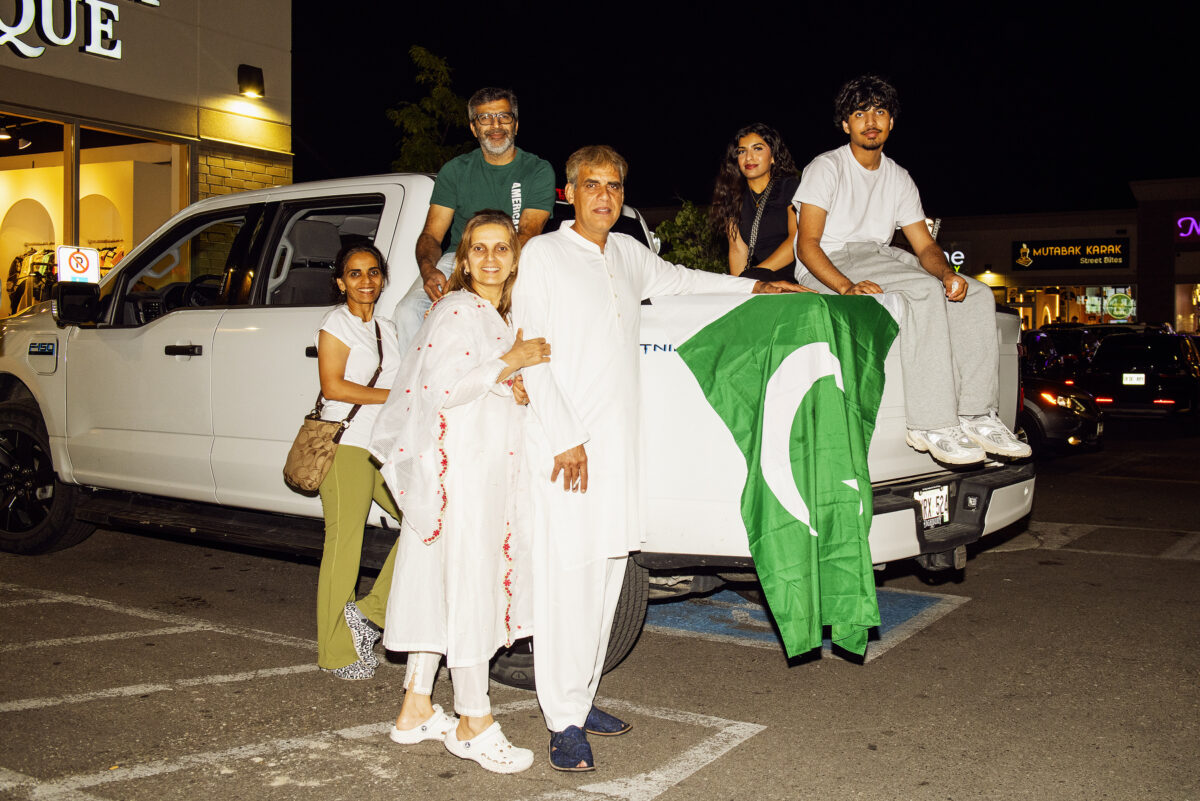
Now, as the City’s council incumbents—those at the forefront of the plaza conversation—seek re-election in October, Ridgeway remains a flashpoint, prompting questions about local political representation, and what happens when a space takes on new, unexpected life as a gathering place for a community.
For decades, this corner of Mississauga, where Highways 407 and 403 meet, developed like much of the city around it. Subdivisions sat dominated by detached homes and wide roads. Commercial spaces were built largely around driving somewhere, buying something, and leaving.
Growing up in the area, 29-year-old Sara Hamade and her friends often ended up hanging out in empty parking lots until security kicked them out.
“There wasn’t really much space for people to go,” she said. Finding halal food, or businesses that reflected her community and values, was another challenge.
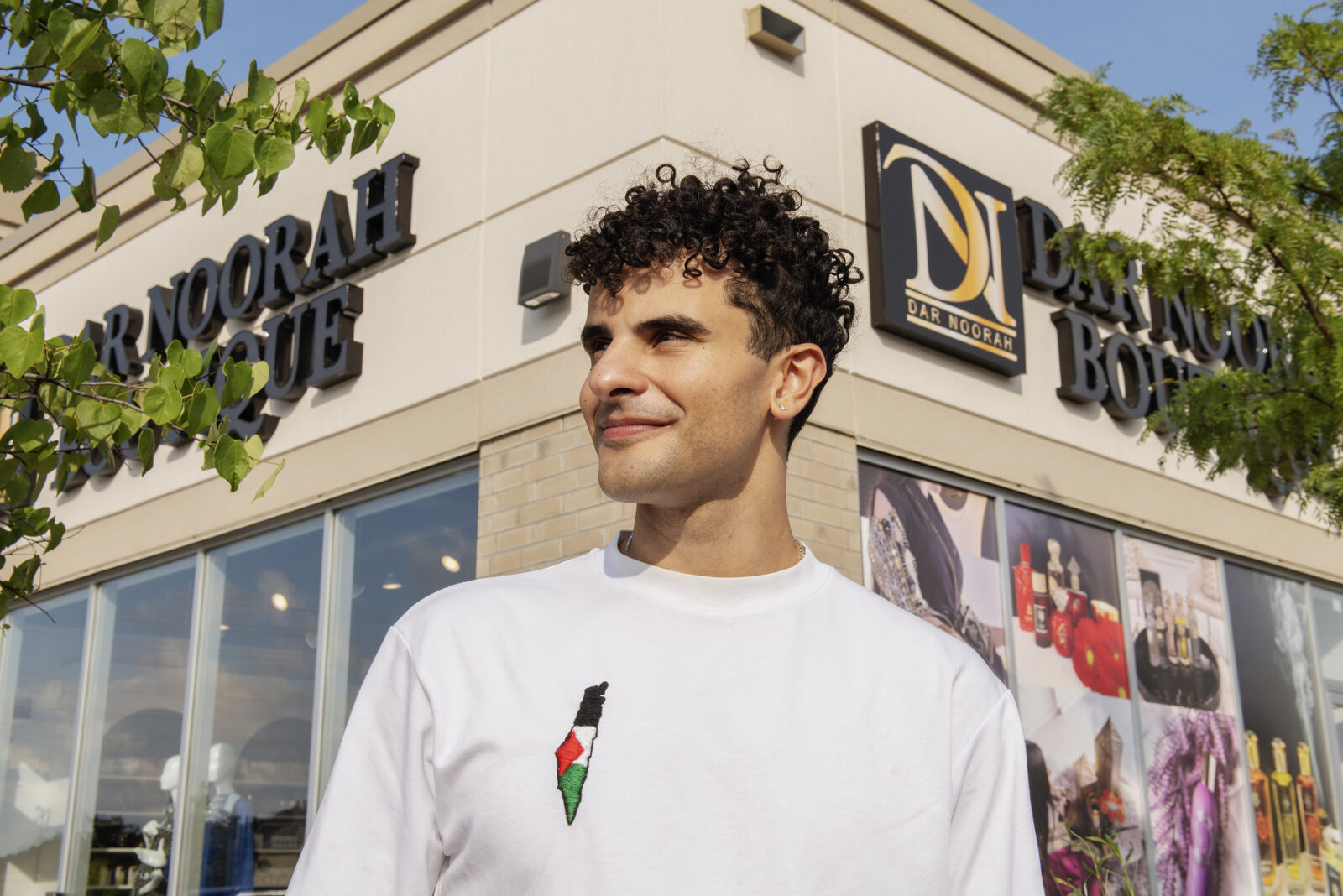
Before there was Ridgeway Plaza, the space it now occupies off Eglinton Avenue was flat, grassy land. After restaurants and stores began opening in 2022, Hamade suddenly had somewhere nearby to grab a bite and meet friends without trekking an hour downtown. With the plaza made up mostly of mom-and-pop businesses, spending money there means supporting people in her community.
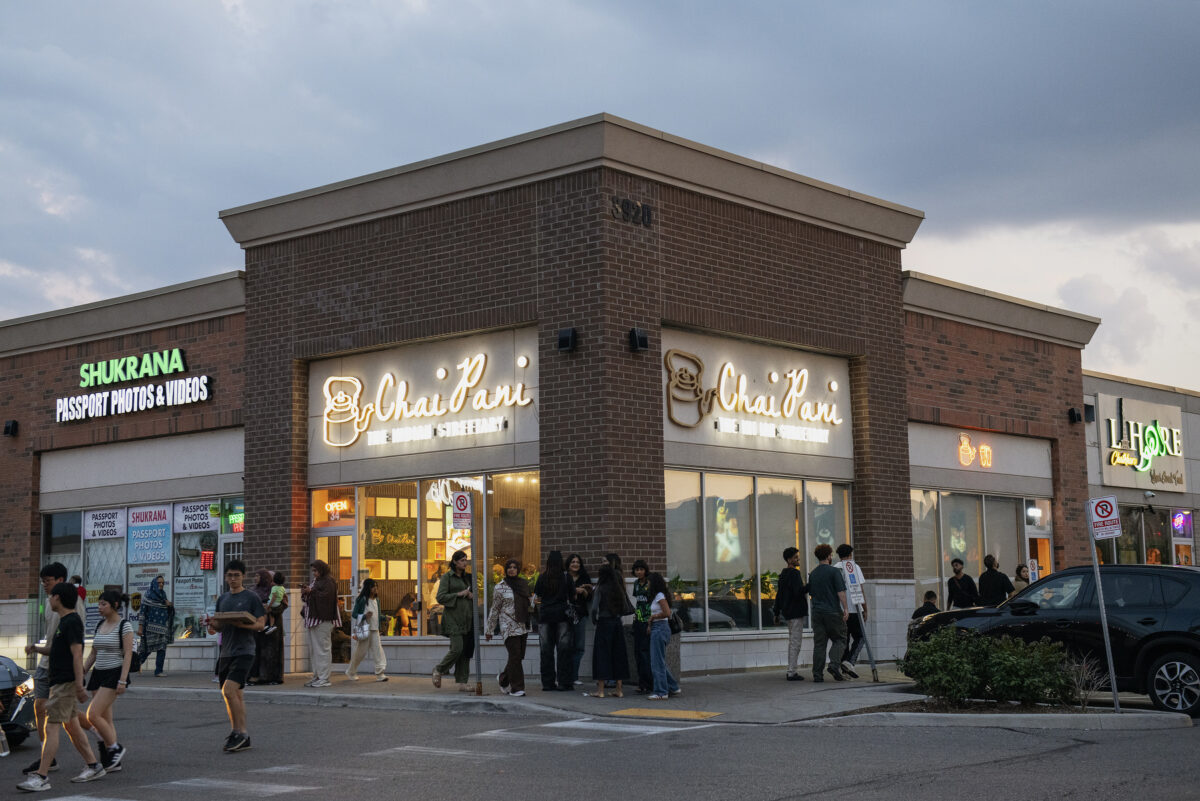
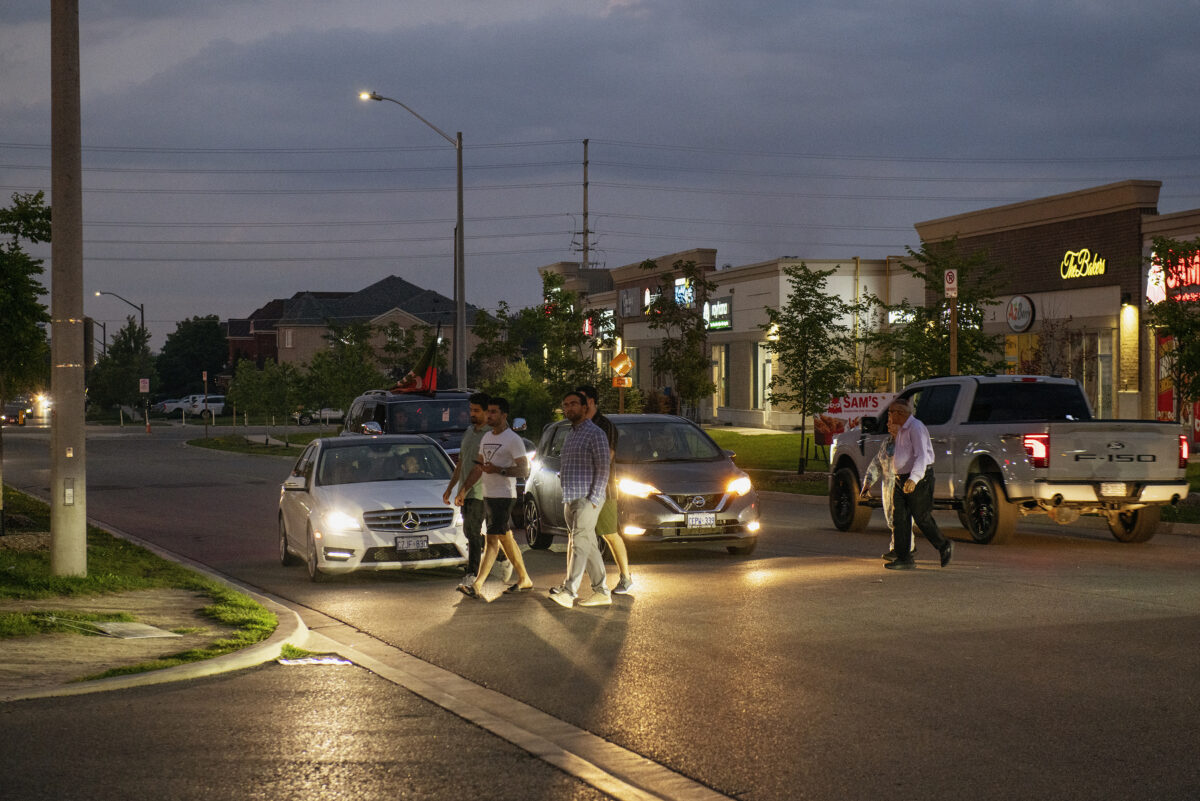
It’s hard to conceive of an ordinary strip mall capturing people’s imagination enough for these large spontaneous gatherings, or for soccer legends, comedians, and livesteamers to stop by. “Are we calling them to come do that? No. People are coming themselves,” said restaurant owner Ahmed Goreja, a member of the plaza’s newly formed Ridgeway Business Association.
Sometimes it’s families looking for a late-night bite, or something that reminds them of home from the over 100 halal restaurants serving food from almost every corner of the world. Other times, it’s a convoy streaming in after a big soccer match.
The city hadn’t planned for it at this scale. But by now, years after its opening, Goreja argues they should expect it. “People need a space to gather, to celebrate, and that is going to be Ridgeway Plaza.”
Tensions around Ridgeway Plaza have been present since its opening, reaching a peak in 2024. City spokesperson Irene McCutcheon said 153 complaints about noise, parking and debris have been recorded since 2022, compared to, for example, 128 about Celebration Square, an outdoor venue in Mississauga’s city centre. Complaints, she cautioned, aren’t proof of broken bylaws.
As part of her masters research in urban planning at Toronto Metropolitan University, Zoha Ahsan analyzed a year of social media posts about Ridgeway. She found plenty of complaints about parking, traffic, and noise. Mixed among them were calls to deport plaza-goers. Some called Ridgeway “Gaza Plaza” and made allusions to terrorism, after people gathered to protest what the UN has described as Israel’s genocide in Gaza.
“When I noticed how many comments [online] were borderline racist or plain racist, that’s what really reinforced that this work needs to be done,” Ahsan said.
All this takes place against the backdrop of growing anti-Muslim and anti-South Asian sentiment in the Peel Region, where police report a doubling of hate crimes against South Asians between 2024 and 2025.
Some Reddit users claim that activity at the plaza has led to a drop in home prices, but between 2022 and 2024, despite complaints about the plaza peaking, property values in the neighbourhood also rose, according to housing data from the Toronto Regional Real Estate Board.
Join the thousands of GTA readers who've signed up for our free newsletter and get award-winning local journalism delivered to your inbox.
"*" indicates required fields
Apart from the heated rants about Ridgeway, there are legitimate criticisms of how the plaza functions. Mejgan Shefa, a 25-year-old public policy graduate, lives just a five-minute drive away, and used to love Ridgeway when it opened. But she rarely goes anymore. “If I go on a Monday morning, after the weekend, you see litter everywhere,” she said. Even picking up food can mean battling traffic and reckless driving, which she believes could be solved by stricter bylaw enforcement.
For Shefa, both things are true: Ridgeway is a cultural space worth preserving, and some behaviour there is unacceptable.
The question this election season, then, is how candidates plan to approach Ridgeway Plaza, and who they believe should be accountable for the challenges it does face.
The plaza is located in Mississauga’s Ward 8, and longtime councillor Matt Mahoney—now seeking re-election for his fourth term—takes a firm stance against the dangerous driving and unauthorized gatherings.
Mahoney said he supports the nearly 300 businesses in Ridgeway, but that the concentration of restaurants draws large crowds late into the night, contributing to overcrowding, blocked emergency access, and dangerous driving. He has backed the City’s nuisance gathering bylaw, and the temporary provincial court injunction aimed at controlling overcrowding at the plaza, while working with Peel Police and the plaza’s condo corporations on additional safety measures.
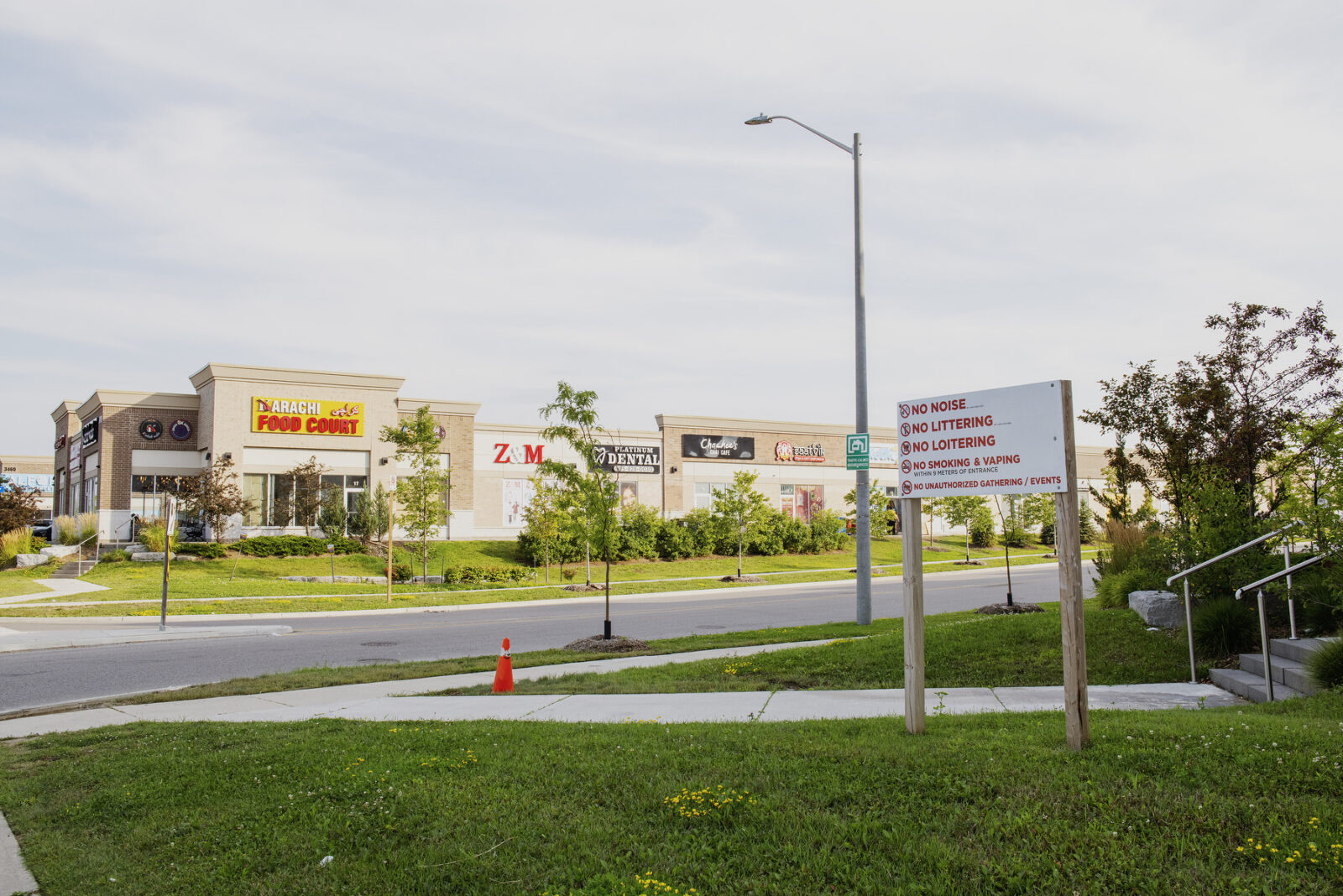
When asked about the concern that the plaza’s tenants ultimately carry the cost of crowd control measures through rising maintenance fees, Mahoney called it “unfortunate”—but says the responsibility falls onto the plaza’s owners. As part of the mitigation measures, in December 2025, Mississauga City Council also introduced a plan to cut restaurant space by 15 percent over time. (The plaza’s condo corporations did not respond to The Local’s request for an interview.)
To Rahul Mehta, who works on educational programming at a Meadowvale settlement agency and is running against Mahoney in Ward 8, blaming the number of restaurants misses a bigger planning failure, something the city is “a hundred per cent responsible for.” Mehta has a background in urban planning; he points out that Ridgeway became a major destination without transit or pedestrian infrastructure to match. The result is thousands arriving the way Mississauga has long expected them to—by car, he says.
Rather than trying to control those crowds primarily through gates and security, Mehta wants the city to better equip Ridgeway to accommodate them. Better transit could reduce the number of people arriving by car, while more trees and dedicated public spaces would give visitors somewhere to gather outside of parking lots and sidewalks, he said. He also wants the city to work more closely with Ridgeway’s business association, by organizing events like community cleanups and barbecues, to bring the businesses and nearby residents together and ease tensions. This gives neighbours an opportunity to experience the plaza as a community space, rather than only encountering its traffic and noise. Talk of simply enforcing bylaws and policing the neighbourhood, Mehta said, is just “wagging our finger at people.”
But Mehta’s bigger question is why people are celebrating in a parking lot at all: “Do we lack spaces for people to celebrate and have fun?”
He points to Celebration Square as proof that Mississauga can create public spaces designed for large gatherings, and suggests the City shouldn’t have stopped at one. With the City currently reviewing a proposal for a hotel near Ridgeway, Mehta says the site could instead become another public gathering space.
To Mehta, the heart of the Ridgeway Plaza discussion is how the city adapts to and embraces something that’s here to stay. But a town hall about Ridgeway Plaza held in March by five-term city councillor Sue McFadden, who represents the neighbouring Ward 10, was overwhelmed by homeowners who seemed to treat plaza-goers as “the other,” Mehta said.
Khaled Sasa, a journalism student and Ward 10 resident, was also at the townhall, and described the room as “hostile.” He says the crowd—consisting mostly of older white residents—were demanding more police at Ridgeway. One resident, he said, suggested having a police station inside the plaza. Sasa says he was heckled when he tried to speak in defence of Ridgeway.
As troubling as the tone of the conversation, for many it was also the time when it was held—during iftar, a small window of time when Muslims break their fast during Ramadan, making it difficult for them to attend.
Muslims make up 17 percent of residents in Mississauga, according to the 2021 census—and Wards 8 and 10 look a lot like the crowds at Ridgeway, with significant Muslim and South Asian populations. This is something McFadden, who’s seeking her sixth term, is aware of. “I’m very fortunate to have a very large Muslim community,” she told me. “They’re my neighbours.” But when asked about the timing of the town hall, she said, “This was not a meeting for just strictly Muslims. This was a meeting for the community…If people were fasting, they didn’t have to attend.”
That time was the only one available to coordinate police, commissioners, and planning staff, she said; and that those who missed it could read her notes online. She added that talks of building a parking garage for Ridgeway are now in the works.
The handling of Ridgeway Plaza by Mississauga’s City Council has raised questions about representation in the city as a whole. Despite Mississauga’s substantial immigrant population, as well as newcomers, and visible and religious minorities, only three out of 12 councillors in Mississauga are visible minorities, and none identify as Muslim.
This could be one factor in the city’s low voter turnout, which was roughly 22 percent in 2022, down from a little over 26 percent in 2018. Despite being one of Ontario’s largest electorates, the city ranked in the bottom 10 percent of the 391 municipalities that reported votes.
Past research on Mississauga has found that foreign-born voters face additional barriers to participating in the electoral process due to feeling less connected to their ward or simply being less aware of how government works. Those challenges build on broader reasons for low turnout, like nonpartisan and historically uncompetitive races.
Ward 10 resident Sasa cares enough about local politics that he even considered running for council himself. But this fall, he doesn’t plan to vote. He said he can’t back McFadden after seeing the way she handled Ridgeway, among other issues—like her support for police budget increases. And he says he’s yet to find a candidate who reflects his values.
Among Mahoney and McFadden’s challengers this fall are two Muslim women: Human resources professional Viktoria Manzar and paralegal Suha Hashim. Manzar, running in Ward 8, promises to support Ridgeway as a “vibrant community destination.” She wants more proactive coordination between the city, police, private security, and the plaza’s owners during peak periods rather than responding after problems arise. She also opposes the city’s plan to reduce restaurant space, arguing that expanding popular restaurants instead could help move lineups and crowds from the parking lot indoors. Longer term, she wants to explore additional parking and patios to make the plaza less congested and more pedestrian-friendly.
Hashim, for Ward 10, similarly wants safety concerns addressed without treating gathering itself as the problem. She wants more community spaces throughout the ward, including regular neighbourhood markets where local businesses can set up, residents can meet, and young people can find work. She believes giving families, seniors and young people more places to gather could reduce the pressure on Ridgeway as one of the area’s few informal meeting spots. And she’s particularly adamant that cultural gatherings shouldn’t be conflated with actions of people who drive dangerously or set off illegal fireworks.
On a warm summer evening near the end of August, minivans circle Ridgeway looking for parking. The plaza is still surrounded by surveillance, security, and anti-gathering signage, reminders of its embattled reputation. What happens here after October depends, in part, on which vision voters choose. New contenders largely want to design around what Ridgeway has become, with better transit, dedicated public spaces away from cars, more parking and safer crossings; the incumbents continue to focus on managing the crowds through enforcement.
But Ridgeway remains somewhere between what it was designed to be and what people have made of it. Inside restaurants, groups hover over registers, each determined to treat the other. Families cross from one side of the plaza to the other in search of dessert, chasing kids who’ve run ahead. Outside, men lean against their cars, chai in hand, talking loud enough to reach a relative back home. There are few places to sit or safe ways to cross, so people make do with the edges of footpaths, their cars, and the occasional camping chair. Built as a place to shop and eat, on this Saturday night, people continue using Ridgeway as a place to be.
The Local’s election coverage in Peel region was made possible through generous support from United Way Greater Toronto. All stories were produced independently by The Local.
More stories about Mississauga Votes 2026
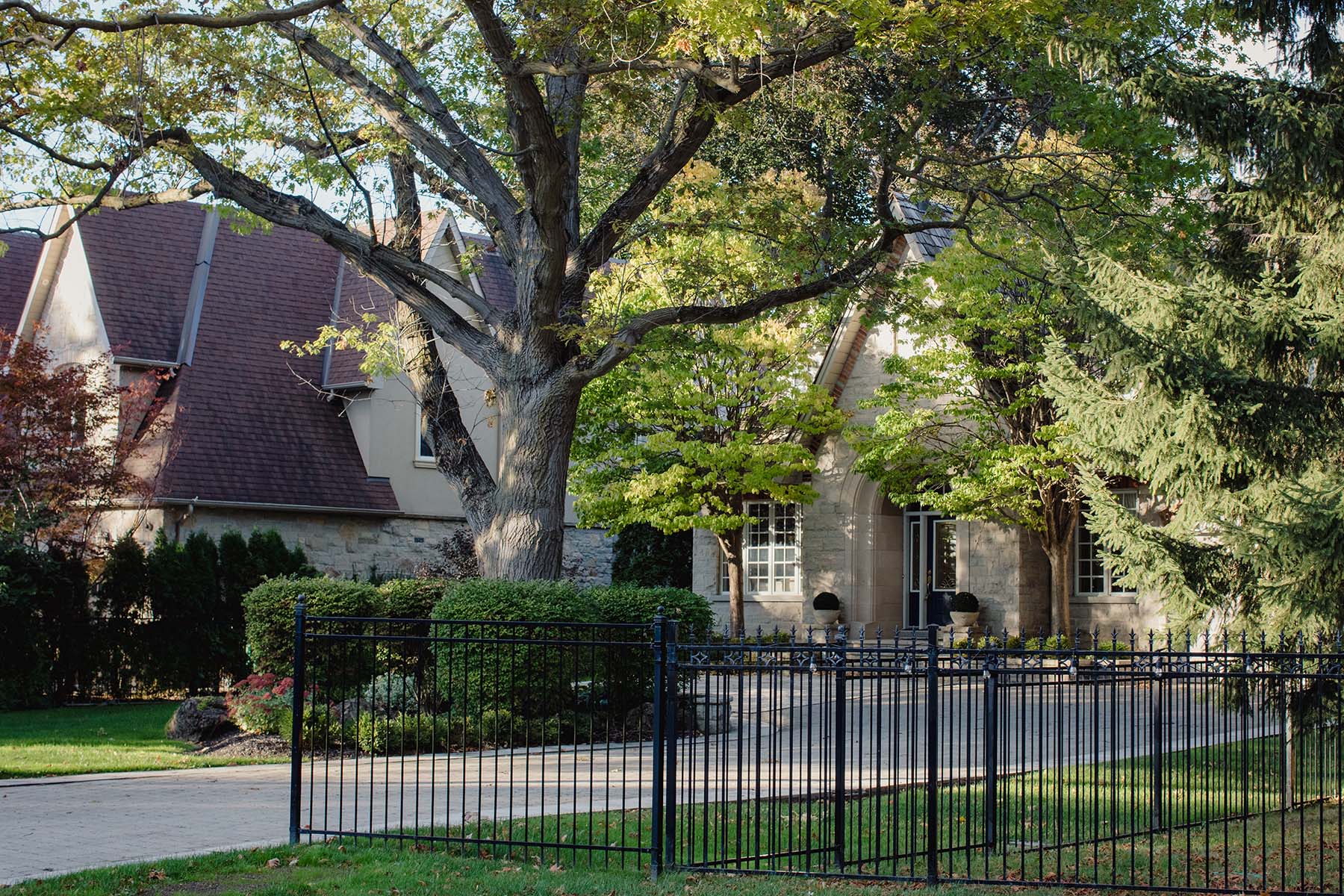
In Mississauga’s Ward 2, Candidates Spar Over Crime, Housing, and Property Taxes
With popular incumbent Alvin Tedjo stepping aside for a mayoral run, 14 candidates present their vision for one of the busiest, and wealthiest, wards in the city.
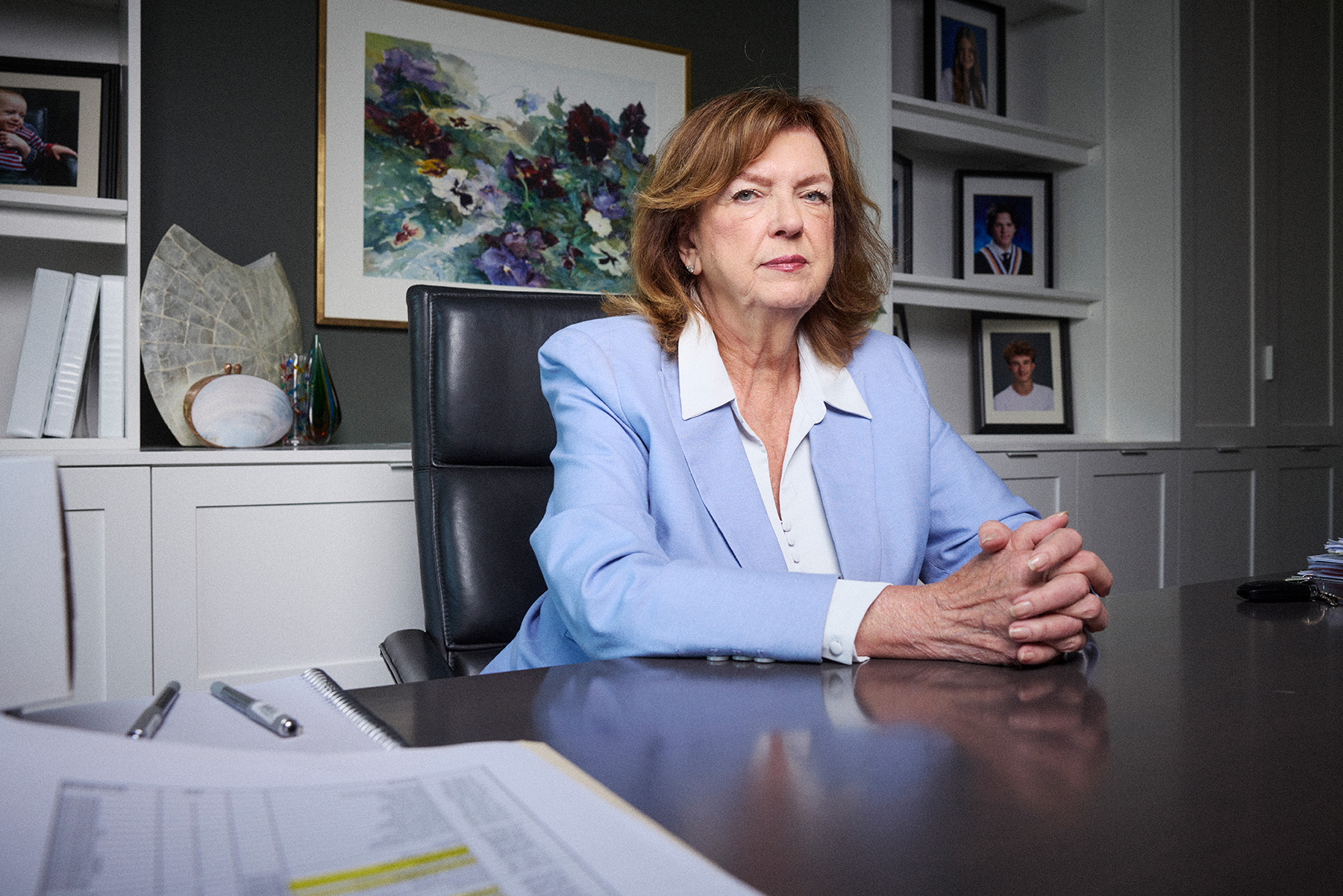
Carolyn Parrish Loves a Fight—Now She’s Up Against Her Fiercest Opponent
The Mississauga mayor has never backed down from a battle—not from Hazel McCallion, George W. Bush, or the Peel police budget. In the heated rematch against Bonnie Crombie, however, some wonder if all the scrapping has become an end in itself.
Candidate Tracker: Mississauga 2026
The only place to find reported, fact-checked biographies and platform summaries for every candidate running in the 2026 Mississauga municipal election. No AI, no campaign talking points, just a team of journalists double-checking candidate records and analyzing policies.
Mississauga Mayoral 2026 Candidates
Fact-checked biographies and platform summaries for all the candidates for mayor of Mississauga.
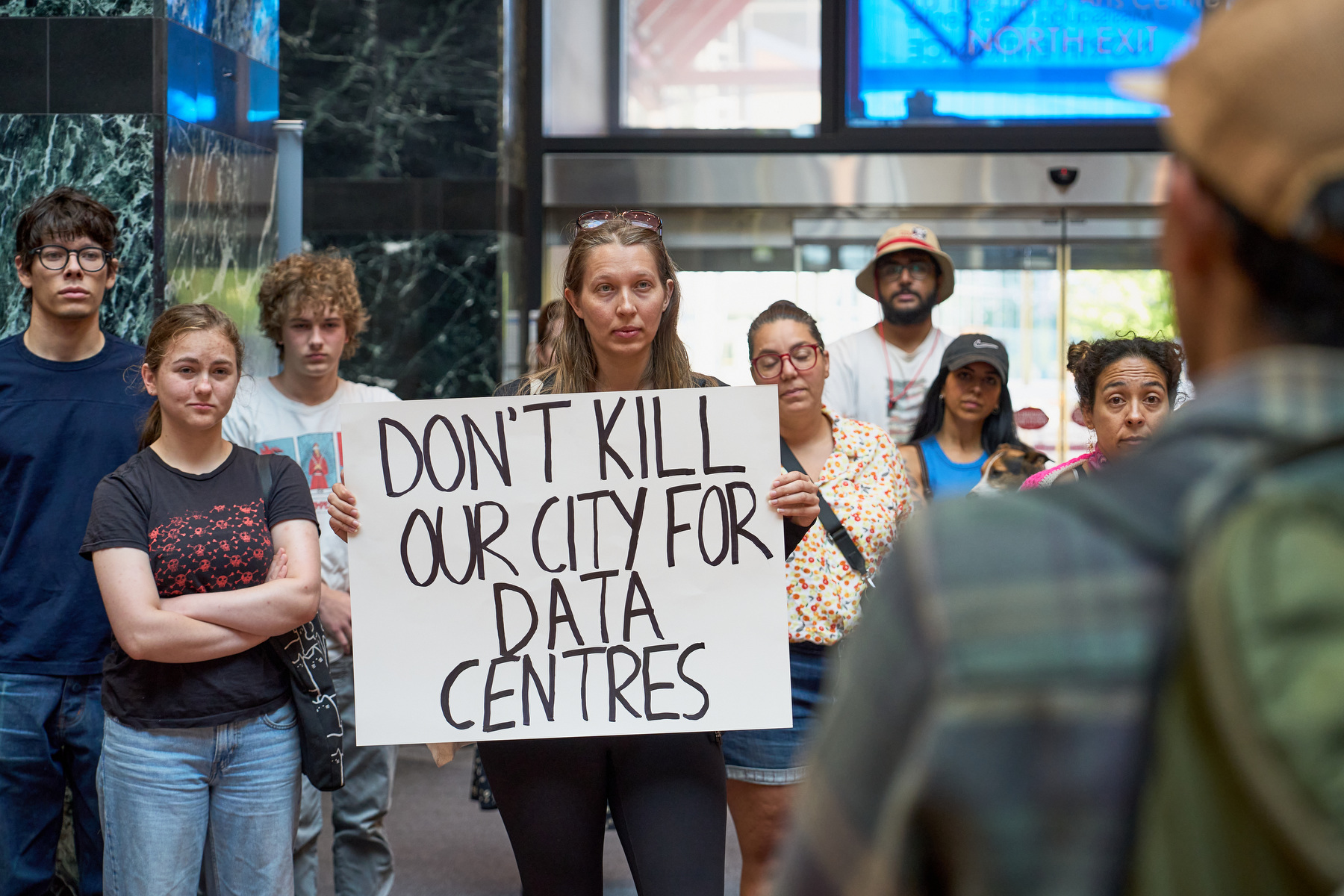
The Data Centre Backlash Has Come to Mississauga—and It’s Swallowing the Municipal Election
Ahead of this week’s vote on whether to freeze data-centre development for a year, city councillors seeking re-election are suddenly taking a firm stance in response to public outcry
How to Vote in the 2026 Mississauga Election
Everything you need to know about voting for mayor, councillor, and trustee in October’s municipal election
More from this issue
In Mississauga’s Ward 2, Candidates Spar Over Crime, Housing, and Property Taxes
With popular incumbent Alvin Tedjo stepping aside for a mayoral run, 14 candidates present their vision for one of the busiest, and wealthiest, wards in the city.
Dianne Saxe Needs to Convince Danforth Voters She’s No Outsider
A walk through Toronto-Danforth with the former environmental lawyer, who jumped into the ward race just minutes before registration closed.
Brad Bradford Seems Angry—He’s Betting Torontonians Are Too
Former staffers say he drove them to tears. Colleagues say he’s a bully. The Bradford campaign says his passion is just what this city needs.
The Incumbent Is Under OPP Investigation. In Scarborough Southwest, Voters Are Focused on Other Issues
In a rematch of a close 2023 by-election, incumbent Parthi Kandavel and Kevin Rupasinghe offer very different visions of a growing suburb.
The Battle Over Sixplexes in Scarborough North
Last year, the ward became the first suburban ward to legalize the construction of sixplexes as-of-right. Now, in a race between incumbent Jamaal Myers and former Liberal MPs Shaun Chen and Han Dong, it’s become the defining issue of the election.
Carolyn Parrish Loves a Fight—Now She’s Up Against Her Fiercest Opponent
The Mississauga mayor has never backed down from a battle—not from Hazel McCallion, George W. Bush, or the Peel police budget. In the heated rematch against Bonnie Crombie, however, some wonder if all the scrapping has become an end in itself.
Candidate Tracker: Mississauga 2026
The only place to find reported, fact-checked biographies and platform summaries for every candidate running in the 2026 Mississauga municipal election. No AI, no campaign talking points, just a team of journalists double-checking candidate records and analyzing policies.
Candidate Tracker: Brampton 2026
The only place to find reported, fact-checked biographies and platform summaries for every candidate running in the 2026 Brampton municipal election. No AI, no campaign talking points, just a team of journalists double-checking candidate records and analyzing policies.
Toronto Mayor Olivia Chow: What She’s Done and What She’s Promising in 2026
Olivia Chow’s platform for re-election is all about building on her achievements, like a renovictions bylaw, TTC fare freeze, and new funding deal with the provincial government.
Brad Bradford, Toronto Mayoral Candidate, Campaigns For Change
Mayoral hopeful Brad Bradford’s platform for 2026 revolves around crime, congestion and cost of living.