


The pay was paltry to begin with. Now, it’s been slashed by more than half. The position itself has been enfeebled, with far less clout and fewer functions, yet there are considerably more people to answer to. And like many details about the newly altered role, the start date is uncertain.
Such is the job description for Toronto’s English-language school board trustees.
Since its ongoing takeover of Ontario’s largest school boards, including the public and Catholic boards in Toronto, the Ford government has introduced measures that severely diminish the role of trustees. Under its Putting Student Achievement First Act, which received royal assent this May, the province is capping trustees’ honoraria at $10,000. (Toronto District School Board trustees previously received about $25,000.) It has limited the number of elected trustees in every board to 12—a move aimed specifically at the Toronto District School Board that nearly doubles the geographical area each trustee in that board will represent. It has reduced trustees’ authority, including by stripping their ability to fire their boards’ chief executive officers (formerly directors of education) without the written approval of the education minister, and by shifting more control over board budgets to the CEOs and the minister.
And most recently, the government has proposed a regulation that would require the CEOs to confirm any trustees’ motions or board decisions before they take effect.
To top it all off, the government has given no indication as to when it will end its board takeovers. While they’re under provincial supervision, the job of Catholic board trustees has been limited to weighing in on denominational matters, and public board trustees have been sidelined entirely. It’s unknown when the trustees who are elected in the upcoming Oct. 26 municipal elections will be able to assume their full duties.
Given these circumstances, it’s hard to see why anyone wants to compete for a trustee position, a job that’s traditionally been considered an opportunity to guide the local governance of public education and, for some, a stepping stone to higher political office. Across Toronto, far fewer candidates are running for trustee this year than in previous elections.
Yet as the Ford government increases its control over school boards, some candidates say it’s more important than ever to step up as local representatives of their communities.
Join the thousands of Toronto area readers who've signed up for our free newsletter and get award-winning local journalism delivered to your inbox.
"*" indicates required fields
Fewer Candidates at the Toronto District School Board
A total of 71 candidates are running for the TDSB’s 12 ward positions this year. There are no uncontested TDSB wards. In 2022, there were 136 candidates across 22 wards.
This year, at least three trustees, Zakir Patel, Sara Ehrhardt, and Debbie King, are seeking a seat on city council instead.
King, who is running for councillor in Ward 4—Parkdale High Park, said she remains invested in public education, but given the limitations the province has placed on trustees, she sees a greater opportunity at city hall to have a bigger impact on families’ lives. King worries that the reduced honoraria for trustees will limit who has the opportunity to run for those positions. In the past, the roughly $25,000 that TDSB trustees received might have helped offset childcare costs or lost wages when trustees attended board meetings. The reduction could eliminate an entire level of representation for certain voices in this diverse city, she said. “And that’s a big deal.”
In addition to King and the others seeking a seat at city council, long-serving trustee Shelley Laskin (former Ward 8) is among those not running for re-election this year. Laskin has served 22 years on the board.
Despite the diminished role and pay, Matias de Dovitiis is one of nine trustees seeking re-election this year at the newly shrunken TDSB. Until this spring, the TDSB was the only board in the province that had more than 12 trustees, with a total of 22, each representing a single ward in the city.
If he’s re-elected, with the new provincial maximum of 12 trustees per board, de Dovitiis would be responsible for nearly double the geographical area of his former ward, Humber River-Black Creek. That ward has now merged with Etobicoke North to form TDSB Ward 1.
Both de Dovitiis and the Etobicoke North incumbent Dennis Hastings are competing for the Ward 1 position.
De Dovitiis acknowledged he is uncertain whether the province even will let trustees back at the board, which was put under supervision in June 2025. But if it does, even in a reduced role, he said trustees will have an opportunity to call out what he sees as the province’s contradictions. “They’ve had a year to fix things, and we get to show the public that they didn’t know what they were doing, and that the real solutions are much more difficult and require funding,” he said.
The provincially-appointed supervisor Rohit Gupta has reduced the TDSB’s 2026-27 spending by $59.5 million to produce a $3.6-billion budget, according to a board report. But it still projects a relatively modest deficit of $15 million.
As part of its cuts, the TDSB eliminated some 218 central staff positions this spring, and it’s expected to cut nearly 800 jobs this fall. De Dovitiis points out that none of these decisions were made openly. “The worst thing [about] supervision has been the secrecy,” he said.
Regardless of how much—or how little—governance power trustees will possess, having a sitting board allows space for public discussion, interaction, and debate, he said.
Curtis Jack, a first-time candidate in Ward 11 (encompassing Scarborough North and Scarborough Centre), said the province’s changes to public education over the past year have been a major motivator for him to run. “I think there needs to be some increased grassroots involvement in things of this nature,” he said.
As a parent council member at his children’s school, he’s seen the frustration of his fellow parents over the board’s funding constraints and its overhaul of the TDSB’s long-standing model schools program, which provided greater support to schools in neighbourhoods with the highest needs. He said he’d like to see more control wrested back from the province to local communities.
Toronto Catholic District School Board
At the Toronto Catholic District School Board (TCDSB), there are 31 candidates running for trustee this year, compared with 42 in 2022. Two are expected to be acclaimed; incumbents Nancy Crawford in Ward 12 and Frank D’Amico in Ward 6 are unopposed.
In total, eight trustees are looking to reclaim their spot among the board’s 12 trustee positions. Three trustees, Joseph Martino, Daniel Di Giorgio, and Kevin Morrison, are running instead for city councillor this year.
Markus de Domenico of Ward 2 is among those seeking re-election. When the province took over the TCDSB in June 2025, it scapegoated trustees with allegations of misspending, he said. “They wanted…to blame us for the deficits that the government created themselves through underfunding.”
As in the case of other boards placed under supervision last June, a provincially-ordered investigation of the TCDSB’s finances showed no evidence of serious financial mismanagement. The province nevertheless based its decision to takeover the board on that investigation, which found the TCDSB was expected to have an accumulated $75 million-deficit at the end of the 2024-25 school year. Reporting by The Local has also shown that many of the boards under supervision are the largest in the province and, owing to a funding formula that critics say is long overdue for review; these boards tend to receive the lowest per-student funding.
Last fall, however, after the takeover, de Domenico was scrutinized for the expenses he’d claimed over seven years, reportedly worth around $90,000, for items that included TV wallmounts and an Apple watch band—expenses he said were incurred and vetted by TCDSB staff. He received a letter from Education Minister Paul Calandra, asking him to return $6,700-worth of items. De Domenico told The Local that he responded, not to the minister, but to the board immediately to return some of the items. “I packed up a bunch of stuff that wasn’t really due for another full year,” he said, explaining that trustees are typically allowed to use expensed items until the end of their term, after which they’re meant to either return them or buy them. “I’ve always abided by that policy,” he said.
(The Toronto and York Region Labour Council countered Calandra’s criticisms of trustee expenses with a press release highlighting the minister’s own expenses, including a $23,000 community barbecue and thousands of dollars in hotel stays in Toronto. The minister, the labour council pointed out, lives in Markham.)
De Domenico sees the issue of expenses as a distraction from the real issue: the province’s underfunding of the education system.
Since the takeover, supervisor Frank Benedetto has reduced the board’s spending for 2026-27 by $25.8 million to produce a $1.3-billion budget, according to the TCDSB’s budget estimates. But the board is still projecting a deficit of $39.5 million, which is just $100,000 smaller than its 2025-26 deficit.
Some of those cost-cutting measures have been highly unpopular, including bussing efficiencies that require changing school bell times, cutting the TCDSB’s international languages program from its daily curriculum, and phasing out its legacy Fifth Block reading intervention program.
First-time candidate Teresa Colonna, who is running in Ward 10, said she’s interested in advocating for her community, regardless of the title conferred through trusteeship. She said she believes children must be at the core of every decision, and that teachers need to be heard, as well. “We can’t have happy students if we don’t have happy teachers,” she said.
She also said she believes the board could do a better job of representing Catholic values. “We can teach our kids ABCs and one, two, threes. But if we are not raising compassionate, kind human beings, what are we doing?” she said.
___
Additional data collection by Inori Roy and analysis by Ilyass Mofaddel.
More from this issue
Lessons From Covering Toronto’s First AI Election
I’ve looked at nearly every candidate running for municipal election across three cities. A lot of their campaigns look the same. What does it mean for democracy?
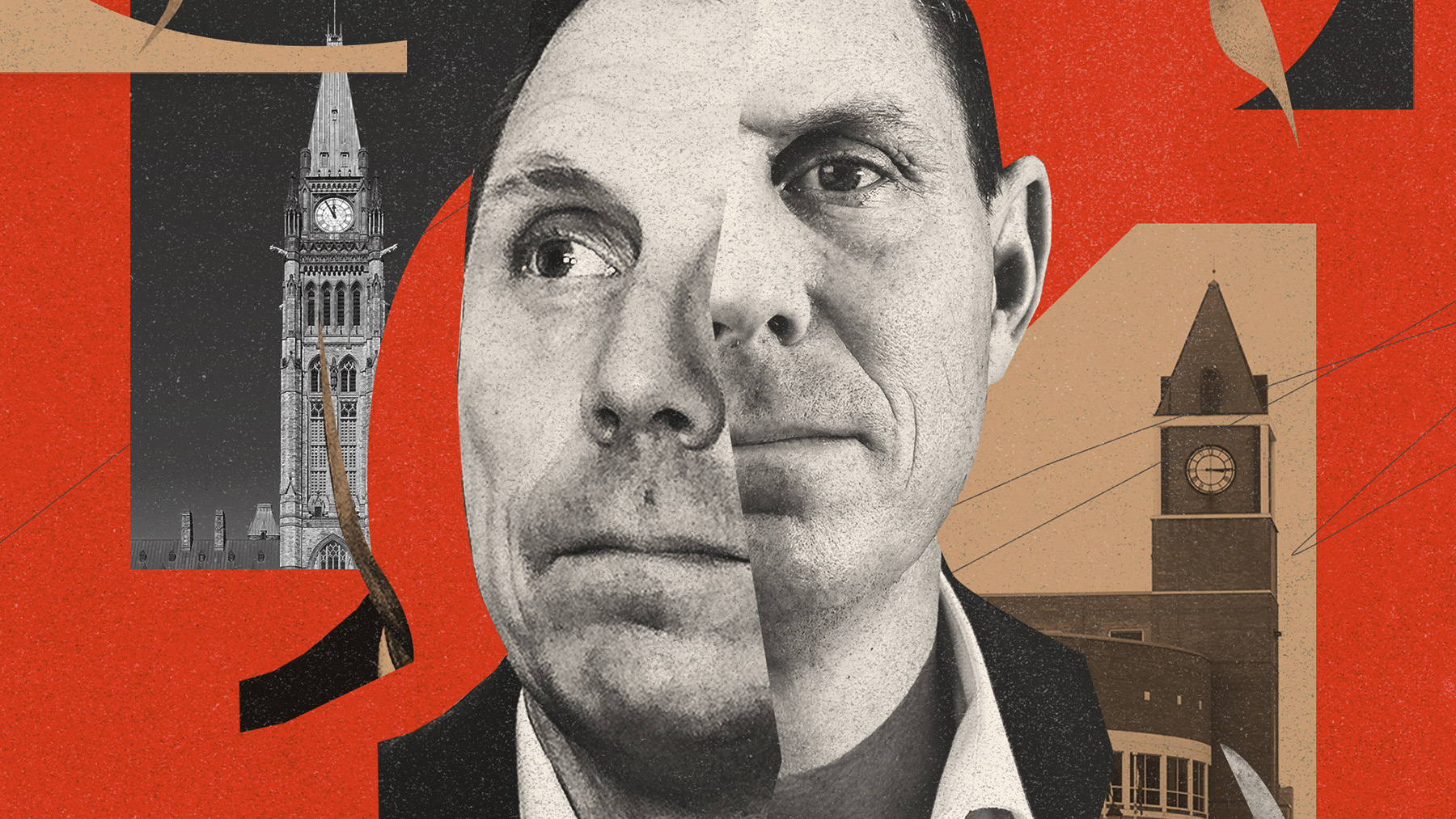
The Two Patrick Browns
Eight years into a scandal-filled tenure as Brampton’s mayor, one version of Patrick Brown is a tireless public servant who transformed a dysfunctional city hall. The other is something else entirely.
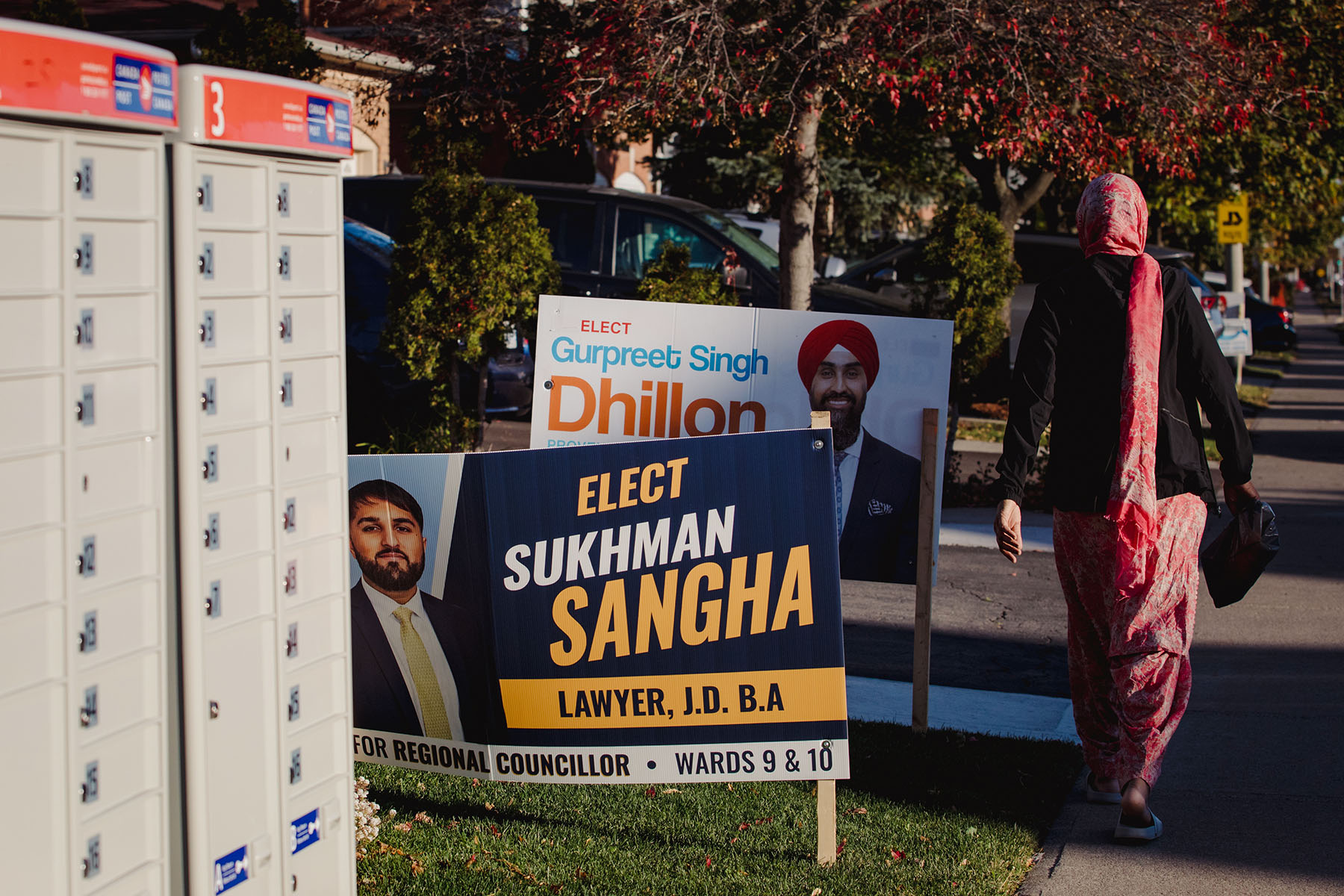
In Brampton’s Northeast, Old Allegations Loom Over the Race for Regional Councillor
The race for regional councillor in Wards 9 and 10 is one of the most crowded in the city. One frontrunner is campaigning in spite of a lingering controversy at city council.
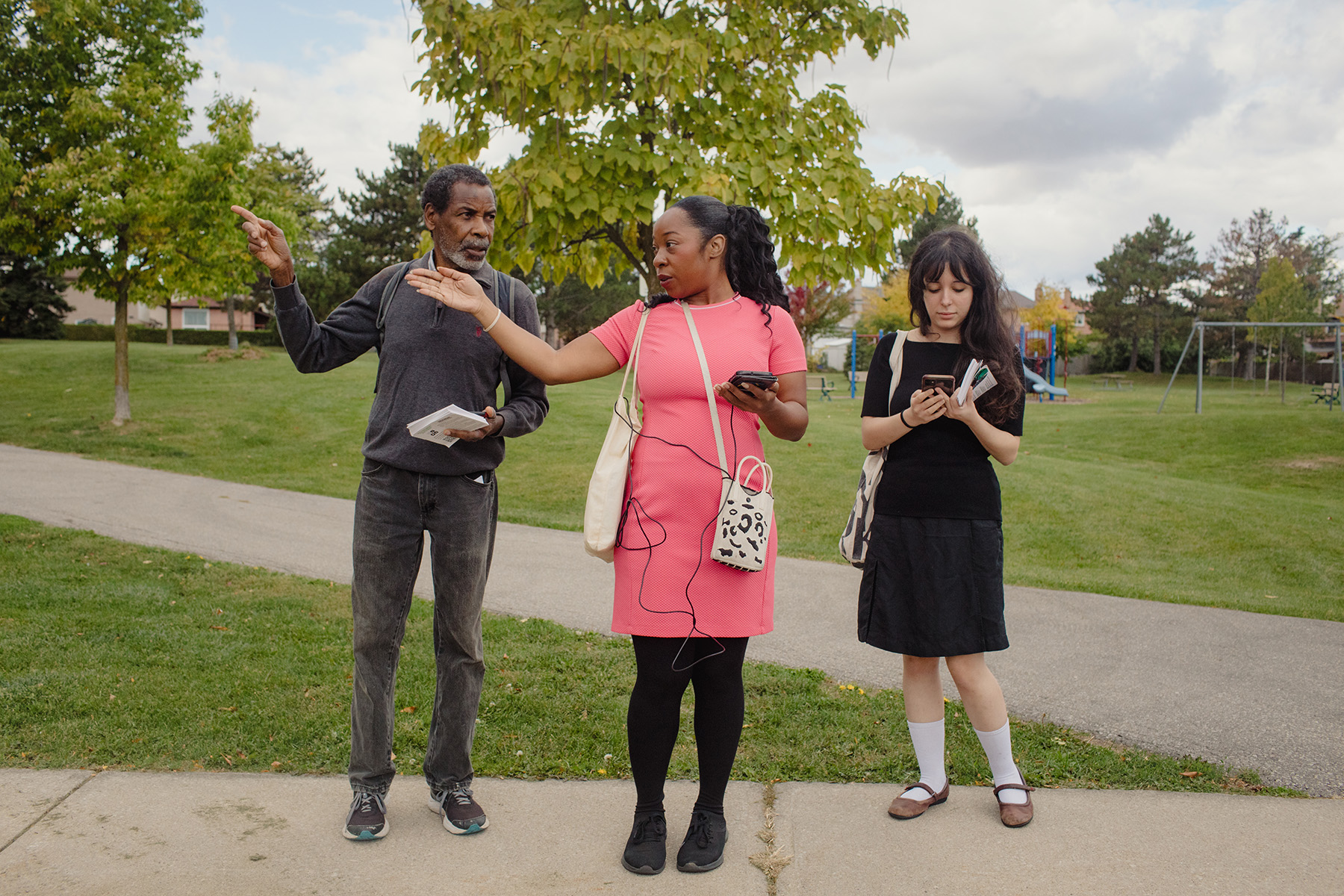
The Young Progressives Hoping to Unseat Vincent Crisanti in Etobicoke North
Policy analyst Chloe Brown made a name for herself challenging some of the biggest names in the city during her 2022 and 2023 mayoral runs. Now, she faces a different challenge—convincing residents of the neighbourhood she grew up in to send her to city hall.
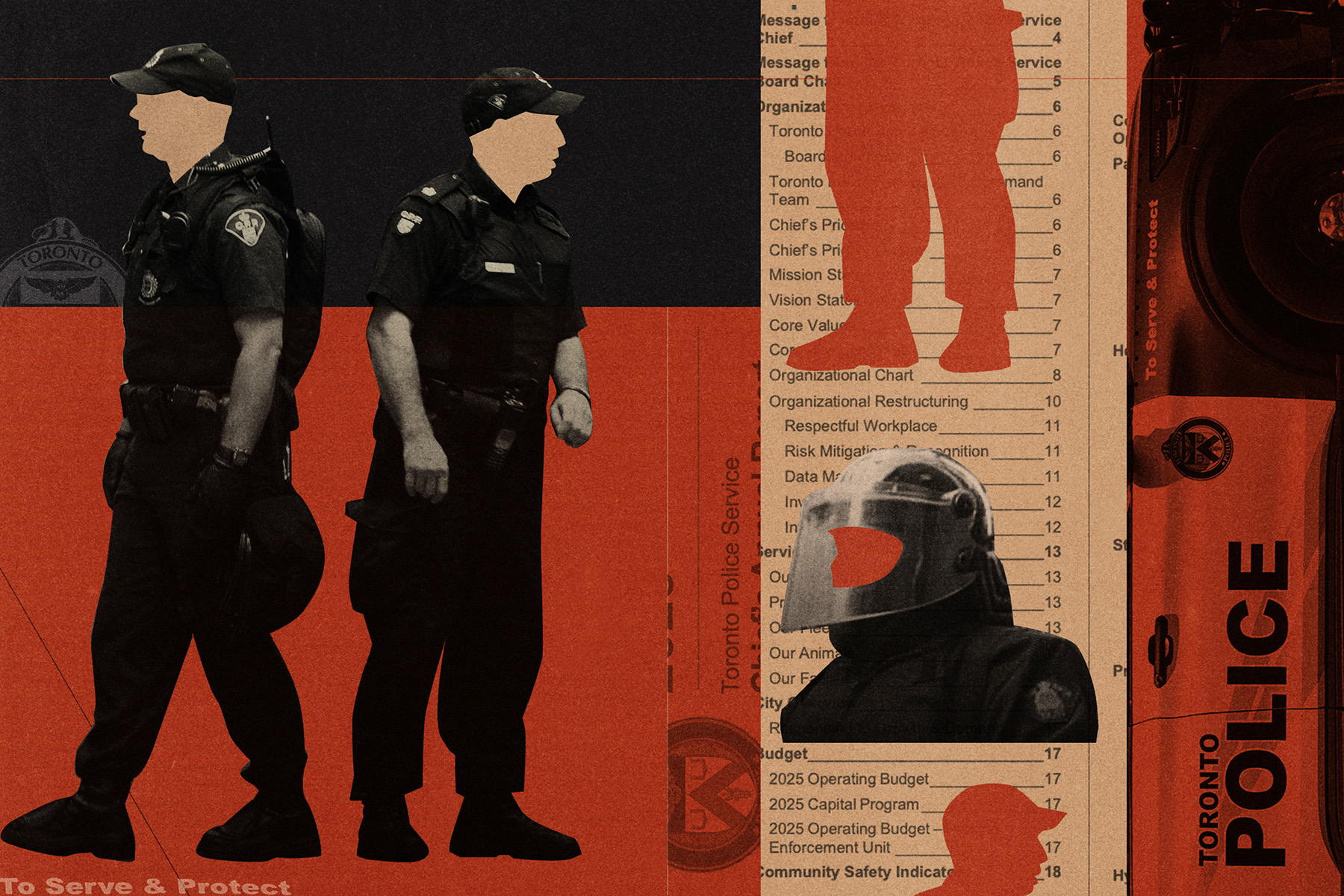
The Biggest Winner of This Election: The Toronto Police
Despite being rocked by one of the biggest scandals in its history, the city’s police force is getting nothing but support from major candidates in the municipal election.
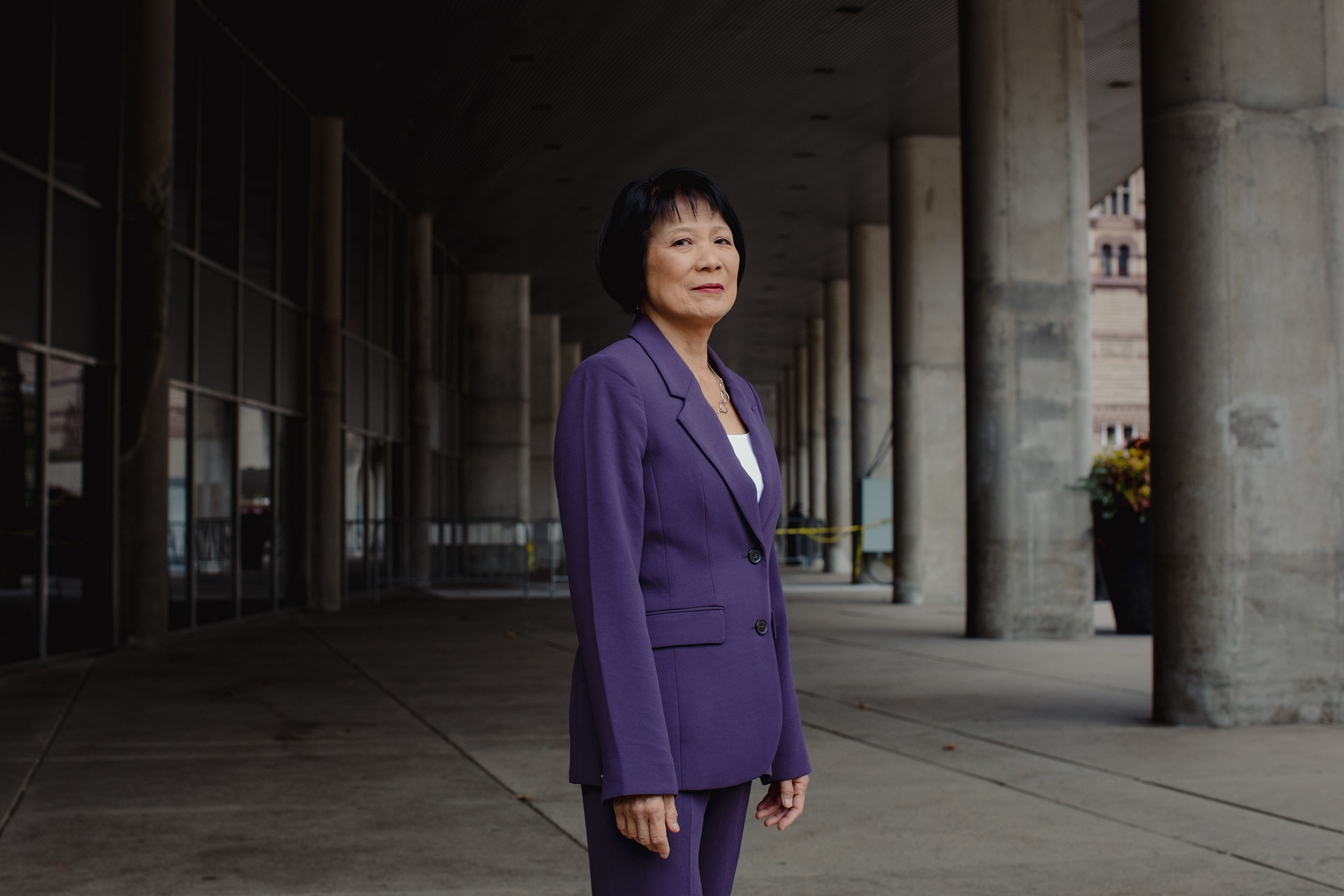
Has Olivia Chow Been an Effective Mayor?
I followed Olivia Chow over a summer of announcements and events to try to understand how she's fared as a leader. I came back with a more fundamental question about what it means to be mayor of Toronto when real power lies elsewhere.
In York South-Weston, Old Opponents Face Off for a Third Time
Frances Nunziata, Toronto’s longest serving city councillor, is ready for another term in office. Do her constituents feel the same?
North of the Tracks: The Election From Main and Danforth
With thousands of new units coming, Danforth Village in the corner of Beaches-East York is a microcosm of a changing city. In today’s sprawling wards, can voters make their local issues heard?
In Mississauga’s Ward 2, Candidates Spar Over Crime, Housing, and Property Taxes
With popular incumbent Alvin Tedjo stepping aside for a mayoral run, 14 candidates present their vision for one of the busiest, and wealthiest, wards in the city. Photos by Chloë Ellingson / The Local
Dianne Saxe Needs to Convince Danforth Voters She’s No Outsider
A walk through Toronto-Danforth with the former environmental lawyer, who jumped into the ward race just minutes before registration closed.