
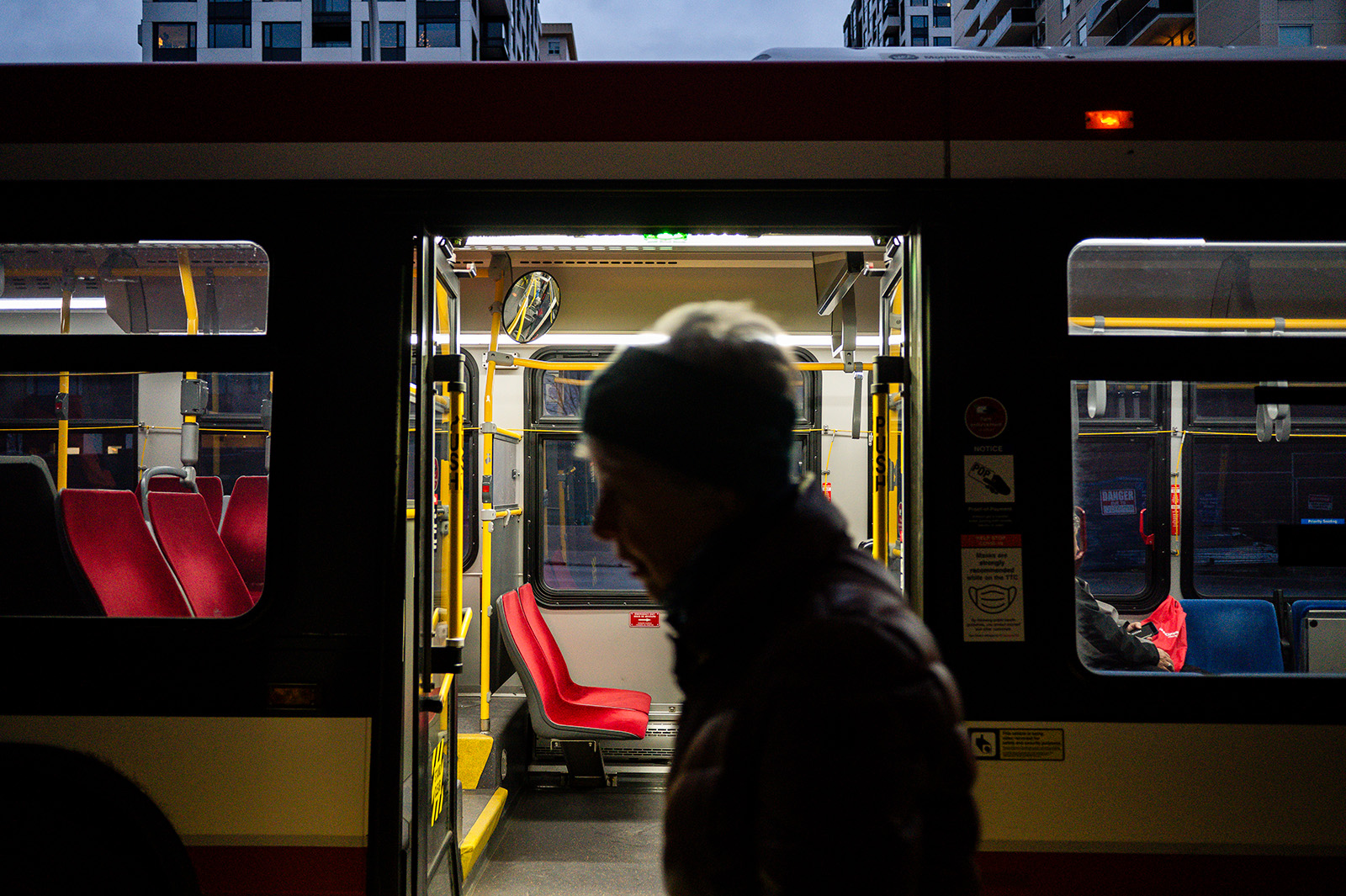
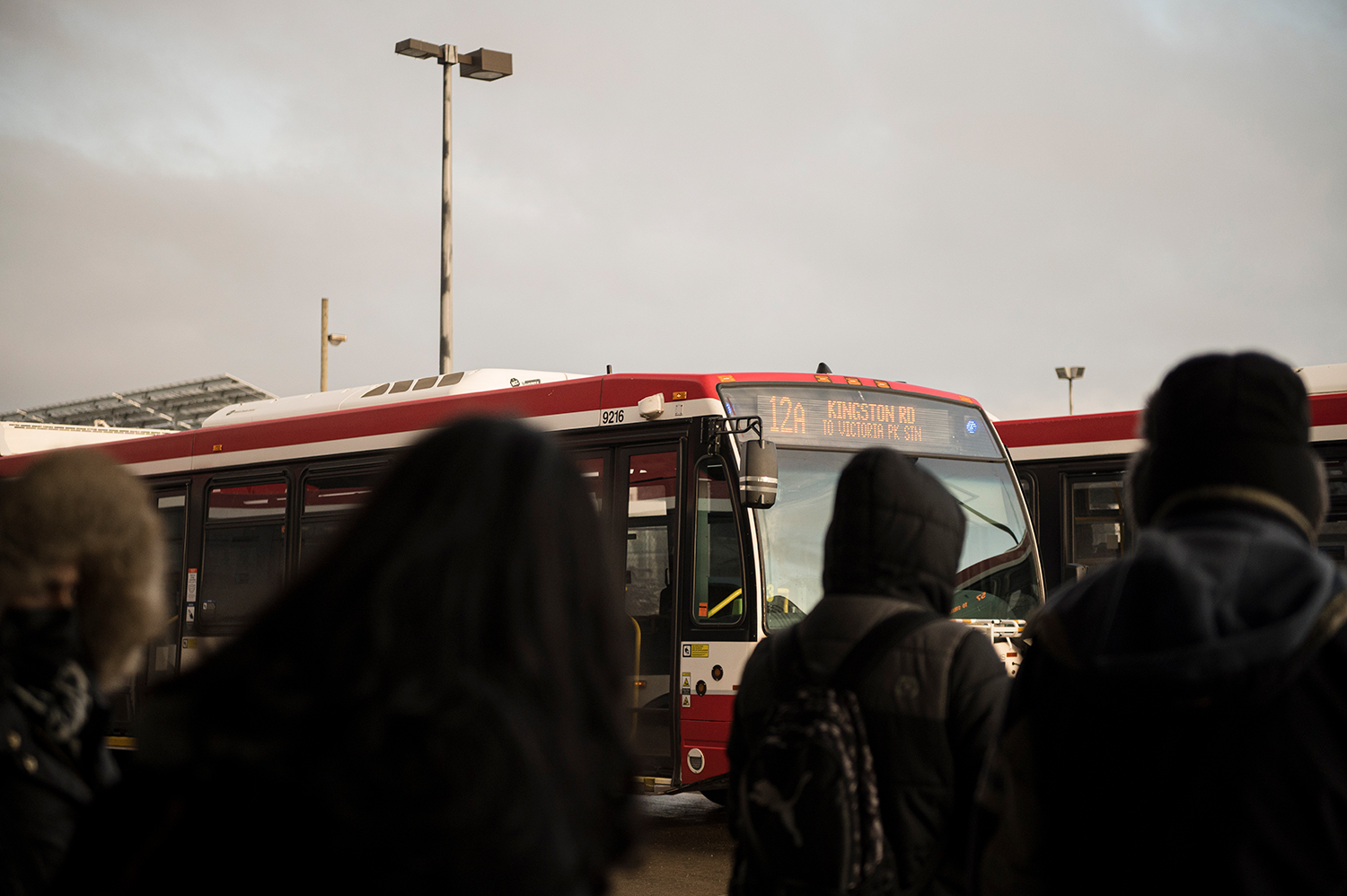
After a decade with the Toronto Transit Commission (TTC), there are still elements that Allison loves about her route as a bus driver. But since the COVID-19 pandemic, her stress level rises as soon as she settles into her seat behind the wheel, and it stays that way until she clocks out. She finds herself just waiting for the next wave of inevitable chaos. Often, she leaves the TTC washroom at shift’s end and finds herself accidentally stepping on a nest of blankets, not knowing what might be inside.
“Honestly, your heart is beating because you don’t know if this person is sleeping, or they’re dead. That weighs heavily, and I don’t care what anybody says,” she tells The Local. (“Allison” is using a pseudonym so she can speak freely without fear of professional reprisal.)
Allison’s experience, and that of other frontline TTC workers, is a fallout of what urban planner David Cooper calls an increase in “societal complexity” colliding with public transit systems across North America. In other words, a series of social challenges have left many public urban spaces—such as libraries, parks, and transit systems—serving as unofficial shelter for people who simply have nowhere else to go.
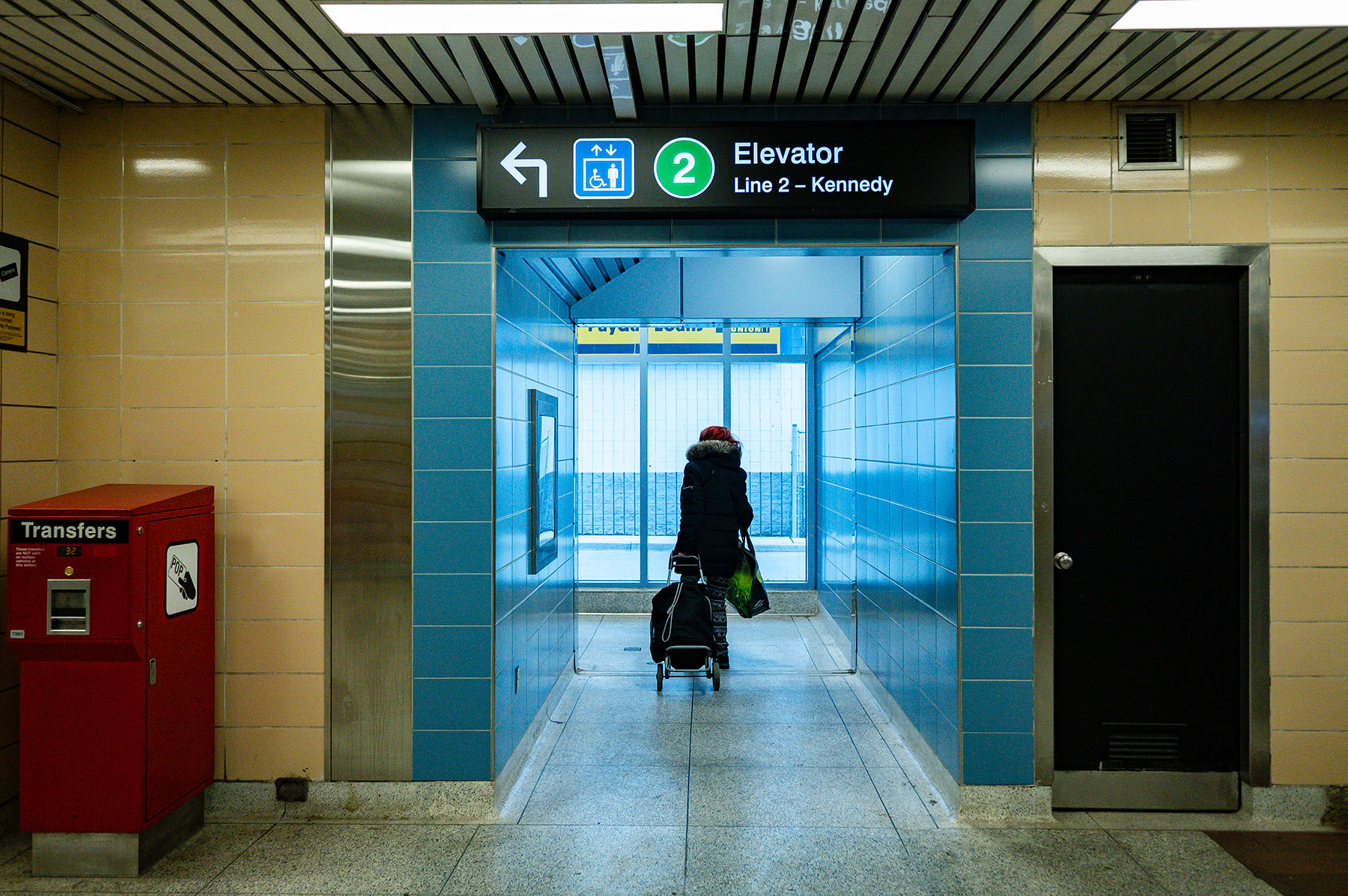
On the TTC, this looks like an increase in substance use on transit properties, riders experiencing mental health crises, and people using subways and streetcars for shelter. According to its own data, last year designated TTC employees administered naloxone, the drug used to reverse opioid overdoses, to riders on 62 separate occasions, up from just seven reports of drug overdoses in 2021. Special constables made 96 apprehensions under the Mental Health Act in 2020, steadily increasing to 215 in 2024. A joint investigation between CBC and the Investigative Journalism Foundation last month found a dramatic jump in reported assaults and violent crime between 2016 and 2024.
All of this means expanding responsibilities for frontline transit workers like Allison, many of whom feel pressure to act more like social workers. Once tasked with driving buses or sweeping subway station floors, they now find themselves tending to passengers’ mental health crises, struggling to connect unhoused riders with shelter support, diffusing outbursts, or, at worst, reporting someone who’s unconscious. As the city faces unprecedented rates of homelessness, a crippling budget deficit, and more vulnerable riders seeking shelter on transit property than ever, it must ask itself: How much can the TTC be expected to fill the gaps of a rapidly dissolving social safety net?
In April, Cooper, who consults on transit planning issues through his firm Leading Mobility, presented a report to the TTC board about these challenges—and the potential solutions transit agencies have implemented, or at least tried to implement, in response.
“Transit agencies are experiencing mission creep as they take on complex public health and outreach responsibilities beyond their original scope,” Cooper told the TTC board.
The TTC has tried various approaches to handling these social challenges, mostly through the lens of passenger safety. Since 2021, the TTC has hired at least 32 additional special constables, part of a safety approach focused on “enhancing high-visibility presence on [the TTC],” a decision not everyone supports. The Ontario Human Rights Commission penned a letter to then-TTC chief executive officer Rick Leary, expressing concern that increased law enforcement presence on TTC property would result in over-policing and discrimination against already-marginalized communities riding the network. But the hiring went ahead, following a number of high-profile incidents in 2022 and early 2023, including several stabbings and a woman who died in hospital after being set on fire aboard a bus.
In 2023, the City of Toronto, TTC, and LOFT Community Services launched a pilot program designed to train transit staff in de-escalation tactics and provide “brochures” to vulnerable riders, listing various social service facilities and their offerings. The TTC also added more security cameras, which now total more than 32,000 across the system. Last month the City hired crisis workers through its social development division, who will be stationed 24/7 at Spadina, Union, and Bloor-Yonge Stations as part of a new safety strategy.
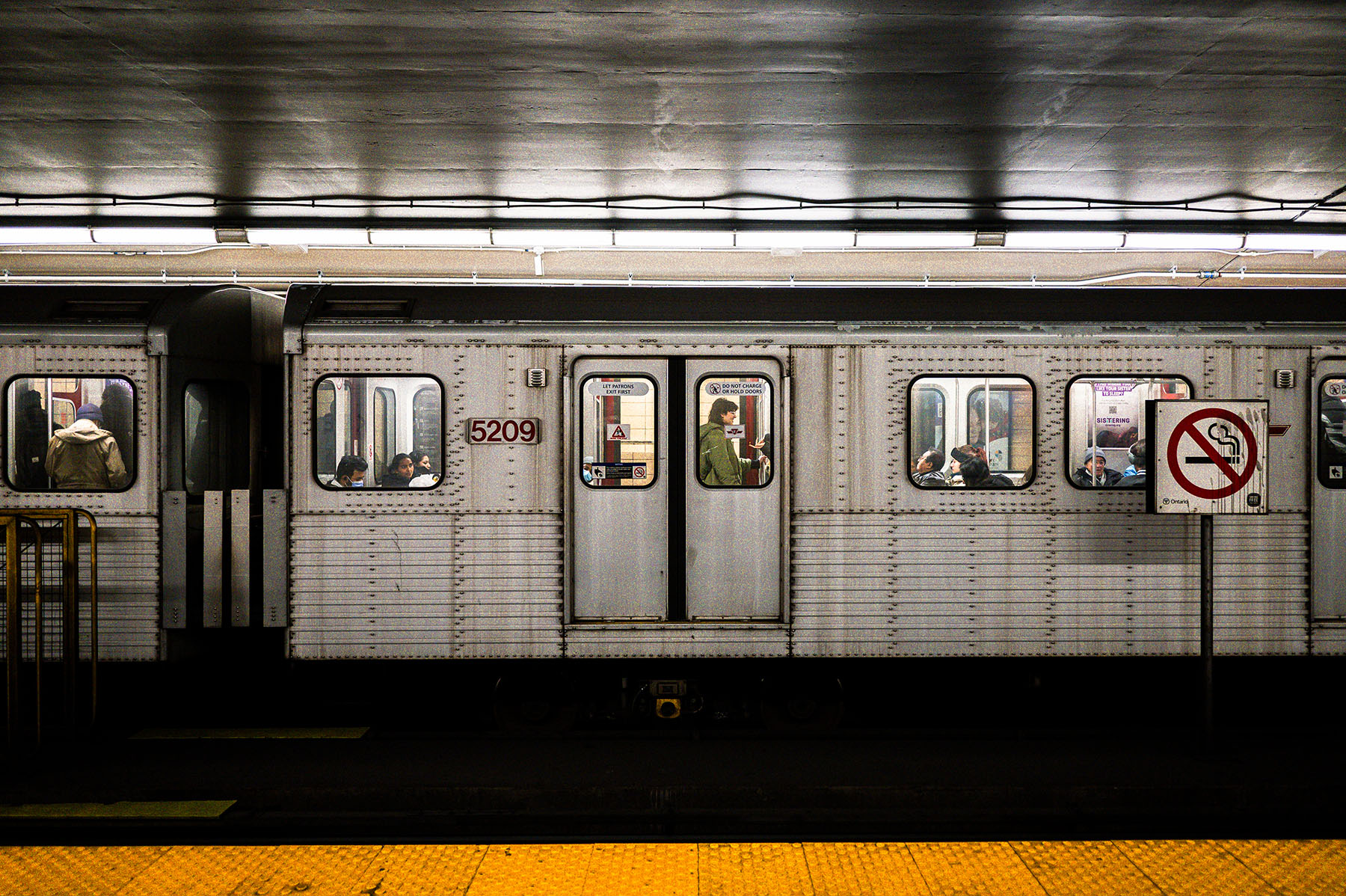
It’s too early to tell which, if any, of these strategies have been effective, said the TTC’s chief safety officer Betty Hasserjian, as she delivered a presentation of her own at the April TTC board meeting. The TTC is still in the process of evaluating its “social supports response,” in response to these challenges.
The TTC is not the only transit agency in North America throwing various strategies at the wall to see what works, and what doesn’t. New York, Edmonton, and Calgary have also increased the number of law enforcement officers in stations and on board transit vehicles. Other agencies, like the Los Angeles Metro and Vancouver’s TransLink, have tried to prevent crime through environmental design, making changes to the flow, lighting, and sightlines within transit properties to deter trespassers. In Philadelphia, the Southeastern Pennsylvania Transportation Authority (SEPTA) created a warming centre inside one of its subway stations, which is staffed full-time and provides food, shower facilities, and primary medical care to approximately 3,000 visitors annually.
But there’s little consensus about which of these strategies work best—mostly because of poorly-collected data, Cooper told The Local in a follow-up interview. “We hastily and very quickly mobilized to do partnerships,” he says. “But it’s hard to assess them when we don’t have clear objectives.”
Join the thousands of Torontonians who've signed up for our free newsletter and get award-winning local journalism delivered to your inbox.
"*" indicates required fields

For Sam, a train driver for more than two decades, it seems clear that many of these solutions, especially the social service partnerships, are just “smoke and mirrors.” (Sam is using a pseudonym in order to speak freely about his job).
“It’s only a few people to cover 50 stations and 100 bus routes,” he says. “They’re fighting a battle they can’t win. It’s like putting a Band-Aid on it to say, ‘Look at us, we’re doing something good.’ But it’s not enough.”
Sam remembers how the job used to be, when he felt comfortable driving the train with his compartment door open and chatting to curious kids about his work, when he didn’t dread doing a final walk down the aisle, fearful of possibly finding a body.
“It’s actually kind of sad. It used to be so fun and amazing driving the train,” he says. “Now, a lot of people don’t feel safe. I mean like operators and the public. So we’re losing all these good interactions with people every day.”
Sam isn’t the only one feeling that precarity and sense of responsibility toward his vulnerable riders. In 2021, a petition signed by more than 230 TTC operators demanded more mental health workers, outreach specialists, and overdose response teams in response to what they called a growing crisis of unhoused and disorderly riders.
“The TTC has basically become a homeless shelter. I say that in the kindest possible way,” says Sam. “Obviously I would love everybody to get the support and the help they need, but as operators, it puts us in a precarious position.”
The business of transit, says Sam, is to move passengers safely between destinations, not to provide housing or crisis care. Not only does this added complexity impact operations at a functional level—in July, 51 percent of subway delays were caused by external factors, such as disorderly patrons or unauthorized persons at track level—but it leaves frontline workers anxious, distracted, and in some cases, feeling uncertain about how to ethically tackle their new tasks.
“I only have two options. I either internalize this, and every day I just keep piling on and eventually I go nuts. Or I go home and I tell my family, and that’s unfair because I don’t want to desensitize them or make them afraid,” says Sam. “It’s kind of sad because a lot of us end up becoming desensitized to society because we’re literally living this every day.”
The challenges outlined by the TTC’s workers are part of a much larger problem, one unlikely to be solved by any transit agency alone. In the midst of a housing crisis, and in the wake of homelessness encampment sweeps, the Ford government’s closure of safe consumption sites, and underfunding for daytime mental health and addiction support programs, public spaces face increasing pressure. Toronto’s most recent Street Needs Assessment, released in July, found the number of unhoused people in Toronto has more than doubled since 2021, reaching 15,400 in 2024. (The premier’s office did not respond to multiple requests for comment).
“We have a situation where we don’t have enough health [supports], we don’t have enough social care, we don’t have enough supportive housing, and we have a lot of people under a lot of stress,” says Kwame McKenzie, chief executive officer of the Wellesley Institute. “So who is going to have to deal with that? At the moment it looks like the TTC.” [Ed note: The Wellesley Institute is one of the funders of The Local. This story was produced independently].
And though the TTC may be scrambling to address these changes on its own property, without more funding and support that addresses the root causes, public spaces will continue to bear the brunt of these social challenges in ways they are not equipped to, McKenzie says. “If the TTC was dealing with lots of people who had cardiac arrests…we’d be saying, ‘Hey, just a second, we’ve got lots of people turning up with cardiac arrests. What do we need to do to make sure this doesn’t happen?’ Not, ‘How do we scale up TTC workers to deal with cardiac arrests?’”
The TTC itself seems to agree with this sentiment. At the April TTC board meeting, local councillor Josh Matlow posed a rhetorical question to chief safety officer Hasserjian.
“Until every level of government more adequately addresses shelter capacity, access to shelter for asylum seekers, the safe and hospitable environment in the shelters, access to housing…access to addiction and mental health care, all of which every government has collectively failed on…are we ever going to be fully able to address this adequately, given that often the subway is the only place to go?”
The short answer is no, Hasserjian told him. Addressing the issue will be difficult, if not impossible, without the support of government partners, she said.
“The TTC is a microcosm of society. So whatever is happening out there in the city is happening on the TTC.”
Local Journalism Matters.
We're able to produce impactful, award-winning journalism thanks to the generous support of readers. By supporting The Local, you're contributing to a new kind of journalism—in-depth, non-profit, from corners of Toronto too often overlooked.
SupportAmid a tight TTC operating budget, it remains to be seen how much the agency will invest in crisis care or other safety measures for vulnerable riders. In 2025, they earmarked $31 million for safety initiatives, but a detailed 2026 budget has yet to be put forth.
Meanwhile, the agency says it recognizes the stress placed on its frontline workers as a result of these social challenges, and says the increased health and safety measures—the outreach pilots, the increased security presence, the crisis workers—are intended to make the system safer for both employees and riders.
“We have, over the last four or five years, increased our budget by tens of millions of dollars each year, strictly focused on health and safety response for both customers and employees,” TTC spokesperson Stuart Green told The Local. “The comment that employees feel that their job has changed somewhat, we’ve heard that, which is why we’ve responded the way that we have.”
“…Every year we’ve been adding to the complement of tools that we have available to deal with these sort of complex crises, but we are a transit agency first and foremost,” Green added. “We are not experts in mental health. We’re not experts in homelessness. We’re not experts in addiction, which is why we’ve asked the experts to come in.”
He says workplace violence and harassment training, as well as de-escalation training, are provided to frontline employees.
For employees like Allison, however, all the corporate training sessions imaginable can’t change the fact that the job of a transit worker is fundamentally changing, and will continue to do so, without more systemic support. One of her biggest concerns is for the new generation of transit operators, who will join the ranks in a much different landscape than she herself did, perhaps unprepared for the reality of the work.
“We get hired for being operators but we wear many hats, and that’s the thing that people don’t seem to realize,” she says. “One day I’m a counsellor, one day I’m a preacher. One day I’m an operator, one day I’m a friend…We do what we can, but like we said, there’s only so much we can do.”
Recent Stories

Meet Gabrielle McMann, Our Yearlong Journalism Fellow
The emerging journalist is our first early-career fellow, in partnership with The Philanthropist Journal

Inside the Booming Industry Selling Lifestyle Drugs Online
From erectile dysfunction medicine to hair loss treatment to weight loss drugs—a thriving online market has emerged to seamlessly deliver drugs straight to your door. But what happens when prescriptions meet profit incentives?

Saving Rhea Seegobin
For the growing number of Canadians who will get cancer in their lifetimes, the financial stress can be profound. But despite her terminal diagnosis, with the support of her community, Rhea is determined to live well.
And How Will You Be Paying for Your Baby Today?
When I first came to the pediatrics unit as an idealistic medical student, I ran into an uncomfortable reality about our universal health-care system.

How Privatized Cataract Surgery Helped Ontario’s Wealthiest—and Left Others Behind
Why a routine surgery offers a window into the possible future of care in this province.
A Clearer Look at the Cost of Care
Dispatches from the edge of the health care system, where money meets medicine and patients are customers.
More from this issue
Meet Gabrielle McMann, Our Yearlong Journalism Fellow
The emerging journalist is our first early-career fellow, in partnership with The Philanthropist Journal
Ontario’s Daycares Are Increasingly Staffed by Underqualified Hires
New data shows Ministry of Education approvals for non-ECEs working in ECE-designated roles jumped more than 1,000 percent over the last five years.

The Year in Pictures
The Local’s editors pick our favourite images of 2025
The Local’s Most-Read Stories of 2025
From features about health care and higher ed, to stories about tracking bunnies, scammers, and worms, these are our most popular stories of the year.

The Local’s 2025 Year in Review
At this reflective time of year, we gather around the flickering warmth of The Local Slack channel to discuss the year that was.
Can the Finch West LRT Keep Up With Its Promises?
After years of delay, Line 6 is now running across a historically isolated part of the city. At its launch, politicians posed, transit enthusiasts assembled, and some locals wondered if it was worth the wait.

The Fallout From Our AI Freelancer Investigation
A conversation about the future of journalism in a world of “Victoria Goldiees.”

Investigating a Possible Scammer in Journalism’s AI Era
A suspicious pitch from a freelancer led editor Nicholas Hune-Brown to dig into their past work. By the end, four publications, including The Guardian and Dwell, had removed articles from their sites.
Early-Career Journalism Fellowship
A joint undertaking of The Local and The Philanthropist Journal, the fellowship provides one Black and/or Indigenous journalist an opportunity to write about issues that matter to their community and civil society.

Neethan Shan Wins Scarborough–Rouge Park By-Election
In a crowded field, the longtime local politician was elected back to city council on a call to put Scarborough first.