



This story was removed for editorial review on Oct. 1, and republished with edits on Oct. 2. See correction note at the bottom of the article for details.
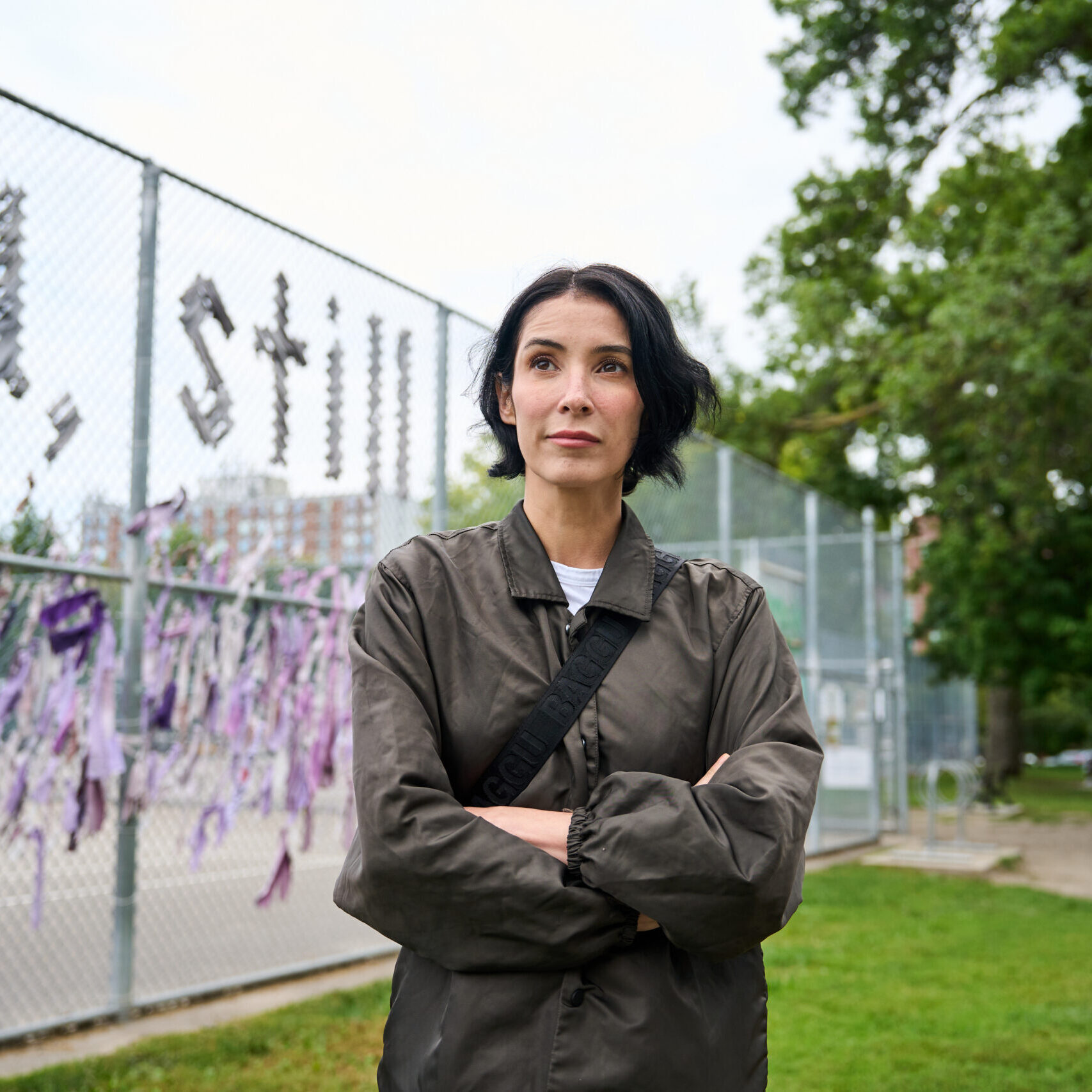
When police gathered at Trinity Bellwoods Park in June 2021, Diana Chan McNally started tweeting. “Come to Trinity Bellwoods,” she wrote, calling for help defending a homeless encampment against the police. “They will try to tire, starve us out, then move in to enforce after midnight, once we’re technically ‘trespassing.’”
She was with a group of homeless people who were living in tents in the park, and police had arrived to force them out. A group of supporters also gathered—and tried to physically prevent the evictions.
Photos and videos of the showdown shocked the public. Dozens of police officers in militarized gear pushed protesters; supporters of the encampment residents winced after being sprayed with pepper spray.
McNally said she found out about the eviction through a “rapid response” chat, which collected the phone numbers of people who were willing to support people in encampments against the police. As the coordinator of the Toronto Drop-in Network, she’d organized dozens of free public spaces where people living in poverty could use the bathroom, do laundry, and eat decent meals during pandemic lockdowns.
That summer in 2021, Toronto’s police continued to drag homeless people out of parks at Lamport Stadium and Alexandra Park. And every time they did it, McNally was there.
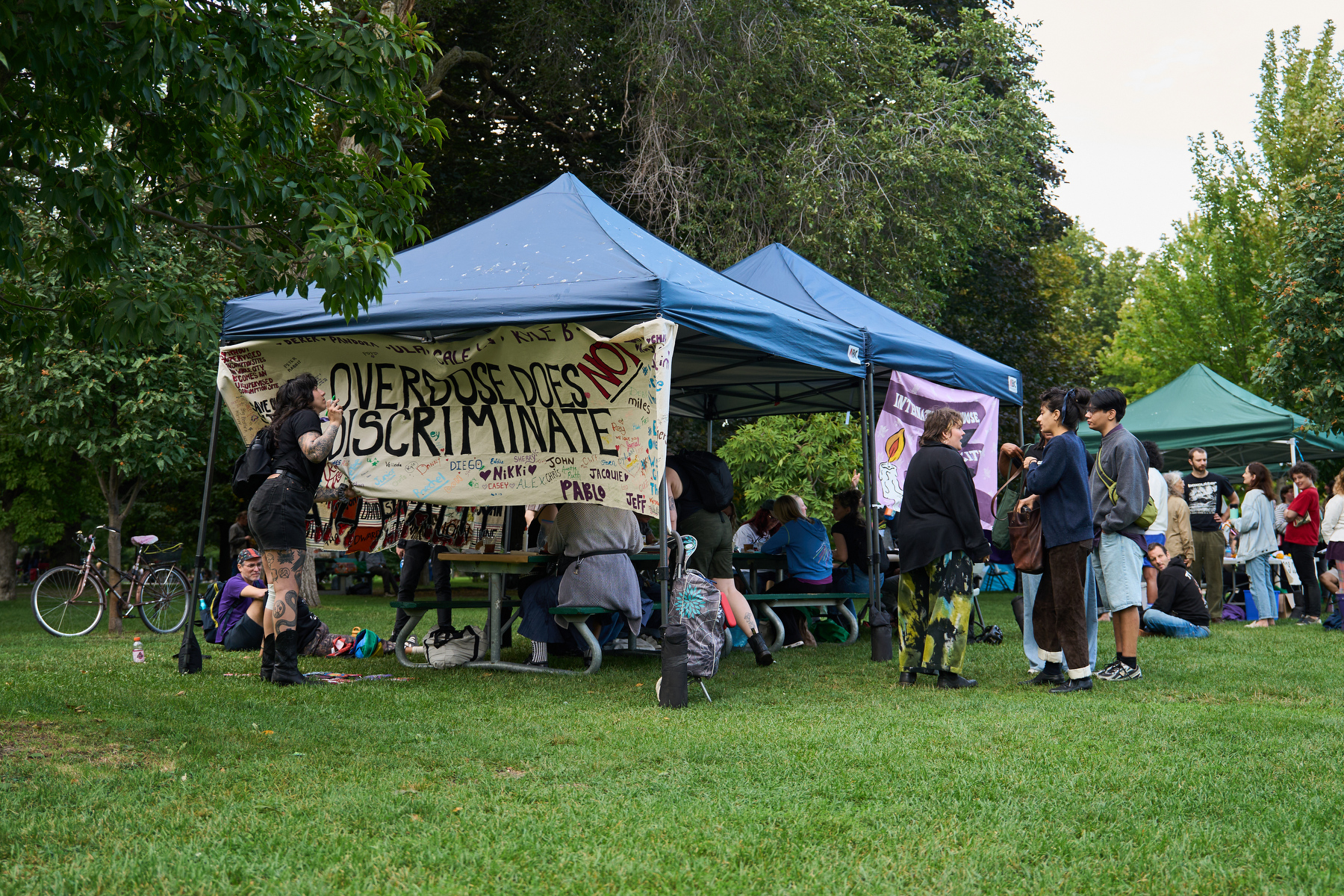
“I was getting myself caged and pepper sprayed but was still speaking, I guess, semi-eloquently about what was happening,” she said.
The frontline worker became a fierce critic of then-mayor John Tory and the police. She also became a de facto spokesperson for the homeless, being invited on TV to talk about encampments and assess political parties’ housing policies before the 2021 election.
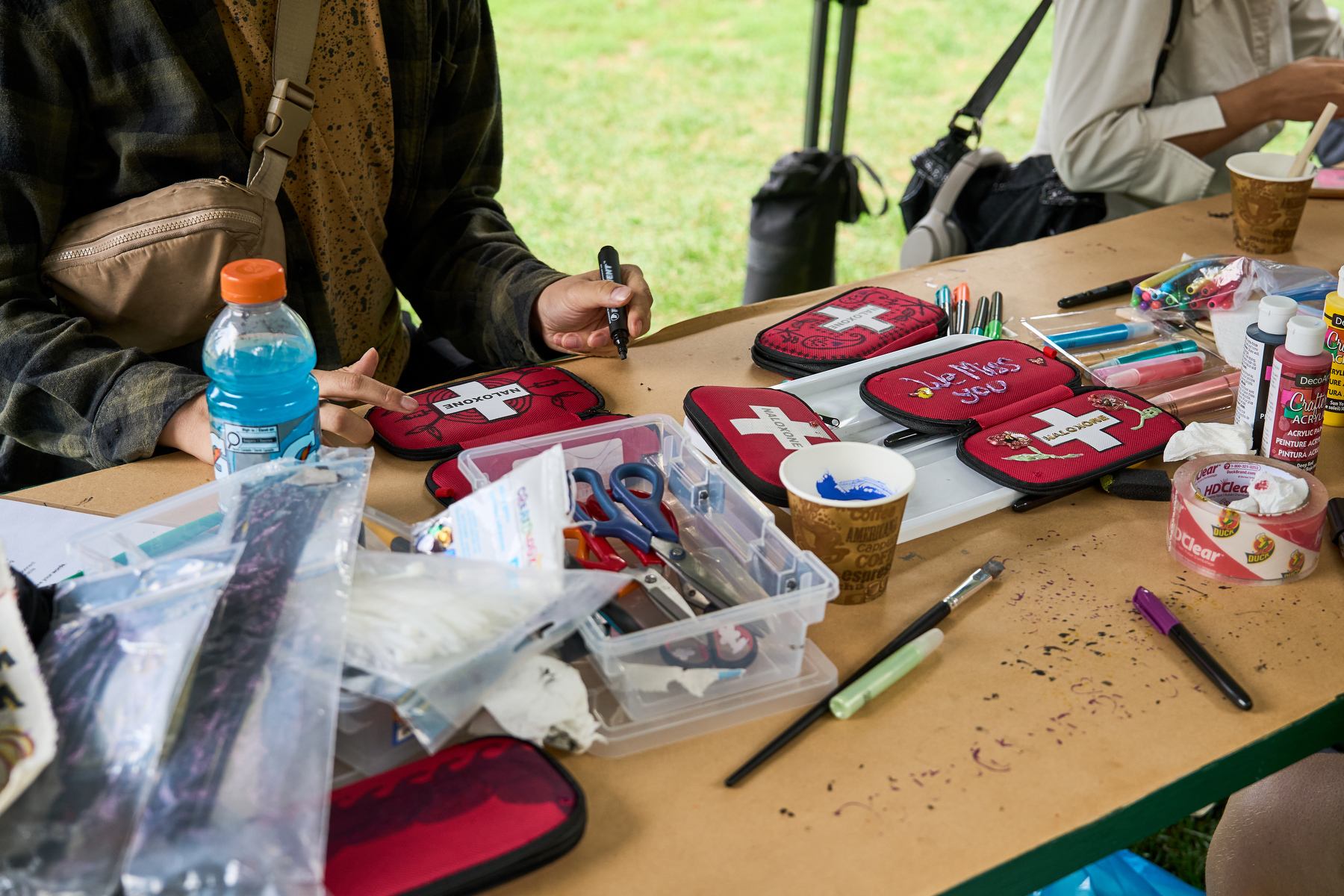
As a former worker at The Meeting Place drop-in at Queen and Bathurst Streets, McNally knew the issues facing people on the street. She had spent years with homeless people, cooking them fried egg sandwiches, helping them with housing applications, and reversing their overdoses with naloxone.
Not only did she know people who were homeless, she had once been in their shoes.
When Chan McNally was a teen, she said she was kicked out of her parents’ house in Rexdale. Pregnant, she couldn’t go back. She skipped between couches at friends’ houses, and, at times, she said, she squatted in buildings like parking garages.
Today, the frontline worker and activist is running for city council in Parkdale–High Park. In April, the ward’s councillor, Gord Perks, announced he wasn’t running for re-election after 20 years. McNally launched her campaign the very next day.
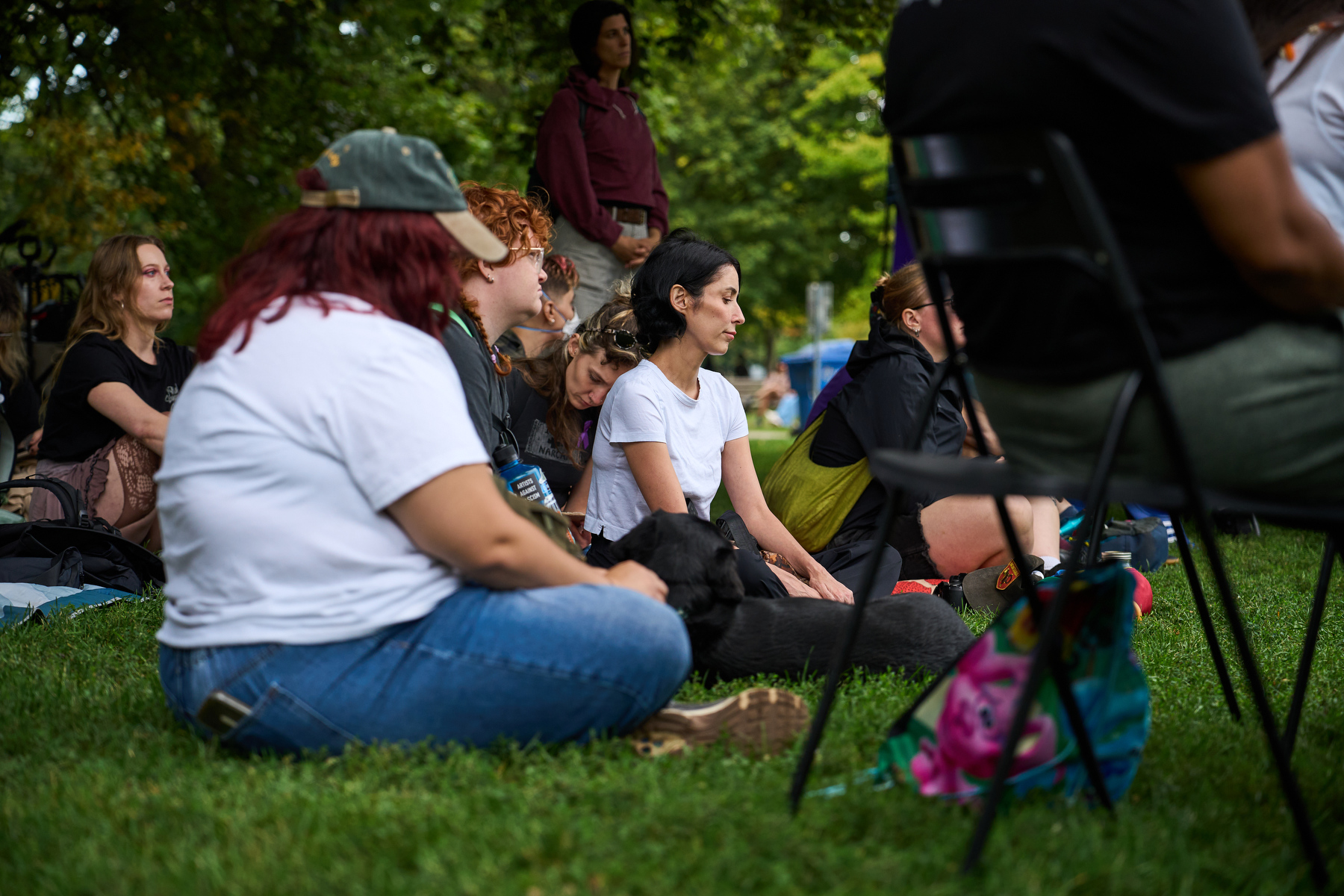
Her campaign has multiple pillars. But one of McNally’s core promises is to increase funding for drop-in centres—the same places where she used to work—to ease the number of homeless people living on the TTC and spending their days in libraries, and, also, to make their lives better. She insists the public will understand the value of this proposal, especially after the closure of safe consumption sites.
“They see the correlation between the shutdown spaces, and then suddenly people are just out because the fuck else are they supposed to go?” she told me. “Drop-in centres. That’s where. That’s where I worked for 11 years.”
It’s a high-stakes bet on the idea that helping the homeless will help the rest of the city, too. And it’s the polar opposite to the campaigns of Brad Bradford, who wants to force people into drug treatment, and Toronto Centre candidate Daniel Tate, the founder of a popular Instagram page that posts videos of homeless people designed to embarrass them.
To win, McNally will have to convince not only tenants and homeless people to give her plan a chance, but homeowners, parents, seniors, and at least some of the voters in her ward’s $5-million mansions, too.
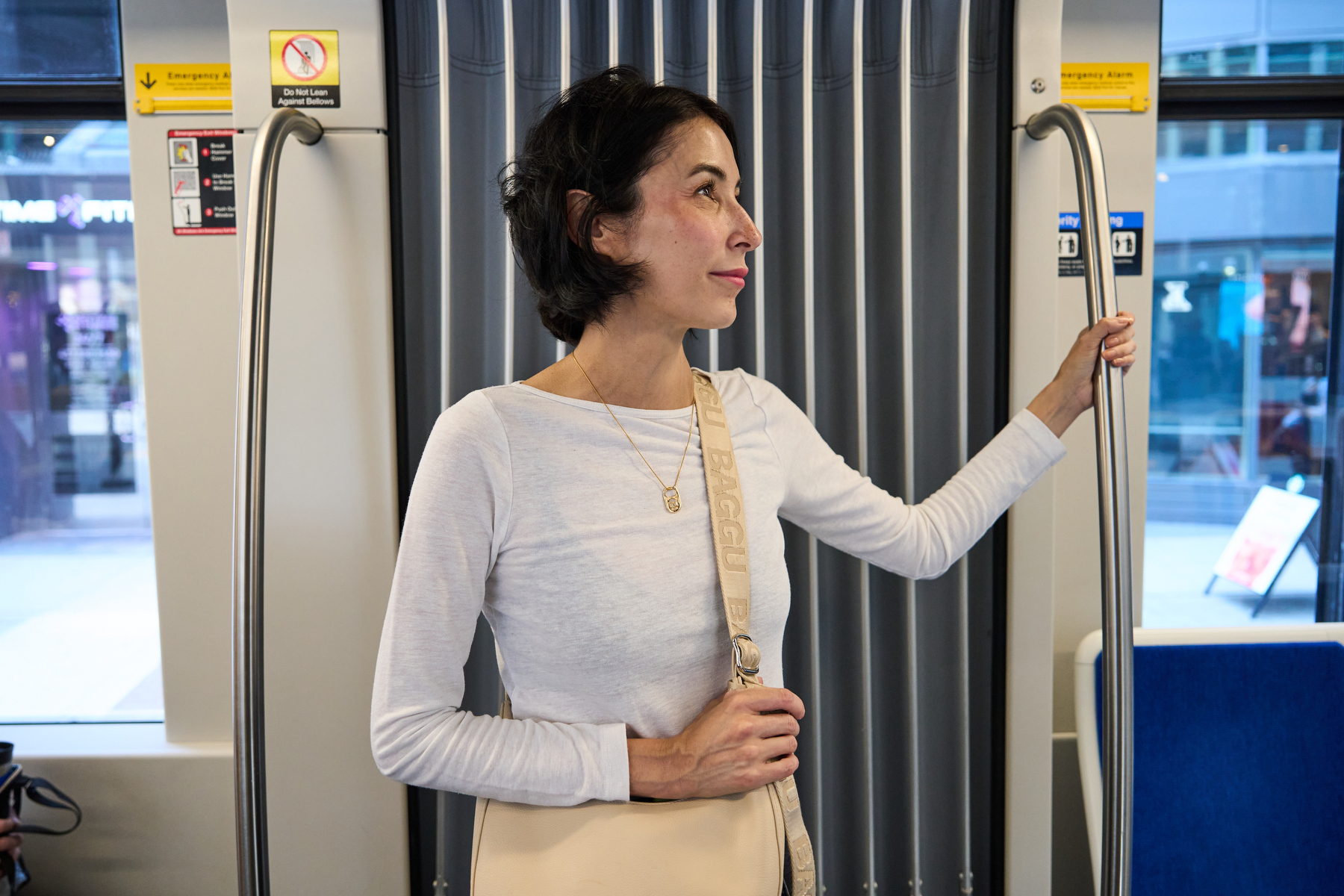
McNally, 43, was born and raised in Toronto. She said her mother gave birth to her at Women’s College Hospital and her parents raised her in Rexdale.
When she was a teen, she got pregnant.
McNally told me the story this summer over lunch at Skyline Restaurant in Parkdale (her pick). It was July, and the heavy sky outside threatened to downpour.
Before our food was set to arrive, I’d squeezed in one last question: “When did you first get involved with homelessness? Like, what motivated that?”
For the first time in our conversation, McNally hesitated. Normally, words flow out of her easily—an animated mixture of respectful terms like “unhoused” and “people who use substances” with F-bombs and frank opinions about other politicians.
This question, though, made her slow down. Her tone gave me the impression that just because she was talking about it, didn’t mean it was easy.
“I mean, I was…” she hesitated, “—homeless when I was a teenager. I was pregnant and actually had a child.”
According to McNally, for months, on an on-and-off basis, her parents didn’t allow her to go home, and the whole time, moving between couch-surfing and squatting, she kept going to school.
She said she remembers sitting in calculus class, having to throw up from morning sickness. “Honest to God, we had to dissect frogs, and I was like, ‘I can’t handle this.’”
She said she tried to get an abortion, but an anti-abortion group had rented a storefront near the clinic, so she accidentally went there instead.
“I walked into the wrong door,” said McNally. ”They terrified me. They surrounded me.”
“They were coming at me about what I should be doing and how it’s morally wrong. And I remember one guy giving me a rose, being like, ‘It’s for your baby,’ and it was so emotionally manipulative.”
According to McNally, she skipped her abortion appointment, terrified by what these strangers had told her. Instead, McNally said she decided to go voluntarily to the Children’s Aid Society to get help planning for her baby’s arrival and care.
“They treated me like a criminal, even though I was like, ‘I’m 15, I can’t be responsible for things like housing myself,’” she said. [Editor’s Note: McNally later told The Local she was 17, not 15 at the time.]
According to McNally, her baby was eventually seized by Children’s Aid and adopted by one of her own high school teachers. She said the teacher was fired for it, and that she decided it was too difficult to stay in touch with the family.
Today, it’s clear that the experience had a profound effect on McNally. She urgently wants to help people in desperate situations—and is willing to vehemently, publicly disagree with people who don’t share those values.
“The reality is, I just actually had a lot of people take care of me that time, and that’s the only difference between me and somebody who would still be out on the street and traumatized,” she said.
“Okay, fine. I was 15 [Editor’s Note: 17], I got pregnant. Moral or immoral? It happens,” she said at our table in the dimly lit back half of Skyline. “People just deserve support no matter what’s going on.”
Frontline work wasn’t her first career choice. According to McNally’s campaign page, she has worked on film sets, in graphic design and as a college teacher. “I’m a poor millennial, so I’ve had 5,000 jobs.”
While teaching at Centennial College around 2014, McNally said she met international students from countries like Nigeria, Ukraine, and Venezuela, who, she said, were scraping together all the resources they had to go to the cheapest program available in the GTA.
These students weren’t eligible for refugee protections, said McNally, but were much safer in Canada. “I was like, ‘Don’t come to class anymore. I don’t care, because that’s not why you’re here.’”
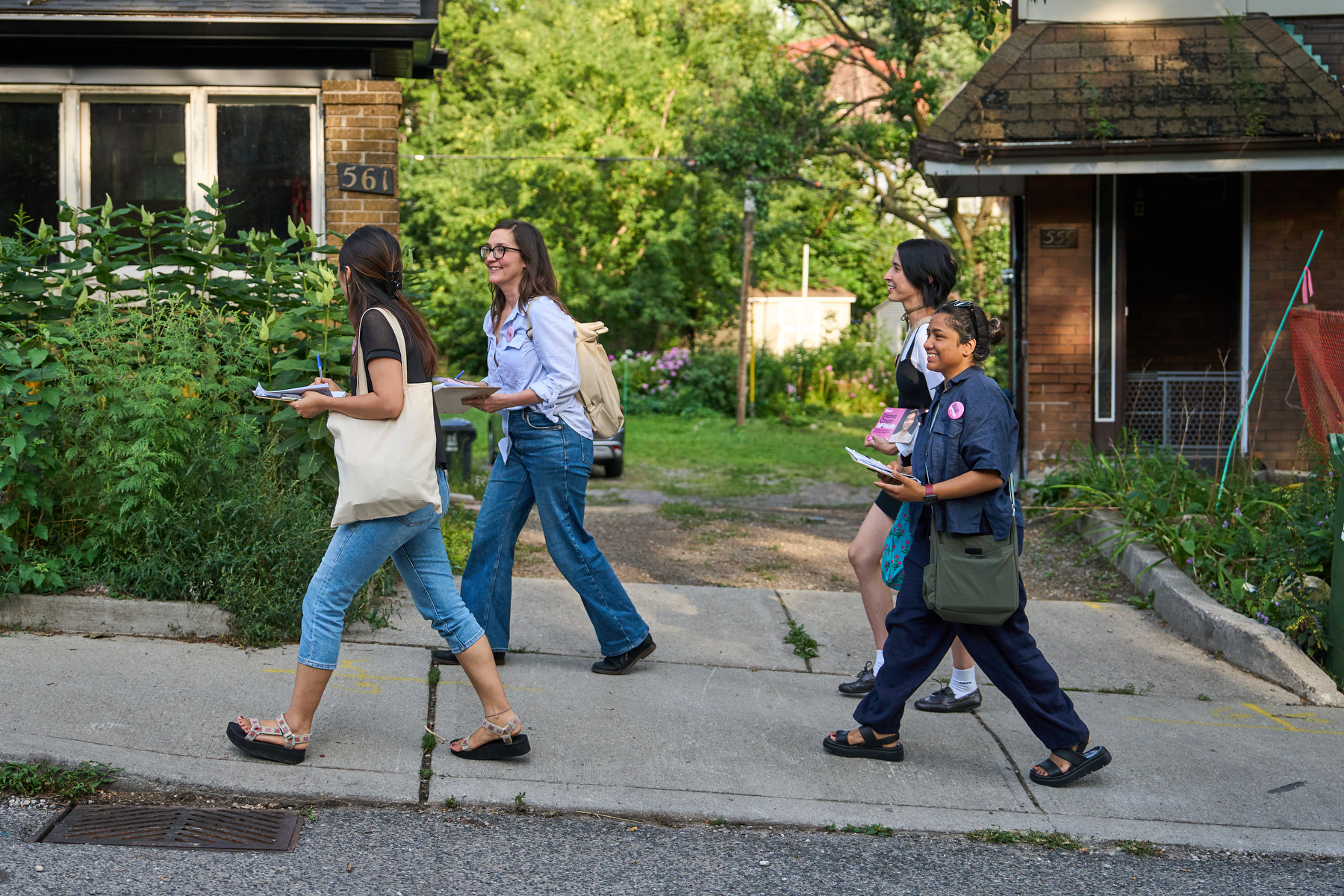
McNally said she started doing what was essentially case management and resettlement work on behalf of her students, helping them to get status in Canada first and focus on their education second.
Then, she said she went back to school for community work, which provided her with a pathway to working with people who are homeless.
“I didn’t have to put on a suit and be in an office. I could just be myself along with everyone else being themselves.”
The job, though, ended up requiring a lot more than just hanging out and being herself.
On her first week at the Toronto Drop-in Network, McNally was sent to depute at city hall. It was 2019. The organization needed someone to urge councillors not to raise the discounted TTC fare for people on social assistance.
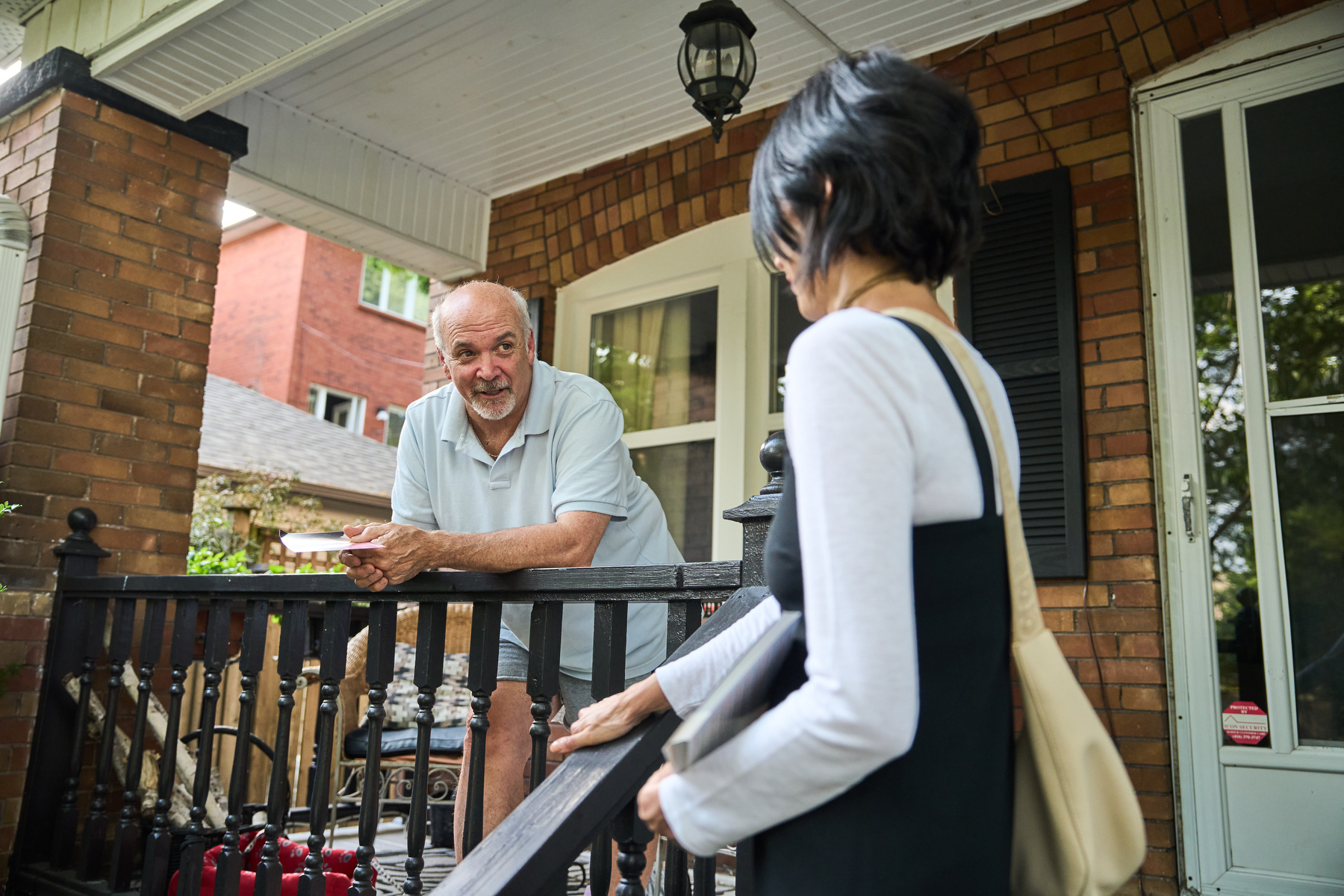
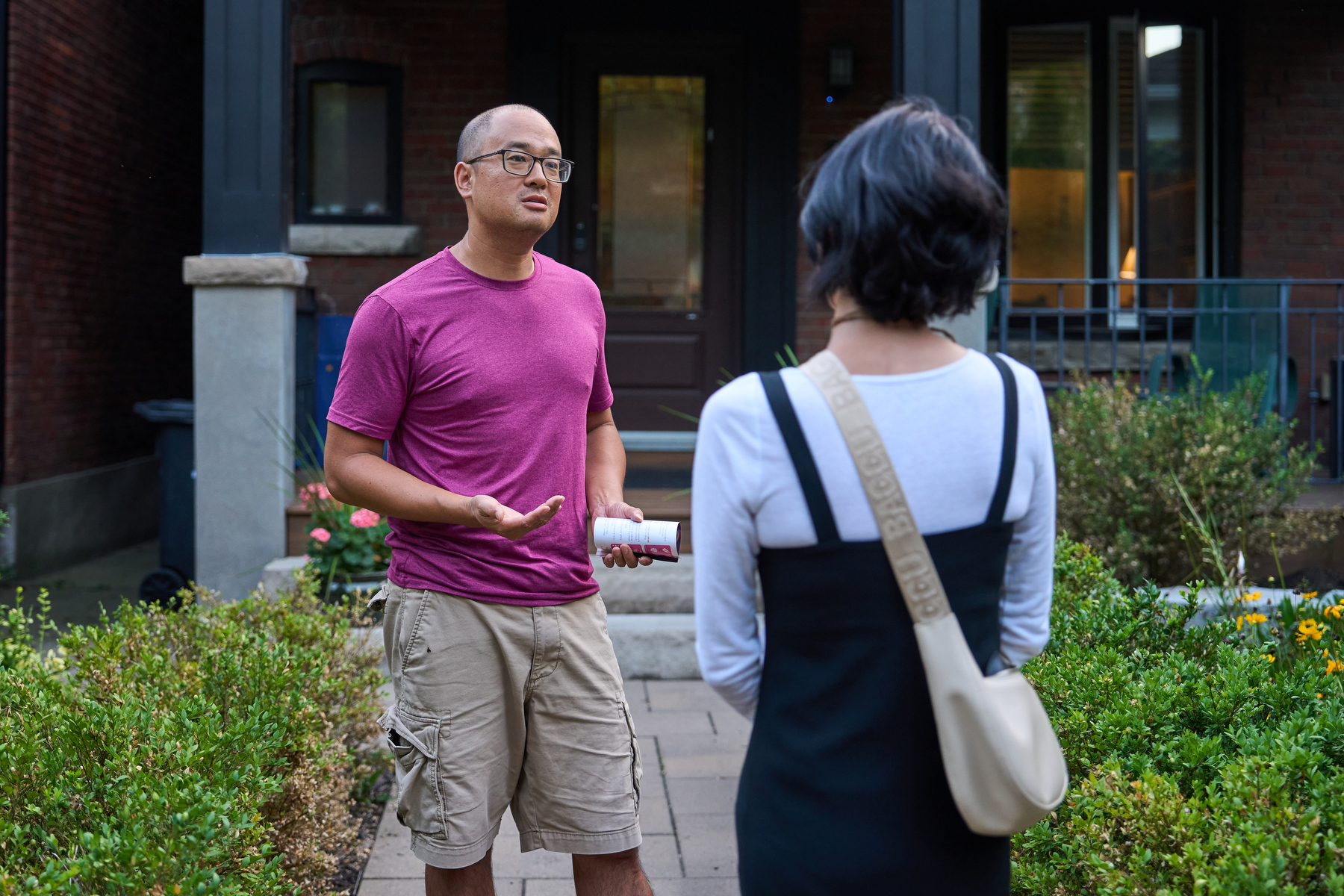
Facing the U-shaped desks of city councillors, McNally described how dependent the people she knew from drop-ins were on public transit: to connect them to work, school, friends, food banks, drop-ins, hospital emergency rooms. Raising their fares was both “both fiscally and socially reckless,” McNally told councillors. “I urge you to do better.”
She lost. The discounted fare was hiked that year. And, as a matter of fact, she didn’t actually enjoy speaking in front of councillors. “There’s such a power difference,” she said.
But she had to keep doing it because it was her job. When the encampment evictions happened in 2021, McNally said she worked with Toronto Drop-in Network and Encampment Support Network to sit down with the people living in encampments and draft a policy alternative to militarized evictions.
The document, A Path Forward, was addressed to John Tory.
“Using armed police officers on horseback and in riot gear to remove residents who are vulnerable to Toronto’s unaffordable housing market due to inadequate social supports, has no place in a caring, compassionate society,” it said.
The document had a laundry list of recommendations. Encampment residents should be offered indoor shelter; homeless shelters should review policies, like those barring residents from eating in their rooms, to create a more welcoming environment; and city staff should actually tell someone where a shelter is located before asking them to commit to going there.
It went nowhere at first. But later in 2021, when homeless people set up an encampment at Dufferin Grove, that ward’s councillor Ana Bailão pitched the city on a “housing first approach.”
The model was a copy, McNally said, of the grassroots Path Forward document.
“I was like, ‘You know what? Fuck you, Ana.’ But also, as long as it’s getting the outcome, then it’s not about the ego. It was the outcome that we had worked for.”
The city brought social and health-care services to the park and used a “person-centered approach” to build relationships.
Ninety people moved from the park into indoor shelters, a report from the city said later. Two of the city’s key learnings, the report said, were that housing uptake increases when housing options are based on a person’s needs and preferences, and that building rapport with people in the park first was key to success later on.
McNally considers it her first policy win. And since then, she’s racked up a few more.
Since 2022, she’s helped win increased funding for free menstrual and incontinence products in shelters and drop-ins; a $1-million increase to drop-in centres’ funding; free water distribution for neighbourhoods like Moss Park during a heat wave; and around $97 million in federal funding for homeless refugees.
“Those are all municipal-specific wins,” she said.
But those city council meetings can also be aggravating for McNally.
“Stephen Holyday will be like, ‘We don’t need shelters here,’” she says of the conservative Etobicoke representative who has fought for councillors to have the right to select the locations of homeless shelters. “And I get personally quite incensed because I would have been that kid.”
Along the way, McNally’s support has empowered organizations of homeless people, too.
In 2023, a group of people on the street formed the Toronto Underhoused and Homeless Union (TUHU). It now has more than 300 members, with chapters in Toronto’s shelters, encampments, and for refugees. The union has won things like shower curtains in shelters where residents previously had to shower in full view of each other.
“She gave me confidence,” TUHU member Saleh Sheihk said of McNally. Sheihk lives in a condo now, but was living in a shelter after arriving from Eritrea during the pandemic.
McNally’s encouragement has helped him feel comfortable speaking at press conferences.
“After I finish, I always think, ‘Did I do something wrong? How was it?’ But she always says, ‘No, you did great.’ And when she invites you to be in the next event, that means she actually means that — she wasn’t saying it as a compliment.”
One of TUHU’s founders, Lynn Walker, says McNally has influenced her listening style, which helps her bring in new members. Until recently, Walker lived in a tent in Allan Gardens.
“When somebody listens, you can tell the difference between somebody that’s listening and somebody that, you know, their head’s going all over the place,” Walker told me. “And she’s the type of person who listens and does the actions. When something needs done, she does what she could do to make it better.”
Join the thousands of Toronto readers who've signed up for our free newsletter and get award-winning local journalism delivered to your inbox.
"*" indicates required fields
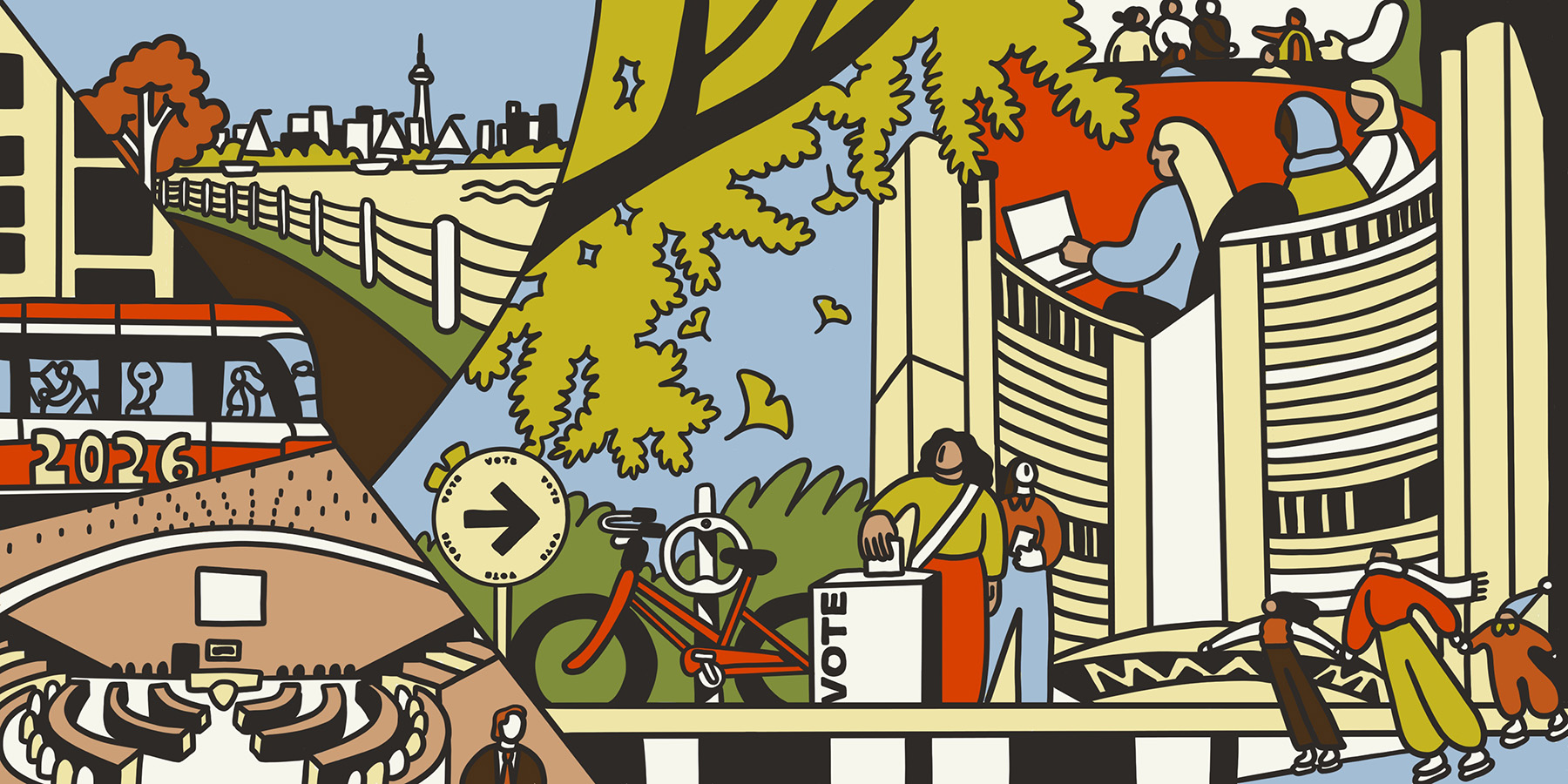
This fall, as candidates fan out across Parkdale High-Park, McNally will have to convince voters in Runnymede, High Park, and Swansea that she’ll be able to represent them as well as she’s represented people without homes.
Seen as the keeper of the progressive baton in the ward, her campaign manager is Marshelle Woodward, a staffer from the office of NDP MPP Alexa Gilmour. When I went canvassing with McNally on a Saturday afternoon in August, all three of her volunteers were associated with the local NDP riding association.
Vying for the same seat are nine other candidates, including Debbie King, a fellow progressive who has been an elected TDSB trustee since 2022. What sets McNally apart is her experience on the frontlines of Toronto’s homelessness crisis, her willingness to get her hands dirty—both literally, by working at encampments, and figuratively, by pissing off people in positions of power—and her status as a self-described “poor millennial.”
Everyone on city council currently, McNally says, is a homeowner. If elected, she could be the only renter. Not only does McNally rent—she lives in a basement with no air conditioning.
One August evening at Another Story Bookshop, about 40 would-be voters gathered for the chance to meet McNally and, she promised, influence her platform. The narrow bookstore is a beloved local business on Roncesvalles’ main strip that displays Pride flags and “No cuts to education” placards in its front window.
Some participants, like Harry Cornelius, were seniors who didn’t know much about McNally, but were impressed with the professional look of her campaign materials.
Others, like 40-year-old Jeremy, knew a lot about her work, and appreciated her principled stance on homelessness.
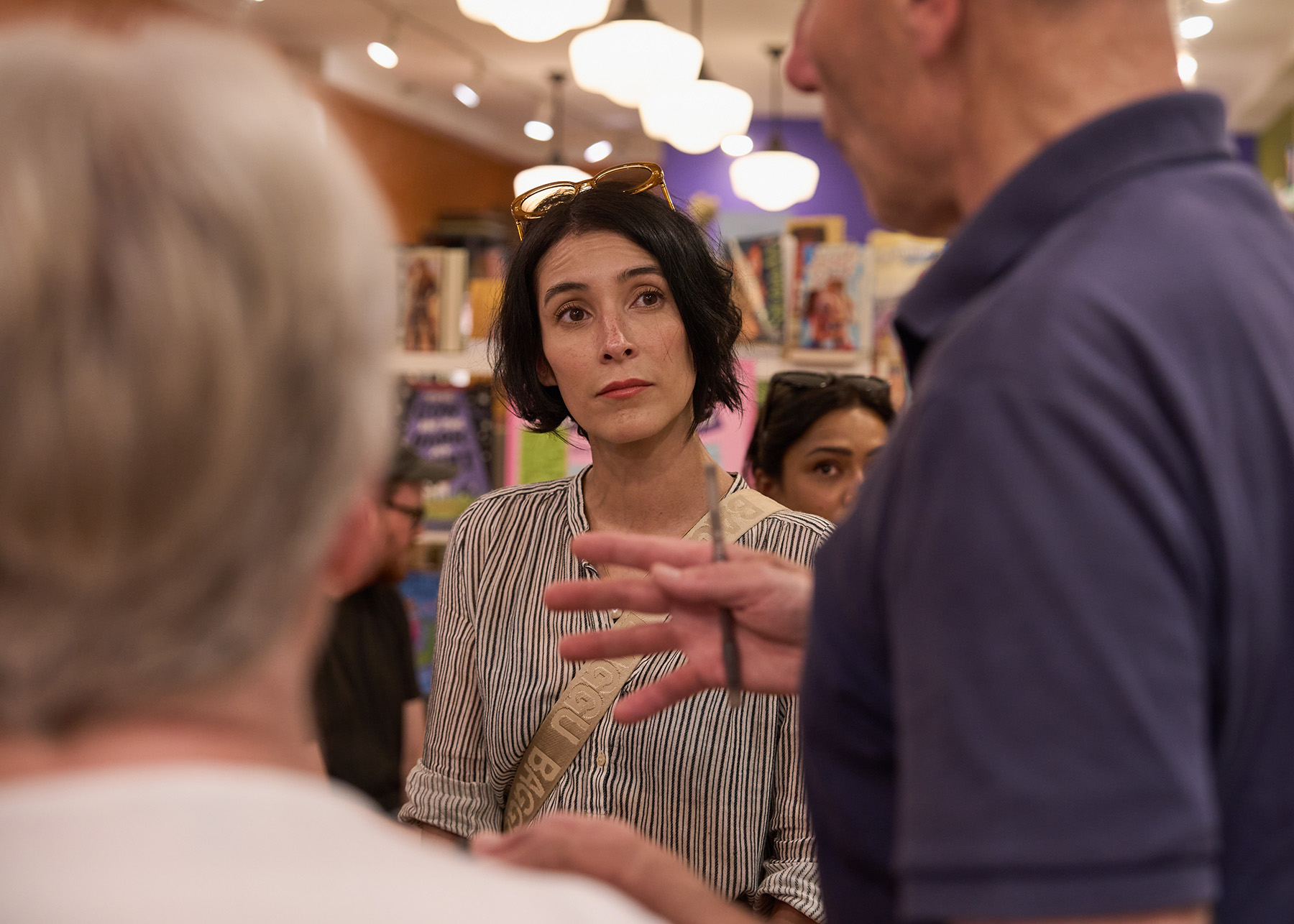
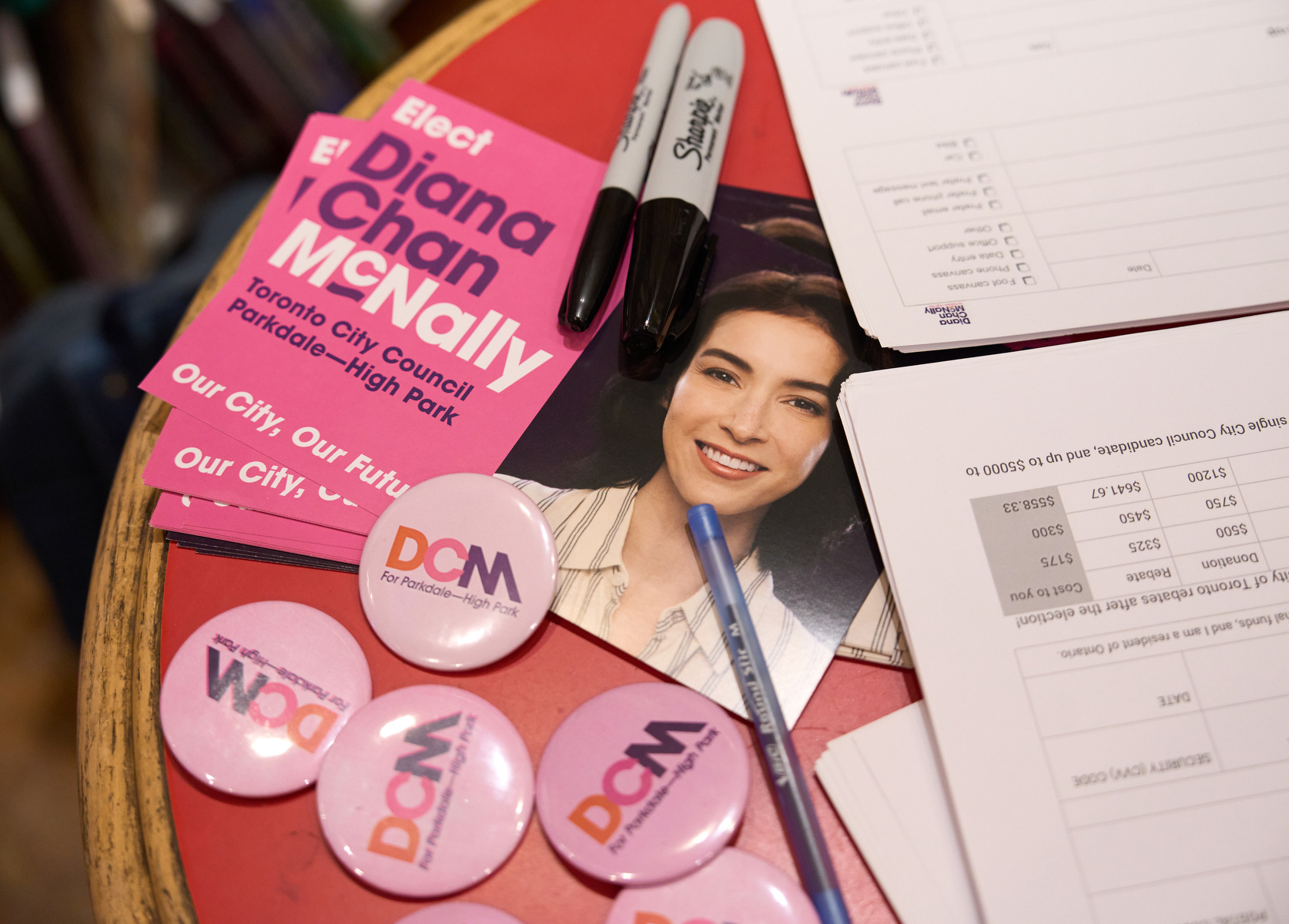
McNally stood before the crowd and introduced herself as a frontline worker and an advocate on housing, homelessness, and human rights. She said she was “very tired” of other levels of government “thinking Toronto doesn’t matter.” And when she described the work she’d put into stopping the expansion of Billy Bishop airport — collecting nearly 2,000 signatures on a petition and delivering them to MP Karim Bardeesy’s office — the crowd broke into applause.
“This is the kind of energy and the kind of fight that I think we need to have in City Hall,” she said.
The event was an early test of McNally’s potential as a municipal politician. There, the constituents’ questions didn’t focus on homelessness. They focused on how she would stop people from driving on the grass at their favourite park, whether she’d make sure that trees planted by the city were taken care of, and how she planned to manage the volume of complaints a city councillor’s office received.
“In addition to working frontline for 11 years, I was a case manager,” she said in response to the last question.
“My entire role was ensuring that everybody I was working with … got connected to healthcare, got connected to housing,” she said. “So, that’s the approach.”
When a constituent did raise the issue of encampments, he knew McNally’s stance—and wanted to challenge it.
“What I’m going to suggest is a compromise,” said the voter, who later told me his name was David White. “Tents shouldn’t be allowed right on the beach, right on the water’s edge. Water’s edge is scarce, and it should be available to everybody,” he said.
“The other place that encampments should not be allowed is in the bush,” he said. “Some of us have volunteered to plant stuff in those naturalized areas, and it’s very disheartening to see it trampled down.”
McNally argued that encampments are already regulated—in fact, they’re illegal—and that Streets to Homes, the city’s outreach program for people living outside, already encouraged people to move to places where their tents wouldn’t cause ecological damage.
She re-stated her belief, without compromising it, that she would not move people out of encampments if they have nowhere else to go.
Later in the event, Jeremy, the millennial voter, brought up McNally’s proposal to increase funding for drop-in centres.
“My partner works for the Toronto Public Library. She’s trained as a librarian, an archivist, not trained as a social worker, and unfortunately, libraries are kind of one of the last free spaces,” said Jeremy, who asked to be identified by his first name because his job prohibits him from speaking to the media.
“I have no problem with unhoused people being there … but it does create friction and the staff is not appropriately equipped [to be] dealing with those kinds of confrontations,” he said.
“So, I think it’s great that daytime drop-in centers could be a place to use the internet, hang out in the AC. It would reduce friction. I think it would increase empathy.”
“And you have trained social workers—” interjected McNally.
Jeremy finished her thought for her. “—Trained social workers that can respond in an empathetic way to their problems.”
McNally didn’t have to spell out the value proposition of her idea. In this case, explaining what drop-in centres were, that she had worked inside them and coordinated their operations, had been enough. For Jeremy, at least, her message was clear: “There’s society-wide benefits to being compassionate.”
By the end of the evening, a number of attendees had buttons pinned to their shirts with McNally’s initials, DCM, printed on them.
Jeremy told me he’d vote for McNally. And White—who wants certain areas to be off limits for homeless encampments—said he’ll consider it.
CORRECTION—Oct. 2, 2026: An earlier version of this story had incorrect information about Diana Chan McNally’s age and the age she gave birth.
In both her initial interview and a follow-up fact-check call with reporter Emma Paling, McNally said that she gave birth to a child at 15. She also said she is currently 41.
After receiving information that called into question some elements of McNally’s story, we contacted her campaign. In a phone call with The Local, McNally said that she is in fact 43 years old, and gave birth when she was 17. She said she had deliberately provided the reporter with inaccurate information in order to protect the identity of her child. During our call, McNally acknowledged that correcting her age and the age she gave birth would not put her child at risk.
As a result of this conversation, we took the rare step of temporarily taking the story down for a full editorial review on Oct. 1. We republished the story on Oct. 2, correcting McNally’s age, and attributing everything we could not independently verify to McNally.
More from this issue
The Young Progressives Hoping to Unseat Vincent Crisanti in Etobicoke North
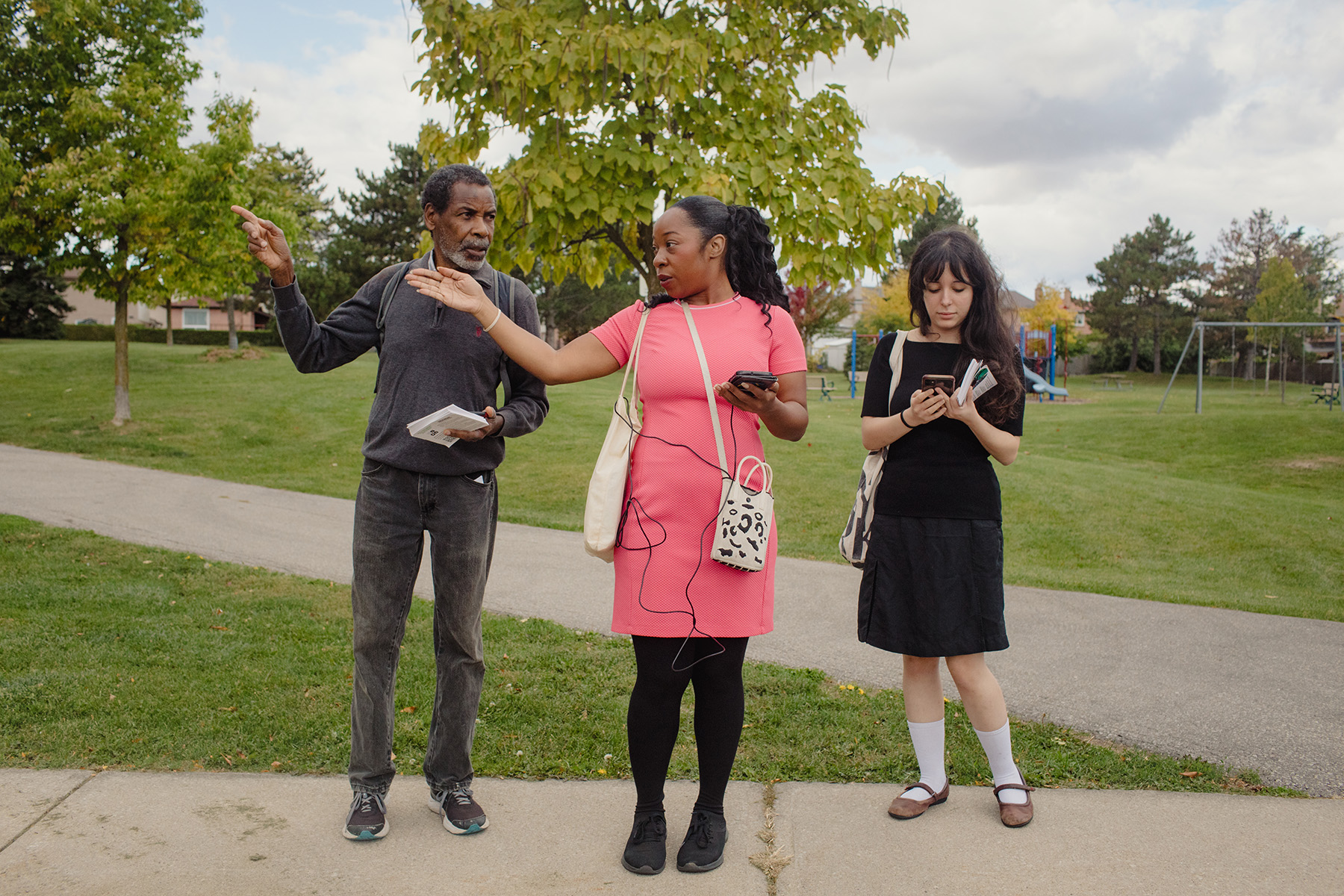
Policy analyst Chloe Brown made a name for herself challenging some of the biggest names in the city during her 2022 and 2023 mayoral runs. Now, she faces a different challenge—convincing residents of the neighbourhood she grew up in to send her to city hall.
The Biggest Winner of This Election: The Toronto Police
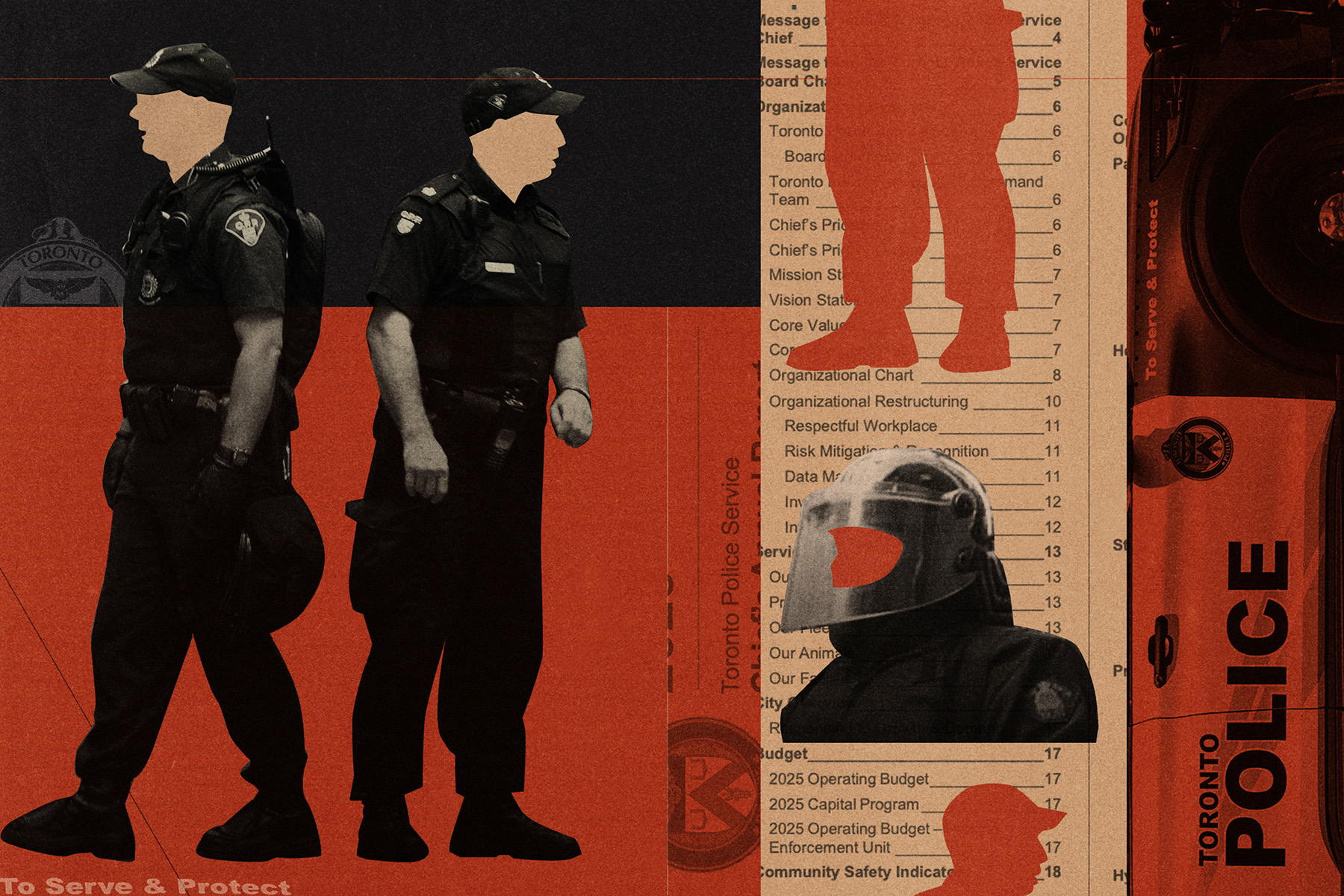
Despite being rocked by one of the biggest scandals in its history, the city’s police force is getting nothing but support from major candidates in the municipal election.
Has Olivia Chow Been an Effective Mayor?
I followed Olivia Chow over a summer of announcements and events to try to understand how she's fared as a leader. I came back with a more fundamental question about what it means to be mayor of Toronto when real power lies elsewhere.
In York South-Weston, Old Opponents Face Off for a Third Time
Frances Nunziata, Toronto’s longest serving city councillor, is ready for another term in office. Do her constituents feel the same?
North of the Tracks: The Election From Main and Danforth
With thousands of new units coming, Danforth Village in the corner of Beaches-East York is a microcosm of a changing city. In today’s sprawling wards, can voters make their local issues heard?
In Mississauga’s Ward 2, Candidates Spar Over Crime, Housing, and Property Taxes
With popular incumbent Alvin Tedjo stepping aside for a mayoral run, 14 candidates present their vision for one of the busiest, and wealthiest, wards in the city. Photos by Chloë Ellingson / The Local
Dianne Saxe Needs to Convince Danforth Voters She’s No Outsider
A walk through Toronto-Danforth with the former environmental lawyer, who jumped into the ward race just minutes before registration closed.
Brad Bradford Seems Angry—He’s Betting Torontonians Are Too
Former staffers say he drove them to tears. Colleagues say he’s a bully. The Bradford campaign says his passion is just what this city needs.
The Incumbent Is Under OPP Investigation. In Scarborough Southwest, Voters Are Focused on Other Issues
In a rematch of a close 2023 by-election, incumbent Parthi Kandavel and Kevin Rupasinghe offer very different visions of a growing suburb.
The Battle Over Sixplexes in Scarborough North
Last year, the ward became the first suburban ward to legalize the construction of sixplexes as-of-right. Now, in a race between incumbent Jamaal Myers and former Liberal MPs Shaun Chen and Han Dong, it’s become the defining issue of the election.